Types of Chocolate Popping Boba Machines
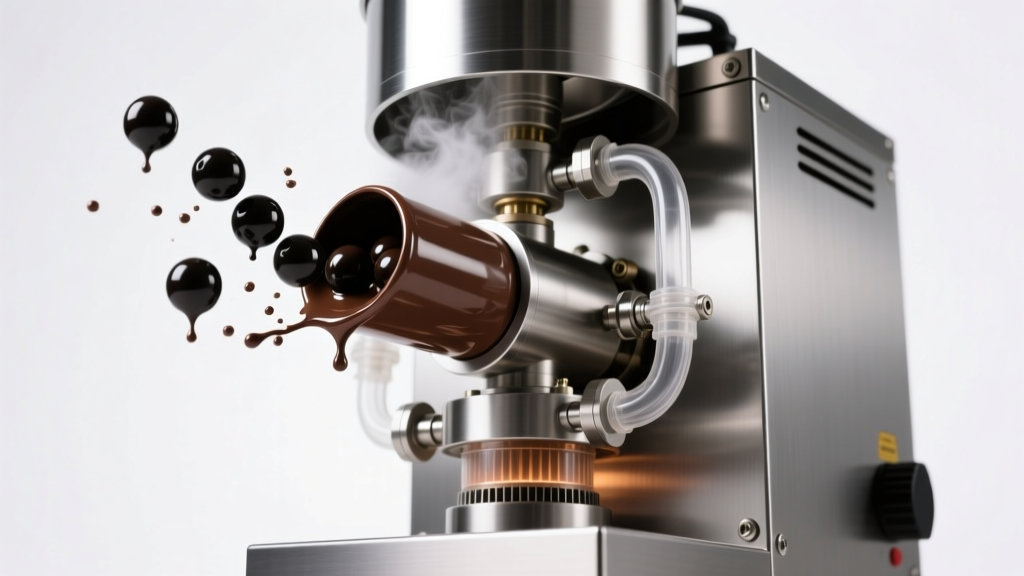
A chocolate popping boba machine is an essential piece of equipment for beverage and dessert manufacturers, especially in the rapidly growing bubble tea and gourmet drink industry. These machines produce gel-like spheres filled with liquid chocolate that burst upon pressure, delivering a unique sensory experience. Designed for commercial and industrial applications, these machines vary in automation level, output capacity, and operational complexity to suit different business scales and production needs.
Automatic Machine
Full automation from ingredient mixing to boba formation and dispensing, ideal for high-volume production.
Advantages
- High production efficiency with minimal labor
- Precise control over boba size and filling volume
- Consistent product quality and uniformity
- Reduces human error and contamination risks
- Time and cost-effective for large-scale operations
Limitations
- Higher initial investment cost
- Requires technical knowledge for maintenance
- Less flexibility for small batch customization
- Needs dedicated space and power supply
Best for: Large bubble tea chains, food processing plants, mass production facilities
Semiautomatic Machine
Combines automated processes with manual input, offering a balance between control and efficiency.
Advantages
- Lower cost than fully automatic models
- Greater flexibility in recipe and texture adjustments
- Easier to operate and maintain
- Ideal for batch production with variable flavors
- Good scalability for growing businesses
Limitations
- Slower production speed
- Requires skilled labor for consistent results
- Potential for human error in ingredient loading
- Output consistency depends on operator skill
Best for: Mid-sized cafes, local franchises, specialty dessert shops
Manual Machine
Hand-operated system requiring user involvement in every stage of boba creation.
Advantages
- Most affordable option for startups
- Compact and portable design
- Full creative control over flavor, size, and texture
- Easy to clean and store
- Perfect for sampling and product development
Limitations
- Very low production capacity
- Labor-intensive and time-consuming
- Inconsistent output between batches
- Not suitable for commercial scaling
Best for: Small kiosks, home-based businesses, culinary experiments
Industrial Machine
Heavy-duty systems built for continuous, large-scale manufacturing in factory environments.
Advantages
- Extremely high output (millions of units daily)
- Durable construction for 24/7 operation
- Integrated mixing, gelling, and packaging systems
- Advanced temperature and viscosity controls
- Compatible with bulk ingredient feeding
Limitations
- Very high purchase and installation cost
- Requires specialized facility and utilities
- Needs trained technicians for operation
- Long setup and maintenance downtime
Best for: Food manufacturing plants, national distributors, export-oriented producers
Rotary Machine
Uses rotating drums or plates to continuously form and release popping boba at high speed.
Advantages
- Continuous production flow with high throughput
- Uniform boba size and shape due to precision molds
- Energy-efficient operation
- Minimal product waste
- Excellent for standardized, large-volume runs
Limitations
- Limited flexibility in boba design variations
- Higher maintenance due to moving parts
- Not ideal for thick or viscous fillings
- Requires consistent ingredient viscosity
Best for: High-volume production lines, standardized flavor lines, export packaging
| Machine Type | Automation Level | Output Capacity | Cost Range | Ideal For |
|---|---|---|---|---|
| Automatic | High | 5,000–20,000+ units/hour | $$$ | Large chains, high-demand outlets |
| Semiautomatic | Medium | 1,000–5,000 units/hour | $$ | Mid-sized businesses, local brands |
| Manual | Low | 100–500 units/hour | $ | Startups, small vendors |
| Industrial | Very High | 100,000–1M+ units/day | $$$$ | Factories, mass producers |
| Rotary | High | 10,000–50,000+ units/hour | $$$ | Continuous production, large batches |
Expert Tip: When selecting a chocolate popping boba machine, consider not only your current production needs but also future scalability. Investing in a semiautomatic or modular automatic system can provide a smooth transition as your business grows, avoiding the need for complete equipment replacement.
Key Features of the Chocolate Popping Boba Machine
The chocolate popping boba machine is a cutting-edge food processing system engineered specifically for producing high-quality, consistent chocolate caviar and flavored boba pearls. Its advanced design combines durability, efficiency, and versatility to meet the demands of commercial beverage and dessert production. Below are the core features that make this machine an essential asset in modern food manufacturing environments.
Stainless Steel Construction
Constructed entirely from premium-grade stainless steel, the chocolate popping boba machine is built for longevity and hygiene. This corrosion-resistant material withstands constant exposure to acidic flavorings, sugar syrups, and industrial cleaning agents without degradation.
The non-porous surface prevents bacterial growth and simplifies sanitation, ensuring compliance with strict food safety standards. Its sleek, professional appearance also enhances the visual appeal of production lines, making it suitable for both back-of-house operations and open-kitchen setups.
High Production Capacity
Designed for scalability, the machine delivers exceptional output—capable of producing thousands of boba servings per day with minimal downtime. Its automated process ensures consistent formation, gelling, and drying of popping boba, enabling businesses to meet peak demand efficiently.
This high throughput is ideal for juice bars, bubble tea chains, dessert cafes, and large-scale food manufacturers who require reliable, continuous production without compromising quality or consistency.
Versatility in Flavors & Sizes
One of the standout features of the machine is its ability to produce boba in a wide range of sizes and flavors. From classic chocolate caviar to exotic variants like mango, matcha, lychee, or even mixed berry, the system can be easily reconfigured to accommodate different liquid centers and shell thicknesses.
This flexibility allows brands to innovate and diversify their product offerings, catering to seasonal trends, regional preferences, or limited-edition menu items—giving businesses a competitive edge in a crowded market.
User-Friendly Operation Panel
Equipped with an intuitive digital control panel, the machine simplifies complex processes into easy-to-manage settings. Operators can adjust droplet size, gelation timing, feed rate, and temperature with precision using a touchscreen interface.
The simple learning curve reduces training time for new staff and minimizes human error, leading to fewer production mistakes and less ingredient waste. Pre-programmed recipes can be saved for quick recall, ensuring batch-to-batch consistency across shifts and locations.
Integrated Drying System
The built-in drying mechanism is a crucial innovation that eliminates the need for secondary drying equipment. After formation, the boba passes through a controlled airflow chamber that gently removes excess moisture while preserving the integrity of the delicate gel membrane.
This results in a non-sticky, uniformly textured final product that bursts cleanly upon consumption. The precise moisture control also extends shelf life and improves storage stability—especially important for chocolate-based boba, which is prone to clumping or melting if not properly dried.
Consistent Quality & Food Safety Compliance
Beyond its physical features, the machine ensures unparalleled consistency in size, shape, and texture of each boba pearl. Uniform droplet dispersion technology guarantees that every batch meets exacting quality standards.
Designed in accordance with international food safety regulations (including FDA and HACCP guidelines), the machine supports traceability, easy maintenance logs, and clean-in-place (CIP) functionality, making it ideal for regulated production environments.
| Feature | Benefit | Best For |
|---|---|---|
| Stainless Steel Build | Durable, hygienic, corrosion-resistant | High-volume, commercial kitchens |
| High Output Rate | Produces thousands of servings daily | Beverage chains, mass production |
| Adjustable Size/Flavor Settings | Enables product innovation and customization | Seasonal menus, R&D departments |
| Touchscreen Control Panel | Reduces training time and operational errors | New hires, multi-location brands |
| Onboard Drying System | Ensures optimal texture and shelf life | Chocolate and creamy flavor boba |
Why These Features Matter
Important: To maintain peak performance and ensure food safety, always follow the manufacturer's recommended cleaning and maintenance schedule. Using unauthorized parts or improper cleaning agents may damage the machine or void the warranty. Regular calibration of the dispensing nozzles and drying system is essential for consistent boba quality.
Commercial Uses of a Machine That Makes Chocolate Popping Boba
A chocolate popping boba machine is more than just a novelty—it's a versatile commercial tool that enables food and beverage businesses to innovate, scale production, and elevate customer experiences. Originally popularized in bubble tea culture, popping boba (also known as flavor caviar or bursting pearls) has evolved into a sought-after ingredient across multiple culinary sectors. These machines use spherification or encapsulation technology to create small, liquid-filled spheres that burst with flavor upon contact, offering a dynamic sensory experience.
Equipped with precise temperature control, customizable molds, and high-output capabilities, modern chocolate boba makers allow businesses to produce consistent, high-quality pearls in bulk—making them ideal for commercial environments where efficiency, creativity, and customer satisfaction are paramount.
Boba Shops and Cafés
Popping boba machines are essential for enhancing the customer experience in bubble tea shops and cafes. Chocolate and flavored popping boba add a unique texture and explosion of flavor to drinks, transforming ordinary beverages into interactive, multi-sensory delights.
- Enables creation of signature drinks with chocolate, fruit, or dessert-flavored boba (e.g., mango, lychee, matcha, or caramel caviar)
- Supports high-volume production during peak hours, ensuring consistent supply without delays
- Allows seasonal or limited-time flavor rotations to keep menus fresh and drive repeat visits
- Reduces ingredient waste through precise portioning and on-demand production
Pro tip: Pair chocolate boba with milk teas or coffee-based drinks for a decadent twist that appeals to adult customers.
Dessert Bars and Restaurants
Dessert-focused establishments use popping boba machines to innovate their offerings and stand out in a competitive market. The burst texture of boba adds a playful, gourmet element to both classic and avant-garde desserts.
- Can be layered into parfaits, panna cotta, chia puddings, or acai bowls for added flavor bursts
- Enhances frozen treats like soft serve, shaved ice, or gelato with colorful, flavorful accents
- Ideal for molecular gastronomy presentations in upscale dining
- Supports large-batch preparation for catering events or dessert buffets
Creative idea: Offer a DIY dessert bar where customers customize their treats with a selection of popping boba flavors.
Baking and Pastry Shops
Bakeries and pastry shops leverage chocolate boba machines to infuse novelty into traditional baked goods. The encapsulated liquid pearls can be baked into muffins, swirled into cake batters, or used as decorative fillings in tarts and macarons.
- Adds surprise flavor bursts to cupcakes, cookies, and brownies (e.g., chocolate-orange or salted caramel boba)
- Enables creation of premium, Instagram-worthy desserts that attract social media attention
- Can be used in fillings for éclairs, donuts, or croissants for a modern twist
- Integrates seamlessly into production workflows with minimal disruption to baking schedules
Innovation tip: Develop a "Flavor Surprise" line of pastries where each bite contains a different popping boba flavor.
Candy and Confectionery Stores
Candy retailers use popping boba machines to craft gourmet treats that mimic luxury caviar candies or encapsulated chocolates. These visually striking products are perfect for gift sets, holiday promotions, and special events.
- Produce chocolate-coated popping pearls for a double-layered burst experience
- Create themed assortments (e.g., Valentine’s Day “Love Burst” mix or holiday peppermint boba)
- Offer customizable gift boxes with a variety of flavors and colors
- Ensure uniform size and shape for professional presentation and consistent customer experience
Sales booster: Market chocolate boba as “edible jewelry” or “gourmet flavor gems” to elevate perceived value.
Food Trucks and Mobile Vendors
Mobile food operators benefit from compact, energy-efficient popping boba machines that enable on-the-spot production of fresh, eye-catching treats. This portability allows vendors to offer premium experiences without a fixed kitchen.
- Ideal for bubble tea trucks, dessert carts, or festival vendors offering boba-infused snacks
- Enables made-to-order customization, increasing perceived freshness and quality
- Small footprint fits easily in limited kitchen spaces or pop-up setups
- Quick production cycle supports fast service during high-traffic events
On-the-go advantage: Use vibrant, colorful boba to attract attention and create a memorable brand image at outdoor markets and concerts.
Event Catering & Specialty Services
Though not originally listed, this emerging use case highlights the machine’s versatility. Caterers and event planners use popping boba to elevate cocktail hours, wedding desserts, and corporate events.
- Add chocolate or fruit boba to champagne or cocktails for a playful twist
- Incorporate into dessert stations or tasting menus for gourmet appeal
- Customize flavors and colors to match event themes (e.g., gold boba for galas)
- Impress guests with innovative, conversation-starting food experiences
Premium service: Offer a “Boba Pairing” experience with desserts and drinks at upscale events.
Business Growth Insight: Investing in a chocolate popping boba machine isn't just about adding a new ingredient—it's about differentiating your brand, increasing perceived value, and tapping into consumer demand for experiential food. Whether you're a café, bakery, or mobile vendor, integrating popping boba can lead to higher average ticket prices, increased social media engagement, and stronger customer loyalty.
| Business Type | Primary Use | Popular Boba Flavors | Production Volume (Est.) |
|---|---|---|---|
| Boba Cafés | Beverage enhancement | Mango, chocolate, lychee, strawberry | 500–2,000 pearls/hour |
| Dessert Bars | Gourmet topping | Vanilla, caramel, matcha, berry | 300–1,500 pearls/hour |
| Bakeries | Filling or surprise element | Chocolate, coffee, citrus, salted caramel | 200–1,000 pearls/hour |
| Candy Stores | Standalone treats or gift sets | Assorted fruit, chocolate-coated, holiday blends | 400–2,500 pearls/hour |
| Food Trucks | On-demand beverage/snack add-on | Seasonal, bold flavors (e.g., blue raspberry, cola) | 300–1,200 pearls/hour |
Additional Considerations for Commercial Success
- Flavor Innovation: Rotate seasonal or limited-edition boba flavors to keep customers excited and returning.
- Machine Maintenance: Regular cleaning and calibration ensure consistent pearl size and prevent clogging.
- Staff Training: Proper handling and storage of boba (especially temperature-sensitive varieties) preserves quality.
- Marketing Potential: Use visually appealing boba in social media content to boost online visibility.
- Cost Efficiency: Bulk ingredient sourcing and in-house production reduce long-term costs compared to pre-made boba.
- Allergen Awareness: Clearly label boba ingredients (e.g., dairy, nuts, gelatin) to accommodate dietary needs.
How to Choose the Best Chocolate Popping Boba Machine for Your Business
Selecting the right chocolate popping boba machine is a crucial decision that can significantly impact your beverage quality, production efficiency, and customer satisfaction. Whether you're launching a bubble tea shop, expanding a dessert menu, or scaling up production, understanding the key selection criteria will help you make an informed investment. This guide breaks down the most important factors—from output capacity to customization—so you can choose a machine that aligns perfectly with your business goals and operational needs.
Important Note: Popping boba machines handle liquid and gel-based ingredients under pressure and temperature control. Always follow manufacturer safety guidelines, ensure proper electrical connections, and use food-grade materials to maintain hygiene and compliance with health regulations.
1. Assess Your Production Requirements and Output Levels
The first step in choosing a chocolate popping boba machine is evaluating your daily production volume and business scale. Machines vary significantly in output capacity, ranging from compact countertop models producing 10–20 kg per hour to industrial systems capable of generating over 100 kg per day.
- High-Volume Operations: Bubble tea franchises, large cafes, or commercial dessert manufacturers should consider high-capacity machines with automated feeding and continuous production features to meet consistent demand.
- Small to Medium Businesses: Startups, kiosks, or bakeries with moderate demand may benefit from semi-automatic models that balance efficiency with space and budget constraints.
- Scalability: Choose a machine that allows room for growth—some models offer modular upgrades or additional nozzles to increase output as your business expands.
Overestimating needs leads to unnecessary costs and wasted space, while underestimating can result in bottlenecks during peak hours. Conduct a realistic forecast of your weekly boba usage before making a purchase.
2. Prioritize Functionality and Ease of Use
A user-friendly interface can dramatically reduce training time and minimize operational errors, especially in fast-paced environments. Modern popping boba machines come equipped with intuitive digital controls, preset programs, and real-time monitoring systems.
- Look for machines with touchscreen panels that allow easy adjustment of parameters such as droplet size, gelation time, and production speed.
- Machines with memory functions can store multiple recipes (e.g., chocolate, mango, matcha), enabling quick switching between flavors without recalibration.
- Automatic cleaning cycles and self-diagnostic alerts enhance usability and reduce downtime.
Staff efficiency improves significantly when operators can manage the machine with minimal supervision, leading to consistent product quality and faster service times.
3. Evaluate Durability and Build Materials
Given the frequent exposure to moisture, heat, and food ingredients, the construction material of the machine is critical for longevity and food safety.
- Stainless Steel (304 Grade): The industry standard for food-contact surfaces due to its corrosion resistance, ease of cleaning, and durability.
- Food-Grade Plastics: Used in certain components like reservoirs or drip trays—ensure they are BPA-free and NSF-certified.
- Sealed Electrical Components: Protect against spills and humidity, especially important in high-moisture environments.
Durable machines not only last longer but also maintain hygiene standards more effectively. Regular maintenance should be simple, with accessible parts and clear service indicators.
4. Explore Customization and Flavor Flexibility
One of the biggest advantages of using a popping boba machine is the ability to create unique, branded products. Customization options allow businesses to differentiate themselves in a competitive market.
- Adjustable Nozzle Sizes: Enable control over boba diameter—from 3mm mini pearls to 8mm jumbo bursts—perfect for different drink types or dessert applications.
- Multi-Flavor Capability: Some advanced machines support dual reservoirs or quick-flush systems, allowing seamless transitions between chocolate and other flavors.
- Texture Control: Fine-tune the firmness and burst intensity of the boba by adjusting calcium bath concentration and droplet immersion time.
This flexibility empowers you to innovate seasonally, respond to customer preferences, and even offer limited-edition chocolate boba variations to boost engagement.
5. Consider Budget and Total Cost of Ownership
While initial price is important, it’s essential to evaluate the total cost of ownership over time. A cheaper machine may lead to higher long-term expenses due to inefficiency, frequent repairs, or limited lifespan.
- Upfront Costs: Entry-level models start around $1,500–$3,000, while commercial-grade systems range from $5,000 to $15,000+ depending on automation level.
- Operating Costs: Include energy consumption, ingredient waste, and replacement parts (e.g., nozzles, pumps).
- Maintenance & Support: Choose brands that offer warranties, technical support, and readily available spare parts.
For startups, leasing or purchasing a refurbished model might be a cost-effective entry point. However, investing in a reliable, energy-efficient machine often pays off through reduced labor, consistent output, and enhanced brand reputation.
| Machine Type | Ideal For | Output Capacity | Key Features | Price Range |
|---|---|---|---|---|
| Compact Manual | Small cafes, pop-ups | 5–15 kg/day | Basic controls, hand-operated dropper | $1,500–$2,500 |
| Semi-Automatic | Bubble tea shops, bakeries | 20–50 kg/day | Digital timer, adjustable nozzles | $3,000–$6,000 |
| Full Automatic | Franchises, large chains | 60–120 kg/day | Touchscreen UI, auto-cleaning, recipe storage | $7,000–$12,000 |
| Industrial Scale | Manufacturers, distributors | 100+ kg/day | Continuous feed, remote monitoring | $12,000–$20,000+ |
Expert Tip: Request a live demonstration or sample production run before purchasing. This allows you to assess the machine’s performance, ease of cleaning, and the quality of the chocolate popping boba it produces—ensuring it meets your texture, size, and consistency standards.
Final Recommendations
- Match the machine size and output to your actual demand—don’t overbuy based on projected growth alone.
- Choose a reputable supplier with strong customer support and training resources.
- Verify compatibility with your preferred chocolate boba base ingredients (e.g., alginate, calcium lactate).
- Ensure the machine fits within your kitchen layout and ventilation setup.
- Train staff thoroughly on operation, cleaning, and troubleshooting procedures.
Selecting the right chocolate popping boba machine is more than just a purchase—it's an investment in your product quality and operational efficiency. By carefully weighing production needs, usability, durability, customization, and long-term costs, you can find a solution that enhances your menu, delights customers, and supports sustainable business growth.
Frequently Asked Questions About Chocolate Popping Boba Machines
Q1: How do you load and replace ingredients in a chocolate popping boba machine?Chocolate popping boba machines are equipped with an internal hopper that holds pre-mixed ingredients such as flavored starch, gelatin, water, or chocolate-based solutions. These mixtures are carefully formulated to create the signature burst-in-mouth texture. The operator simply pours the prepared mixture into the designated hopper compartment, ensuring it is free of lumps or impurities.
The machine’s digital control panel allows customization of key parameters, including boba size (typically ranging from 3mm to 10mm), flavor infusion settings, and production speed. Once the mixture is loaded, the machine automates the entire process—forming droplets, cooling them via a temperature-controlled chamber, and drying them to achieve the perfect consistency and shelf stability.
To maintain optimal performance, it's recommended to clean the hopper between flavor changes and follow the manufacturer’s guidelines for ingredient viscosity and preparation methods.
Q2: Is cleaning a chocolate popping boba machine easy and time-efficient?Yes, most modern chocolate popping boba machines are designed with user-friendly maintenance in mind. Key components such as the ingredient hopper, nozzle heads, drip trays, and collection bins are typically removable and dishwasher-safe or easily hand-washed.
The cleaning process generally involves:
- Draining any remaining mixture from the hopper.
- Disassembling accessible parts for thorough rinsing.
- Wiping down the internal chamber and cooling unit with a soft, damp cloth.
- Sanitizing surfaces to prevent cross-contamination, especially when switching between flavors or allergens.
Regular cleaning after each use prevents clogging, ensures consistent boba formation, and extends the lifespan of the machine. Some high-end models even feature self-cleaning cycles or quick-flush functions for added convenience.
Q3: What sizes do chocolate popping boba machines come in, and how do I choose the right one?Chocolate popping boba machines are available in a wide range of sizes and capacities to suit different operational needs:
| Machine Type | Size & Capacity | Ideal For |
|---|---|---|
| Countertop Models | Compact, 1–3 liters per hour output | Home kitchens, small cafes, dessert shops testing new products |
| Mid-Sized Units | Freestanding, 5–10 liters per hour output | Bakery chains, bubble tea franchises, catering businesses |
| Industrial-Grade Machines | Large-scale, 20+ liters per hour with automated feeding | Food manufacturers, mass production facilities, export operations |
When selecting a machine, consider your available kitchen space, daily production volume, menu diversity, and scalability goals. Smaller units are energy-efficient and require minimal setup, while larger systems may need dedicated ventilation, plumbing, and electrical support.
Q4: How long can boba made with a popping boba machine be safely stored?Boba produced using a chocolate popping boba machine can remain fresh and safe for consumption for several weeks when stored properly. This extended shelf life is made possible by the machine’s integrated drying and moisture control systems, which reduce water activity and inhibit microbial growth.
For optimal freshness and texture:
- Store dried boba in airtight, food-grade containers away from direct sunlight and humidity.
- Keep at room temperature (15–25°C) unless otherwise specified by the manufacturer.
- Avoid refrigeration unless rehydrating before use, as condensation can degrade quality.
- Always check the manufacturer’s label for exact expiration dates and storage instructions based on the specific formulation used.
Homemade or small-batch boba without preservatives may have a shorter shelf life (7–14 days), so proper labeling and rotation (first-in, first-out) are essential in commercial settings.
Q5: Can a popping boba machine be used to make other types of bursting caviar besides boba?Yes, many advanced popping boba machines are highly versatile and capable of producing a variety of flavored, edible "caviar" pearls beyond traditional boba. By adjusting the ingredient solution and machine settings, chefs and food artisans can create gourmet spheres that burst with flavor upon consumption.
Popular alternative applications include:
- Chocolate Caviar: Used in desserts, cakes, and ice creams—releases a rich cocoa or ganache center when bitten.
- Fruit-Infused Pearls: Made with pureed mango, strawberry, or passionfruit for cocktails and yogurt parfaits.
- Savory Flavor Beads: Such as basil oil, truffle, or balsamic vinegar pearls for gourmet plating and molecular gastronomy.
- Alcoholic Spheres: For cocktail garnishes that deliver a burst of liqueur or spirits (used responsibly and labeled accordingly).
This flexibility makes the popping boba machine a valuable tool not only in beverage shops but also in fine dining, pastry kitchens, and innovative food manufacturing. Always ensure ingredients are food-safe, properly emulsified, and compatible with the machine’s nozzle and gelling system.