Chicken udon soup is the quintessential Japanese comfort dish—warm, nourishing, and deeply satisfying. Unlike its more delicate ramen or somen counterparts, udon features thick, chewy wheat noodles submerged in a savory dashi-based broth, often enriched with tender poached chicken, vegetables, and aromatic seasonings. This dish transcends simplicity, offering layers of umami and texture that make it ideal for cold evenings, recovery meals, or weekend culinary projects. Whether you're new to Japanese home cooking or refining your technique, mastering chicken udon soup means understanding the balance between broth clarity, noodle integrity, and ingredient harmony. This guide provides a comprehensive, step-by-step approach to crafting an authentic yet accessible version, complete with professional insights on seasoning, timing, and presentation.
Definition & Overview
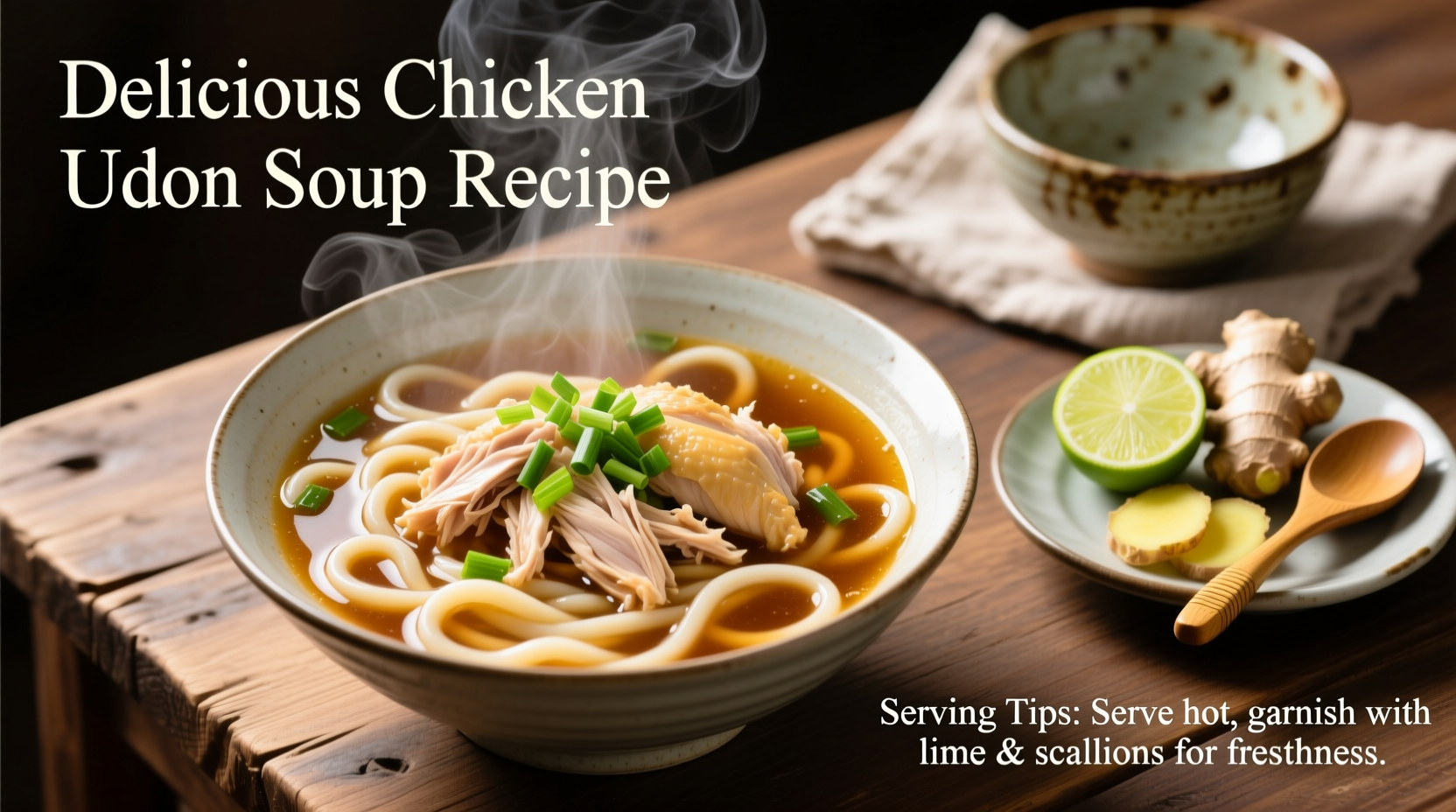
Udon (うどん) refers to thick, white Japanese wheat flour noodles made from just three ingredients: wheat flour, water, and salt. These noodles are prized for their soft yet resilient chew, making them ideal for both hot soups and chilled dipping preparations. Chicken udon soup, while not as traditional as tempura or kitsune udon, has become a popular adaptation in home kitchens and modern izakayas due to its universal appeal and protein-rich profile.
The soup typically consists of a clear but flavorful broth—traditionally based on kombu (kelp) and katsuobushi (bonito flakes), known collectively as ichiban dashi—seasoned with soy sauce and mirin. Poached or simmered chicken breast or thigh adds lean protein, while toppings like sliced green onions, kamaboko (fish cake), and boiled spinach elevate both taste and visual appeal. The result is a balanced, restorative meal that respects tradition while accommodating contemporary tastes.
Key Characteristics
| Characteristic | Description |
|---|---|
| Flavor Profile | Umami-rich, mildly salty-sweet with herbal undertones from dashi; chicken adds subtle savoriness without overpowering. |
| Aroma | Clean and warm, with hints of seaweed, roasted fish (from katsuobushi), and green onion. |
| Color & Appearance | Clear amber broth, thick ivory noodles, vibrant green scallions, pinkish-white chicken, and optional red accents from narutomaki or chili oil. |
| Texture | Chewy noodles, tender chicken, smooth broth—no creaminess unless modified. |
| Heat Level | Naturally mild; heat can be added via condiments like shichimi togarashi or rayu (chili oil). |
| Culinary Function | Main course, comfort food, recovery meal, or light lunch. |
| Shelf Life | Broth keeps 3–4 days refrigerated; cooked udon best consumed immediately. Assembled soup does not freeze well. |
Practical Usage: How to Make Chicken Udon Soup at Home
Creating an exceptional chicken udon soup hinges on two pillars: a clean, aromatic broth and perfectly cooked components. Follow this method to achieve restaurant-level results with minimal specialized equipment.
- Prepare the Dashi Broth: In a medium pot, add 4 cups of water and a 4x6 inch piece of dried kombu. Soak for 20 minutes. Heat over medium until just before boiling (small bubbles form around edges), then remove kombu. Add 1 cup loosely packed katsuobushi, bring to a boil, then turn off heat and steep for 5 minutes. Strain through a fine-mesh sieve lined with cheesecloth.
- Season the Broth: Return strained dashi to the pot. Add 3 tablespoons soy sauce, 2 tablespoons mirin, and 1 teaspoon sugar. Warm gently—do not boil—to dissolve sugar and meld flavors. Taste and adjust: if too strong, dilute with water; if flat, add a pinch of salt or a splash of mirin.
- Cook the Chicken: Season one boneless, skinless chicken breast (or two thighs) with salt. Place in a small pan, cover with water, and poach over low heat for 12–15 minutes until internal temperature reaches 165°F (74°C). Remove, let rest 5 minutes, then slice thinly against the grain.
- Cook the Udon: If using fresh/frozen udon, boil in unsalted water for 1–2 minutes. If dried, follow package instructions (usually 8–10 minutes). Drain and rinse under cold water to remove excess starch and stop cooking. Divide among serving bowls.
- Assemble the Bowl: Ladle hot broth over noodles. Arrange chicken slices on top. Garnish with diagonally sliced scallions, a wedge of kamaboko, and optional blanched spinach or enoki mushrooms.
Pro Tip: For deeper flavor without heaviness, simmer the poaching liquid from the chicken with the dashi. Skim any foam to maintain clarity. Avoid boiling the seasoned broth—it dulls the delicate dashi notes.
Variants & Types of Udon and Broth Styles
While the core concept remains consistent, regional and personal variations offer diverse experiences. Understanding these helps tailor the dish to preference or occasion.
- Kake Udon: The simplest form—hot udon in basic soy-dashi broth. Ideal base for chicken additions.
- Miso Udon: Broth includes red or white miso paste, lending earthiness and body. Pairs well with dark meat chicken or shredded rotisserie chicken.
- Kitsune Udon: Features sweetened fried tofu (aburaage). Can be combined with chicken for a hybrid bowl.
- Bukkake Udon: Chilled noodles served with a concentrated tare (flavor base) diluted at the table with hot broth. Offers textural contrast.
- Yaki Udon: Stir-fried version, usually with pork and vegetables. Not a soup, but sometimes confused—ensure clarity when labeling.
For chicken udon soup, kake-style is recommended for beginners due to its clarity and ease of balancing flavors. Miso variation suits colder months or those preferring heartier profiles.
Comparison with Similar Ingredients and Dishes
Udon is often mistaken for other Asian noodles or soups. Clarifying distinctions ensures proper technique and expectations.
| Feature | Udon | Ramen | Soba |
|---|---|---|---|
| Noodle Base | Wheat flour, water, salt | Wheat flour, kansui (alkaline water), egg (sometimes) | Buckwheat flour (often blended with wheat) |
| Noodle Thickness | Thick (4–6 mm) | Medium (2–4 mm), variable | Thin to medium (2–3 mm) |
| Texture | Soft, chewy, bouncy | Firm, springy, slightly elastic | Firm, slightly gritty, nutty |
| Broth Type | Light dashi-soy | Rich (tonkotsu, shoyu, miso, shio) | Light to medium; often chilled for soba |
| Common Protein | Tempura, fish cake, occasionally chicken | Chashu pork, egg, nori | None (chilled), or light seafood |
| Chicken Use | Modern addition, less traditional | Rare, but possible in fusion versions | Uncommon; clashes with buckwheat subtlety |
“Udon’s strength lies in restraint. The broth should whisper, not shout. When adding chicken, choose poached white meat to preserve that delicacy.” — Chef Aiko Tanaka, Tokyo Soba Academy
Practical Tips & FAQs
Can I use store-bought broth instead of making dashi?
Yes, but quality varies. Look for instant dashi granules labeled “hon-dashi” (not artificial flavorings). Alternatively, use low-sodium chicken broth blended 50/50 with water and enhanced with a strip of kombu simmered for 10 minutes. Avoid overly sweet or MSG-heavy bases.
What’s the best cut of chicken for udon soup?
Boneless, skinless chicken breast yields a clean, lean result and absorbs broth well. Thighs offer more flavor and moisture but may cloud the broth slightly. Rotisserie chicken works in a pinch—shred and add at the end without reheating.
How do I prevent mushy udon noodles?
Never overcook. Fresh or frozen udon needs only 60–90 seconds in boiling water. Rinsing under cold water halts cooking and removes surface starch, preventing clumping. Add noodles to hot broth just before serving.
Are there vegetarian alternatives that still pair well with chicken?
No—if using chicken, avoid conflicting vegetarian elements like shirataki or excessive mushrooms. However, if adapting for mixed diets, prepare separate broth bases: dashi for omnivores, kombu-only for vegetarians.
Can I make this ahead of time?
Components can be prepped separately. Cook and slice chicken up to 2 days in advance. Dashi broth keeps 3–4 days refrigerated. Noodles must be cooked fresh. Reheat broth gently, add noodles, then top with room-temperature chicken to warm through.
What are traditional garnishes for udon?
Standard garnishes include:
- Sliced scallions (negi)
- Narutomaki (pink-swirl fish cake)
- Blanched spinach (horenso)
- Menma (fermented bamboo shoots)—less common in udon than ramen
- Seven-spice blend (shichimi togarashi) on the side
Is udon gluten-free?
No—udon is made from wheat flour and contains gluten. For gluten-free alternatives, consider soba made from 100% buckwheat (check labels) or rice-based noodles like shirataki, though texture and absorption differ significantly.
Storage Tip: Store leftover broth in glass jars for up to 4 days. Do not store assembled soup—noodles will continue absorbing liquid and become bloated. Freeze broth for up to 3 months; thaw overnight in refrigerator.
Expert Pairing Suggestions
To elevate the dining experience, consider complementary side dishes and beverage pairings that align with Japanese culinary principles.
- Takuan (pickled daikon): Adds brightness and cuts richness.
- Edamame with sea salt: Light, protein-rich, and texturally contrasting.
- Spinach goma-ae: Blanched spinach tossed in sesame dressing—nutty and cooling.
For drinks:
- Cold barley tea (mugicha) – non-sweet, toasty, aids digestion.
- Dry sake or junmai-shu – enhances umami without sweetness.
- Sparkling water with yuzu – refreshing citrus note.
Summary & Key Takeaways
Chicken udon soup bridges tradition and accessibility, offering a wholesome, flavorful meal rooted in Japanese culinary philosophy. Success depends on attention to detail: a clean dashi foundation, properly cooked noodles, and balanced seasoning. While not classically dominant in Japan, chicken serves as a practical, widely enjoyed protein that integrates seamlessly when handled with care.
Key points to remember:
- Always start with high-quality dashi—homemade is best, but premium instant options work.
- Poach chicken gently to retain tenderness and avoid toughening.
- Cook udon al dente and rinse to preserve chew.
- Season broth lightly; you can always add more, but cannot remove excess salt.
- Garnish simply—scallions, fish cake, and a spice option provide enough complexity.
- Store components separately for optimal next-day results.
Try this tonight: Use leftover roasted chicken, quick-kneaded frozen udon, and a 5-minute dashi packet. In under 15 minutes, you’ll have a nourishing, authentic-tasting bowl that rivals takeout—without the sodium overload.