Halloween is more than just costumes, candy, and jack-o'-lanterns. Behind the festive surface lies a rich tapestry of cultural evolution, spiritual beliefs, and centuries-old rituals. From ancient Celtic fire festivals to Christian observances and American pop culture, Halloween has transformed into a global phenomenon. Understanding its roots not only deepens appreciation for the holiday but also reveals how societies adapt traditions across time and geography.
The Celtic Roots: Samhain and the Thin Veil
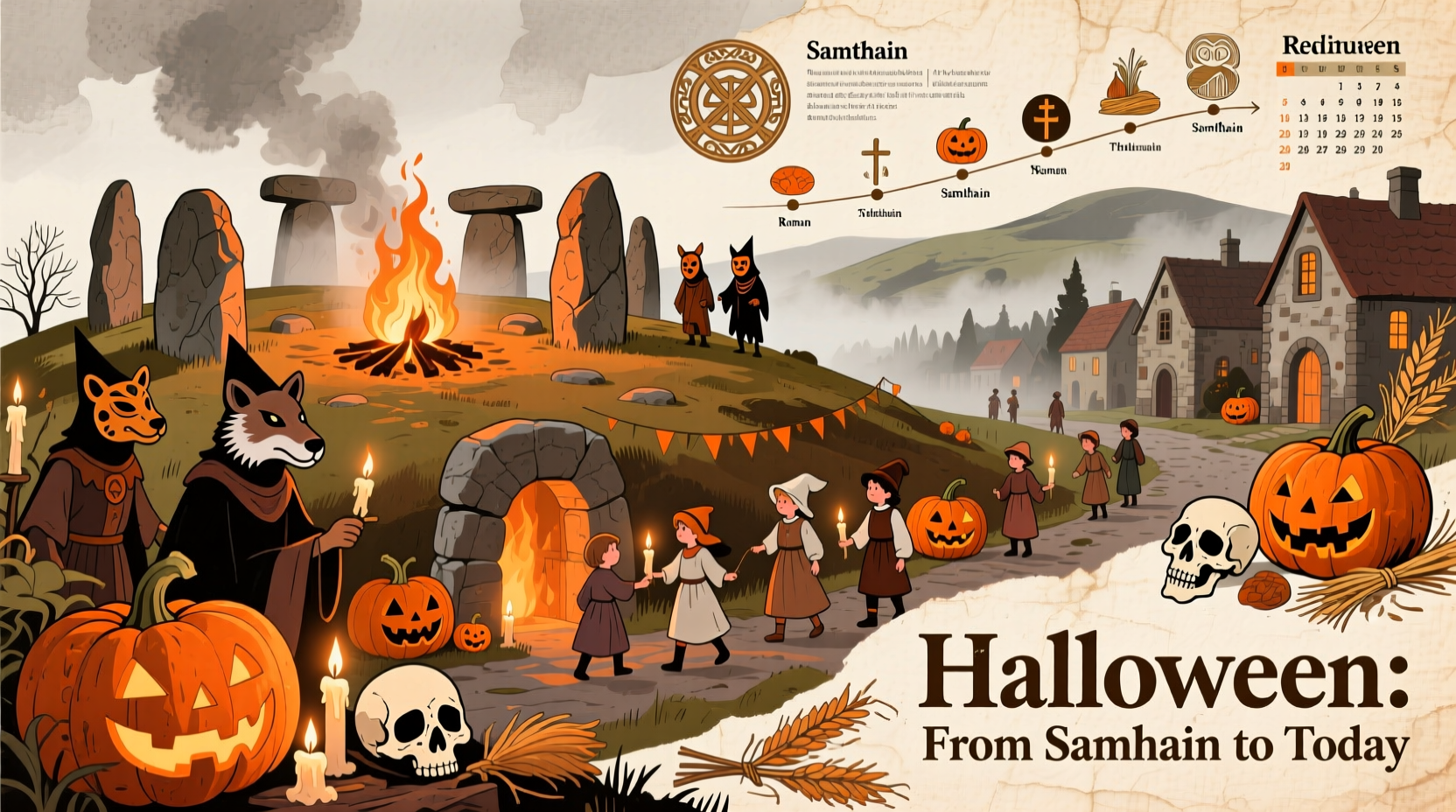
Halloween’s earliest origins trace back over 2,000 years to the ancient Celtic festival of Samhain (pronounced “sow-in”). Celebrated on the night of October 31, Samhain marked the end of the harvest season and the beginning of winter—a time associated with death and hardship. The Celts believed that on this night, the boundary between the living and the dead blurred, allowing spirits to return to Earth.
These returning spirits were both feared and honored. Some were thought to cause trouble, such as damaging crops or haunting homes, while others were seen as ancestors seeking connection. To protect themselves, people lit bonfires, wore disguises made of animal skins, and left food offerings at doorsteps to appease wandering souls.
“Samhain was not merely a celebration—it was a liminal space where the natural and supernatural intersected.” — Dr. Fiona O’Neill, Cultural Anthropologist
The idea of spirits walking among the living during seasonal transitions appears in many cultures, but the Celts formalized it into a communal ritual that laid the groundwork for future celebrations.
Christian Influence: All Saints’ and All Souls’ Day
As Christianity spread through Europe, church leaders sought to replace pagan festivals with Christian observances. In the 8th century, Pope Gregory III designated November 1 as All Saints’ Day, a time to honor saints and martyrs. The evening before became known as All Hallows’ Eve, later contracted into “Halloween.” November 2 was designated as All Souls’ Day, a time to pray for the departed.
Despite the Church’s efforts, many Samhain customs persisted under new names. Bonfires remained central, and the belief in restless spirits evolved into prayers for souls in purgatory. The practice of “souling”—where poor people would go door-to-door offering prayers for the dead in exchange for soul cakes—emerged in medieval Britain and is considered a precursor to modern trick-or-treating.
Tip: The transition from Samhain to All Hallows’ Eve illustrates how religious institutions often absorb existing traditions rather than erase them.Transatlantic Transformation: Halloween in America
Halloween arrived in North America primarily through Irish and Scottish immigrants fleeing the Great Famine in the mid-19th century. In the U.S., the holiday began to shift from a spiritually focused event to a community-centered celebration. By the early 20th century, Halloween parties, parades, and school events became common, especially in urban areas.
The commercialization of Halloween accelerated in the 1950s. Candy companies promoted treats as safer alternatives to pranks, and mass-produced costumes, decorations, and themed products flooded the market. Trick-or-treating, once rooted in souling and guising (a tradition where people dressed up and performed in exchange for food), became standardized as children went door-to-door collecting candy.
American media further popularized Halloween through films like *Halloween* (1978), television specials like *It’s the Great Pumpkin, Charlie Brown*, and horror-themed entertainment, embedding the holiday deeply into popular culture.
Timeline of Key Halloween Developments
- ~800 BCE: Celts celebrate Samhain, marking the end of harvest and honoring the dead.
- 8th Century CE: Pope Gregory III establishes All Saints’ Day on November 1; All Hallows’ Eve becomes a recognized vigil.
- 9th–15th Century: Souling and guising practices develop in Britain and Ireland.
- Mid-1800s: Irish and Scottish immigrants bring Halloween traditions to North America.
- Early 1900s: Halloween becomes a secular, community-based holiday in the U.S.
- 1950s: Trick-or-treating gains popularity; candy replaces homemade treats.
- 1970s–Present: Horror films and pop culture expand Halloween’s reach globally.
Enduring Traditions and Their Meanings
Many modern Halloween customs have surprising historical depth. Below is a breakdown of common practices and their origins:
| Tradition | Modern Practice | Historical Origin |
|---|---|---|
| Wearing Costumes | Dressing as ghosts, superheroes, or pop culture figures | Celts wore animal skins to confuse or ward off spirits during Samhain |
| Jack-O'-Lanterns | Pumpkins carved with faces and lit by candles | Irish legend of “Stingy Jack”; originally turnips were used in Ireland |
| Trick-or-Treating | Children collect candy from neighbors | Evolved from souling and guising traditions in medieval Europe |
| Haunted Houses | Commercial attractions with scares and special effects | Rooted in folklore about restless spirits and ghost stories told on Samhain |
| Candy Apples and Sweets | Popular Halloween treats | Apples were used in divination games; candy replaced older food offerings |
The jack-o'-lantern, for instance, comes from an Irish folktale about a man named Jack who tricked the devil and was condemned to wander the earth with only a burning coal inside a hollowed turnip to light his way. Immigrants to America found pumpkins more plentiful and easier to carve, leading to the iconic symbol we recognize today.
Global Variations and Modern Adaptations
While Halloween is most prominent in the United States, Canada, and parts of Europe, similar holidays exist worldwide. Mexico’s Día de los Muertos (Day of the Dead), celebrated November 1–2, shares thematic elements with Halloween—honoring the deceased with altars, marigolds, and offerings—but maintains a distinct cultural identity focused on celebration rather than fear.
In recent decades, Halloween has gained popularity in countries like Japan, Germany, and Australia, often adapted to local tastes. Japanese celebrations tend to focus on cosplay and nightlife, while German authorities discourage door-to-door trick-or-treating due to privacy concerns, though costume parties are common.
Tip: When celebrating Halloween abroad, research local customs to ensure your activities are respectful and appropriate.Mini Case Study: How One Town Revived Its Halloween Heritage
The town of Derry in Northern Ireland, widely regarded as the birthplace of Halloween due to its strong Celtic roots, launched the \"Beltane Festival\" in the 1980s to reclaim its cultural legacy. Initially a small community event, it grew into one of Europe’s largest Halloween celebrations, featuring street performances, fire sculptures, and a massive parade.
By blending ancient symbolism with modern artistry, Derry transformed Halloween from a commercial holiday into a meaningful cultural experience. Today, thousands visit annually, boosting tourism and reinforcing local pride. This example shows how communities can honor historical roots while creating inclusive, vibrant celebrations.
Frequently Asked Questions
Why do we say “trick or treat”?
The phrase originated in early 20th-century North America as a playful threat: children implied they might play a prank (“trick”) unless given a treat. It formalized the exchange between neighbors and helped curb vandalism by encouraging generosity.
Is Halloween a religious holiday?
Not in its modern form. While it has roots in Christian observances like All Saints’ Eve, today Halloween is largely secular and cultural. However, some Christian denominations still observe it as a religious day, and others choose not to celebrate due to its pagan associations.
Why are black and orange the Halloween colors?
Orange represents the autumn harvest and fall foliage, while black symbolizes darkness, death, and the thinning veil to the spirit world. Together, they reflect the seasonal and symbolic themes of the holiday.
Conclusion: Honoring the Past, Celebrating the Present
Halloween endures because it speaks to universal human experiences—our relationship with death, our love of storytelling, and our desire to transform identity, even if just for one night. Whether you’re carving a pumpkin, donning a costume, or sharing ghost stories, you’re participating in a tradition that spans millennia and continents.
Understanding the origins of Halloween enriches the experience, turning simple fun into something deeper. As the holiday continues to evolve, it remains a powerful example of how cultures preserve meaning through adaptation.
🚀 Ready to celebrate with purpose? Share this article with friends or family to spark a conversation about what Halloween means to you—and how you can honor its history while making new memories.