When winter arrives, pet owners face a critical decision: how to keep their dogs warm without compromising comfort or mobility. Two popular options dominate the market—knit dog sweaters and quilted dog coats. While both promise warmth, they deliver it in fundamentally different ways. Understanding the science behind insulation, fabric structure, and environmental conditions can help you make an informed choice. The answer isn’t always obvious, and for many dogs, the “warmer” option depends on breed, activity level, and climate.
How Warmth Works: The Science of Canine Winter Wear
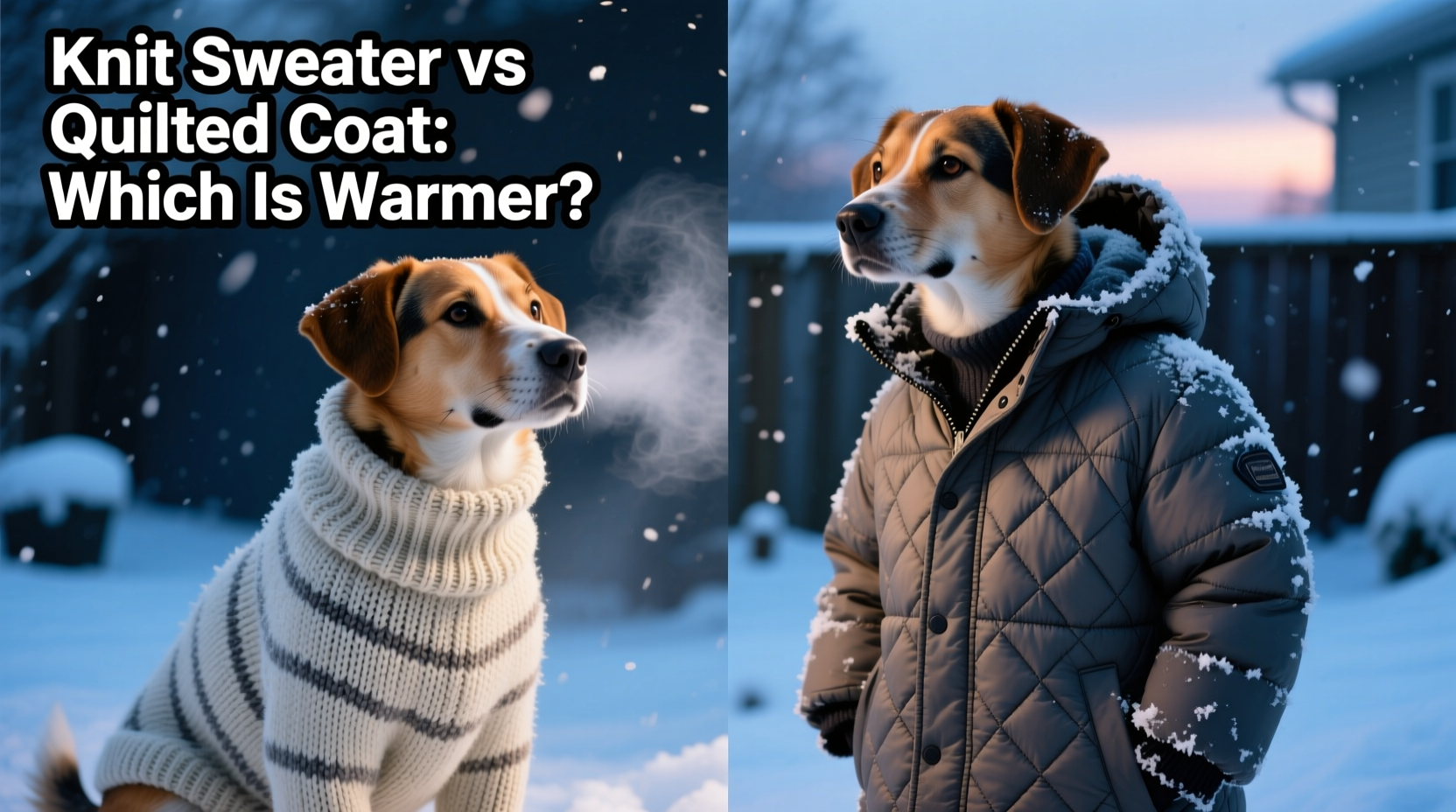
Dogs regulate body temperature differently than humans. While some breeds with thick double coats—like Huskies or Malamutes—rarely need extra layers, smaller or short-haired breeds such as Chihuahuas, Greyhounds, or Dachshunds lose heat quickly in cold weather. A dog’s core temperature should remain around 101–102.5°F (38–39°C), and when ambient temperatures drop below 45°F (7°C), vulnerable dogs may begin to feel the chill.
Effective dog outerwear works by trapping body heat close to the skin through insulation. The key factors are:
- Thermal retention: How well the material holds in heat.
- Wind resistance: Protection against cold air penetrating the fabric.
- Moisture management: Ability to wick sweat or resist snow/rain absorption.
- Fit and coverage: Whether the garment covers vital areas like the chest, abdomen, and back.
Knit sweaters and quilted coats approach these needs in contrasting ways—one relying on natural fiber density, the other on engineered layering.
Knit Dog Sweaters: Style Meets Limited Warmth
Knit sweaters are often favored for their aesthetic appeal. Made from wool, acrylic, cotton blends, or alpaca fibers, they mimic traditional human knitwear. Their warmth comes primarily from the air pockets formed within the knitted loops. These tiny spaces trap warm air generated by the dog’s body, creating a passive insulating layer.
However, knit sweaters have limitations:
- They offer minimal wind resistance unless tightly woven.
- Many absorb moisture, becoming heavier and less insulating when wet.
- Stretchy fits can loosen over time, reducing thermal efficiency.
- Lack of full coverage—often leaving the belly exposed.
Wool-based knits perform best due to lanolin’s natural water resistance and high warmth-to-weight ratio. But even premium wool sweaters struggle in wet or windy conditions. They’re ideal for indoor use, short walks, or mild climates where extreme cold isn’t a factor.
“Knit garments provide psychological comfort to owners and dogs alike, but they shouldn’t be relied upon in sub-freezing temperatures.” — Dr. Lena Patel, Veterinary Behaviorist & Pet Wellness ConsultantTip: If using a knit sweater outdoors, layer it under a lightweight, windproof shell jacket for added protection.
Quilted Dog Coats: Engineered for Real Cold
Quilted dog coats are constructed with multiple fabric layers separated by stitching that creates small, evenly spaced compartments—typically filled with synthetic insulation like polyester fiberfill, Primaloft®, or Thinsulate™. This design mimics high-performance outdoor gear used by humans in extreme conditions.
The quilting pattern prevents insulation from shifting, ensuring consistent warmth across the torso. Outer shells are usually made from ripstop nylon or polyester with a DWR (durable water repellent) finish, making them resistant to snow, slush, and light rain. Many also feature fleece linings, adjustable straps, hoods, and belly coverage for maximum protection.
Because they combine wind resistance, moisture management, and superior insulation, quilted coats outperform knit sweaters in actual cold-weather performance. Independent lab tests show that a mid-weight quilted coat retains up to 40% more body heat than a standard acrylic knit sweater at 30°F (-1°C) with moderate wind.
Real-World Example: Winter Walks in Chicago
Maria, a dog owner in Chicago, tested both types during a particularly harsh January. Her 8-year-old Shih Tzu, Milo, wore a hand-knit wool sweater on one walk and a quilted insulated coat on another—same route, same time of day, -5°F (-20°C) with wind chill. On the sweater day, Milo lifted his paws frequently, shivered after 10 minutes, and refused to go beyond half the usual distance. With the quilted coat, he walked the full 30 minutes, tail wagging, showing no signs of discomfort. Maria switched to the quilted coat permanently after that test.
Comparison: Knit Sweater vs Quilted Coat
| Feature | Knit Dog Sweater | Quilted Dog Coat |
|---|---|---|
| Insulation Type | Air trapped in knit fibers | Synthetic fill (e.g., polyester, Thinsulate) |
| Wind Resistance | Low to none | High (tight outer shell) |
| Water Resistance | Poor (absorbs moisture) | Good to excellent (DWR coating) |
| Belly Coverage | Rarely covered | Usually covered with snap or Velcro panels |
| Durability | Moderate (snags easily) | High (ripstop fabrics) |
| Best For | Indoors, mild weather, fashion | Cold, wet, or windy conditions |
Choosing the Right Option: A Practical Checklist
Selecting between a knit sweater and a quilted coat shouldn’t be based on appearance alone. Use this checklist to match your dog’s needs with the right garment:
- ✅ Is your dog small, short-haired, elderly, or medically compromised?
- ✅ Do you live in a region with temperatures below freezing?
- ✅ Are walks taken in windy or snowy conditions?
- ✅ Does your dog spend time outdoors beyond brief bathroom breaks?
- ✅ Is moisture exposure (snow, rain, slush) common?
If you answered “yes” to two or more, a quilted coat is the safer, warmer choice. Knit sweaters are better suited for decorative purposes, indoor wear, or transitional seasons like early fall or late spring.
Frequently Asked Questions
Can I layer a knit sweater under a quilted coat?
Yes, and it’s often recommended. Layering adds extra insulation, especially for very cold climates. Just ensure the combined fit doesn’t restrict movement or cause overheating during active play.
Are there downsides to quilted coats?
Some dogs find them bulky or unfamiliar at first. Poorly designed models may rub under the arms or restrict shoulder movement. Always check sizing charts carefully and allow time for acclimation. Also, machine washing can degrade insulation over time if not done gently.
Do all dogs need winter coats?
No. Breeds with dense undercoats—such as Bernese Mountain Dogs, Newfoundlands, or Samoyeds—are naturally equipped for cold weather. In fact, dressing them in heavy coats can lead to overheating. Assess your dog’s breed, age, health, and behavior in cold environments before adding layers.
Final Recommendation: Prioritize Function Over Fashion
While knit dog sweaters have undeniable charm, they are not built for serious winter protection. Quilted dog coats, with their layered construction, wind-resistant shells, and full-body coverage, are objectively warmer and more effective in cold, wet, or windy conditions. For pet owners in temperate to frigid zones, investing in a quality quilted coat is not just practical—it’s a matter of comfort and safety.
That said, there’s room for both in a dog’s wardrobe. Use knit sweaters for cozy evenings at home or photo sessions. Reserve quilted coats for outdoor excursions when real insulation matters. The goal isn’t to pick one forever, but to equip your dog appropriately for each situation.
💬 Your dog’s comfort matters. Share your winter gear tips or ask questions in the comments—help fellow pet parents make smarter choices this season!