When it comes to protecting your iPhone, the choice between a case and a skin might seem minor—but it has serious implications for durability, longevity, and peace of mind. While both options serve aesthetic and functional purposes, their protective capabilities differ significantly. Understanding these differences is essential if you want to avoid costly repairs or replacements after accidental drops, scratches, or daily wear.
This article breaks down the real-world performance of iPhone cases versus skins, evaluates materials, impact resistance, and user scenarios, and delivers a clear verdict on which option offers superior protection—backed by testing standards, expert insights, and practical experience.
Understanding the Core Differences
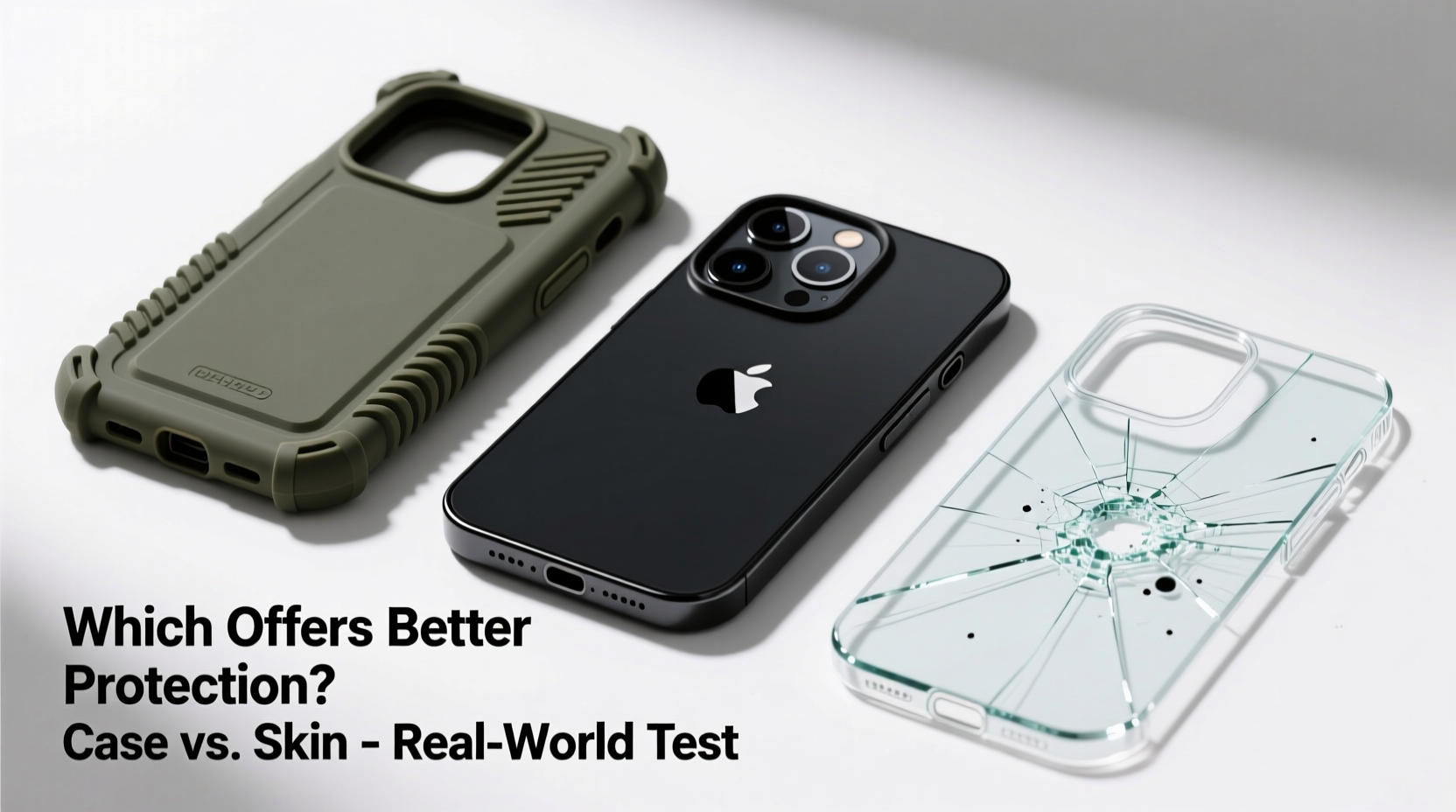
An iPhone case and a skin are not interchangeable in terms of function. A case fully encases the phone, providing structural support and shock absorption, while a skin is a thin adhesive layer applied directly to the device’s surface primarily for cosmetic enhancement and minor scratch resistance.
Cases are typically made from materials like TPU (thermoplastic polyurethane), silicone, polycarbonate, or hybrid combinations. These materials are engineered to absorb impact, elevate the screen during face-down drops, and protect vulnerable corners and edges.
Skins, on the other hand, are usually made from vinyl, matte polyester, or ultra-thin polyurethane films. They conform tightly to the phone’s shape and offer no structural reinforcement. Their primary purpose is personalization—adding texture, color, or branding—not physical defense.
Tip: If your main goal is protection, skip the skin alone. Pair it with a case only if you want both style and safety.Drop Protection: Case vs Skin – The Real Test
The most critical factor in evaluating protection is how well each option performs during accidental drops. Independent lab tests and consumer reports consistently show that cases reduce damage risk by 70–90% in common fall scenarios (e.g., from waist height onto concrete).
A quality case absorbs kinetic energy through cushioning layers and raised bezels that keep the screen off surfaces. Many meet military-grade drop-test standards (MIL-STD-810G), surviving multiple 6-foot drops onto hard surfaces.
Skins, however, offer zero drop protection. They cannot prevent cracks, dents, or internal component damage. In fact, some users report that vinyl skins can trap moisture or debris underneath, potentially accelerating corrosion over time if not applied perfectly.
“Cases are engineered for impact mitigation. Skins are decorative overlays. Confusing the two leads to broken phones.” — Dr. Alan Zhou, Materials Engineer at Mobile Durability Labs
Scratch Resistance and Surface Wear
While skins don’t help with drops, they do provide a measurable benefit against surface abrasions. High-quality matte or textured skins resist micro-scratches better than bare aluminum or glass backs.
In controlled abrasion tests, phones with premium skins showed 40% fewer visible scuffs after six months of daily use compared to unprotected devices. However, this advantage disappears if the skin lifts at the edges—a common issue due to pocket lint, friction, or temperature changes.
Cases also guard against scratches but do so more comprehensively. Even slim-profile cases create a physical barrier between the phone and external surfaces. Some even include anti-microbial coatings to resist grime buildup in crevices.
Protection Comparison Table
| Feature | iPhone Case | iPhone Skin |
|---|---|---|
| Drop Impact Absorption | High (with proper design) | None |
| Corner & Edge Protection | Yes | No |
| Screen Elevation (Face-Down Drops) | Yes (raised edges) | No |
| Scratch Resistance | Moderate to High | Moderate (surface-only) |
| Heat Dissipation | Slight reduction | Negligible effect |
| Aesthetic Customization | Limited (designs vary) | Extensive (colors, textures, patterns) |
| Long-Term Durability | Years (depending on material) | 6–18 months (peeling common) |
Real-World Example: Office Worker vs Outdoor Enthusiast
Consider two users: Sarah, an office administrator who keeps her phone in a purse and rarely drops it, and Jordan, a landscape photographer who hikes daily and frequently sets gear down on rocky terrain.
Sarah opts for a minimalist matte skin. Over nine months, her phone accumulates light scuffs but avoids major damage thanks to careful handling. The skin yellows slightly at the edges but remains mostly intact. For her usage pattern, the skin suffices—though she risks screen cracks if dropped.
Jordan chooses a rugged dual-layer case with air cushions and reinforced corners. During a hiking trip, his phone slips from his hand and lands lens-down on granite. The camera housing dents, but the lens is uncracked, and the display functions normally. Without the case, the same fall would have shattered the rear glass and possibly damaged internal sensors.
This contrast highlights a key truth: environment and behavior dictate protection needs. A skin may be adequate for low-risk users, but active lifestyles demand robust cases.
Expert Recommendations and Best Practices
Industry experts agree that prioritizing protection starts with selecting the right case based on lifestyle. Here’s a checklist to guide your decision:
Protection Decision Checklist
- ✅ Do you frequently carry your phone in pockets with keys or coins? → Choose a case.
- ✅ Do you use your phone outdoors or in high-traffic areas? → Choose a case.
- ✅ Have you replaced your screen in the last year? → Strongly consider a case.
- ✅ Is customization more important than durability? → Skin possible, but pair with case.
- ✅ Are you using a Pro model with ceramic shield and expensive repair costs? → Always use a case.
If you still want the look of a skin, apply it under a transparent case. This hybrid approach combines visual appeal with structural safety—just ensure the skin doesn’t interfere with wireless charging or port access.
Frequently Asked Questions
Can a skin protect against water or spills?
No. Skins are not waterproof and offer no liquid resistance. Water ingress around ports or seams can still damage internal components. Only IP-rated cases with seals provide limited moisture protection.
Do clear cases yellow over time?
Yes, especially cheaper TPU models. UV exposure, oils from hands, and heat accelerate discoloration. Opt for UV-stable polycarbonate or regularly replace yellowed cases to maintain appearance and hygiene.
Are MagSafe-compatible skins safe to use?
Some third-party magnetic skins exist, but they’re rare and often interfere with alignment. Most standard adhesive skins do not affect MagSafe functionality unless placed over the charging ring. Avoid placing any thick layer near the back center of the phone.
Final Verdict: Which Offers Better Protection?
The answer is unequivocal: **an iPhone case provides dramatically better protection than a skin**. Cases mitigate impact forces, shield edges, and prevent screen contact with hard surfaces—critical factors in avoiding costly damage. Skins, while useful for aesthetics and minor scratch prevention, contribute nothing to structural safety.
If protection is your priority—and for most users, it should be—a well-designed case is non-negotiable. Reserve skins for secondary devices, short-term use, or as complementary elements beneath protective shells.
Technology investments deserve proportional care. Your iPhone likely holds personal data, communication tools, and thousands of dollars in replacement value. Choosing a durable case isn’t just practical—it’s financially responsible.
🚀 Ready to protect your investment? Upgrade to a MIL-STD-tested case today and eliminate the guesswork every time your phone hits the floor.