Summer brings sunshine, humidity, and increased perspiration—all of which can turn a beautiful necklace into an irritant if it's not made with sensitive skin in mind. For millions of people, wearing the wrong metal or material leads to redness, itching, rashes, or even long-term contact dermatitis. But avoiding jewelry altogether isn’t the answer. With the right knowledge, you can enjoy stylish, season-appropriate necklaces that look stunning and feel comfortable—even during the hottest months.
This guide breaks down everything you need to know about selecting summer-safe necklaces: from understanding metal sensitivities to decoding labeling terms like “hypoallergenic” and “nickel-free.” You’ll also learn how sweat and sunscreen interact with jewelry, what materials stand up best to summer conditions, and how to maintain your pieces so they last year after year.
Understanding Skin Sensitivity and Jewelry Reactions
Skin reactions to jewelry are more common than many realize. The most frequent culprit is nickel, a metal used in alloys to strengthen cheaper jewelry. According to the American Contact Dermatitis Society, nickel allergy affects up to 18% of the U.S. population—and women are disproportionately affected. When nickel comes into prolonged contact with moist skin (especially in hot weather), it leaches out and triggers an immune response.
Other metals like cobalt, copper, and certain types of stainless steel can also cause irritation, though less frequently. Even gold, when alloyed with reactive metals, may provoke sensitivity in some individuals. Symptoms typically include redness, swelling, blistering, or dry, flaky patches where the jewelry touches the skin.
“Nickel remains the top cause of allergic contact dermatitis from jewelry. In summer, when sweat increases metal ion release, reactions become more likely and more severe.” — Dr. Lena Patel, Board-Certified Dermatologist
The risk doesn’t end with metals. Some synthetic coatings, dyes in fabric cords, or adhesives in glued components can also trigger reactions. That’s why choosing the right necklace involves more than just aesthetics—it’s a matter of health and comfort.
Best Materials for Sensitive Skin in Summer
When shopping for summer necklaces, prioritize materials known for their biocompatibility and resistance to corrosion. The following options are widely regarded as safe for sensitive skin:
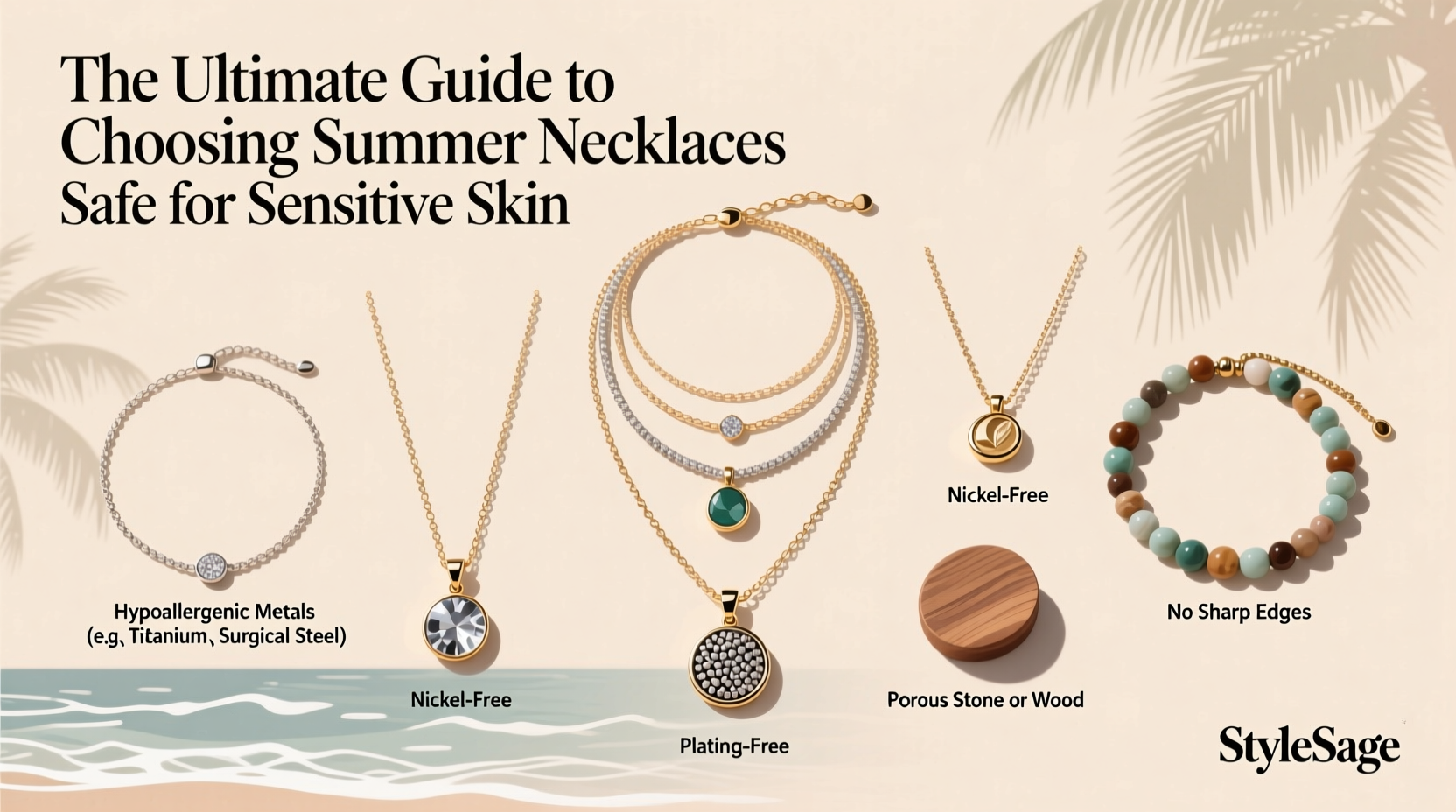
- Surgical-Grade Stainless Steel (316L): Resistant to tarnish and sweat, this medical-grade steel contains low levels of nickel bound tightly within its structure, minimizing leaching.
- Titanium: Lightweight, strong, and naturally hypoallergenic. Titanium does not contain nickel and is often used in body piercings for this reason.
- Pure Gold (18k or higher): While lower-karat gold often includes nickel or copper, 18-karat and above have higher gold content and fewer reactive alloys. White gold should be checked carefully—some versions still contain nickel unless labeled “nickel-free.”
- Platinum: Dense, durable, and naturally white, platinum is one of the least reactive precious metals. It’s ideal for long wear but comes at a higher price point.
- Polymer Clay or Ceramic Pendants: Non-metallic and non-conductive, these materials avoid metal contact entirely while offering unique artistic flair.
- Silicone or Medical-Grade Rubber Cords: Ideal for active lifestyles, these are sweat-resistant, lightweight, and free from latex or phthalates.
What to Avoid in Summer Necklaces
Certain materials may look appealing but pose significant risks in warm, humid conditions. These should be avoided if you have sensitive skin:
| Material | Risk Factor | Why It’s Problematic in Summer |
|---|---|---|
| Base Metal Alloys (e.g., nickel silver) | High | Nickel leaches faster when mixed with sweat and saltwater. |
| Brass or Bronze | Moderate to High | Can oxidize quickly, leaving green stains and irritating skin. |
| Low-Karat Gold (10k or 14k yellow/white) | Moderate | Often alloyed with nickel, copper, or zinc—common irritants. |
| Cheap Plating (e.g., gold-plated over nickel) | High | Wears off quickly, exposing reactive base metals. |
| Fabric or Leather Cords with Dyes | Moderate | Dyes and tanning agents can transfer to skin, especially when damp. |
Avoid any piece labeled vaguely as “fashion jewelry,” “metal alloy,” or “gold-toned.” These terms offer no transparency and often hide problematic components.
Step-by-Step Guide to Choosing a Safe Summer Necklace
Selecting the right necklace isn’t guesswork. Follow this five-step process to ensure comfort and confidence all season long:
- Identify Your Sensitivities: If you’ve had reactions before, note which metals or styles caused them. Patch testing by a dermatologist can confirm specific allergies.
- Research Materials: Prioritize titanium, surgical steel, platinum, or high-karat gold. Verify claims with product descriptions or manufacturer documentation.
- Inspect Construction: Check for smooth finishes, secure clasps, and absence of chipped plating. Poor craftsmanship increases exposure to base metals.
- Test in Real Conditions: Wear the necklace for a few hours on a warm day. Remove it if you feel itching or notice redness. Early detection prevents worsening reactions.
- Start Simple: Choose shorter chains (chokers or princess length) that minimize movement and friction against the skin.
Real-Life Example: A Beach Vacation Gone Wrong
Sophie, a 32-year-old teacher with mild nickel sensitivity, bought a delicate rose-gold pendant necklace before her Caribbean vacation. The listing claimed it was “hypoallergenic” and “perfect for daily wear.” Excited, she wore it every day—swimming, sweating, and applying sunscreen. By day four, a red, itchy rash formed along her collarbone. She removed the necklace and consulted a local clinic, where a nurse confirmed contact dermatitis from nickel exposure. Lab analysis later revealed the chain was only 0.5 microns thick in gold plating over a nickel-core alloy—a clear violation of EU safety standards.
After switching to a titanium chain, Sophie enjoyed the rest of her trip without issues. Her experience underscores the importance of verifying claims and understanding that “rose gold” doesn’t guarantee safety.
Care and Maintenance for Long-Term Comfort
Even the safest materials require upkeep. Sweat, chlorine, saltwater, and sunscreen residue accelerate wear and increase the risk of irritation over time.
- Clean your necklace weekly with mild soap and lukewarm water. Use a soft toothbrush to reach crevices.
- Rinse thoroughly and dry completely before storing. Moisture accelerates oxidation, even in resistant metals.
- Store separately in a soft pouch or lined box to prevent scratches that expose underlying layers.
- Remove necklaces before swimming, showering, or applying lotions and sprays.
Checklist: How to Buy a Summer-Safe Necklace
Use this checklist before making a purchase:
- ☑ Confirmed hypoallergenic material (titanium, platinum, surgical steel)
- ☑ No mention of nickel, brass, or unspecified alloys
- ☑ Secure clasp that won’t tug or rub
- ☑ Smooth finish with no rough edges or peeling plating
- ☑ Certificate of authenticity or material disclosure available
- ☑ Suitable length and weight for all-day comfort
- ☑ Return policy in case of skin reaction
Frequently Asked Questions
Can I wear gold-plated jewelry if I have sensitive skin?
Only if it’s plated over a hypoallergenic base like titanium or surgical steel. Most gold-plated jewelry uses nickel-containing alloys underneath. Even thick plating wears off over time, especially with summer exposure to sweat and salt.
Is sterling silver safe for sensitive skin?
Not always. Sterling silver is 92.5% silver and 7.5% other metals—often copper. While copper is less reactive than nickel, it can still cause reactions in rare cases. Additionally, silver tarnishes when exposed to sulfur in sweat, creating silver sulfide, which may stain or irritate skin.
What does ‘hypoallergenic’ really mean?
The term isn’t regulated in the U.S. jewelry industry. It suggests reduced risk but doesn’t guarantee safety. Always verify with specific material information. In Europe, the REACH regulation limits nickel release to 0.5 µg/cm²/week—look for compliance with this standard.
Final Thoughts
Choosing a summer necklace shouldn’t mean choosing between style and comfort. With rising awareness and better manufacturing standards, more brands now offer elegant, skin-safe options that thrive in heat and humidity. By understanding your sensitivities, knowing which materials to trust, and maintaining your pieces properly, you can wear your favorite necklaces confidently—from beach days to evening outings—without fear of irritation.
💬 Have a favorite summer necklace that’s gentle on your skin? Share your go-to brand or material in the comments and help others make safer, smarter choices.