
The smartphone market has evolved beyond screen size and camera specs—today’s users are asking a more practical question: which device truly fits into the rhythm of everyday life? The Samsung Galaxy Z Flip 5 and the iPhone 15 Plus represent two distinct philosophies in mobile design. One embraces the novelty and compactness of a foldable form factor; the other doubles down on traditional slab design with enhanced battery and display real estate. But when it comes to daily usability—commuting, multitasking, photography, and pocketability—one must ask: which design actually works better over time?
Design Philosophy: Compact Innovation vs. Familiar Power
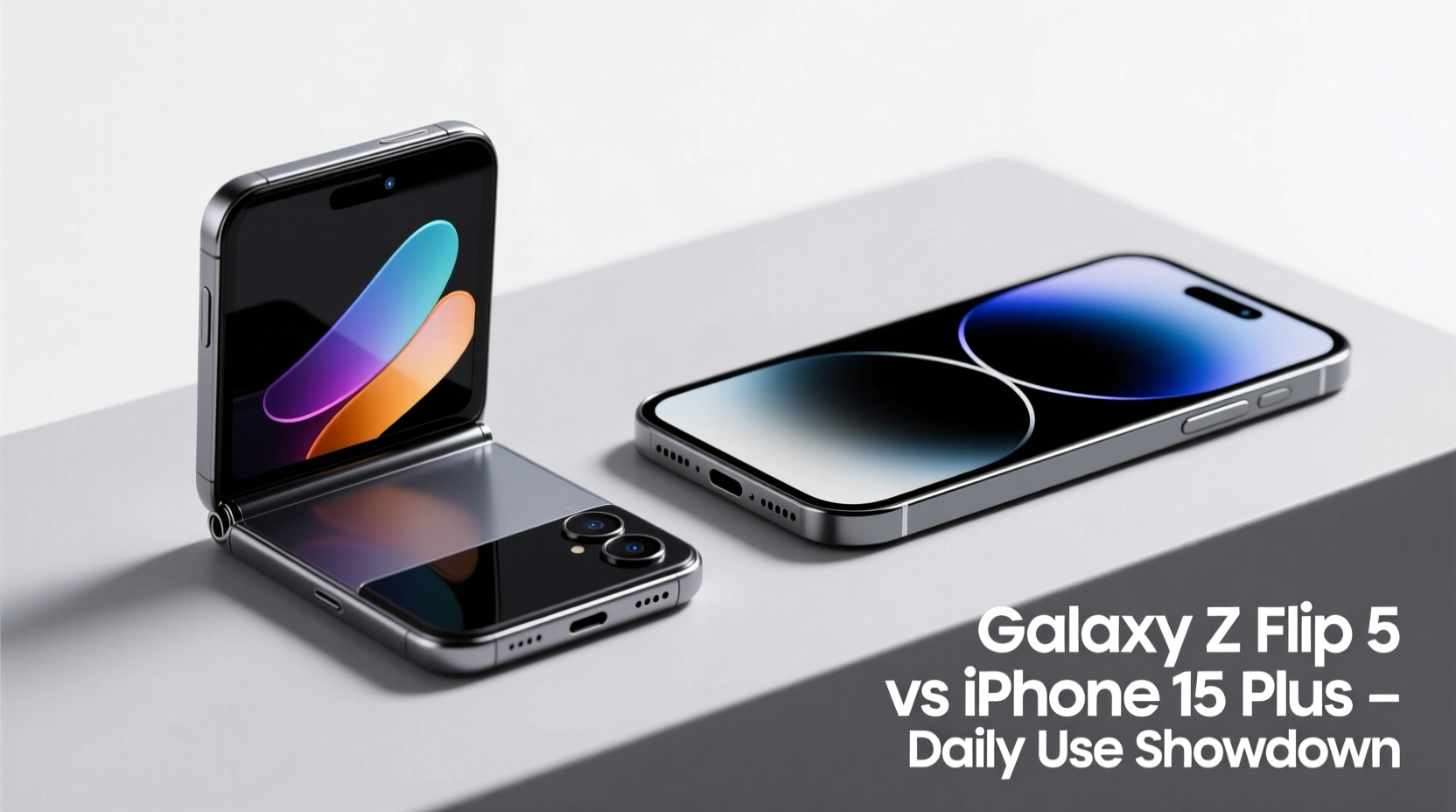
The Galaxy Z Flip 5 is built around the idea of reinvention. It folds vertically, transforming from a full-screen smartphone into a slim, credit-card-sized device that slips effortlessly into a jeans pocket or small purse. When closed, it displays useful information on its 3.4-inch external Cover Screen—time, notifications, music controls—without needing to unfold.
In contrast, the iPhone 15 Plus follows Apple’s long-standing approach: refine what already works. With a 6.7-inch Super Retina XDR display, it offers expansive viewing space ideal for videos, reading, and navigation. Its flat, durable design—backed by Ceramic Shield and aerospace-grade aluminum—is built for resilience and one-handed (though barely) use.
At first glance, the Flip 5 feels like the future. But innovation often comes at the cost of compromise. The crease in the main display, while less noticeable than previous models, is still present. The hinge mechanism, though improved with Samsung’s “waterdrop” design, adds thickness and potential failure points. Meanwhile, the iPhone 15 Plus avoids these concerns entirely—no moving parts, no folding mechanics, just consistent performance.
Tip: If pocket space is limited or you frequently switch bags, the Flip 5’s folded size gives it a clear advantage in portability.Daily Usability: Real-World Scenarios That Matter
To assess which phone suits daily use, consider how people actually interact with their devices throughout the day.
- Commute & Transit: On crowded subways or tight sidewalks, pulling out a large phone can be awkward. The Flip 5 unfolds only when needed, reducing fumbling and exposure to pickpockets. The iPhone 15 Plus, while sleek, requires both hands for most tasks and doesn’t collapse into anything smaller.
- Quick Tasks: Checking a text, dismissing an alarm, or pausing music can be done on the Flip 5’s outer screen. The iPhone 15 Plus demands full unlocking, even for minor interactions.
- Media Consumption: Watching TikTok or YouTube Shorts benefits from the Flip 5’s tall, narrow format. However, for longer videos or movies, the iPhone’s larger, brighter display with True Tone and HDR support provides a superior experience.
- Typing & Productivity: Despite Samsung’s improvements to the virtual keyboard on folded mode, touch-typing remains inefficient. Most users unfold the Flip 5 for messaging. The iPhone 15 Plus offers a wider keyboard layout, making typing faster and more accurate.
“Foldables excel in convenience but still lag in sustained productivity. For users who value quick access over extended use, they’re revolutionary. For others, they’re a novelty.” — David Lin, Mobile UX Researcher at TechInsight Labs
Performance and Battery: Sustaining Your Day
Under the hood, both phones are capable, but their endurance tells different stories.
The iPhone 15 Plus runs on Apple’s A17 Bionic chip—a powerhouse optimized for efficiency. Paired with iOS’s aggressive background management, it consistently delivers 1.5 to 2 days of moderate use on a single charge. This longevity reduces charging anxiety, especially during travel or back-to-back meetings.
The Galaxy Z Flip 5, powered by the Snapdragon 8 Gen 2 for Galaxy, performs admirably in apps and multitasking. However, its 4,300mAh battery struggles to last a full heavy-use day. Frequent folding/unfolding, dual-screen usage, and dynamic refresh rate adjustments drain power faster. Users often report needing a midday charge.
| Feature | Samsung Galaxy Z Flip 5 | iPhone 15 Plus |
|---|---|---|
| Battery Capacity | 4,300 mAh | 4,912 mAh (estimated) |
| Charging Speed | 25W wired, 15W wireless | 20W wired, MagSafe compatible |
| Average Battery Life | 12–14 hours (moderate use) | 18–24 hours (moderate use) |
| Processor | Snapdragon 8 Gen 2 (for Galaxy) | A17 Bionic |
| RAM | 8GB | 6GB |
While raw specs favor the Flip 5 on paper, real-world efficiency tilts toward the iPhone. iOS’s tight hardware-software integration allows fewer resources to achieve smoother performance. The Flip 5, running Android with Samsung’s One UI, offers more customization but at the cost of background bloat and inconsistent app optimization—especially for third-party apps not adapted for foldables.
Durability and Longevity: Can Foldables Last?
This is where many users hesitate. Foldable phones have come a long way, but they remain inherently more fragile than traditional smartphones.
The Galaxy Z Flip 5 uses Gorilla Glass Victus+ on the outer screen and an ultra-thin glass (UTG) layer on the inner display. The hinge is rated for 200,000 folds—roughly five years of average use. However, dust ingress remains a risk. While Samsung includes an improved seal, exposing the device to sandy beaches or gritty environments can compromise the mechanism over time.
The iPhone 15 Plus, with its IP68 rating (up to 6 meters for 30 minutes), is built for resilience. Ceramic Shield front, color-infused back glass, and precision-cut aluminum edges make it resistant to drops and spills. Millions of users attest to iPhones surviving multiple years of daily abuse—from coffee spills to accidental drops on concrete.
Tip: Always carry your Flip 5 in a protective case or pouch. Avoid placing it loose in bags with keys or coins that could scratch the screen.Repair costs further highlight the divide. Replacing the Flip 5’s main display can exceed $300—even with insurance. The iPhone 15 Plus screen repair is also expensive (~$279 out of warranty), but standard and widely available. Foldable repairs require specialized technicians and parts, limiting service options.
Mini Case Study: Two Users, Two Lifestyles
Alex, 28 – Urban Professional & Social Connector
Alex lives in downtown Chicago, commutes via train, and values style and convenience. She chose the Galaxy Z Flip 5 for its compact size and Instagram-ready look. She loves showing off the outer screen as a fashion accessory and using Quick Shot mode for candid photos without unfolding. However, after six months, she noticed slight pixelation near the crease and found herself carrying a power bank more often. Still, she wouldn’t switch—“It just feels more ‘me.’”
Jamal, 35 – Freelance Photographer & Traveler
Jamal needs reliability above all. He shoots in remote areas, edits on the go, and relies on GPS for navigation. He opted for the iPhone 15 Plus for its battery life, camera consistency, and compatibility with his existing ecosystem (MacBook, AirPods, iCloud). While he admires the Flip 5’s design, he finds it impractical for long shoots and harsh environments. “One drop could ruin my workflow,” he says. “I need something that just works.”
Camera Comparison: Flexibility vs. Consistency
Photography is a key differentiator. The Flip 5’s hinge allows for hands-free shooting—ideal for vlogging or group selfies. Its 12MP main and ultrawide cameras perform well in daylight, and the outer screen acts as a viewfinder when filming. However, low-light performance lags behind flagship standards, and video stabilization isn’t on par with Apple’s Cinematic Mode.
The iPhone 15 Plus features a 48MP main sensor with sensor-shift stabilization, 2x optical zoom, and advanced computational photography. Its Smart HDR and Night mode produce consistent results across lighting conditions. While it lacks the Flip 5’s flexible shooting angles, its image processing—especially in portrait and landscape modes—is unmatched in the Android world.
For social media creators who prioritize unique angles and instant sharing, the Flip 5 offers creative advantages. For professionals or those who want reliable, high-quality photos every time, the iPhone 15 Plus remains the safer bet.
Frequently Asked Questions
Is the Galaxy Z Flip 5 worth it for everyday use?
Yes—if you value compactness, style, and interactive outer screen features. However, be prepared for shorter battery life and higher fragility. It excels as a secondary or lifestyle phone rather than a rugged primary device.
Can the iPhone 15 Plus replace a foldable?
It depends on your needs. If you want a durable, long-lasting phone with excellent battery and camera, yes. But if you desire innovative form factors, self-standing video calls, or pocket-friendly design, no. The iPhone doesn’t offer folding functionality, and Apple shows no signs of entering the foldable market soon.
Which phone lasts longer over two years?
Historically, iPhones retain performance and resale value better. The iPhone 15 Plus will likely receive five years of iOS updates, while the Flip 5 is guaranteed only four years of Android updates. Additionally, physical wear on the hinge and crease may degrade the Flip 5’s usability over time, whereas the iPhone’s static design ages more predictably.
Action Checklist: Choosing the Right Phone for You
Use this checklist to determine which device aligns with your lifestyle:
- ✅ Do you often carry a small bag or tight pockets? → Flip 5 wins
- ✅ Do you need all-day battery without charging? → iPhone 15 Plus wins
- ✅ Do you film videos or take frequent selfies? → Flip 5 offers flexibility
- ✅ Do you live in a dusty or rugged environment? → iPhone 15 Plus is more resilient
- ✅ Do you rely heavily on one ecosystem (Apple/Android)? → Stay consistent
- ✅ Are you willing to pay a premium for novelty and design? → Flip 5 appeals to early adopters
- ✅ Do you keep phones for 3+ years? → iPhone 15 Plus offers better longevity
Final Verdict: Design That Suits Daily Use
The Samsung Galaxy Z Flip 5 is a triumph of industrial design—an elegant, futuristic device that turns heads and redefines pocketability. It’s ideal for urbanites, trendsetters, and those who value convenience in short bursts. But it’s not without trade-offs: battery limitations, durability concerns, and a learning curve for app adaptation.
The iPhone 15 Plus, meanwhile, represents peak refinement of the traditional smartphone. It doesn’t surprise, but it delivers—consistently. Its battery life, camera quality, and build durability make it a dependable companion for travelers, professionals, and anyone who prioritizes function over form.
So, which foldable design actually suits daily use? The answer isn’t about technology—it’s about lifestyle. If your day involves constant movement, tight spaces, and a need for quick interactions, the Flip 5’s compact intelligence shines. But if your routine demands endurance, reliability, and seamless integration, the iPhone 15 Plus remains the smarter choice for real-world resilience.
💬 Have you switched to a foldable or stuck with a classic design? Share your experience below and help others decide which phone truly fits life as it’s lived—not just marketed.








