For many watch enthusiasts, the chronograph is more than just a stopwatch—it's a symbol of precision engineering and functional elegance. Whether you're timing a lap, tracking a meeting, or measuring intervals in daily life, a properly adjusted chronograph enhances both utility and confidence. Yet, despite its widespread presence in mechanical and quartz timepieces, many owners underutilize or misconfigure this feature. Understanding how to adjust and use your chronograph correctly ensures accuracy, prolongs movement life, and maximizes your investment.
Understanding the Chronograph: More Than Just a Stopwatch
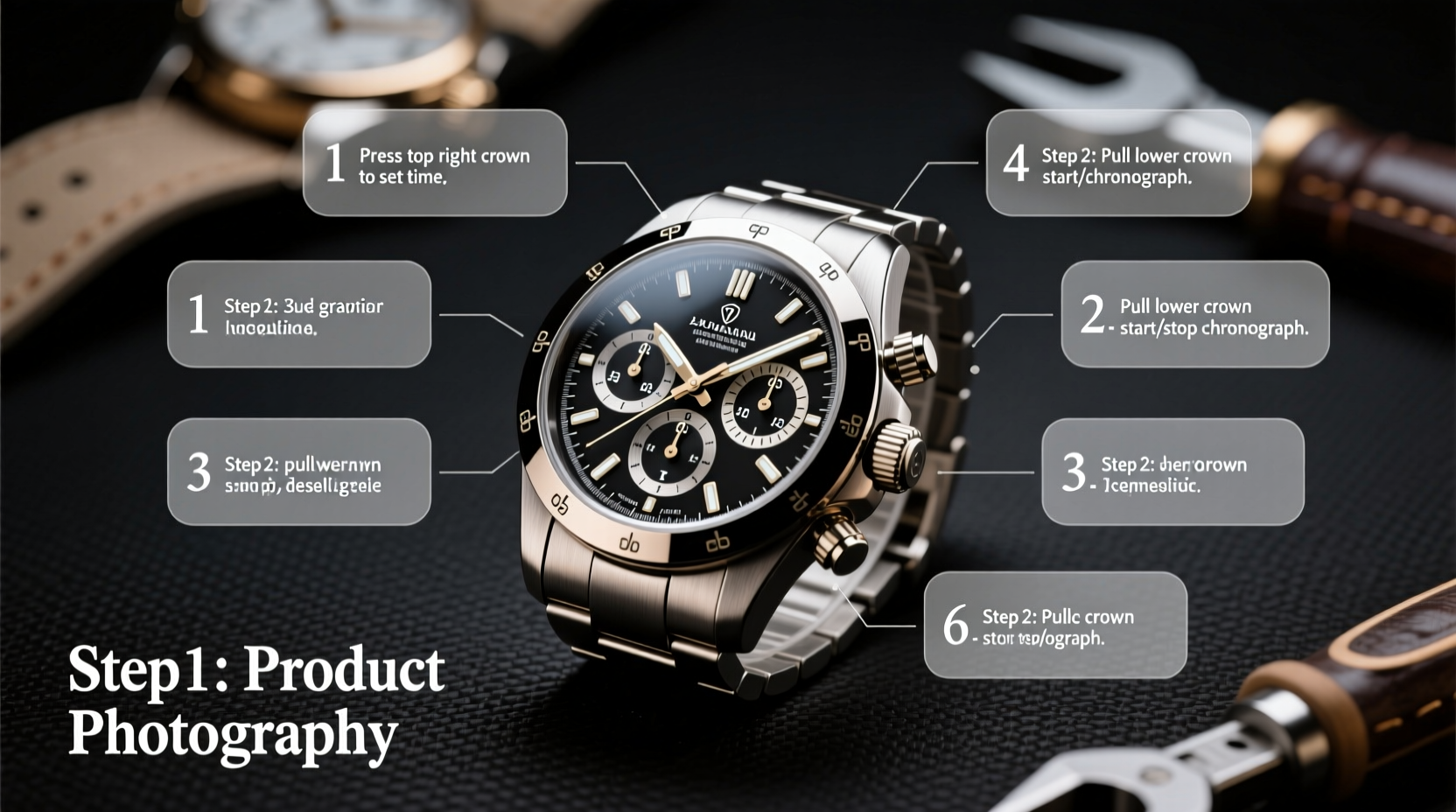
A chronograph is a complication that allows the user to measure elapsed time without interfering with the primary timekeeping function. Most chronographs feature two pushers flanking the crown: the top starts and stops the timer, while the bottom resets it. The dial typically includes subdials to track seconds, minutes, and sometimes hours accumulated during timing.
Unlike a simple analog watch, a chronograph integrates additional gears, levers, and springs—especially in mechanical models—making proper operation essential to avoid strain on the movement. Misuse, such as resetting while the chronograph is still running, can cause damage over time. Precision begins not just in reading the time, but in operating the mechanism with care.
“Chronographs are marvels of micro-engineering. Their reliability depends as much on user technique as on craftsmanship.” — Daniel Rivas, Watchmaker at Geneva Horology Institute
Step-by-Step Guide to Adjusting Your Chronograph Accurately
Adjusting your chronograph isn’t merely about pressing buttons—it involves preparation, calibration, and verification. Follow these steps to ensure accurate and safe operation.
- Ensure the chronograph hands are zeroed. Before starting any measurement, confirm that the central chrono second hand and subdial hands rest precisely at zero. If they don’t, realignment is necessary.
- Pull the crown to the time-setting position (if applicable). On some analog chronographs, especially older or high-complication models, you may need to enter a special mode to adjust the chronograph hands. Refer to your manual for specific instructions.
- Start the chronograph briefly. Press the top pusher to start the timer, then immediately stop it. This disengages the clutch and prepares the system for adjustment.
- Reset the chronograph. Press the bottom pusher to reset the hands. Observe whether all hands return cleanly to zero. If they don’t, your watch likely requires hand alignment.
- Access chronograph hand adjustment (via service mode or crown positions). Some modern chronographs allow limited user adjustment through multiple crown pulls or button combinations. For example, holding both pushers while pulling the crown might activate calibration mode.
- Align the central chrono hand. Using the top pusher, advance the central seconds hand to align perfectly with the 12 o’clock marker. This may require multiple short presses.
- Adjust subdial hands if accessible. Minute and hour totalizers are harder to adjust manually. Most require professional tools, but minor discrepancies can sometimes be corrected using sequential reset techniques.
- Test accuracy against a reference time source. Use an atomic clock or smartphone timer to verify that your chronograph measures exactly 30 seconds, 1 minute, or 5 minutes without deviation.
- Secure the crown and resume normal use. Once calibrated, push the crown back in and avoid unnecessary resets while timing is active.
Common Chronograph Mistakes and How to Avoid Them
Even experienced users make errors that compromise accuracy or longevity. Awareness of these pitfalls helps maintain optimal performance.
| Mistake | Consequence | Solution |
|---|---|---|
| Resetting while the chronograph is running | Can bend levers or damage the hammer mechanism | Always stop first, then reset |
| Overusing pushers with excessive force | Wears out seals and increases water resistance risk | Press gently and only when needed |
| Ignoring misaligned hands | Leads to inaccurate readings over time | Calibrate regularly or visit a watchmaker |
| Operating chronograph underwater | Pressure changes may force water past pusher gaskets | Never use pushers below water unless rated for saturation diving |
Real-World Example: Timing a Marathon Segment
Consider Sarah, a triathlon coach using her chronograph-equipped dive watch to evaluate athletes’ split times. During training, she noticed her watch consistently showed 2.5 seconds longer than the official electronic timer over a 500-meter swim segment. After investigation, she realized the central chronograph hand had drifted slightly off zero after a recent impact.
Following the adjustment steps outlined above, she accessed the calibration function on her model (a Seiko Presage with 8R46 movement) by pulling the crown to the third position and pressing both pushers simultaneously. She advanced the central hand in one-second increments until it aligned perfectly with the top index. Upon retesting, her measurements matched the digital timer within 0.1 seconds. This small correction improved her coaching accuracy and reinforced the importance of routine chronograph maintenance.
Essential Care Checklist for Chronograph Owners
To keep your chronograph functioning reliably, follow this practical checklist:
- ✅ Zero the chronograph hands monthly or after hard impacts
- ✅ Test timing accuracy weekly using a known time source
- ✅ Avoid pressing pushers too forcefully
- ✅ Never operate pushers underwater unless explicitly rated for it
- ✅ Service mechanical chronographs every 5–7 years to clean and lubricate the column wheel or cam system
- ✅ Store the watch with the chronograph reset (hands at zero)
- ✅ Keep the crown fully screwed down (if applicable) to maintain water resistance
Frequently Asked Questions
Why doesn’t my chronograph hand return exactly to zero?
This is known as “zero deviation” and is common in both mechanical and quartz chronographs. Small offsets (under 1/4 second) may be acceptable, but larger ones suggest the need for hand repositioning or service. In mechanical watches, this can result from wear in the reset hammer or spring fatigue.
Can I adjust the minute counter on my chronograph myself?
In most cases, no. The minute (and hour) totalizer subdials are linked to complex gear trains that require demagnetization, depthing tools, and timing machines to adjust safely. Attempting DIY corrections risks misalignment or damage. Leave this to a qualified watchmaker.
How often should I have my chronograph serviced?
Every 5 to 7 years for mechanical models; quartz chronographs every 6–8 years or when battery is replaced. Servicing includes cleaning the chronograph module, inspecting pusher seals, and testing pressure resistance.
Conclusion: Precision Is Within Reach
Mastering the chronograph function transforms your watch from a passive timepiece into an active instrument of precision. By understanding its mechanics, following correct adjustment procedures, and avoiding common errors, you preserve both functionality and value. Whether you're a pilot, athlete, engineer, or simply someone who appreciates fine craftsmanship, accurate chronograph use reflects attention to detail and respect for horological tradition.
💬 Ready to refine your timing skills? Pick up your watch today, verify its chronograph alignment, and share your experience or questions with fellow enthusiasts.