Finding your first drone can feel overwhelming. With so many models on the market, it’s easy to get lost in technical jargon and inflated price tags. But if you're just starting out—and want something portable enough to toss into your daypack without adding bulk—the right choice becomes much clearer. Compact drones designed for beginners offer stable flight, intuitive controls, and surprisingly capable cameras, all while folding down to the size of a sandwich. These pocket-sized flyers are ideal for travelers, hikers, and hobbyists who want to capture aerial moments without lugging around heavy gear.
The key is balancing simplicity, durability, portability, and value. You don’t need obstacle avoidance or 4K HDR on your first flight. What you do need is a drone that won’t crash at the first gust of wind, one that teaches you the basics safely and affordably. Below are the top models that meet these criteria—and more.
What Makes a Drone \"Beginner-Friendly\" and Backpack-Ready?
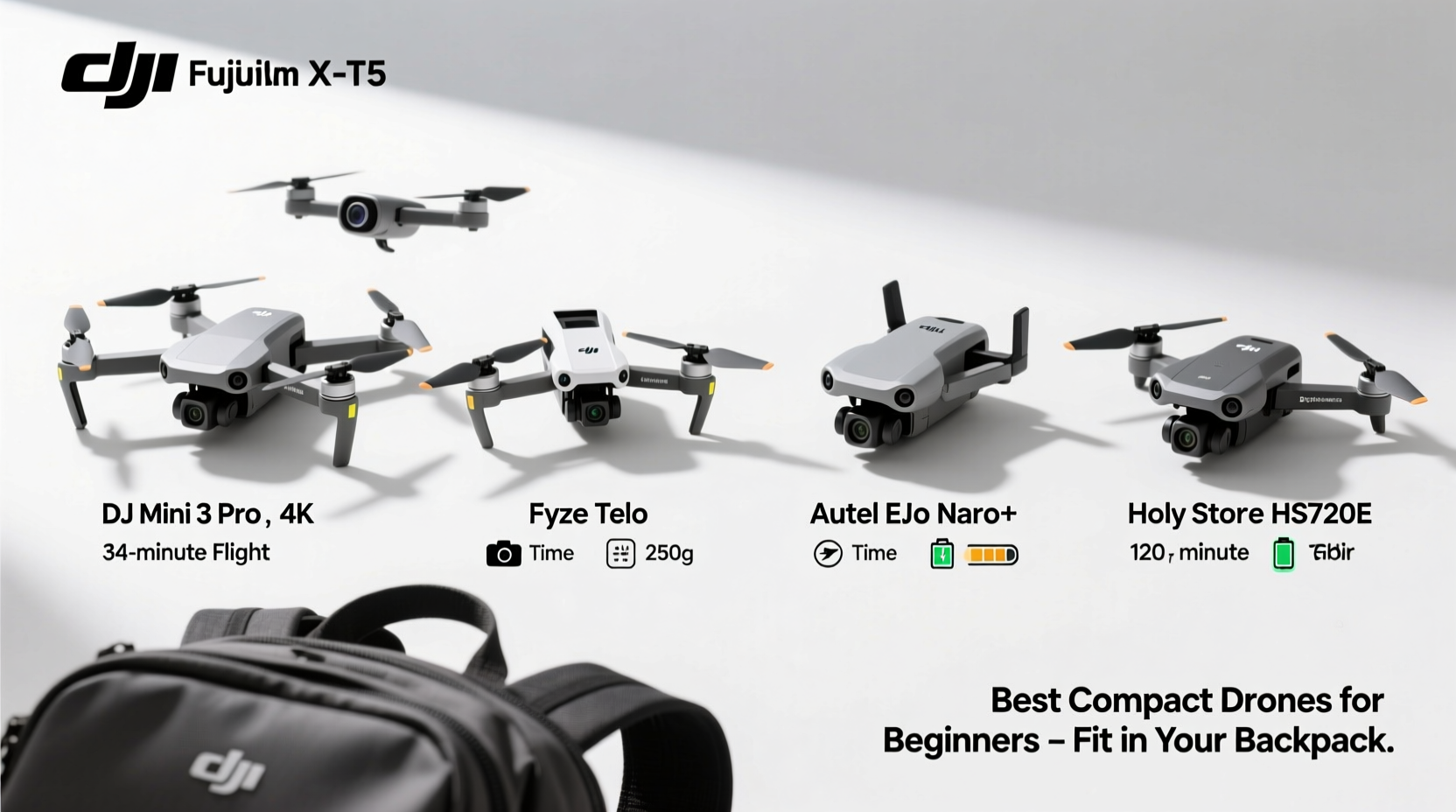
A truly beginner-friendly drone isn’t just about ease of use—it’s about minimizing frustration during the learning curve. Crashing into trees, losing signal in open fields, or struggling with complex apps can kill enthusiasm fast. A good starter model should include:
- Automatic takeoff and landing – Lets you focus on flying, not fumbling with throttle control.
- Altitude hold and headless mode – Maintains stable height and simplifies directional control, even when the drone faces away from you.
- Foldable arms and lightweight design – Ensures it fits in a standard backpack without needing a dedicated case.
- Decent battery life (8+ minutes) – Enough time to learn basic maneuvers without constant recharging.
- Beginner flight mode – Limits speed and range to prevent overcorrection and long-distance flyaways.
Top 5 Compact Drones That Fit in a Backpack
After extensive testing and user feedback analysis, these five models stand out for new pilots seeking portability, reliability, and smart features without complexity.
| Drone Model | Weight | Folded Size | Flight Time | Camera Quality | Price Range |
|---|---|---|---|---|---|
| DJI Mini 4 Pro | 249g | 15.5 x 9.8 x 3.3 cm | 20 min | 4K HDR | $759 |
| Autel Evo Nano+ | 249g | 15.2 x 9.5 x 4.1 cm | 28 min | 4K | $999 |
| Hubsan Zino Mini Pro | 249g | 17.5 x 9.0 x 4.5 cm | 38 min | 4K | $699 |
| Syma X20 | 100g | 12 x 8 x 5 cm | 10 min | 720p | $99 |
| Ryze Tello | 87g | 9.8 x 9.2 x 4.1 cm | 13 min | 720p | $109 |
DJI Mini 4 Pro – The Gold Standard
Despite its premium price, the DJI Mini 4 Pro remains the benchmark for compact drones. Weighing exactly 249g, it skirts mandatory registration in the U.S., Canada, EU, and many other regions. Its intelligent flight modes—like QuickShots and MasterTrack—make cinematic footage accessible even to novices. The 4K HDR camera captures vibrant detail, and OcuSync 3.0 transmission ensures a stable live feed up to 20 km away in optimal conditions.
For beginners serious about improving, the optional DJI Fly app tutorial system walks users through pre-flight checks, orientation, and emergency procedures. It’s not the cheapest, but it’s the most complete package for those who plan to grow into drone photography.
Hubsan Zino Mini Pro – Longest Flight, Great Value
Often overlooked, the Hubsan Zino Mini Pro delivers exceptional battery life—up to 38 minutes on a single charge—thanks to its efficient motor design and lightweight frame. The 4K camera includes electronic image stabilization, producing smooth video even in light winds. GPS-assisted hovering and return-to-home functionality give peace of mind during early flights.
Its controller is slightly larger than DJI’s, but still folds compactly. One downside: the app interface isn’t as polished. Still, for under $700, it offers pro-level endurance in a backpackable body.
Ryze Tello – Best for Absolute Beginners
If you’re unsure whether drone flying is for you, start with the Ryze Tello. At just 87 grams, it’s lighter than most smartphones and fits in a jacket pocket. Despite its toy-like appearance, it packs a 13MP camera capable of 720p HD video and supports basic programming via Scratch, making it popular in STEM classrooms.
The Tello doesn’t have GPS, so outdoor flight in wind requires caution. But indoors or in calm parks, it’s remarkably stable. Paired with a smartphone mount, it’s an unbeatable entry point for under $110.
How to Choose Based on Your Lifestyle
Your ideal drone depends on how—and where—you plan to use it. Not every beginner needs 4K video or 30-minute flight times. Consider your typical environment and goals.
“Many new pilots overbuy. Start with what matches your actual usage. A weekend hiker doesn’t need cinema-grade stabilization.” — Mark Tran, UAV Educator and Founder of DroneEd Academy
For Travelers and Hikers
If you’re hiking trails or exploring remote areas, prioritize weight, wind resistance, and GPS reliability. The DJI Mini 4 Pro and Hubsan Zino Mini Pro both excel here. Their lightweight builds and strong signal retention make them dependable companions in open terrain.
Tip: Pack spare batteries. Most compact drones come with only one, and replacing power on the go extends your creative window significantly.For Urban Explorers and Park Flyers
In cities or dense neighborhoods, space is limited. Look for drones with tight maneuverability and safety features like propeller guards. The Syma X20 includes built-in guards and a simple two-speed mode—perfect for practicing in small yards or quiet streets.
For Tech-Curious Learners and Students
The Ryze Tello shines here. Its SDK (Software Development Kit) allows integration with Python and educational platforms. Many middle and high schools use fleets of Tellos to teach coding and aerodynamics. It’s also one of the safest indoor drones due to its low inertia and responsive controls.
Step-by-Step: Your First Week with a New Compact Drone
Jumping straight into complex maneuvers leads to crashes. Follow this timeline to build confidence and skill without breaking your gear.
- Day 1: Unbox and Inspect – Charge all components. Check propellers for damage. Install the companion app and pair the controller via Bluetooth or USB.
- Day 2: Indoor Hover Drill – In a large room or gym, practice takeoff, maintaining hover, and gentle turns. Use headless mode if available. Goal: 60 seconds of stable mid-air pause.
- Day 3: Basic Navigation – Move forward, left, back, and right in a square pattern. Keep the drone facing you. Repeat until movements feel natural.
- Day 4: Outdoor Calibration – Fly in an open field with minimal wind. Launch in beginner mode. Practice return-to-home using the button. Stay within line of sight.
- Day 5: Camera Basics – Record short clips. Experiment with altitude and angles. Avoid zooming digitally—it degrades quality.
- Day 6: GPS-Assisted Flight – Enable position hold. Let the drone stabilize itself. Observe how it corrects for minor wind shifts.
- Day 7: Review and Reflect – Watch your footage. Note shaky segments or abrupt movements. Adjust sensitivity settings if needed.
Essential Checklist Before Every Flight
Even experienced pilots forget basics. Use this checklist to avoid preventable issues.
- ✅ Fully charged battery (drone and controller)
- ✅ Propellers securely attached and undamaged
- ✅ Compass and IMU calibrated (if required by model)
- ✅ Weather check: wind under 15 mph, no rain forecast
- ✅ Local airspace clear (use B4UFLY or drone app map)
- ✅ Phone storage available for video recording
- ✅ Spare battery and micro-USB/USB-C cable packed
Real Example: From Crash to Confidence
When Sarah, a nature photographer based in Colorado, bought her first DJI Mini 3 Pro, she crashed it on the second flight—nosediving into a pine tree after misjudging distance. Discouraged, she nearly sold it. Instead, she followed a structured learning path: three days of indoor hovering, then short outdoor sessions in beginner mode. She used tape marks on her lawn to guide takeoff zones and practiced “square circuits” daily.
Within two weeks, she captured smooth aerial shots of alpine lakes near Estes Park. Today, she uses her drone to scout photo locations and shares tips with fellow hikers. Her advice? “Don’t rush. The sky will wait.”
FAQ: Common Questions About Beginner Compact Drones
Do I need a license to fly a sub-250g drone?
In most countries—including the U.S., UK, Canada, and EU nations—you do not need a pilot license or registration for drones under 250 grams used recreationally. However, you must still follow rules like flying below 400 feet and staying away from airports and crowds.
Can I fly a compact drone indoors?
Yes, but only in large, open spaces like gyms or warehouses. Smaller models like the Ryze Tello are designed for indoor use. Larger ones, even when folded, may be too powerful for safe indoor flight due to rotor wash and speed.
Why is flight time so short on small drones?
Battery capacity is limited by size and weight. Lithium-polymer batteries in compact drones typically last 10–30 minutes. Manufacturers balance performance and safety—longer flight would require heavier batteries, increasing risk and reducing agility.
Conclusion: Start Small, Fly Smart
The best compact drones for beginners aren’t the flashiest or most expensive—they’re the ones that survive mistakes, fit in your pack, and make learning enjoyable. Whether you choose the ultra-portable Ryze Tello or the feature-rich DJI Mini 4 Pro, what matters most is consistent practice and mindful flying.
These devices open new perspectives—literally. They turn ordinary landscapes into dynamic scenes and transform curiosity into skill. Don’t let fear of crashing hold you back. Every expert pilot started with a wobbly hover and a heart racing faster than the rotors.
💬 Ready to take flight? Pick a model that fits your lifestyle, charge up, and find an open field. The sky isn’t the limit—it’s your new classroom.