When the temperature drops, your outerwear choices matter—not just for comfort, but for how you present yourself to the world. Two wardrobe staples often find themselves at odds in this seasonal debate: the knitted cardigan and the woven coat. One exudes cozy charm, the other polished authority. But when it comes to staying warm and looking sharp, which one truly wins?
The answer isn’t as simple as “wear more layers.” It depends on climate, occasion, material quality, and personal style. Let’s break down the science of insulation, the nuances of construction, and the realities of everyday wear to determine which garment earns its place in your winter rotation.
How Warmth Works: The Science Behind Insulation
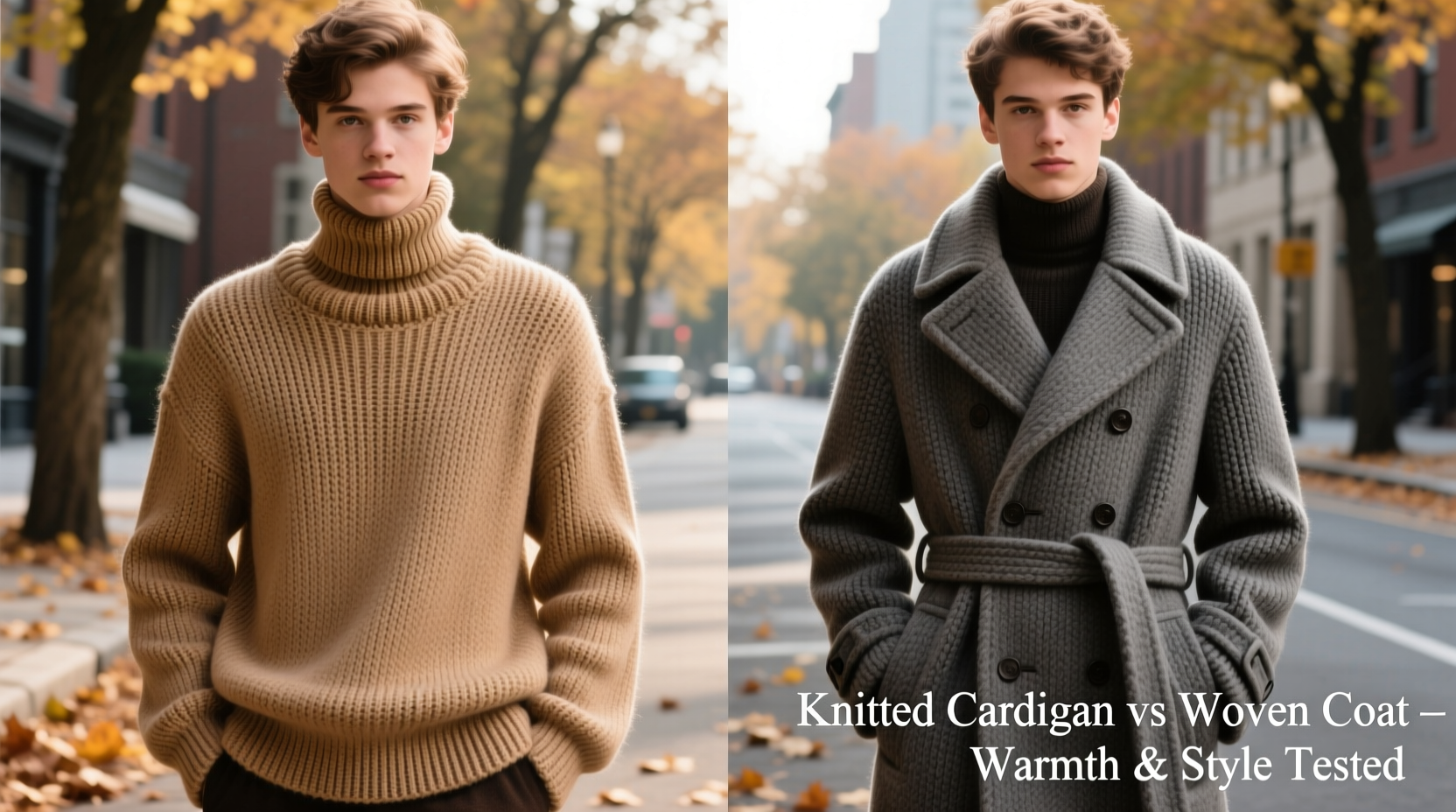
Warmth in clothing isn’t just about thickness—it’s about trapping body heat. Air is a natural insulator, and fabrics that create pockets of still air retain heat more effectively. This principle governs everything from down jackets to wool sweaters.
Knitted garments like cardigans rely on their structure: loops of yarn interlocked to form a flexible fabric with built-in air gaps. These micro-pockets trap warm air close to the skin, especially when made from high-loft fibers like merino wool or alpaca. The denser the knit, the better the insulation—though tight knitting can reduce breathability.
Woven coats, by contrast, are constructed from tightly interlaced threads forming a flat, stable fabric. Their warmth comes not from the weave itself but from added insulation—such as down, synthetic batting, or heavy wool blends—and wind-resistant finishes. A well-constructed trench or wool overcoat acts as a barrier against cold air, moisture, and wind chill.
“Layering is key, but the outermost layer determines how much heat you actually retain. A woven coat seals in warmth; a cardigan manages it.” — Dr. Lena Torres, Textile Scientist, MIT Materials Lab
Material Matters: Wool, Cotton, and Beyond
Not all cardigans and coats are created equal. Material choice dramatically affects both thermal performance and aesthetic appeal.
High-quality knitted cardigans made from 100% merino wool offer excellent warmth-to-weight ratio, natural moisture-wicking, and softness. Cashmere elevates luxury and warmth but requires careful maintenance. Cotton cardigans, while breathable, offer minimal insulation in cold weather and compress easily, losing their loft.
Woven coats shine in material versatility. A classic wool blend overcoat (typically 70–80% wool) provides structured warmth and resists pilling. Modern technical coats use synthetic shells with thermal linings, offering waterproofing and wind resistance. Down-filled coats provide exceptional warmth for extreme cold but lose efficiency when wet.
Tip: For maximum warmth, choose a cardigan with a shawl or button-up collar to cover the neck, and pair it with a high-neck base layer.Comparative Analysis: Cardigan vs Coat
| Feature | Knitted Cardigan | Woven Coat |
|---|---|---|
| Insulation Efficiency | Moderate (depends on fiber and knit density) | High (especially with lining or padding) |
| Wind Resistance | Low (air permeable) | High (tight weave, storm flaps, etc.) |
| Style Flexibility | High (can be dressed up or down) | Moderate (more formal, less versatile) |
| Durability | Medium (prone to pilling, stretching) | High (resists abrasion, holds shape) |
| Layering Compatibility | Excellent (easy to wear under or over) | Limited (bulky, best as outer layer) |
| Weather Protection | Poor (no rain or wind block) | Good to Excellent (depending on finish) |
Real-World Performance: A Mini Case Study
Consider Sarah, a graphic designer living in Portland, Oregon. Her daily routine includes walking 15 minutes to a café, working remotely, and attending occasional client meetings. In early winter, she alternated between a charcoal merino cardigan and a navy wool-blend topcoat.
On dry, calm days around 45°F (7°C), the cardigan was her favorite—comfortable, breathable, and easy to remove indoors without overheating. Paired with a turtleneck and scarf, it provided sufficient warmth during short commutes.
But during a week of rain and 30°F (-1°C) winds, the cardigan failed. It absorbed moisture, lost its insulating properties, and offered no protection against gusts. The woven coat, however, kept her dry and warm even during longer walks. Its structured shoulders and clean lines also gave her confidence in client-facing settings.
Sarah’s experience illustrates a broader truth: context dictates performance. The cardigan excels in controlled environments and mild conditions; the coat dominates in harsh weather and formal settings.
Style & Aesthetic: When Looking Good Matters
Fashion isn’t secondary—it’s functional. How a garment makes you feel affects how you carry yourself. Knitted cardigans offer texture, movement, and a relaxed elegance. They drape softly, complement casual and smart-casual outfits, and come in endless patterns—from Fair Isle to minimalist ribbing.
Woven coats project authority. A well-tailored overcoat in camel or black adds polish to any ensemble. The crisp lines, defined lapels, and structured silhouette convey intentionality. They’re the go-to for interviews, evening events, or anytime you want to appear put-together.
That said, modern fashion blurs these lines. Designers like Margaret Howell and A.P.C. have popularized oversized wool cardigans worn like light coats, while some technical parkas now feature tailored cuts suitable for urban wear.
Tip: Elevate a cardigan’s look with leather boots and slim-fit trousers. For coats, ensure proper sleeve length and shoulder fit—ill-fitting coats ruin even the best fabric.When to Choose Which: A Practical Checklist
Use this checklist to decide based on your needs:
- ✅ Choose a knitted cardigan if:
- You’re dressing for indoor-outdoor transitions
- You prefer soft, tactile fabrics
- You need layering flexibility
- The weather is dry and above 40°F (4°C)
- You’re aiming for a relaxed, artistic, or vintage-inspired look
- ✅ Choose a woven coat if:
- You face wind, rain, or sub-40°F temperatures
- You need long-lasting durability
- You’re dressing for professional or formal occasions
- You want weather protection without adding bulk underneath
- You value structure and silhouette in your wardrobe
FAQ: Common Questions Answered
Can a cardigan be as warm as a coat?
Only in limited conditions. A thick, heavyweight wool cardigan may match a light unlined coat in still, dry air—but it won’t resist wind or moisture. For true warmth parity, you’d need an impractically bulky knit. Coats win in real-world cold climates.
Are there warm cardigans suitable for winter?
Yes. Look for cardigans made from 100% wool (merino, Shetland, or Icelandic), with a dense cable or Aran knit. Wear them over a thermal base and under a shell jacket for added protection. They work best as mid-layers in winter, not outer layers.
Do woven coats always look too formal?
Not anymore. Many brands offer relaxed-fit wool coats, chore coats, or field jackets with woven construction that suit casual wear. Materials like cotton gabardine or recycled polyester blends keep the look modern and accessible.
Final Verdict: Balance Warmth and Style Intentionally
The question isn’t which is better overall—it’s which serves your life better right now. The knitted cardigan wins on comfort, versatility, and effortless style. The woven coat triumphs in protection, longevity, and sartorial impact.
The smartest wardrobes don’t choose one over the other—they use both. Layer a fine-gauge cashmere cardigan under a tailored wool coat for maximum warmth and depth of style. Or wear a chunky cardigan solo on crisp autumn evenings, then swap to a coat when winter bites.
Ultimately, great dressing is about adaptation. Understand what each garment does well, respect their limits, and combine them thoughtfully. That’s how you stay warm, look good, and move through the season with confidence.
💬 What’s your go-to winter layer? Do you swear by your cardigan or live in your coat? Share your experience and help others build smarter cold-weather wardrobes.