Shopping for Korean dresses online opens up a world of stylish, trend-forward designs—from minimalist silhouettes to romantic puff sleeves and tailored A-lines. But one major challenge remains: getting the right fit without trying anything on. Unlike Western brands, Korean fashion often follows a different sizing standard that can be smaller and more structured. Without proper guidance, it’s easy to end up with a dress that’s too tight in the shoulders or too short in the torso. The good news? With the right approach, you can shop with confidence and consistently find pieces that flatter your body type and align with your personal style.
Understand Korean Sizing Standards
Korean clothing sizes are generally based on body measurements rather than vanity sizing, which is common in some Western markets. This means a size label like “M” isn’t just an arbitrary designation—it corresponds directly to specific centimeter-based dimensions. However, even within Korea, there’s no universal standard across brands. One brand’s small might be another’s XS or even M, depending on their target demographic and design philosophy.
The most accurate way to navigate this inconsistency is by referencing the brand’s official size chart. These charts typically include key measurements such as:
- Chest (around the fullest part)
- Waist (narrowest point)
- Hips (widest point)
- Shoulder width (from edge to edge)
- Sleeve length
- Total length (from shoulder to hem)
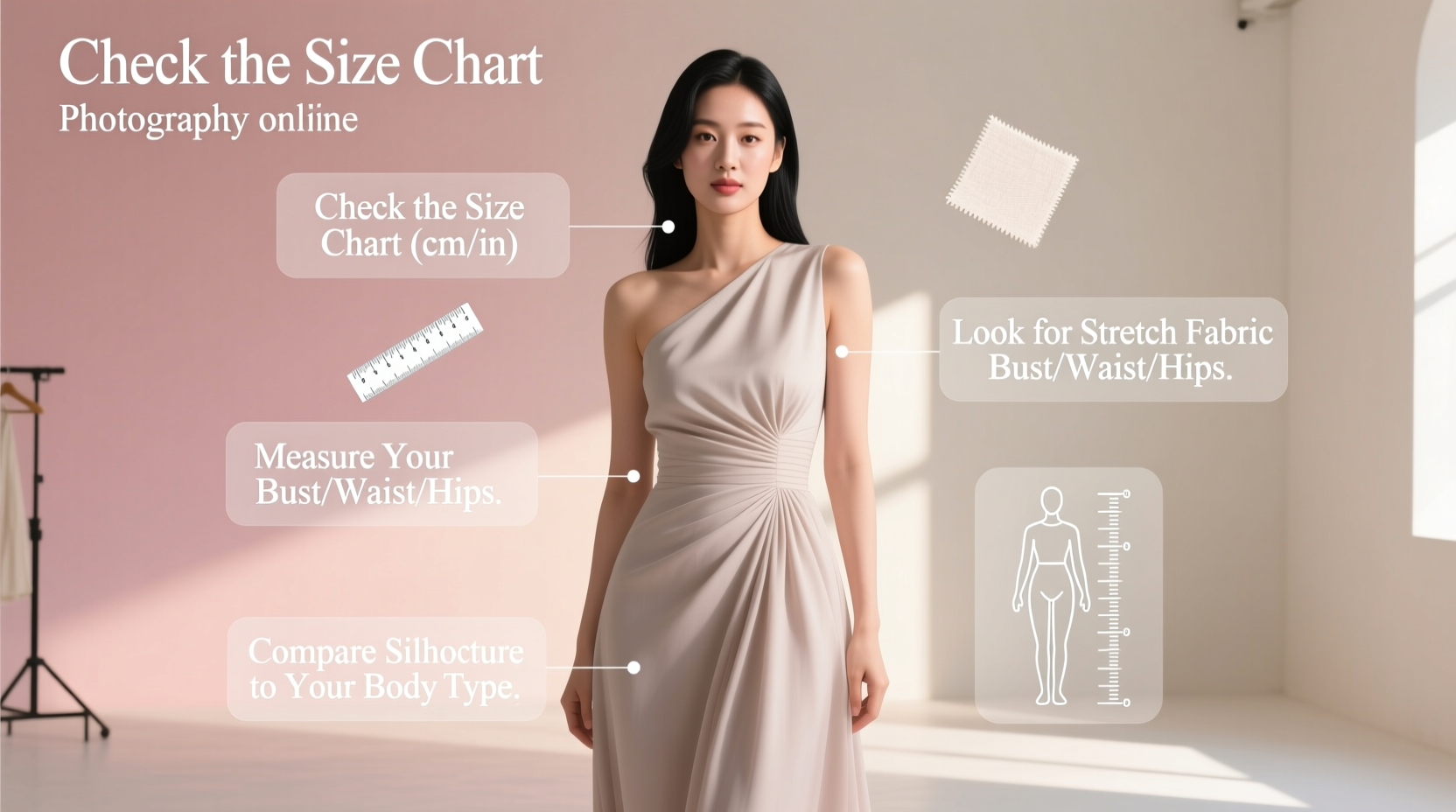
Always measure yourself using a soft tape measure while wearing minimal clothing. Compare your numbers directly to the size chart—not to your usual U.S., EU, or UK size.
Tip: Measure yourself in front of a mirror to ensure the tape is level and not twisted.Use a Step-by-Step Measurement Guide
To avoid guesswork, follow this precise method for measuring your body:
- Chest: Wrap the tape around the fullest part of your bust, keeping it parallel to the floor.
- Waist: Find your natural waistline (usually above the navel and below the ribcage) and measure snugly around it.
- Hips: Stand with feet together and measure around the widest part of your hips and buttocks.
- Shoulder Width: From the outer edge of one shoulder to the other, across the back.
- Arm Length: From the shoulder seam down to the wrist bone, with arm slightly bent.
- Dress Length: Decide how long you want the dress to fall (knee, midi, ankle), then measure from your shoulder down to that point.
Record these numbers once and keep them saved in your phone or notes app. You’ll use them every time you shop.
Compare International Size Charts with Real Data
To illustrate how Korean sizes differ from Western equivalents, here’s a comparison table based on average industry standards:
| U.S. Size | Bust (inches) | Waist (inches) | Hips (inches) | Korean Size | Typical Fit Note |
|---|---|---|---|---|---|
| 2 | 32 | 24 | 34 | 33 | Fitted; may run tight in shoulders |
| 4 | 33 | 25 | 35 | 44 | True to size for petite frames |
| 6 | 34 | 26 | 36 | 55 | Narrow cut; check sleeve openings |
| 8 | 36 | 28 | 38 | 66 | May require sizing up for broader backs |
| 10 | 38 | 30 | 40 | 77 | Often runs short in torso; verify length |
Note: These are general guidelines. Always cross-check with the specific brand’s size chart before purchasing.
Read Reviews Like a Pro
Customer reviews are among the most valuable tools when shopping online. They offer real-world insights into how a dress fits on different body types. Look beyond star ratings and focus on written feedback that includes details such as:
- \"Runs small—I recommend sizing up.\"
- \"Great length for someone 5'2\", but might be too short for taller wearers.\"
- \"Tight across the chest, even though my waist fits perfectly.\"
Pay attention to reviewers who mention their height, weight, and usual size. If multiple people say the same thing—especially about fit issues—you should take it seriously.
“Fit consistency varies widely across Korean indie brands. I always check at least five reviews mentioning fit before adding anything to cart.” — Lena Park, Seoul-based stylist and fashion consultant
Avoid Common Fit Mistakes: Do’s and Don’ts
Making assumptions about size or skipping measurement checks leads to returns and disappointment. Use this checklist to stay on track:
| Do | Don't |
|---|---|
| Measure yourself before every major purchase | Assume your U.S. size translates directly |
| Check model stats in product photos | Ignore comments about fabric stretch |
| Look for garments with adjustable features (e.g., tie waists, elastic backs) | Buy based solely on price or aesthetics |
| Contact customer service if size charts lack detail | Order multiple sizes without checking return policies |
Real Example: How Sarah Found Her Perfect Fit
Sarah, a 5’4” shopper based in Vancouver, loved the look of a high-neck smocked midi dress from a popular Korean boutique. Her usual U.S. size is 6, so she initially considered ordering the Korean 55. But instead of guessing, she measured her bust (34”), waist (27”), and hips (37”). She noticed the 55 had a listed waist of 26.5”—tighter than her natural measurement.
She scrolled through reviews and found three customers with similar stats saying they sized up to 66 for comfort. The fabric was non-stretch linen blend. Based on this, Sarah chose the 66. When the dress arrived, it fit beautifully—snug enough to define her shape but comfortable enough to wear all day. By combining measurements, fabric awareness, and peer feedback, she avoided a common misstep.
Your Action Checklist Before Buying
Before clicking “Add to Cart,” go through this quick verification process:
- ✅ Measured your current chest, waist, hips, and shoulder width
- ✅ Located the brand’s detailed size chart (not just S/M/L)
- ✅ Compared your measurements to the garment’s actual dimensions
- ✅ Checked whether the fabric has stretch or structure
- ✅ Read at least 3–5 customer reviews focusing on fit
- ✅ Verified the return policy in case of sizing issues
- ✅ Considered sizing up if between sizes or buying structured styles
Frequently Asked Questions
Do Korean dresses run small?
Generally, yes—especially in the shoulders, chest, and sleeve openings. Many Korean brands design for petite and slim East Asian body types, which can result in narrower cuts. Even if your waist fits, the upper body might feel restrictive. Always consult the size chart and consider sizing up for comfort.
How do I know if a dress will be too short?
Korean fashion often favors shorter hemlines, particularly in mini and above-the-knee styles. Check the product description for total length in centimeters. Convert it to inches (divide cm by 2.54) and compare it to your preferred dress length. For example, a 75cm dress is about 29.5 inches long—which may hit mid-thigh on someone 5’5” or higher.
What should I do if a store doesn’t have a size chart?
If no size chart is available, proceed with caution. Contact customer support and ask for exact garment measurements. If they can’t provide them, it’s safer to avoid the purchase unless you’re already familiar with the brand’s fit. Lack of transparency often indicates inconsistent quality control.
Final Thoughts: Shop Smarter, Not Harder
Finding the perfect fit when buying Korean dresses online isn’t about luck—it’s about preparation. By understanding sizing conventions, measuring accurately, analyzing reviews, and respecting fabric behavior, you transform uncertainty into confidence. Each purchase becomes less of a gamble and more of a curated addition to your wardrobe.
The most stylish women aren’t those who buy the most, but those who wear what fits them best. Take the time to get it right. Your next favorite dress is out there—waiting to fit you flawlessly.
💬 Have a fit tip or success story with Korean fashion? Share it in the comments and help others shop smarter!