In an age where screens dominate our evenings—from smartphones to laptops—many people struggle to fall asleep or stay asleep. One popular solution that has gained traction in recent years is wearing blue light glasses at night. Marketed as a way to protect your circadian rhythm and enhance sleep, these amber- or red-tinted lenses claim to block the short-wavelength blue light emitted by digital devices. But do they actually work? And if so, under what conditions? This article examines the science behind blue light exposure, evaluates clinical evidence on blue light glasses, and offers practical guidance for those considering them as part of their nighttime routine.
The Science of Blue Light and Circadian Rhythm
Light plays a central role in regulating the body’s internal clock, known as the circadian rhythm. This biological system governs when we feel alert and when we feel sleepy, largely through the production of melatonin—a hormone secreted by the pineal gland in response to darkness.
Blue light, which falls between 460 and 480 nanometers on the visible spectrum, is particularly effective at suppressing melatonin. Natural sunlight is rich in blue wavelengths, signaling to the brain that it's daytime and time to be awake. However, artificial sources such as LED screens, fluorescent bulbs, and even energy-efficient lighting also emit substantial amounts of blue light.
When exposed to this type of light during evening hours, the brain may interpret it as daylight, delaying melatonin release and pushing back the onset of sleepiness. Studies have shown that just two hours of screen use before bedtime can suppress melatonin by up to 23%, disrupt sleep architecture, and reduce overall sleep efficiency.
“Evening exposure to blue-enriched light can shift the circadian clock by up to three hours, similar to jet lag.” — Dr. Charles Czeisler, Harvard Medical School
How Blue Light Glasses Work
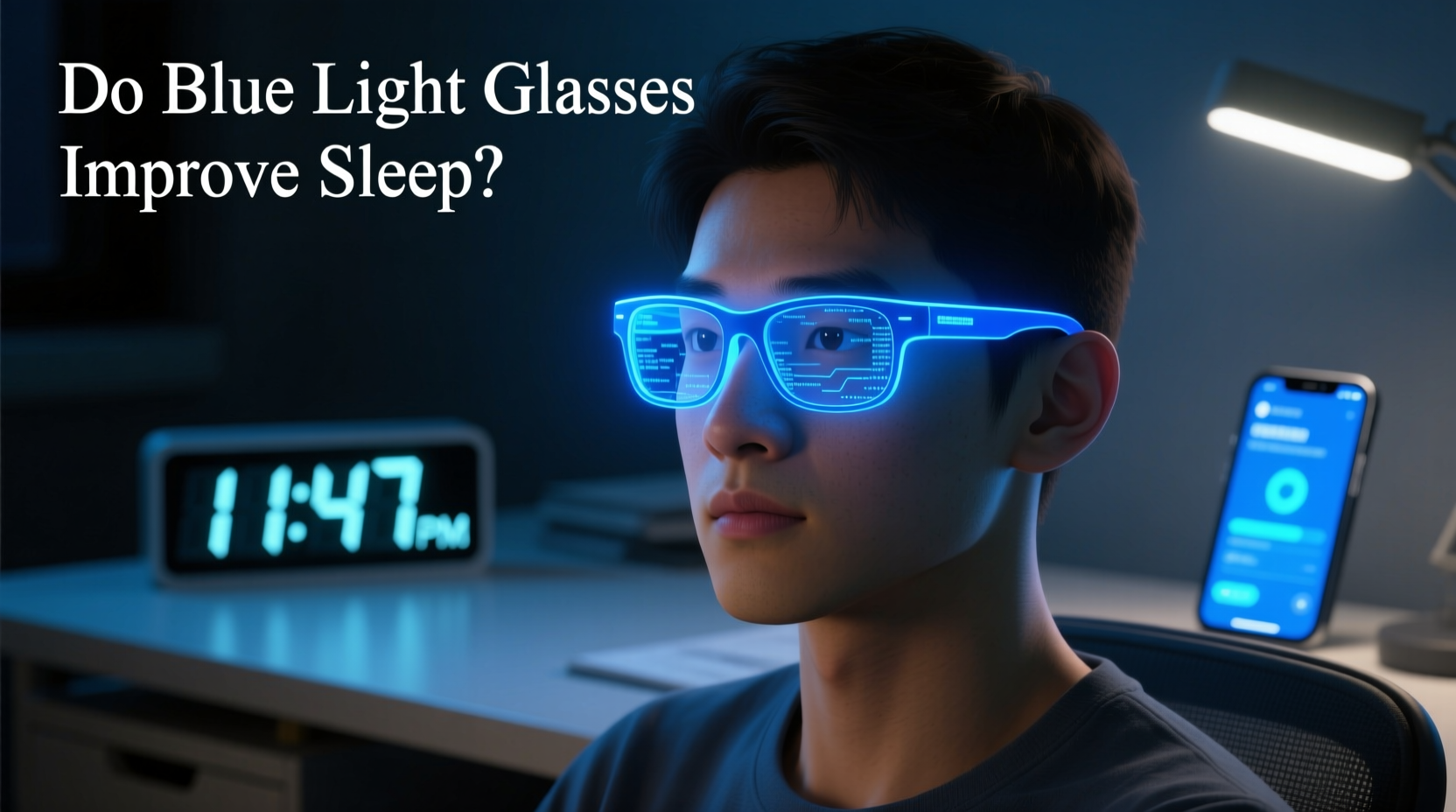
Blue light blocking glasses are designed to filter out specific wavelengths of light, primarily in the blue range. Most models use tinted lenses—typically amber, orange, or red—that absorb or reflect blue light before it reaches the retina. The idea is simple: by reducing blue light exposure in the evening, these glasses help preserve natural melatonin production and support a smoother transition into sleep.
Not all blue light glasses are created equal. Some only block a portion of blue light (e.g., 10–30%), while higher-quality versions can filter over 90% of blue wavelengths, especially those below 500 nm. The effectiveness depends on both lens material and tint density. Red-tinted lenses tend to block more blue and green light than amber ones, potentially offering greater protection for melatonin levels.
Tip: For maximum effect, wear blue light glasses at least 1–2 hours before bedtime, especially if you're using screens.Evidence: Do They Actually Improve Sleep?
The scientific literature presents a mixed but generally positive picture regarding the efficacy of blue light glasses.
A 2017 study published in Chronobiology International found that participants who wore amber-tinted glasses for three hours before bed experienced significant improvements in sleep quality, falling asleep faster and reporting higher subjective sleep satisfaction compared to a clear-lens control group. Another trial involving shift workers showed that those using blue-blocking glasses during night shifts had better daytime sleep duration and quality.
However, not all studies show strong effects. A 2020 randomized controlled trial from the University of Manchester concluded that while blue light filtering did slightly increase melatonin levels, the real-world impact on sleep latency and total sleep time was minimal when compared to behavioral changes like reducing screen brightness or avoiding devices altogether.
The consensus among sleep researchers is that blue light glasses can be beneficial—but they are most effective when used as part of a broader sleep hygiene strategy. They don't replace good habits; rather, they complement them.
Who Benefits Most?
- Night-shift workers: Those exposed to artificial light during biological night may benefit significantly from blocking blue wavelengths to maintain melatonin rhythms.
- Heavy evening screen users: People who must work late on computers or wind down with phones/tablets may see measurable gains in sleep onset and quality.
- Individuals with delayed sleep phase syndrome: Those who naturally fall asleep very late may use blue-blocking glasses to advance their sleep schedule.
Practical Guide: Using Blue Light Glasses Effectively
Simply owning a pair of blue light glasses isn’t enough. To get real results, timing, consistency, and context matter. Here’s how to integrate them effectively into your nightly routine.
Step-by-Step Implementation
- Determine your evening light exposure: Track when you start using screens or bright indoor lights. This helps identify the optimal time to begin wearing glasses.
- Choose the right lens type: Opt for amber or red-tinted lenses that block at least 80% of blue light below 500 nm. Look for third-party lab testing data if available.
- Wear them consistently: Put on the glasses 1–2 hours before bedtime, regardless of screen use. Consistency strengthens circadian entrainment.
- Pair with other sleep-friendly behaviors: Dim overhead lights, avoid scrolling in bed, and keep devices on night mode with reduced brightness.
- Monitor your sleep: Use a journal or wearable tracker to assess changes in sleep onset, wake-ups, and perceived restfulness over 2–4 weeks.
| Feature | Recommended | Avoid |
|---|---|---|
| Lens Color | Amber or red | Clear or lightly tinted |
| Blue Light Blocking Range | Blocks >80% below 500 nm | No specification or unverified claims |
| Wear Time Before Bed | 1–2 hours minimum | Only during screen use or sporadically |
| Additional Features | Anti-glare, UV protection | Uncomfortable frames or poor fit |
Real-World Example: Sarah’s Experience
Sarah, a 34-year-old graphic designer, routinely worked on her laptop until 10:30 PM. Despite feeling tired, she often lay awake until midnight or later. After reading about blue light’s effects, she purchased a pair of red-tinted blue light blocking glasses and committed to wearing them every evening starting at 8:30 PM.
Within the first week, she noticed she felt sleepier earlier. By the second week, she was consistently falling asleep by 10:45 PM. Over a month, her average sleep duration increased from 6.2 to 7.4 hours, and she reported waking up less groggy. While she also dimmed her living room lights and stopped checking emails in bed, she credited the glasses with helping her “mentally disconnect” from work-mode and signal to her body that it was time to wind down.
Sarah’s case illustrates how blue light glasses can serve as both a physiological aid and a behavioral cue—a ritual that reinforces healthy boundaries around technology use.
Common Misconceptions and Limitations
Despite growing popularity, several myths surround blue light glasses:
- Myth: Any yellow-tinted glasses block blue light. Reality: Many fashion-oriented \"blue light\" glasses only filter a small fraction of harmful wavelengths. True effectiveness requires spectral filtering data.
- Myth: Blue light glasses cure insomnia. Reality: They address one environmental factor among many. Insomnia often involves stress, medical conditions, or poor sleep habits beyond light exposure.
- Myth: Screen settings (like Night Shift) are just as effective. Reality: Software filters reduce blue light but rarely eliminate it completely. Physical filters (glasses) offer more consistent and comprehensive protection.
Frequently Asked Questions
Can I wear blue light glasses during the day?
While not harmful, wearing them during daylight hours may reduce alertness and cognitive performance, as blue light plays a crucial role in maintaining daytime wakefulness and mood regulation. Reserve them for evening use unless advised otherwise by a healthcare provider for specific conditions.
Are there side effects to wearing blue light glasses?
Most users report no side effects. Some notice temporary color distortion due to lens tint, which typically resolves after a few days of adaptation. Rarely, individuals may experience mild eye strain if the glasses aren’t properly fitted.
Do blue light glasses work for children and teens?
Preliminary evidence suggests yes. Adolescents are especially vulnerable to circadian disruption due to natural phase delays and high device usage. A 2021 pilot study found that teens wearing amber lenses for two hours before bed fell asleep 20 minutes earlier on average. However, parental supervision and limits on screen time remain essential.
Action Checklist: Optimizing Evening Light Exposure
- ✅ Assess your current screen use after 7 PM
- ✅ Invest in high-quality blue light blocking glasses (amber or red tint)
- ✅ Begin wearing glasses 1–2 hours before target bedtime
- ✅ Reduce room lighting intensity in the evening
- ✅ Enable night mode on all devices
- ✅ Avoid bright overhead lights or white LEDs in bedrooms
- ✅ Maintain a consistent sleep schedule, even on weekends
Final Thoughts: A Tool, Not a Cure-All
Blue light glasses at night can indeed improve sleep quality—for some people, under the right conditions. They are not a magic fix, nor a substitute for sound sleep hygiene. But when used thoughtfully and consistently, they can serve as a valuable tool in managing modern light exposure and supporting natural melatonin rhythms.
The key lies in integration: pairing glasses with behavioral changes like limiting screen time, creating a relaxing pre-sleep environment, and maintaining regular sleep-wake cycles. For those struggling with delayed sleep onset or frequent nighttime awakenings linked to evening tech use, trying blue light glasses could be a low-risk, high-reward experiment.
“The best sleep aid isn’t always a pill or a gadget—it’s aligning your environment with your biology.” — Dr. Rebecca Robbins, Sleep Scientist, Brigham and Women’s Hospital💬 Have you tried blue light glasses? Did they make a difference in your sleep? Share your experience in the comments and help others decide whether they’re worth incorporating into their nightly routine.