When the Nokia 6 and Samsung Galaxy J7 Pro were released in 2017, both entered a fiercely competitive mid-range smartphone market with promises of solid performance, clean software, and reliable build quality—all at an accessible price point. Over time, consumer preferences evolved, but these two devices remained benchmarks for what a \"worthwhile\" budget phone should deliver. Today, looking back through the lens of real-world usage, long-term reliability, and software support, one question stands out: which device actually provided more lasting value?
The answer isn’t just about specs on paper. It’s about daily usability, durability, update cycles, and how well each phone aged. This analysis dives deep into key areas—design, performance, camera, software, and post-purchase experience—to determine which of these once-popular contenders delivered the better return on investment.
Design and Build Quality: Substance vs Style
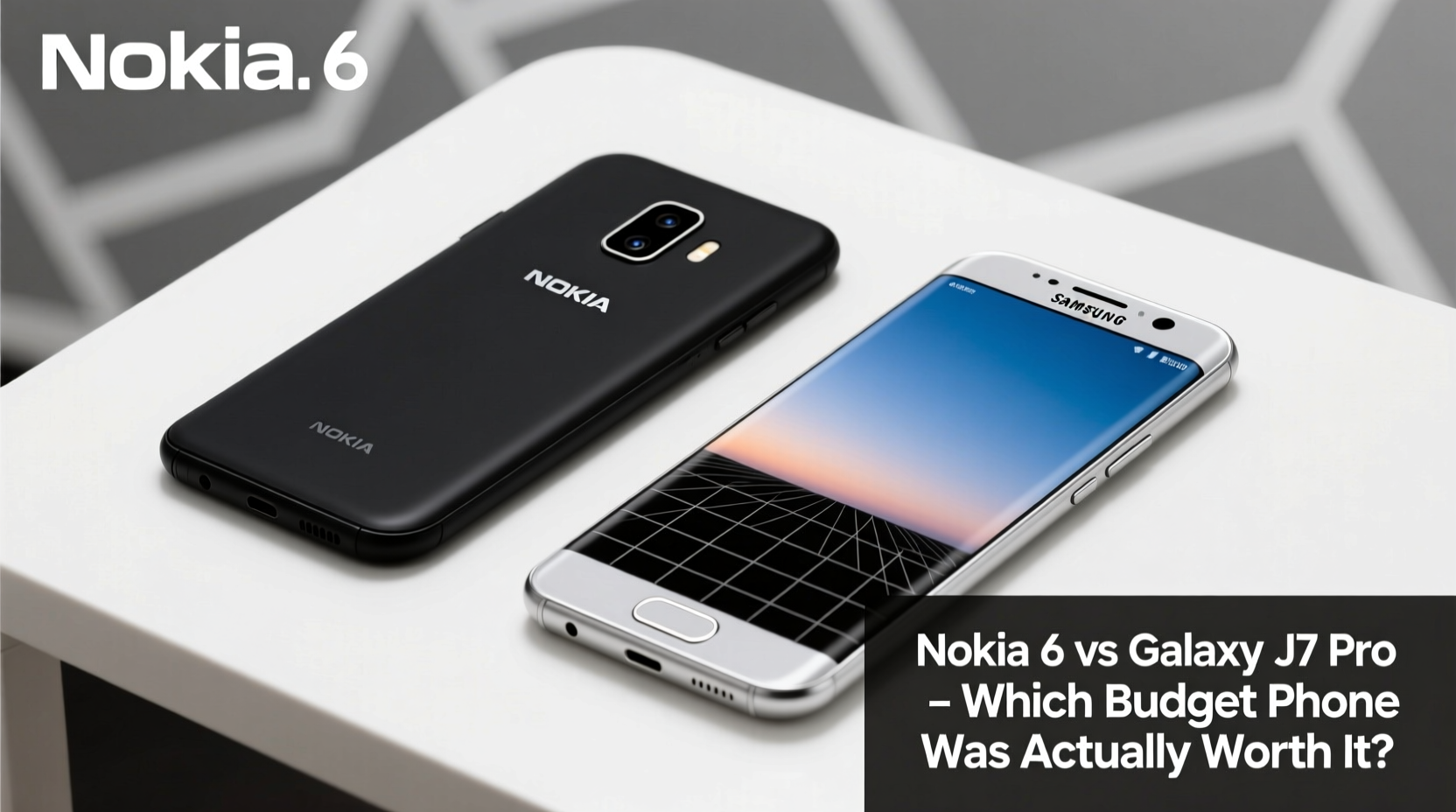
The Nokia 6 stood out immediately with its all-metal unibody construction, a rarity in the budget segment at the time. HMD Global revived the brand with a focus on durability and minimalist Scandinavian design. The result was a phone that felt premium in hand—solid, dense, and resistant to minor drops thanks to its reinforced aluminum frame.
In contrast, the Galaxy J7 Pro opted for a sleeker aesthetic with a glass front and plastic back, sandwiched in a metal frame. While visually appealing and lighter than the Nokia, the plastic body raised concerns about long-term resilience. Users reported creaking over time, and the glossy finish attracted fingerprints and scratches without a case.
Tip: When choosing a budget phone, prioritize build materials—metal or reinforced polycarbonate often outlasts flimsy plastics under daily wear.From a longevity standpoint, the Nokia 6’s ruggedness gave it an edge. Its IP52 splash resistance (in later variants) added another layer of practicality absent in the J7 Pro.
Performance and Hardware Comparison
Under the hood, both phones targeted similar audiences but took different approaches.
| Feature | Nokia 6 (2017) | Samsung Galaxy J7 Pro |
|---|---|---|
| Processor | Qualcomm Snapdragon 430 (8x 1.4 GHz Cortex-A53) | Exynos 7870 (8x 1.6 GHz Cortex-A53) |
| RAM | 3GB / 4GB (varies by region) | 3GB |
| Storage | 32GB (expandable up to 128GB) | 32GB (expandable up to 256GB) |
| Battery | 3000 mAh | 3600 mAh |
| Display | 5.5\" IPS LCD, 1080p | 5.5\" Super AMOLED, 1080p |
| OS at Launch | Android 7.1.1 Nougat | Android 7.0 Nougat |
The Exynos chip in the J7 Pro technically offered slightly better GPU performance and efficiency, especially in gaming scenarios. However, the Snapdragon 430 in the Nokia 6 was optimized for smooth Android operation, particularly since it ran near-stock Android. Real-world multitasking was comparable, though the J7 Pro’s larger battery gave it superior endurance—up to two days of moderate use.
Still, the Nokia 6’s cleaner software meant fewer background processes, leading to snappier app launches despite weaker raw specs. Over time, this translated into less slowdown as apps updated and system demands increased.
Software Experience and Long-Term Support
This is where the Nokia 6 pulled decisively ahead. As part of HMD’s promise to revive Nokia with a focus on stock Android and timely updates, the Nokia 6 received regular security patches and eventually upgraded to Android 9 Pie—a rare achievement in the $200 price range.
Samsung, at the time, lagged behind in update delivery for its mid-tier J-series. The Galaxy J7 Pro launched with Android 7 and only reached Android 8.1 Oreo after significant delays. Security updates were sporadic, leaving users exposed to vulnerabilities months after fixes were available.
“Timely OS updates are not just about new features—they’re critical for security and app compatibility. Phones like the Nokia 6 set a precedent for accountability in budget segments.” — Rajiv Mehta, Mobile Analyst at TechPulse Asia
For users who kept their phones beyond 18 months, the difference became clear. The Nokia 6 handled newer versions of WhatsApp, Google Maps, and banking apps more reliably into 2020, while the J7 Pro began showing lags and compatibility warnings.
Camera Performance in Real-World Use
The Galaxy J7 Pro featured a 13MP rear sensor with an f/1.7 aperture—the widest in its class at the time—alongside an 8MP front shooter ideal for selfies and video calls. In good lighting, photos were vibrant and detailed, leveraging Samsung’s color tuning. Low-light performance was decent due to the large aperture, though noise crept in quickly in dim environments.
The Nokia 6 used a more modest 16MP rear sensor with f/2.0 and relied on software processing from the Snapdragon ISP. Colors were accurate but less punchy than Samsung’s output. Its biggest drawback was slower shutter response and lack of HDR automation, making action shots difficult.
Front cameras favored the J7 Pro significantly. Its brighter display also acted as a soft fill light during selfies, enhancing results indoors. For social media users prioritizing photo sharing, the J7 Pro had the advantage.
Mini Case Study: Priya, a college student in Chennai, bought the J7 Pro for Instagram content creation. She praised its selfie camera and screen vibrancy but grew frustrated when the phone failed to receive Android 9, causing her editing apps to crash frequently by late 2019. Switching to a refurbished Nokia 6, she found the experience slower but far more stable over time.Value Over Time: What Made One Phone More \"Worth It\"?
“Worth it” depends on priorities. If your primary needs were battery life, bright display, and strong selfie performance, the Galaxy J7 Pro made sense—especially in 2017. But if you valued long-term usability, cleaner software, and consistent updates, the Nokia 6 proved the smarter investment.
- Durability: Nokia 6’s metal body survived drops and daily abuse better.
- Software: Stock Android + guaranteed updates improved longevity.
- Resale Value: Nokia 6 retained higher resale prices even two years post-launch.
- Ecosystem Fit: Better integration with Google services due to minimal bloatware.
One telling metric: independent repair shops in India and Southeast Asia reported fewer motherboard failures in Nokia 6 units compared to J7 Pros, where swollen batteries and charging port issues emerged within 2–3 years.
Checklist: Was Your Budget Phone Truly Worth It?
Use this checklist to evaluate any budget smartphone’s long-term value:
- Did it receive at least two major OS updates?
- Was security patching consistent for 18+ months?
- Did performance remain usable after 2 years?
- Was the build quality resilient to daily handling?
- Did the camera function reliably across lighting conditions?
- Was there minimal bloatware affecting storage and speed?
- Could it run essential apps (banking, messaging, navigation) smoothly until retirement?
The Nokia 6 scored positively on six of seven criteria. The J7 Pro met only four.
Frequently Asked Questions
Which phone had better customer service and warranty support?
Nokia benefited from Foxconn’s global service network, offering easier access to authorized repairs. Samsung had wider reach but mixed feedback on part availability for older models like the J7 Pro, especially after 2019.
Can either phone still be used in 2024?
As emergency or backup devices, yes—but with limitations. Both struggle with modern web browsing and newer app versions. The Nokia 6 remains slightly more functional due to its cleaner Android base and absence of heavy skins.
Why did the Nokia 6 get better updates than Samsung’s offering?
HMD Global partnered directly with Google for Android One certification on later models. Even non-Android One variants like the original Nokia 6 inherited disciplined update practices. Samsung, burdened by its heavily customized TouchWiz/Experience UI, faced longer testing cycles and lower priority for mid-tier updates.
Final Verdict: The Phone That Delivered Real Value
The Galaxy J7 Pro won on immediate appeal—its AMOLED screen dazzled, the camera pleased social-focused users, and the battery lasted longer per charge. But the Nokia 6 won the long game. Its combination of durable design, clean software, and exceptional update support made it a rare budget phone that didn’t feel obsolete within a year.
In retrospect, “worth it” isn’t measured by initial excitement, but by sustained usefulness. For students, professionals, or first-time smartphone buyers needing reliability over flashiness, the Nokia 6 offered a level of integrity many competitors—including the J7 Pro—simply couldn’t match.
💬 Do you still use or remember your Nokia 6 or Galaxy J7 Pro? Share your experience—how long did it last, and what made you finally upgrade?