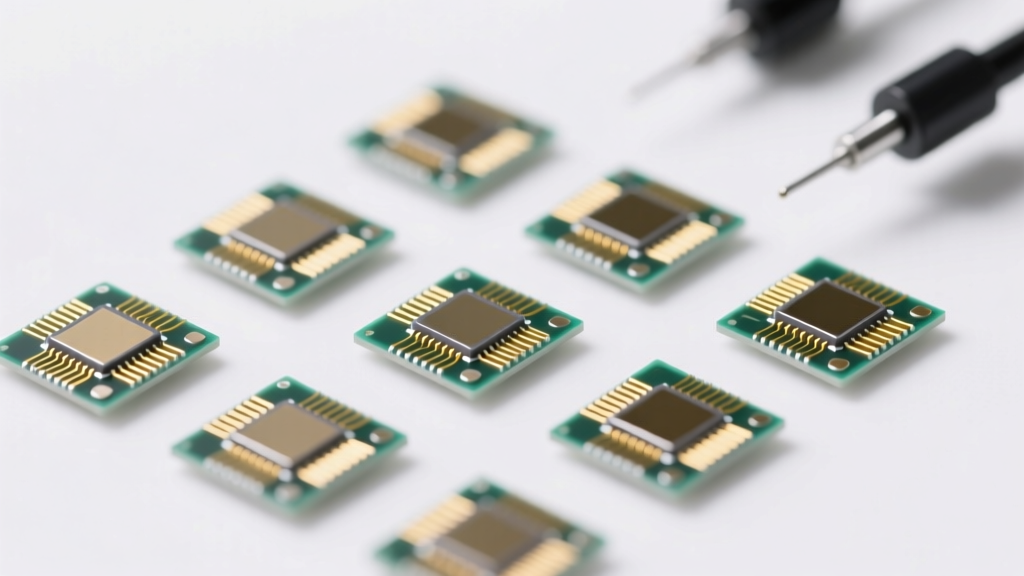
Types of LED Chips
An LED chip is a semiconductor device that emits light when an electric current passes through it. These tiny yet powerful components are the core of all LED lighting systems, determining brightness, efficiency, color quality, and application suitability. Understanding the different types of LED chips helps in selecting the right lighting solution for homes, commercial spaces, industrial environments, and specialized applications like horticulture.
SMD LED Chips
Surface-Mounted Device (SMD) LEDs are among the most widely used LED chip types, known for their versatility and compact design.
Advantages
- Compact size allows for flexible design integration
- Energy-efficient with low power consumption
- Operates effectively at low voltages
- Available in multiple color temperatures and RGB options
- Ideal for high-density lighting arrays
Limitations
- Lower individual brightness compared to COB or high-power chips
- May require multiple units for large-area illumination
- Heat dissipation can be challenging in tightly packed configurations
Best for: Residential lighting, LED strips, TV backlights, signage, and indoor decorative lighting
COB LED Chips
Chip-on-Board (COB) technology integrates multiple LED diodes directly onto a single substrate, creating a powerful, concentrated light source.
Advantages
- Extremely high lumen density from a small area
- Uniform light distribution with minimal glare
- Superior thermal management due to shared heat path
- Fewer components needed, reducing failure points
- Excellent for directional and spotlighting applications
Limitations
- Requires robust heat sinking due to high intensity
- Less flexibility in color tuning compared to SMD
- Higher initial cost than standard SMD solutions
Best for: Track lighting, recessed downlights, art galleries, retail displays, and task lighting
High-Power LED Chips
Engineered for maximum output, high-power LED chips deliver intense illumination, often exceeding 1,000 lumens per chip.
Advantages
- Exceptional brightness suitable for large-scale lighting
- Used in high-intensity applications like stadium lights and streetlights
- Essential in horticultural lighting to support plant growth
- Capable of long throw distances in spotlights and flashlights
- Supports full-spectrum lighting for specialized uses
Limitations
- High energy consumption compared to other chip types
- Generates significant heat, requiring advanced cooling systems
- Shorter lifespan if not properly thermally managed
- Premium pricing due to complex manufacturing and materials
Best for: Outdoor lighting, industrial facilities, grow lights, automotive headlights, and emergency lighting
Mid-Power LED Chips
Mid-power LEDs strike a balance between efficiency, brightness, and cost, typically operating around 1 watt per chip with outputs up to 200 lumens.
Advantages
- Optimal balance of performance and efficiency
- Cost-effective for widespread commercial use
- Reliable performance with consistent brightness over time
- Lower heat generation allows simpler thermal design
- Widely used in standardized lighting fixtures
Limitations
- Not suitable for ultra-high-brightness applications
- May require multiple chips for higher output needs
- Limited in extreme environmental conditions without protection
Best for: Office lighting, wall sconces, retail ambient lighting, and general-purpose indoor fixtures
| Chip Type | Power Range | Brightness (Lumens) | Efficiency | Primary Applications |
|---|---|---|---|---|
| SMD LED | 0.1W – 0.5W | 50 – 150 lm/chip | High | LED strips, bulbs, displays, signage |
| COB LED | 10W – 100W+ | 800 – 10,000+ lm/module | Very High | Downlights, track lights, retail lighting |
| High-Power LED | 1W – 50W+ | 100 – 1,500+ lm/chip | Moderate to High | Streetlights, grow lights, automotive, industrial |
| Mid-Power LED | 0.5W – 1W | 100 – 200 lm/chip | High | Indoor fixtures, commercial lighting, wall lights |
Expert Tip: When selecting LED chips for any application, always consider thermal management. Even the most efficient chip can suffer reduced lifespan and performance if overheating occurs. Use proper heat sinks and ensure adequate ventilation, especially with COB and high-power LEDs.
Choosing the right LED chip depends on your specific lighting needs—whether it's energy efficiency, brightness, color accuracy, or durability. From ambient home lighting to high-intensity industrial setups, each chip type offers unique benefits tailored to different environments and performance requirements.
Industrial Applications of Exporting LED Chips
LED chips have revolutionized industrial operations worldwide due to their exceptional energy efficiency, long lifespan, and superior light quality. As global demand for sustainable and high-performance lighting grows, the export of LED chips has become a cornerstone of modern manufacturing, enabling industries to enhance productivity, safety, and product quality. From assembly lines to quality assurance, LED technology is embedded in nearly every aspect of industrial processes.
Key Insight: Exporting high-quality LED chips supports industrial modernization by providing reliable, scalable, and cost-effective lighting solutions that improve operational efficiency and reduce environmental impact.
Up to 80% Energy Savings vs. Traditional Lighting 50,000+ Hours Average Lifespan 30–50% Reduction in Maintenance CostsIllumination of Work Areas
Proper illumination is critical in industrial environments where precision, safety, and efficiency are paramount. LED lighting systems provide bright, uniform, and flicker-free illumination across vast factory floors, warehouses, and production plants. Unlike traditional fluorescent or halogen lights, LEDs deliver consistent lumen output over time, reducing shadows and glare that can impair visibility.
Modern industrial facilities leverage high-output LED high-bay and low-bay fixtures to illuminate large spaces efficiently. These systems are often integrated with smart controls—such as motion sensors and daylight harvesting—to optimize energy use. The result is a safer, more productive workspace where employees can perform tasks with greater accuracy and reduced eye strain.
Quality Control and Inspection Systems
In manufacturing, detecting defects early in the production cycle is essential to maintaining high product standards. LED lighting plays a crucial role in quality control by providing intense, directional, and color-accurate illumination that highlights surface imperfections, misalignments, and material inconsistencies.
Advanced inspection stations use high-intensity COB (Chip-on-Board) LED arrays and structured lighting to enhance contrast and detail visibility. These systems are often paired with machine vision cameras and automated optical inspection (AOI) tools, enabling real-time defect detection in electronics, automotive parts, pharmaceuticals, and consumer goods.
Traditional Lighting
- Limited brightness and coverage
- Higher heat emission
- Frequent replacements needed
- Poor color rendering (CRI < 70)
LED-Based Inspection Lighting
- High-intensity, focused beams
- Low heat output preserves product integrity
- Long lifespan reduces downtime
- Excellent color rendering (CRI > 90)
By exporting advanced LED chips tailored for inspection applications, manufacturers gain access to reliable components that improve yield rates and reduce waste in high-volume production environments.
Machine and Equipment Lighting
Industrial machinery requires dependable task lighting to ensure safe and efficient operation. LED chips are increasingly embedded directly into machines—such as CNC units, conveyor systems, and robotic arms—to illuminate control panels, moving parts, and work zones. These integrated LED solutions are designed to withstand vibrations, dust, moisture, and extreme temperatures.
Machine-mounted LED lights improve operator visibility during setup, maintenance, and troubleshooting, significantly reducing the risk of accidents. Their instant-on capability and durability make them ideal for continuous operation in demanding environments. Additionally, their low power draw allows integration without overloading control circuits.
LED Displays and Digital Signage in Manufacturing
The production of LED displays for consumer electronics, industrial monitors, and digital signage relies heavily on high-quality exported LED chips. These micro-chips form the pixels in screens used in smartphones, televisions, tablets, and large-format displays in control rooms and assembly lines.
Beyond end-product manufacturing, factories themselves use LED displays to monitor production metrics, display safety alerts, and communicate real-time performance data through Andon systems. Bright, high-resolution LED panels ensure critical information is visible even in well-lit or noisy environments.
Furthermore, the lighting used on display assembly lines must be precise and consistent to allow technicians to handle tiny components and detect soldering flaws. Full-spectrum LED lighting with high color accuracy ensures that screen calibration and quality checks are performed under optimal conditions.
| Application | LED Chip Type | Key Benefits |
|---|---|---|
| General Factory Lighting | SMD 2835 / 5050 | Energy efficiency, wide beam angle, easy integration |
| Inspection Stations | COB LEDs | High intensity, uniform light, excellent CRI |
| Machine Task Lighting | High-Power SMD | Durability, compact size, low heat |
| LED Display Manufacturing | Mini-LED / Micro-LED | High resolution, brightness, color accuracy |
Global Impact: Exporting LED chips supports industrial advancement in emerging markets by providing affordable, high-performance lighting technology that boosts productivity, reduces energy dependency, and promotes sustainable manufacturing practices.
Product Specifications and Features of Exporting LED Chips
LED chips have revolutionized the lighting industry with their superior energy efficiency, durability, and design flexibility. As a key component in modern lighting solutions, understanding the technical specifications and practical applications of LED chips is essential for exporters, distributors, and end-users alike. This guide provides a comprehensive overview of LED chip features, installation best practices, and maintenance strategies to ensure optimal performance and longevity.
Energy Efficiency
LED chips are engineered to convert a high percentage of electrical energy into visible light, minimizing energy waste. Compared to traditional incandescent or compact fluorescent (CFL) bulbs, LEDs consume up to 80% less power for equivalent light output.
- Typical efficacy ranges from 80–150 lumens per watt (lm/W), depending on chip quality and design
- Reduced energy consumption translates to lower electricity bills and smaller carbon footprint
- Ideal for energy-conscious markets and regions with high electricity costs
Export advantage: High efficiency meets international energy standards like Energy Star and EU Ecodesign
Long Lifespan
One of the most compelling benefits of LED chips is their extended operational life, significantly reducing replacement frequency and maintenance costs.
- Lifespan typically ranges from 15,000 to 50,000 hours—up to 25 times longer than incandescent bulbs
- L70 rating (time until brightness drops to 70% of initial output) is a key metric for quality assessment
- Longevity makes LEDs ideal for hard-to-reach installations such as high ceilings or outdoor fixtures
Key insight: Higher-quality drivers and thermal management extend actual lifespan beyond rated hours
Brightness & Light Output
Brightness in LED chips is measured in lumens, not watts, allowing for precise comparison across different technologies.
- Output varies from 100 lumens (low-power indicator chips) to over 2,000 lumens (high-power COB modules)
- Available in multiple color temperatures (2700K warm white to 6500K daylight) for diverse applications
- High CRI (Color Rendering Index >80) options ensure accurate color representation in retail and hospitality settings
Application tip: Match lumen output to space requirements—e.g., 800–1100 lm for standard room lighting
Directional Light Emission
Unlike traditional bulbs that emit light omnidirectionally, LED chips produce focused light, improving optical efficiency.
- Natural directional output reduces the need for reflectors and diffusers, simplifying fixture design
- Perfect for task lighting, downlights, and spotlighting applications
- Less light loss means higher usable lumens per watt in directional fixtures
Design benefit: Enables slimmer, more compact lighting fixtures for modern architectural use
Compact Size & Form Factors
The small footprint of LED chips allows for innovative lighting designs and integration into tight spaces.
- Common types include SMD (Surface Mount Device), COB (Chip-on-Board), and high-power discrete chips
- SMDs like 2835, 3030, and 5050 are widely used in strips and panels for flexibility and density
- COB technology packs multiple chips into a single module for high-intensity, uniform lighting
Export note: Specify chip type and size clearly in product documentation for compatibility
Low Heat Emission
LED chips generate significantly less radiant heat than traditional lighting, enhancing safety and efficiency.
- Most heat is conducted through the base rather than emitted as infrared radiation
- Reduces cooling load in climate-controlled environments, contributing to overall energy savings
- Lower fire risk makes LEDs suitable for use near flammable materials or in enclosed fixtures
Important: Proper heat sinking is still required to maintain performance and prevent premature degradation
How to Install LED Chips: Best Practices
Successful installation ensures optimal performance, safety, and longevity of LED lighting systems. Follow these professional guidelines for reliable results:
- Surface Preparation: Clean mounting surfaces thoroughly to ensure proper adhesion and thermal contact. Remove dust, grease, or moisture that could impair heat transfer or electrical connections.
- Mounting & Fixturing: For ceiling or recessed installations, measure and mark positions accurately. Drill holes only where necessary, using appropriate bits for the material (drywall, wood, concrete).
- Wiring & Electrical Safety: Turn off power at the circuit breaker before beginning work. Use correct gauge wiring and secure connections with wire nuts or terminal blocks. Insulate all exposed conductors to prevent short circuits or shocks.
- Handling with Care: Avoid touching LED chips directly—skin oils can create hot spots. Use anti-static precautions when working with sensitive components.
- Testing & Commissioning: After installation, restore power and test each light individually. Check for flickering, dimming, or color inconsistencies. Address issues immediately before finalizing the installation.
Pro Installer Tip: Use a multimeter to verify voltage compatibility and ensure drivers are correctly matched to the LED load. Mismatched components are a leading cause of early failure.
Maintenance and Repair Guidelines
While LED chips require minimal maintenance, proactive care extends service life and maintains lighting quality over time.
- Regular Cleaning: Dust accumulation can reduce light output by up to 20%. Clean fixtures every 6–12 months using a soft, dry cloth or compressed air. Avoid abrasive cleaners or solvents.
- Periodic Inspection: Schedule routine checks for signs of overheating, discoloration, or driver failure. Early detection prevents cascading failures in multi-chip arrays.
- Component Replacement: Replace aging drivers, capacitors, or damaged heat sinks promptly. These often fail before the LED chip itself.
- Minor Repairs: Fix loose connections, reseat connectors, or replace damaged wiring to restore performance without full replacement.
- Technology Upgrades: Consider retrofitting older LED modules with newer, more efficient chips during scheduled maintenance to improve energy savings and light quality.
Sustainability Note: Many LED components are recyclable. Encourage customers to dispose of drivers and electronic parts through certified e-waste programs to support environmental responsibility.
| LED Chip Type | Typical Lumen Output | Common Applications | Lifespan (Hours) | Thermal Notes |
|---|---|---|---|---|
| SMD 2835 | 40–50 lm/chip | LED strips, panels, bulbs | 30,000–40,000 | Requires aluminum PCB for heat dissipation |
| COB Module | 1,000–2,000+ lm/module | Downlights, spotlights, floodlights | 25,000–50,000 | Needs active or passive heatsink |
| High-Power 3030 | 150–200 lm/chip | Street lighting, industrial fixtures | 35,000–45,000 | High thermal density; requires robust cooling |
| Mini LED (for displays) | Variable (low to medium) | Backlighting, signage, displays | 50,000+ | Sensitive to overheating; needs thermal management |
Additional Considerations for Exporters
- Compliance Standards: Ensure products meet regional certifications (CE, RoHS, UL, CCC, PSE) for market access
- Thermal Management: Include heat sink recommendations or integrated solutions in product packaging
- Driver Compatibility: Clearly specify required driver types (constant current, voltage) and dimming compatibility
- Packaging & Labeling: Provide detailed datasheets, installation guides, and multilingual labeling for global distribution
- Warranty Support: Offer 3–5 year warranties to build trust and demonstrate confidence in product quality
Important Considerations When Choosing LED Chips for Lighting
Selecting the right LED chip is essential for achieving optimal lighting performance, energy efficiency, and longevity. Whether you're designing residential, commercial, or industrial lighting systems, understanding key selection criteria ensures that your fixtures deliver consistent, high-quality illumination tailored to the environment and application. This guide explores the most critical factors in LED chip selection to help you make informed decisions.
Important Note: Choosing the wrong LED chip can lead to poor light quality, increased energy costs, premature failure, and safety risks. Always match the LED specifications to the intended use and environmental conditions.
Brightness Requirements
The brightness of an LED chip, measured in lumens (lm), directly affects how well a space is illuminated. Determining the appropriate lumen output begins with assessing the room’s purpose, size, ceiling height, and ambient lighting conditions.
- Low-light areas such as hallways, bedrooms, or accent lighting typically require LED chips producing 100–500 lumens.
- General lighting for kitchens, offices, or living rooms often needs 800–1,500 lumens per fixture.
- High-brightness applications like warehouses, garages, or outdoor floodlights may require chips rated at 1,500–2,000+ lumens.
Over-lighting wastes energy and creates glare, while under-lighting compromises visibility and safety. Use lighting calculators or consult lighting design standards (such as IESNA guidelines) to determine the ideal lumen output for your space.
Pro Tip: Consider using multiple lower-lumen LEDs instead of a single high-output chip to achieve more uniform light distribution and reduce hotspots.
Heat Management
LEDs are sensitive to heat, and excessive temperatures can significantly reduce their lifespan and light output. High-power LED chips generate more heat, making thermal management a critical design consideration.
- Effective heat sinks made from aluminum or copper help dissipate heat away from the LED junction.
- In enclosed or poorly ventilated fixtures, consider integrating active cooling solutions like small fans or thermal pads.
- Ambient temperature plays a role—installations in hot climates or near heat sources (e.g., kitchens, attics) require enhanced thermal design.
- Ensure the LED driver and housing are also rated for high-temperature operation.
Poor heat management can lead to lumen depreciation (dimming over time) and color shift, where the light changes hue due to thermal stress. Always verify the chip’s maximum operating temperature and junction temperature (Tj) ratings.
Energy Efficiency
One of the greatest advantages of LED technology is its energy efficiency. The efficiency of an LED chip is measured in lumens per watt (lm/W), indicating how much light is produced per unit of power consumed.
- Standard LEDs offer around 80–100 lm/W.
- High-efficiency chips can exceed 150 lm/W, ideal for applications with long operating hours.
- Commercial and municipal lighting (e.g., streetlights, office buildings) benefit most from high lm/W chips, reducing electricity costs and carbon footprint.
For example, replacing a 60W incandescent bulb (800 lumens) with a 9W LED (850 lumens) saves approximately 51W per hour. Over a year, this can result in significant savings, especially in large-scale installations.
| Lumen Range | Typical Wattage | Common Applications | Efficiency (lm/W) |
|---|---|---|---|
| 100–500 lm | 3–8W | Accent lighting, night lights, decorative fixtures | 80–110 |
| 800–1,200 lm | 9–15W | Living rooms, kitchens, offices | 90–110 |
| 1,500–2,000+ lm | 20–30W | Warehouses, garages, outdoor floodlights | 70–100 |
Light Quality
Light quality goes beyond brightness—it includes color temperature, color rendering, flicker, and beam consistency, all of which impact visual comfort and functionality.
- Color Temperature (CCT): Measured in Kelvin (K), it defines whether light appears warm (2700K–3000K), neutral (3500K–4500K), or cool (5000K–6500K). Warm light is ideal for homes and hospitality; cool light enhances focus in offices and industrial settings.
- Color Rendering Index (CRI): A CRI of 80+ is standard, but for art galleries, retail displays, or medical facilities, choose LEDs with CRI >90 to ensure accurate color representation.
- Flicker-Free Operation: Low-quality drivers can cause visible flickering, leading to eye strain and headaches. Opt for LEDs with flicker-free drivers or those meeting IEEE 1789 standards.
- Tunable White or RGB LEDs: For dynamic environments, consider chips that allow adjustment of color temperature or hue via smart controls.
Expert Tip: Always request a spectral power distribution (SPD) graph from the manufacturer to evaluate the quality of light output and ensure minimal blue light peaks for healthier illumination.
Environmental Conditions
The operating environment has a major impact on LED performance and durability. Outdoor, industrial, or harsh indoor environments demand robust chip and fixture designs.
- Moisture and Dust: For outdoor or damp locations (e.g., bathrooms, parking lots), select LED chips housed in fixtures with an IP65 or higher rating. IP66 offers protection against powerful water jets, making it ideal for coastal or high-rainfall areas.
- Temperature Extremes: LEDs in freezers, outdoor signage, or desert climates should be rated for wide operating ranges (e.g., -30°C to +60°C).
- Corrosive Environments: Coastal installations require anti-corrosion coatings or housings made from stainless steel or marine-grade aluminum to resist salt spray.
- Vibration-Prone Areas: In industrial machinery or transportation lighting, ensure the LED module is shock-resistant and securely mounted.
Using indoor-rated LEDs in outdoor settings can lead to rapid failure due to moisture ingress, thermal cycling, or UV degradation. Always verify the full fixture rating, not just the chip itself.
Caution: Never install non-weatherproof LEDs in outdoor or wet locations. Doing so creates electrical hazards and voids warranties. Always follow local electrical codes and use UL/CE-certified components.
Additional Selection Tips
- Choose reputable manufacturers with proven reliability and long warranty periods (5+ years).
- Check for compliance with safety and performance standards (e.g., ENERGY STAR, DLC, UL, CE).
- Consider future maintenance—modular LED chips are easier to replace than integrated units.
- For smart lighting, ensure compatibility with control systems (e.g., DALI, Zigbee, Bluetooth).
- Test sample fixtures in the actual environment before large-scale deployment.
Selecting the right LED chip involves balancing brightness, efficiency, thermal performance, light quality, and environmental resilience. By carefully evaluating these factors, you can design lighting systems that are not only energy-efficient and cost-effective but also enhance comfort, safety, and visual performance across diverse applications.
Frequently Asked Questions About LED Chips in Lighting
Q1. Do LED chips get installed for the interior or exterior?LED chips are widely used in both interior and exterior applications, offering versatile, energy-efficient lighting solutions across a broad range of environments.
- Indoor Use: In homes, offices, and commercial buildings, LED chips power general lighting (ceiling lights, downlights), task lighting (under-cabinet, desk lamps), and accent lighting (display cases, artwork). Their compact size and low heat output make them ideal for enclosed or sensitive spaces.
- Outdoor Use: For exterior applications, LED chips illuminate streetlights, parking lots, building facades, signage, and landscape lighting. They are engineered to be weather-resistant and durable, often rated for IP65 or higher to withstand moisture, dust, and temperature fluctuations.
- Specialized Applications: LEDs are also used in automotive lighting, emergency systems, and smart lighting networks due to their long lifespan and controllability.
Modern LED chips are designed to perform efficiently in nearly any environment, making them a preferred choice for comprehensive lighting strategies in both residential and industrial settings.
Q2. Which factors limit the export of LED chips?While global demand for LED chips is growing, several regulatory, technical, and economic factors can restrict or complicate their export:
- Regulatory Compliance: Many countries enforce strict import standards for electrical components, including certifications like CE (Europe), UL (USA), CCC (China), and RoHS (hazardous substance restrictions). Non-compliant LED chips may be denied entry.
- Energy and Environmental Standards: Exporters must meet energy efficiency benchmarks such as ENERGY STAR or the EU Ecodesign Directive. Products failing these standards face market exclusion.
- Power Grid Compatibility: Developing markets often have inconsistent voltage levels, frequency variations, or unstable power supplies, requiring LED drivers and chips to be specially adapted to avoid premature failure.
- Trade Barriers: Tariffs, import quotas, and local content requirements in certain regions can increase costs and reduce competitiveness.
- Intellectual Property (IP) Issues: High-tech LED chips may be protected by patents, and unauthorized export or use can lead to legal challenges.
To overcome these limitations, manufacturers and exporters must invest in compliance testing, adapt products to regional requirements, and establish partnerships with local distributors familiar with regulatory landscapes.
Q3. Do LED chips affect lighting fixtures?Absolutely—LED chips play a crucial role in determining the performance, design, and functionality of lighting fixtures. Their characteristics directly influence:
- Light Quality: The type of LED chip affects color temperature (warm white, cool white, daylight), color rendering index (CRI), and beam angle. High-CRI chips are essential in retail and art galleries for accurate color representation.
- Fixture Design: Because LED chips are small and directional, they allow for slimmer, more compact fixtures like ultra-thin recessed lights or flexible track lighting systems. This enables innovative architectural integration.
- Thermal Management: Efficient heat dissipation is critical for LED longevity. Fixtures must be designed with proper heat sinks and ventilation, especially when using high-power chips.
- Dimming and Control: Advanced LED chips support smart controls, enabling dimming, color tuning, and integration with IoT systems like voice assistants or building automation.
As a result, lighting designers and manufacturers carefully select LED chips based on the intended application—whether it's ambient, task, or accent lighting—to ensure optimal performance and aesthetic appeal.
Q4. What are the lighting tools that use LED chips?LED chips are integrated into a wide variety of lighting fixtures and tools, revolutionizing how we illuminate spaces. Common types include:
| Lighting Type | Common Applications | Key Benefits |
|---|---|---|
| Recessed Lights (Downlights) | Kitchens, bathrooms, offices | Space-saving, focused illumination |
| Wall-Mounted Lights | Hallways, bedrooms, outdoor walls | Ambient lighting, decorative appeal |
| Track Lights | Retail stores, galleries, kitchens | Adjustable direction, spotlighting |
| Pendant Lights | Dining areas, kitchens, lobbies | Decorative focus, task lighting |
| Task Lighting (e.g., under-cabinet) | Workspaces, kitchens, offices | High brightness, targeted illumination |
| Architectural & Accent Lighting | Stair edges, coves, facades | Enhances design, creates mood |
Additionally, LED chips are used in emergency lights, grow lights for agriculture, and portable tools like headlamps and work lights. Their adaptability makes them the cornerstone of modern lighting technology.
Q5. What is the main goal of trading LED chips?The primary objective of trading LED chips is to enable global access to energy-efficient, sustainable, and technologically advanced lighting solutions. This international trade supports several key outcomes:
- Energy Conservation: LED chips consume up to 80% less energy than traditional incandescent or fluorescent lighting, helping countries reduce electricity demand and carbon emissions.
- Economic Development: Developing nations benefit from affordable, long-lasting lighting, improving quality of life and supporting infrastructure growth.
- Technology Transfer: Trade facilitates the spread of innovation—such as smart lighting, human-centric designs, and UV-C disinfection chips—across borders, accelerating global adoption.
- Supply Chain Efficiency: Specialized manufacturing regions (e.g., Asia for production, Europe and North America for R&D) collaborate to deliver cost-effective, high-quality products worldwide.
- Sustainability Goals: By extending product lifespans and reducing waste, LED chip trade aligns with global environmental initiatives like the UN Sustainable Development Goals (SDG 7: Affordable and Clean Energy).
In essence, the trade of LED chips is not just about commerce—it's a vital component of the global shift toward smarter, greener, and more resilient lighting ecosystems.