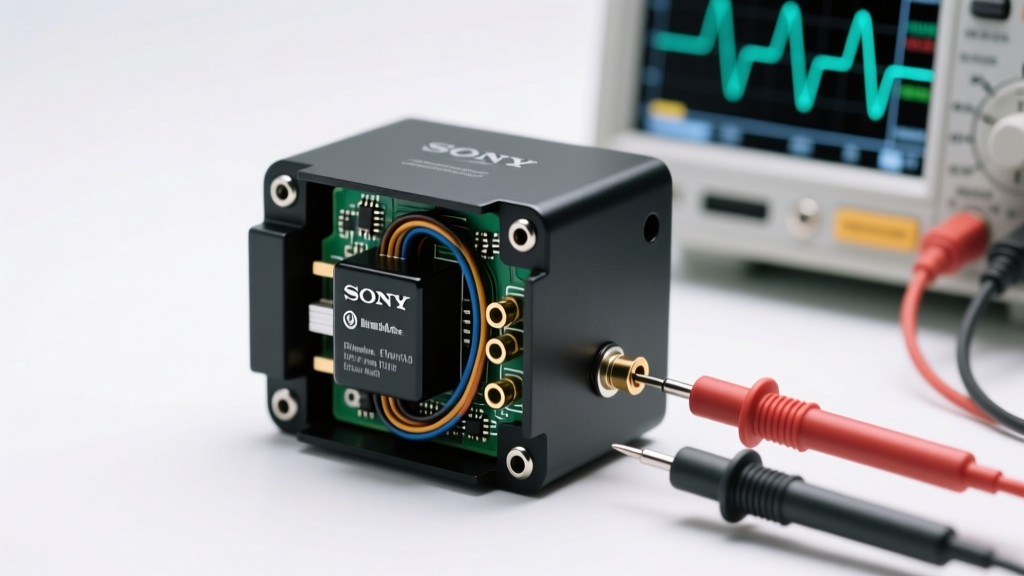
Types of BF740L3RH: Applications and Performance Overview
The BF740L3RH is a highly stable N-channel MOSFET engineered for general-purpose applications, delivering an optimal balance of efficiency, reliability, and performance. This semiconductor device is widely used across power management systems, telecommunications infrastructure, and signal processing circuits due to its robust electrical characteristics, including low on-resistance, high switching speed, and excellent thermal stability.
Below is a detailed breakdown of the primary application types of the BF740L3RH, each tailored to specific electronic functions. These include:
- RF Transistors
- Heterojunction Bipolar Transistors (HBTs)
- Digital Devices
- Analog Devices
- Switching Components
- Power Amplifiers
RF Transistors
The BF740L3RH excels in radio frequency (RF) applications, where signal integrity and high-frequency performance are critical.
Advantages
- Excellent high-frequency response
- Low signal distortion
- High gain and stability in RF amplification
- Efficient power use in wireless transmission
Limitations
- Sensitive to impedance mismatches
- Requires careful PCB layout for optimal RF performance
Best for: Smartphones, wireless modules, Wi-Fi routers, and RF transceivers
Heterojunction Bipolar Transistors (HBTs)
When integrated into HBT configurations, the BF740L3RH supports high-speed, high-efficiency amplification in advanced communication systems.
Advantages
- High current density and switching speed
- Superior performance in 4G/5G base stations
- Enhanced signal fidelity and linearity
- Excellent thermal stability under load
Limitations
- Complex biasing requirements
- Higher cost in high-frequency modules
Best for: Telecommunications infrastructure, microwave systems, and optical networking
Digital Devices
In digital circuits, the BF740L3RH functions as a fast, efficient switching element for logic and control applications.
Advantages
- Fast switching response
- Low gate charge for reduced drive loss
- Minimal heat generation during operation
- Ideal for high-speed logic and microcontroller interfaces
Limitations
- Requires level shifting in low-voltage logic systems
- Gate protection needed against voltage spikes
Best for: Microprocessors, FPGAs, embedded systems, and digital control boards
Analog Devices
The BF740L3RH is employed in analog signal processing for its linearity and low-noise characteristics.
Advantages
- High linearity in amplification
- Low noise output
- Precise signal control in variable loads
- Stable operation in feedback loops
Limitations
- Not ideal for ultra-low-noise audio without filtering
- Requires thermal management in high-gain stages
Best for: Audio preamplifiers, sensor interfaces, and signal conditioning circuits
Switching Components
As a core switching MOSFET, the BF740L3RH delivers high efficiency in power control applications.
Advantages
- Very low on-resistance (RDS(on))
- Reduced power loss and heat generation
- Fast turn-on/off times
- High efficiency in DC-DC converters and power supplies
Limitations
- Parasitic inductance can cause ringing in high-frequency switching
- Requires gate driver circuitry for optimal performance
Best for: Power supplies, motor drivers, LED drivers, and battery management systems
Power Amplifiers
The BF740L3RH is used in RF and audio power amplifiers to boost signal strength efficiently.
Advantages
- High output power capability
- Excellent signal amplification with minimal distortion
- Thermally robust for continuous operation
- Supports high-efficiency Class D and Class AB topologies
Limitations
- May require heat sinking at high power levels
- Susceptible to oscillation without proper layout
Best for: Base station transmitters, broadcast equipment, and high-power audio systems
| Application Type | Key Strength | Typical Use Case | Performance Benefit |
|---|---|---|---|
| RF Transistors | High-frequency stability | Wireless communication | Clear signal transmission in mobile devices |
| HBTs | Fast switching & high gain | 5G infrastructure | Improved network speed and reliability |
| Digital Devices | Low gate charge | Microcontroller systems | Energy-efficient logic switching |
| Analog Devices | Low noise & linearity | Audio and sensor circuits | Precise signal reproduction |
| Switching Components | Low RDS(on) | DC-DC converters | Reduced power loss and heat |
| Power Amplifiers | High output power | Transmitters and audio systems | Long-range signal coverage |
Expert Tip: When using the BF740L3RH in high-frequency or high-power applications, ensure proper PCB layout with short traces, adequate grounding, and thermal vias to maximize performance and longevity. Consider using a gate resistor to suppress ringing during fast switching.
Material Composition and Durability of the BFR740L3RH Transistor
The BFR740L3RH is a high-performance NPN bipolar RF transistor widely used in wireless communication systems, including mobile devices, GPS modules, and IoT applications. Its exceptional durability and long operational life are directly tied to the advanced materials and engineering that go into its construction. The key elements contributing to its reliability include its semiconductor base, thermal management design, and terminal construction.
Core Material Components
Semiconductor Materials
At the heart of the BFR740L3RH lies its semiconductor structure, primarily composed of silicon (Si) or silicon-germanium (SiGe) heterojunctions. These materials are chosen for their superior electron mobility, thermal stability, and ability to function efficiently at high frequencies—critical for RF amplification and signal processing.
Silicon remains the industry standard due to its excellent balance of cost, manufacturability, and performance. It offers strong resistance to mechanical stress and thermal fluctuations, ensuring stable operation across a wide temperature range (-55°C to +150°C). Silicon-germanium technology further enhances performance by enabling faster switching speeds and improved gain at frequencies exceeding several gigahertz, making it ideal for modern high-speed communication systems.
The use of advanced epitaxial growth techniques ensures precise control over doping profiles and layer thickness, minimizing defects and enhancing long-term reliability under continuous operation.
Heat-Sink & Thermal Design
Effective thermal management is essential for maintaining the performance and lifespan of high-frequency transistors like the BFR740L3RH. During operation, power dissipation generates heat that, if not properly managed, can lead to parameter drift, reduced efficiency, or catastrophic failure.
The BFR740L3RH features an optimized package design (typically in SOT343 or similar ultra-small surface-mount packages) that facilitates efficient heat transfer to the printed circuit board (PCB). While it does not have an external heat sink, the device relies on the PCB’s copper planes and thermal vias to act as a passive heat-dissipating structure.
Designers are encouraged to incorporate adequate copper pour and thermal grounding to maximize heat dissipation. This integrated thermal strategy, combined with the inherent thermal robustness of the Si/SiGe junction, allows the transistor to maintain stable performance even under sustained load conditions.
Terminal & Interconnect Materials
The terminals (or leads) of the BFR740L3RH play a crucial role in ensuring reliable electrical connectivity and mechanical stability within the circuit. These terminals are typically made from copper alloy substrates with a nickel-palladium-gold (Ni-Pd-Au) or nickel-tin (Ni-Sn) plating finish.
Nickel plating provides a robust diffusion barrier that prevents oxidation and corrosion, especially in humid or chemically aggressive environments. It also enhances solderability and ensures strong, durable joints during reflow soldering processes. The outer gold or tin layer further improves conductivity and protects against surface degradation over time.
These corrosion-resistant terminal materials are vital for applications exposed to moisture, temperature cycling, or industrial pollutants—ensuring consistent signal integrity and connection reliability throughout the device’s operational life.
Package & Encapsulation
Beyond the core materials, the BFR740L3RH is housed in a molded plastic package designed to protect the delicate semiconductor die from environmental hazards such as dust, moisture, and mechanical impact. The encapsulation material is typically a thermoset epoxy resin with high mechanical strength and excellent insulating properties.
This protective housing also provides electrical isolation between terminals and shields the internal structure from electromagnetic interference (EMI). The compact size of the package enables integration into space-constrained designs without sacrificing performance or durability.
The entire assembly undergoes rigorous quality testing, including moisture resistance (e.g., MSL level 1), thermal cycling, and bond strength verification, ensuring compliance with industrial and automotive reliability standards.
| Component | Material Used | Function & Benefit |
|---|---|---|
| Semiconductor Junction | Silicon (Si) / Silicon-Germanium (SiGe) | Enables high-frequency operation, excellent gain, and thermal stability |
| Terminal Plating | Nickel-Palladium-Gold (Ni-Pd-Au) | Corrosion resistance, long-term solderability, and stable conductivity |
| Lead Frame | Copper Alloy | High thermal and electrical conductivity with mechanical durability |
| Encapsulation | Epoxy Molding Compound | Environmental protection, insulation, and mechanical resilience |
Key Factors Enhancing Long-Term Durability
Important: To maximize the lifespan and performance of the BFR740L3RH, ensure proper PCB layout practices—especially regarding thermal vias, grounding, and signal isolation. Avoid exceeding maximum ratings for voltage, current, and power dissipation. Always refer to the manufacturer’s datasheet for specific application guidelines, storage conditions, and soldering profiles. Improper handling or circuit design can significantly reduce device reliability, even with high-quality internal materials.
Commercial Value of BFR740L3RH
The BFR740L3RH is a high-performance RF transistor that delivers exceptional value across multiple industries due to its reliability, efficiency, and advanced signal processing capabilities. As a key component in modern wireless communication systems, its versatility drives demand in fast-evolving technological sectors such as telecommunications, consumer electronics, and industrial automation.
Telecommunication Industry
The BFR740L3RH plays a critical role in next-generation telecommunication infrastructure, including 5G base stations, signal repeaters, microwave links, and small-cell networks. Its high-frequency performance and low-noise characteristics make it ideal for amplifying and processing RF signals with minimal distortion.
- Enables efficient signal amplification in the 1.5–3.8 GHz frequency range, supporting LTE, 5G NR, and Wi-Fi 6/6E standards
- Improves transmission range, signal clarity, and data throughput in dense urban environments
- Supports energy-efficient designs, reducing power consumption in large-scale network deployments
- Used in MIMO (Multiple Input Multiple Output) antenna systems to enhance network capacity and reliability
Market Impact: Telecom equipment manufacturers rely on components like the BFR740L3RH to meet escalating bandwidth demands and ensure seamless connectivity, directly contributing to its strong commercial demand.
Consumer Electronics
In the consumer electronics sector, the BFR740L3RH is integrated into devices requiring robust RF performance, such as smartphones, tablets, smart TVs, wireless routers, and IoT-enabled gadgets. Its ability to handle high-speed data transmission makes it essential for maintaining stable wireless connections.
- Facilitates reliable Wi-Fi, Bluetooth, and cellular signal amplification in compact form factors
- Reduces signal dropouts and latency in streaming, gaming, and video conferencing applications
- Supports miniaturization of RF front-end modules without sacrificing performance
- Enhances overall user experience by improving wireless responsiveness and connection stability
Commercial Insight: With over 1.5 billion smartphones shipped annually and growing IoT adoption, the BFR740L3RH’s role in ensuring seamless connectivity positions it as a high-value component in mass-market electronics.
Industrial Automation
The BFR740L3RH is increasingly adopted in industrial automation and control systems that depend on wireless communication for monitoring, remote operation, and real-time data exchange. Its durability and consistent RF performance make it suitable for harsh industrial environments.
- Used in wireless sensor networks (WSNs) and industrial IoT (IIoT) gateways for long-range signal transmission
- Supports SCADA systems, robotics, and PLCs requiring low-latency, interference-resistant communication
- Operates reliably under temperature variations and electromagnetic interference common in factories and plants
- Enables scalable and flexible deployment of automated systems without extensive cabling
Growth Driver: As Industry 4.0 initiatives accelerate globally, the demand for reliable RF components like the BFR740L3RH continues to rise, enhancing its commercial significance in smart manufacturing and predictive maintenance systems.
Cross-Industry Advantages
Beyond specific applications, the BFR740L3RH offers technical and economic benefits that amplify its market value across sectors.
- High Gain & Low Noise: Delivers superior signal-to-noise ratio, crucial for clear communication in congested RF environments
- Thermal Stability: Maintains performance under continuous operation, reducing failure rates in critical systems
- Cost-Effective Integration: Compatible with standard PCB manufacturing processes, lowering production costs
- Long-Term Availability: Backed by major semiconductor suppliers with stable supply chains and multi-year production commitments
Strategic Value: Its proven reliability and broad applicability make the BFR740L3RH a preferred choice for OEMs aiming to balance performance, scalability, and time-to-market.
Market Outlook: The global RF transistor market is projected to exceed $15 billion by 2028, driven by 5G expansion, smart device proliferation, and industrial digitization. Components like the BFR740L3RH—offering a blend of performance, efficiency, and compatibility—are well-positioned to capture significant market share. For suppliers and designers, emphasizing its versatility and reliability can strengthen customer confidence and drive adoption across emerging technologies.
| Industry | Key Applications | Performance Benefits | Commercial Impact |
|---|---|---|---|
| Telecommunications | 5G Base Stations, Repeaters, Small Cells | High gain, low noise, thermal stability | Enables faster data networks; critical for infrastructure scalability |
| Consumer Electronics | Smartphones, Tablets, Routers, Smart TVs | Stable RF output, compact integration | Improves user experience; high-volume demand |
| Industrial Automation | Wireless Sensors, IIoT Gateways, SCADA | Durable, interference-resistant, long-range | Supports smart manufacturing; growing IIoT adoption |
| Cross-Industry | Test Equipment, DAS, Private Networks | Reliable, standardized, cost-efficient | Versatile component with wide OEM acceptance |
Additional Considerations for Commercial Success
- Supply Chain Resilience: The BFR740L3RH is available through major distributors with global logistics networks, ensuring consistent availability even during market fluctuations
- Design Support: Manufacturers provide reference designs, SPICE models, and application notes to accelerate product development
- Regulatory Compliance: Meets international standards (RoHS, REACH) and is qualified for use in commercial and industrial environments
- Future-Proofing: Suitable for current and next-gen wireless protocols, offering long design lifecycle and reduced obsolescence risk
- Aftermarket Demand: Used in repair and upgrade markets for telecom and industrial equipment, extending its commercial lifespan
How to Choose the BFR740L3RH Transistor: A Comprehensive Guide
Selecting the right bipolar RF transistor like the BFR740L3RH is critical for ensuring optimal performance in high-frequency applications. As a high-performance NPN silicon RF transistor designed for amplification in the UHF range, the BFR740L3RH is widely used in communication systems where signal integrity, gain, and low noise are essential. This guide outlines the key selection criteria to help engineers and procurement managers make informed decisions when integrating the BFR740L3RH into their designs.
Important Note: The BFR740L3RH is a discontinued component. While still available through some distributors, long-term supply stability should be carefully evaluated. Consider identifying suitable alternatives or second-sourcing strategies for production-critical applications.
Key Selection Criteria for BFR740L3RH
- Operational Requirements: Frequency range, power handling, gain, and noise performance
- Application Needs: Signal amplification, switching, or processing in analog/digital systems
- Circuit Compatibility: Voltage, current, impedance, and thermal compatibility
- Supply Availability: Stock levels, supplier reliability, and lifecycle status
1. Operational Requirements
The operational environment of your system plays a decisive role in determining whether the BFR740L3RH is the right fit. This transistor excels in high-frequency applications, with a transition frequency (fT) of up to 7000 MHz, making it ideal for UHF and microwave frequency bands. Its high power gain (typically 18 dB at 1 GHz) and low noise figure (around 1.5 dB at 1 GHz) make it particularly suitable for low-noise amplifier (LNA) stages in RF front-ends.
Designed for small-signal amplification, the BFR740L3RH performs reliably in environments requiring stable gain across a broad frequency spectrum. It is commonly used in:
- Wireless communication systems (GSM, LTE, 5G infrastructure)
- Broadcasting equipment (UHF transmitters and receivers)
- RFID readers and IoT connectivity modules
- Test and measurement instruments
- Amateur radio and satellite communication devices
To ensure reliable operation, verify that your system's frequency range (typically 500 MHz to 2.5 GHz) aligns with the BFR740L3RH’s optimal performance window. Operating outside this range may result in reduced gain or increased distortion.
2. Application Needs
The BFR740L3RH is engineered for use in both analog and digital RF applications where signal fidelity and amplification efficiency are paramount. When evaluating application suitability, consider the following use cases:
- RF Amplification: Ideal for driver and pre-amplifier stages due to its high gain and linearity.
- Signal Processing: Effective in mixer and oscillator circuits requiring stable transistor characteristics.
- Switching Applications: Can be used in fast-switching RF circuits, though not optimized for power switching.
- Low-Power Systems: Suitable for battery-powered devices due to its low current consumption (IC max 50 mA).
System designers should assess whether their application demands high linearity, minimal phase noise, or consistent gain over temperature variations—all areas where the BFR740L3RH performs well. If your system involves high-power output stages, consider pairing it with a power amplifier transistor in a cascade configuration.
3. Circuit Compatibility
Ensuring seamless integration with your existing circuit design is crucial for maximizing performance and reliability. The BFR740L3RH operates with the following key electrical parameters:
| Parameter | Value | Notes |
|---|---|---|
| Collector-Emitter Voltage (VCEO) | 12 V | Absolute maximum rating; operate below for reliability |
| Collector Current (IC) | 50 mA | Continuous operation limit |
| Transition Frequency (fT) | 7000 MHz | Indicates high-frequency capability |
| Noise Figure | 1.5 dB (typical at 1 GHz) | Excellent for low-noise applications |
| Power Gain | 18 dB (typical at 1 GHz) | High gain in UHF range |
| Package Type | SOT-323 (SC-76) | Surface-mount, space-efficient |
Before integration, compare these specifications with your circuit’s operating conditions. Pay special attention to biasing requirements—proper DC biasing ensures optimal RF performance and prevents thermal runaway. Impedance matching networks should also be designed to maximize power transfer and minimize reflections, especially in 50 Ω systems.
4. Supply Availability and Procurement Strategy
The BFR740L3RH has been marked as not recommended for new designs (NRND) by its manufacturer, Infineon Technologies, indicating it is in the phase-out stage. While still available from authorized distributors like Digi-Key, Mouser, and RS Components, long-term supply cannot be guaranteed.
To mitigate supply chain risks:
- Purchase in bulk for existing production runs or legacy systems
- Source only from reputable, authorized distributors to avoid counterfeit components
- Verify date codes and packaging authenticity upon receipt
- Develop a transition plan to a recommended replacement (e.g., BFR92A, BFR93A, or newer RF transistors)
- Consult the manufacturer’s lifecycle documentation for end-of-life timelines
Warning: Avoid using the BFR740L3RH in new product designs due to its NRND status. Relying on obsolete components can lead to future production delays, increased costs, and potential redesigns.
Expert Tip: When designing with legacy components like the BFR740L3RH, maintain a bill of materials (BOM) with alternative part numbers and cross-reference data. This ensures continuity and simplifies future upgrades or replacements.
Final Recommendations
- Use the BFR740L3RH only in existing designs or repair applications
- Verify all electrical parameters against your circuit’s operating conditions
- Design proper heat dissipation and biasing circuits for stable operation
- Implement impedance matching for maximum RF efficiency
- Plan for obsolescence by identifying modern, pin-compatible alternatives
- Always test prototypes under real-world conditions before full deployment
In conclusion, while the BFR740L3RH remains a capable RF transistor for high-frequency amplification, its lifecycle status requires careful consideration. By evaluating operational needs, application requirements, circuit compatibility, and supply chain sustainability, engineers can make informed decisions that balance performance with long-term reliability.
Frequently Asked Questions About the BFR740L3RH RF Transistor
Q1: What are the common use cases for the BFR740L3RH in various industries?The BFR740L3RH is a high-performance NPN silicon RF transistor widely used across multiple high-tech industries due to its excellent gain and frequency characteristics. Its primary applications include:
- Telecommunications: Employed in RF amplifiers, low-noise amplifier (LNA) stages, and signal boosters in base stations, repeaters, and wireless infrastructure for 4G/5G networks.
- Consumer Electronics: Integrated into smartphones, tablets, and Wi-Fi routers to enhance signal reception, improve data transmission speeds, and support multi-band connectivity.
- Industrial Automation: Used in wireless sensor networks, remote monitoring systems, and industrial IoT (IIoT) devices where reliable long-range communication is essential.
- Automotive Electronics: Found in keyless entry systems, tire pressure monitoring systems (TPMS), and vehicle-to-everything (V2X) communication modules.
Thanks to its ability to operate efficiently at high frequencies (up to several GHz), the BFR740L3RH plays a critical role in modern systems requiring stable signal amplification and low-power consumption.
Q2: How does the BFR740L3RH contribute to the efficiency of industrial systems?The BFR740L3RH significantly enhances the performance and reliability of industrial control and communication systems by enabling robust wireless signal transmission. Key contributions include:
- Signal Amplification: Boosts weak RF signals in noisy industrial environments, ensuring clear communication between sensors, controllers, and central monitoring units.
- Long-Range Connectivity: Supports extended-range wireless links in large facilities such as factories, warehouses, and energy plants, reducing the need for extensive cabling.
- Low Power Consumption: Enables energy-efficient operation in battery-powered industrial IoT devices, extending service life and reducing maintenance needs.
- High Gain and Low Noise: Maintains signal integrity in complex electromagnetic environments, minimizing data loss and improving system responsiveness.
These features make the BFR740L3RH ideal for mission-critical applications where consistent and dependable wireless performance is non-negotiable.
Q3: What role does the BFR740L3RH play in consumer electronics?In consumer electronics, the BFR740L3RH is a key enabler of seamless wireless connectivity. It functions primarily as a low-noise amplifier (LNA) or driver amplifier in RF front-end modules. Its roles include:
- Wi-Fi & Bluetooth Performance: Enhances sensitivity and range in wireless adapters, allowing faster data transfer and more stable connections in smart devices.
- Mobile Network Reception: Improves signal acquisition in smartphones and tablets, especially in areas with weak coverage, leading to better call quality and faster internet speeds.
- Miniaturization Support: Its compact SOT-323 package allows integration into slim, space-constrained devices without sacrificing performance.
- Multi-Band Operation: Supports a wide frequency range, making it suitable for devices that operate across various global standards (e.g., GSM, LTE, Wi-Fi 2.4GHz/5GHz).
Without components like the BFR740L3RH, modern portable devices would struggle to maintain reliable, high-speed wireless communication under real-world conditions.
Q4: Is the BFR740L3RH suitable for high-temperature environments?Yes, the BFR740L3RH is designed to operate reliably in elevated temperature conditions, making it suitable for many industrial and automotive applications. Key thermal characteristics include:
- Low Heat Generation: Due to its high efficiency and low saturation voltage, the device produces minimal heat during operation, reducing thermal stress on surrounding components.
- Operating Temperature Range: Typically rated from -55°C to +150°C (junction temperature), allowing use in harsh environments such as engine compartments or outdoor enclosures.
- Thermal Stability: Maintains consistent RF performance across a wide temperature range, ensuring reliable signal amplification even under thermal cycling.
- Cooling Considerations: While inherently stable, prolonged operation near maximum ratings may benefit from PCB heat sinking or passive cooling in tightly packed assemblies.
These thermal properties make the BFR740L3RH a dependable choice for applications where environmental resilience is crucial.
Q5: What factors determine the BFR740L3RH's commercial value?The commercial success and market demand for the BFR740L3RH stem from a combination of technical performance, industry trends, and application versatility. Key value drivers include:
| Factor | Description |
|---|---|
| High-Frequency Performance | Capable of operating at frequencies up to several GHz, meeting the demands of modern wireless communication standards. |
| Energy Efficiency | Low power consumption makes it ideal for battery-powered and portable devices, aligning with green technology trends. |
| Compact Packaging | The SOT-323 package enables integration into densely populated PCBs, supporting miniaturization in consumer electronics. |
| Industry Demand | Widely used in growing markets such as 5G infrastructure, IoT, smart homes, and industrial automation. |
| Reliability & Longevity | Proven track record in mission-critical applications ensures trust among engineers and manufacturers. |
| Cost-Effectiveness | Offers a balanced price-to-performance ratio, making it accessible for both high-volume and specialized production. |
Together, these factors position the BFR740L3RH as a commercially valuable component in the global semiconductor market, particularly in applications where RF performance, size, and reliability are paramount.