Fiber optic Christmas trees have grown in popularity over the past decade, offering a modern, low-maintenance alternative to traditional evergreen or artificial trees. With shimmering lights woven through delicate strands of plastic or acrylic “branches,” these trees create a mesmerizing glow without the need for separate string lights. But for parents of toddlers—especially those who love to explore by pulling, tugging, and climbing—the question arises: Are fiber optic Christmas trees truly safe?
The answer isn't a simple yes or no. While fiber optic trees eliminate certain hazards like exposed electrical wires and hot bulbs, they introduce other concerns when placed within reach of curious young children. Understanding the materials, construction, and potential risks is essential for making an informed decision that balances holiday cheer with child safety.
Understanding Fiber Optic Tree Construction
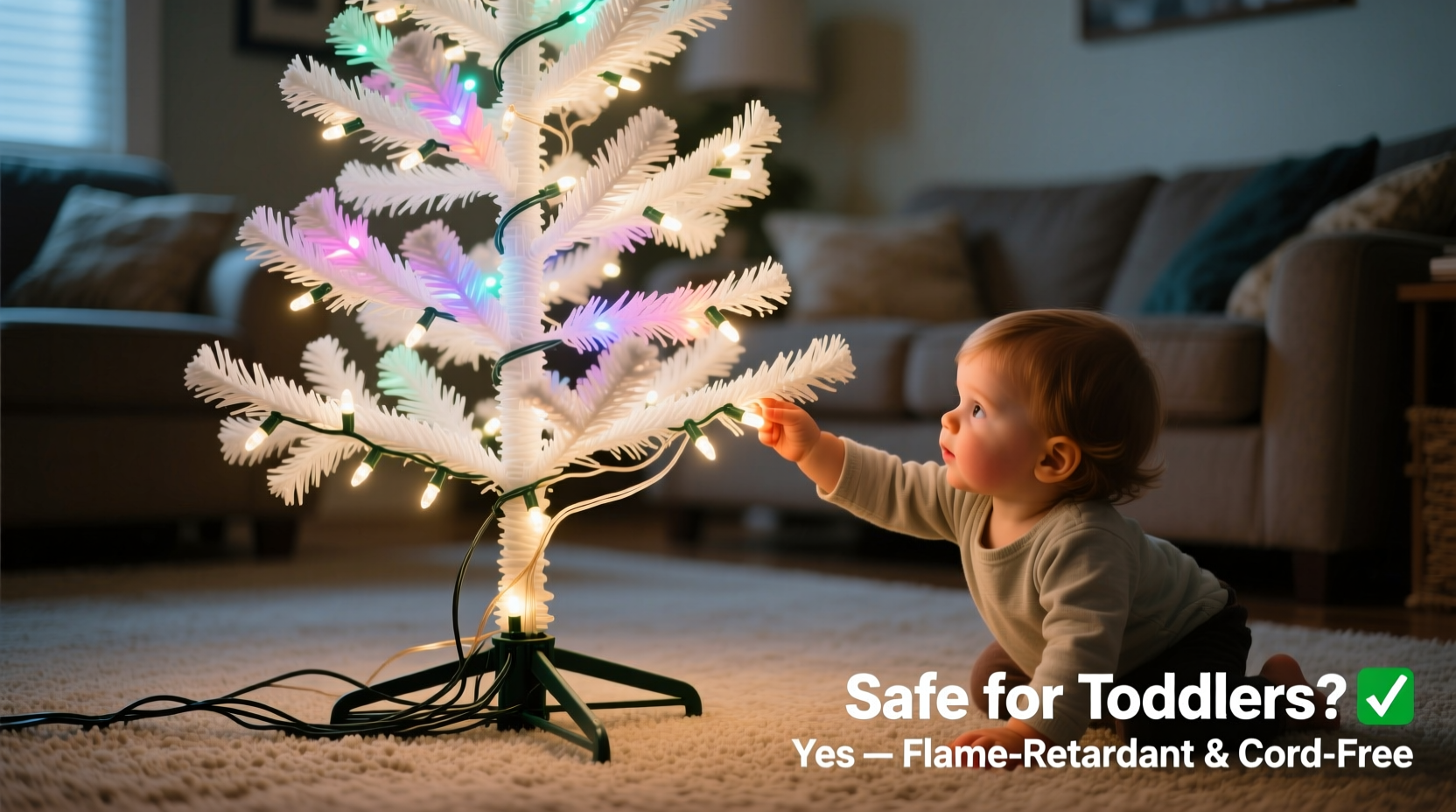
Fiber optic Christmas trees operate using bundles of thin, flexible optical fibers that transmit light from a central LED source located at the base. The light travels along the fibers and emits from their ends, creating a starry effect throughout the tree. Unlike traditional trees, there are no individual light sockets or strings draped around the branches, which reduces fire risk and eliminates tangled cords.
Most fiber optic trees are made from non-flammable or flame-retardant plastics such as PVC or acrylic. The internal lighting system uses low-voltage LEDs, which remain cool to the touch even after hours of operation. This makes them inherently safer than incandescent bulb-lit trees, which can become hot enough to cause burns or ignite nearby materials.
However, the structural integrity of these trees varies significantly between models. Many are designed more for visual appeal than durability. Their slender trunks and lightweight frames may not withstand persistent pulling or climbing. Some models use brittle materials that can crack under pressure, potentially exposing internal components.
Tip: Always check the manufacturer’s specifications for weight limits and recommended age ranges before placing a fiber optic tree in a home with young children.Potential Hazards for Toddlers Who Pull on Branches
Toddlers between 12 and 36 months are naturally inclined to interact physically with their environment. Pulling on objects helps them develop motor skills and test cause-and-effect relationships. Unfortunately, this behavior poses specific risks when directed toward decorative items like fiber optic trees.
1. Risk of Toppling
One of the most serious dangers is tipping. Many fiber optic trees are tall and narrow, with a high center of gravity. If a toddler pulls forcefully on an upper branch, the entire structure may become unstable and fall. Even lightweight trees can strike a child on the head or trap limbs underneath.
2. Exposure to Internal Components
While the outer casing is typically smooth and sealed, aggressive tugging can crack or break the trunk or base housing. This could expose wiring, circuit boards, or small parts. Though LED systems run on low voltage, any contact with internal electronics increases the risk of electric shock, especially if moisture is present (e.g., spilled drinks or wet hands).
3. Choking and Ingestion Risks
Broken fiber strands or detached decorative caps can become small, sharp fragments. These pose both choking and laceration hazards. Acrylic fibers may splinter into jagged pieces if snapped, and some bases include small screws or clips that could loosen over time.
4. Tripping and Entanglement
Although fiber optic trees don’t require external light strings, they still need a power cord running from the base to an outlet. This cord, often placed along the floor, presents a tripping hazard. A falling toddler could hit their head on the tree or injure themselves while trying to regain balance.
“Any decorative item placed in a shared living space with toddlers must be evaluated not just for its appearance, but for how it holds up under real-world interaction.” — Dr. Laura Bennett, Pediatric Safety Consultant
Safety Checklist: Evaluating Your Fiber Optic Tree
Before setting up your holiday display, go through this comprehensive checklist to assess whether your fiber optic tree is suitable for homes with active toddlers.
- ✅ Is the tree securely anchored or able to be stabilized with wall brackets or straps?
- ✅ Does the manufacturer list a stability rating or tip-resistance certification?
- ✅ Are all electrical components fully enclosed with no accessible screws, wires, or openings?
- ✅ Can the tree support light pressure without wobbling excessively?
- ✅ Is the power cord protected or routed out of walking paths?
- ✅ Are replacement parts or repair instructions available in case of damage?
- ✅ Have you tested the surface temperature after several hours of operation?
Real-Life Scenario: A Close Call During Holiday Prep
In suburban Ohio, Sarah M., a mother of two, purchased a six-foot fiber optic tree for her family’s living room. She chose it specifically because it didn’t require additional lights and looked elegant in their minimalist decor. On the second night after setup, her 18-month-old son crawled over and grabbed one of the upper branches while attempting to stand.
The tree swayed dramatically but did not fall. However, the force caused a small crack near the base where the fiber bundle entered the housing. Upon closer inspection, Sarah noticed a faint buzzing sound and saw a tiny spark when she unplugged the unit. She immediately removed the tree and contacted customer support, who confirmed that the internal LED module was now compromised.
Luckily, no injuries occurred, but the incident prompted Sarah to research safer alternatives. She later replaced the tree with a shorter, sturdier model mounted on a weighted base and installed a baby gate to restrict access during unsupervised times.
This example illustrates how seemingly minor interactions can lead to unexpected outcomes—even with products marketed as safe and modern.
Comparing Tree Types: Safety Features at a Glance
| Tree Type | Fire Risk | Heat Emission | Tipping Risk | Child Interaction Safety |
|---|---|---|---|---|
| Fiber Optic | Low (LEDs, no heat) | Minimal | Moderate to High | Low to Moderate (depends on build quality) |
| Traditional Artificial (with lights) | Moderate (if using incandescent bulbs) | High (bulbs get hot) | Moderate | Low (exposed wires, hot bulbs) |
| Unlit Artificial (add battery lights) | Very Low | None | Low to Moderate | High (if secured properly) |
| Live Evergreen | High (if dry) | None | Moderate | Low (sap, needles, water hazard) |
This comparison shows that while fiber optic trees excel in fire and heat safety, their structural vulnerability remains a concern—particularly in households where toddlers are learning to walk and explore.
Step-by-Step Guide: Making a Fiber Optic Tree Toddler-Safe
If you’ve already invested in a fiber optic tree or prefer its aesthetic, you can take proactive steps to minimize risks. Follow this timeline to ensure a safer holiday season.
- Week 1: Assess Stability
Place the tree on a flat surface and gently apply pressure to the midsection. Observe how much it wobbles. If it tips easily, consider anchoring options. - Week 2: Secure the Base
Attach the tree to a wall stud using L-brackets or furniture straps. Alternatively, place it in a corner where two walls provide natural support. - Week 3: Manage Cords
Route the power cord along baseboards and secure it with cord covers. Plug into a surge protector placed out of reach. - Week 4: Create a Physical Barrier
Use a baby gate, play yard, or furniture arrangement to keep toddlers at a safe distance. Supervise closely during free-play time. - Ongoing: Daily Inspection
Check for cracks, loose parts, or signs of overheating each evening. Unplug when leaving the house or going to bed.
“Prevention is always better than reaction. A few minutes of setup safety can prevent a lifetime of regret.” — National Fire Protection Association (NFPA) Child Safety Division
Frequently Asked Questions
Can my toddler get shocked by touching a broken fiber optic tree?
It’s unlikely but possible. Most fiber optic trees use low-voltage DC power (under 24 volts), which is generally safe to touch. However, if the internal transformer or circuit board is damaged and exposed to moisture or metal objects, there is a minimal risk of shock. Always unplug immediately if damage occurs.
Are there toddler-safe fiber optic trees on the market?
Some manufacturers design models with reinforced bases and shatter-resistant materials. Look for brands that advertise “tip-resistant” designs or include wall-mount kits. Read customer reviews focusing on durability and real-world performance with pets or children.
What’s a safer alternative to a tall fiber optic tree?
Consider a low-profile option such as a tabletop fiber optic tree placed on a high surface, or use battery-operated LED decorations in a sealed enclosure. Another idea is a fabric tree with sewn-in fairy lights, which can be soft and washable while still providing a festive glow.
Final Recommendations and Conclusion
Fiber optic Christmas trees offer undeniable charm and technological advantages over traditional lighting methods. For families without young children or with well-contained living spaces, they can be a safe and beautiful choice. However, for households with toddlers who pull, climb, or explore aggressively, extra precautions are non-negotiable.
No holiday decoration is worth compromising a child’s safety. If your current tree lacks stability, cannot be anchored, or shows signs of fragility, it may be wiser to opt for a different style. Prioritize models with wide bases, durable materials, and built-in safety certifications. When in doubt, keep the tree behind a barrier and supervise all interactions.
Holiday traditions should bring joy, not anxiety. By evaluating your space, understanding product limitations, and taking preventive action, you can enjoy the magic of a glowing tree while keeping your little ones protected.
💬 Have experience with fiber optic trees and toddlers? Share your story or safety hacks in the comments—your insight could help another parent make a safer choice this season.