It’s been nearly a decade since Apple and Samsung released two of their most iconic smartphones: the iPhone 6s and the Galaxy S7 Edge. At the time, both devices represented peak innovation in mobile technology—offering faster processors, improved cameras, and sleek new designs. For many users, choosing between them wasn’t just about brand loyalty; it was a decision that could influence their digital experience for years to come.
Today, with the benefit of hindsight, we can evaluate not just how these phones performed upon release—but whether upgrading to either device was truly worth it in the long run. Was the premium price justified? Did one outlast the other? And more importantly, which offered better real-world value over time?
Design and Build Quality: First Impressions Matter
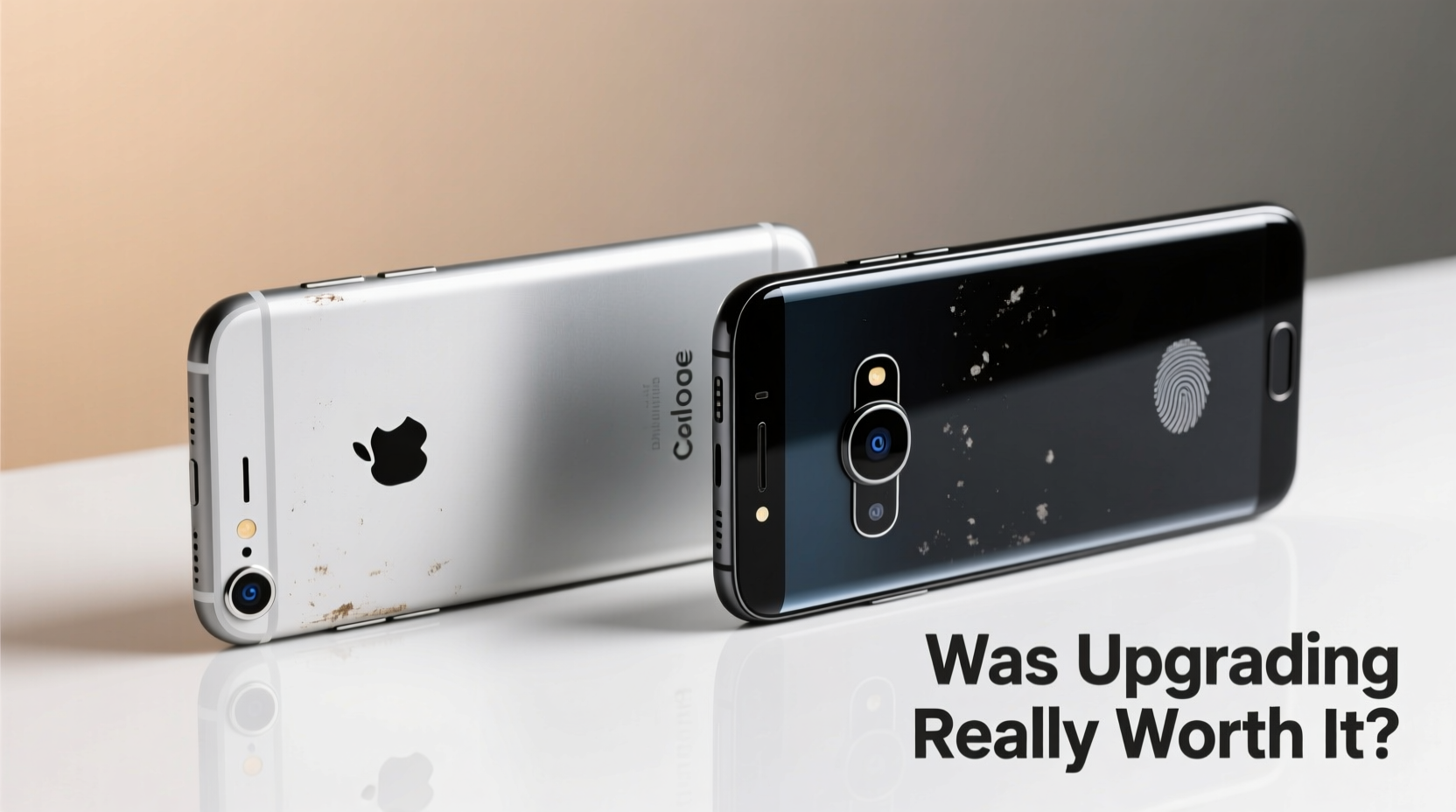
The iPhone 6s maintained Apple’s minimalist aluminum unibody design introduced with the iPhone 6, but with a key upgrade: stronger 7000-series aluminum to prevent “bendgate” issues. It felt solid, compact, and familiar—especially for existing iPhone users. The addition of 3D Touch brought a new layer of interactivity, allowing users to access contextual menus by pressing harder on the screen.
In contrast, the Galaxy S7 Edge stood out immediately with its dual-curved AMOLED display and glass-metal sandwich construction. The symmetrical curves gave it a futuristic look, and the device felt luxurious in hand. Despite using glass on both front and back, Samsung included IP68 water resistance—a feature Apple wouldn’t adopt until the iPhone 7.
Tip: Devices with water resistance and durable materials tend to last longer in daily use—even if they feel more fragile at first.While the S7 Edge turned heads, the iPhone 6s prioritized practicality. Its flatter edges made it easier to grip without a case, and the overall build proved resilient over time. However, the lack of water resistance became a growing drawback as competitors adopted the feature widely.
Performance and Software Longevity
Beneath the surface, both phones packed impressive hardware for their era. The iPhone 6s ran on Apple’s A9 chip with 2GB of RAM, while the Galaxy S7 Edge used either the Snapdragon 820 or Exynos 8890 (depending on region), also with 4GB of RAM. On paper, Samsung had the edge in multitasking capacity.
In practice, iOS’s optimization allowed the iPhone 6s to deliver smooth performance even years after launch. Apple supported the 6s with five major iOS updates—from iOS 10 through iOS 15—making it one of the longest-supported iPhones in history. This meant users could keep using modern apps and security features well into the late 2010s.
Samsung, on the other hand, provided only three major Android OS upgrades (from Marshmallow to Nougat to Oreo). After that, support dwindled. By 2020, the S7 Edge was no longer receiving security patches, limiting its usability in an increasingly app-dependent world.
“Software support is often more important than raw specs when judging long-term value.” — David Kim, Mobile Analyst at TechInsight Weekly
This difference in update policy significantly impacted longevity. An iPhone 6s user in 2021 could still browse securely, use banking apps, and receive messages. An S7 Edge owner faced increasing compatibility issues and potential security risks.
Camera Comparison: Photos That Lasted
| Feature | iPhone 6s | Galaxy S7 Edge |
|---|---|---|
| Rear Camera | 12MP, f/2.2 | 12MP Dual Pixel, f/1.7 |
| Front Camera | 5MP | 5MP |
| Low-Light Performance | Moderate | Excellent |
| Video Recording | 4K up to 30fps | 4K up to 30fps |
| Image Processing | Natural color tone | Vibrant, saturated output |
The Galaxy S7 Edge’s camera was ahead of its time. Its f/1.7 aperture and Dual Pixel autofocus allowed for exceptional low-light photography and fast focusing. For enthusiasts who loved capturing night scenes or indoor moments without flash, the S7 Edge was unmatched in its class.
The iPhone 6s delivered reliable, consistent photos with accurate colors and excellent dynamic range. While it struggled slightly in dim lighting, its video stabilization and audio recording were superior. For vloggers and casual users who prioritized stability over sheer brightness, the 6s remained a strong contender.
Real-World Example: Two Users, Five Years Later
Consider Sarah and James, both early adopters of these devices in 2016.
- Sarah bought the Galaxy S7 Edge for its stunning display and camera. She loved taking photos at concerts and posting them instantly. But by 2019, her phone began lagging. Apps crashed more often, and she couldn’t update WhatsApp past version 2.19. Security warnings appeared regularly. She replaced it in 2020.
- James chose the iPhone 6s for its ecosystem and durability. He didn’t care much about curved screens but valued reliability. Even in 2021, he used his 6s for emails, messaging, and light browsing. Though the battery degraded, iOS updates kept core functions secure and functional.
This scenario reflects a broader trend: Samsung’s hardware often dazzled at launch, but Apple’s software stewardship extended usable life far beyond expectations.
Was Upgrading Really Worth It?
For many, the answer depends on how they define “worth.”
If you valued cutting-edge design, immersive media consumption, and photographic capability, the Galaxy S7 Edge was absolutely worth the upgrade—especially if you planned to replace it within three years. Its screen remains one of the best AMOLED displays ever put in a smartphone, and its camera set benchmarks that influenced future models.
However, if your priority was long-term usability, security, and minimal friction with apps and services, the iPhone 6s delivered far greater return on investment. Supporting modern operating systems until 2021 means it stayed relevant nearly twice as long as its Android counterpart.
Tip: When upgrading, consider not just current performance but projected software support—often a better indicator of longevity than hardware alone.Checklist: Evaluating Upgrade Value (Retrospective)
- Did the device receive at least four years of OS updates?
- Was critical functionality (camera, messaging, web browsing) still usable after five years?
- Did the manufacturer provide regular security patches beyond three years?
- Could the phone run essential modern apps (banking, social media, navigation) in 2020+?
- Was repair and battery replacement accessible and affordable?
Frequently Asked Questions
Which phone had better battery life?
The Galaxy S7 Edge had a slight edge with its 3,600mAh battery compared to the iPhone 6s’s 1,715mAh. However, iOS optimization helped the 6s last a full day under moderate use. The S7 Edge could stretch further, especially with its adaptive screen brightness and power-saving modes.
Can either phone still be used today?
As of 2024, both are obsolete for primary use. The iPhone 6s lost support with iOS 16, and many apps now require iOS 17 or later. The S7 Edge hasn’t received security updates since 2020, making it risky for sensitive tasks. They may function as music players or offline devices, but neither is suitable for daily connectivity.
Why did Apple support the 6s for so long?
Apple’s vertically integrated ecosystem allows tighter control over hardware-software synergy. Unlike Android OEMs, Apple doesn’t rely on third-party drivers or chipset vendors for updates. This enables older devices to run newer OS versions efficiently, even with less RAM or older processors.
Final Verdict: Looking Back with Clarity
In the moment, the Galaxy S7 Edge felt like the future—curved glass, vivid colors, and a camera that rivaled standalone point-and-shoots. The iPhone 6s seemed incremental by comparison. But time revealed a different story.
True value isn’t always measured in megapixels or screen curvature. It’s found in sustained usability, ongoing security, and seamless integration with evolving digital ecosystems. By those metrics, the iPhone 6s emerges as the more worthwhile upgrade for most users.
That said, tech choices are personal. Some users prioritize short-term excellence over long-term endurance—and there’s merit in enjoying peak innovation while it lasts.
🚀 What was your upgrade experience in 2016? Share your thoughts on the iPhone 6s vs Galaxy S7 Edge era—what you loved, what disappointed you, and whether you’d make the same choice today.