Types of 2 Ohm Resistor Color Code & Resistor Materials
A 2 ohm resistor is a fundamental passive component used in electronic circuits to limit current flow, divide voltages, and dissipate power. The resistance value—measured in ohms (Ω)—indicates how much the resistor opposes electrical current. A 2 ohm resistor provides minimal resistance, making it ideal for high-current applications such as power amplifiers, automotive systems, and audio equipment.
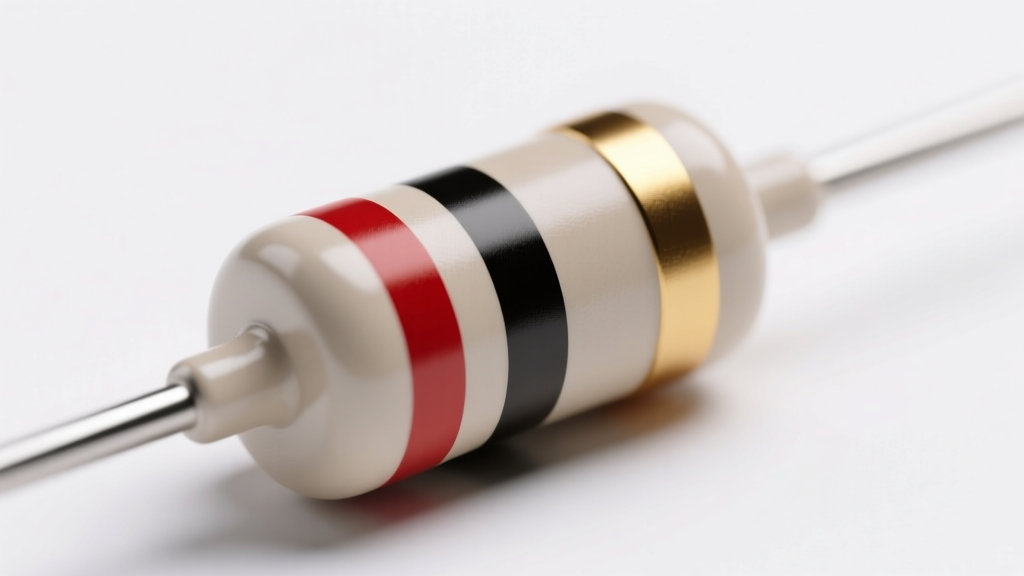
The color code for a 2 ohm resistor typically follows the standard 4-band or 5-band system. For a 4-band resistor:
- First band: Red (2)
- Second band: Black (0)
- Third band: Gold (multiplier of 0.1)
- Fourth band: Gold or Silver (tolerance of ±5% or ±10%)
This translates to 20 × 0.1 = 2 ohms. In 5-band resistors, precision increases with an extra significant digit, allowing tighter tolerances and improved accuracy in sensitive circuits.
Common Resistor Materials and Their Characteristics
Different materials are used to manufacture resistors, each offering unique benefits in terms of precision, stability, power handling, and cost. Below is a detailed breakdown of the most common types used in 2 ohm and similar low-resistance applications.
Carbon Composition
One of the oldest resistor types, made from a mixture of carbon powder and ceramic binder, compressed into a cylindrical shape.
Advantages
- High surge current handling
- Robust under voltage spikes
- Inexpensive to produce
- Compact size
Limitations
- Poor temperature stability
- Higher noise levels
- Lower precision (typically ±5% to ±20%)
- Ages over time, altering resistance
Best for: Vintage electronics, surge protection, non-critical circuits
Metal Film
Manufactured by depositing a thin metal layer (like nickel-chromium) on a ceramic substrate, then spiraled to set resistance.
Advantages
- High precision (±1% or better)
- Low noise and excellent stability
- Low temperature coefficient
- Minimal long-term drift
Limitations
- Lower surge tolerance than carbon types
- More expensive than carbon
- Limited to moderate power ratings
Best for: Precision circuits, audio equipment, signal conditioning
Metal Oxide
Made from metal oxide films (e.g., tin oxide), offering a balance between durability and performance.
Advantages
- Better power handling than metal film
- Improved stability and reliability
- Good resistance to humidity and heat
- Higher operating temperature range
Limitations
- Slightly lower precision than metal film
- Higher noise than film types
- More costly than carbon
Best for: Industrial controls, power supplies, automotive systems
Wire Wound
Constructed by winding a resistive wire (like nichrome) around a ceramic or fiberglass core, ideal for high-power applications.
Advantages
- Extremely high precision and stability
- Handles very high power and current
- Excellent thermal dissipation
- Low temperature coefficient
Limitations
- Inductive at high frequencies
- Larger physical size
- Higher cost
- Not ideal for high-frequency AC circuits
Best for: Power amplifiers, motor controls, high-current 2 ohm applications
Carbon Film
Produced by depositing a carbon film on an insulating core, offering improved performance over carbon composition.
Advantages
- Better stability and lower noise than carbon composition
- Improved tolerance (±2% to ±5%)
- Good temperature performance
- Cost-effective for general use
Limitations
- Lower power rating than wire wound
- Not suitable for high-precision circuits
- Can degrade under high humidity
Best for: General-purpose electronics, consumer devices, low-cost circuits
| Resistor Type | Precision | Power Handling | Noise Level | Best Use Case |
|---|---|---|---|---|
| Carbon Composition | Fair | Medium | High | Surge protection, vintage gear |
| Metal Film | Excellent | Low-Medium | Very Low | Precision analog circuits |
| Metal Oxide | Good | High | Low | Industrial and automotive |
| Wire Wound | Excellent | Very High | Low | High-power 2Ω applications |
| Carbon Film | Good | Medium | Moderate | General electronics |
Physical Shapes and Sizes
Resistors come in various physical forms—including cylindrical (axial), rectangular (surface-mount), and specialized geometries—each designed for specific circuit board layouts and thermal requirements. The size directly affects the resistor’s ability to dissipate heat, which is crucial in high-current 2 ohm applications. Larger packages (e.g., 5W, 10W) are used in amplifiers and power systems to prevent overheating and ensure long-term reliability.
Expert Tip: When using a 2 ohm resistor in high-power circuits, always calculate the power dissipation (P = I²R) to select a resistor with adequate wattage rating. Undersized resistors can overheat and fail prematurely.
Features, Specifications, and Uses of the 2 Ohm Resistor Color Code
A 2 ohm resistor is a fundamental passive component in electronic circuits, widely used for current limiting, voltage division, and signal conditioning. Understanding its color code, construction, and technical parameters is essential for engineers, technicians, and hobbyists alike. This guide provides a comprehensive overview of the features, specifications, and practical applications of 2 ohm resistors, with emphasis on their color coding system and performance characteristics.
Key Features of 2 Ohm Resistors
Color Code Identification
The 2 ohm resistor is identified by a specific color band pattern: Red-Black-Gold-Gold (for 5% tolerance) or Red-Black-Gold-Red (for 2% tolerance). The first band (Red) represents the digit 2, the second band (Black) represents 0, the third band (Gold) indicates a multiplier of 0.1, and the fourth band shows the tolerance (Gold = ±5%, Red = ±2%). This results in 20 × 0.1 = 2 ohms.
Accurate interpretation of these bands ensures correct component selection and prevents circuit malfunction due to incorrect resistance values.
Construction Materials
2 ohm resistors are manufactured using various materials, each offering distinct advantages:
- Carbon Composition: Durable and cost-effective, suitable for general-purpose use but with higher noise and lower precision.
- Metal Film: Offers high precision, low noise, and excellent stability—ideal for sensitive analog circuits.
- Carbon Film: Balances performance and cost, commonly used in consumer electronics.
- Metal Oxide: Provides high surge resistance and thermal stability, often used in power applications.
- Wire Wound: Designed for high-power applications, capable of handling large currents with minimal drift.
Physical Form Factors
2 ohm resistors are available in multiple shapes and sizes to suit different mounting techniques and space constraints:
- Cylindrical (Axial Lead): Traditional through-hole design, easy to use in breadboards and prototyping.
- Rectangular (Surface Mount - SMD): Compact size ideal for PCBs in modern electronics like smartphones and IoT devices.
- Spherical or Chip Resistors: Used in high-density circuitry where space is limited.
These form factors ensure compatibility across a wide range of applications, from industrial equipment to DIY electronics projects.
Performance Characteristics
Modern 2 ohm resistors are engineered for reliability and consistency:
- Low temperature coefficient for minimal resistance drift under thermal stress.
- High noise immunity, especially in metal film types, making them suitable for audio and measurement circuits.
- Stable long-term performance with minimal aging effects when operated within rated parameters.
These features make 2 ohm resistors reliable components in both analog and digital systems.
Technical Specifications
| Parameter | Typical Value | Description |
|---|---|---|
| Resistance Value | 2 Ω | Exact resistance may vary based on tolerance; measured using multimeter or LCR meter. |
| Tolerance | ±1% to ±5% | Common in metal film (±1%), carbon film (±5%), and wire wound (±5%). Precision applications require tighter tolerances. |
| Temperature Coefficient | 15–50 ppm/°C | Metal film: ~15 ppm/°C; Carbon composition: ~50 ppm/°C. Lower values indicate better stability. |
| Power Rating | 0.25W – 10W | Standard metal film: 0.25W–0.5W; Power amplifiers and industrial circuits use 5W–10W wire-wound variants. |
| Operating Temperature | -55°C to +155°C | Wide range ensures functionality in extreme environments, including automotive and outdoor electronics. |
Common Applications and Uses
Important: Always verify the resistor's color code before installation, especially in high-current applications. Using an incorrect resistor can lead to overheating, circuit damage, or fire hazards. For power-intensive applications (e.g., amplifiers), ensure the resistor has an adequate power rating (e.g., 5W or higher) and proper heat dissipation. When in doubt, consult the circuit schematic or use a digital multimeter to confirm resistance value.
How To Choose 2 Ohm Resistor Color Code
Selecting the correct 2 ohm resistor involves more than just identifying the color bands—it requires understanding the electrical, environmental, and application-specific factors that ensure reliability and performance. Whether you're designing a circuit, replacing a component, or troubleshooting, choosing the right 2 ohm resistor is crucial for optimal functionality and safety.
Understanding the 2 Ohm Color Code
The resistor color code is a standardized system used to identify resistance values. For a 2 ohm resistor, the color bands are typically:
- First band: Red (2)
- Second band: Black (0)
- Third band (multiplier): Gold (×0.1)
- Fourth band (tolerance): Gold (±5%) or Brown (±1%)
This results in a 2.0 × 0.1 = 2 ohms. Always verify the band sequence and direction—some resistors use a wider tolerance band or have spacing clues to determine orientation.
Pro tip: Use a multimeter to confirm resistance when color bands are faded or unclear.
Resistance Value and Tolerance
While the nominal value is 2 ohms, real-world resistors vary slightly. Tolerance defines this variation:
- ±5% (Gold): Value ranges from 1.9Ω to 2.1Ω – suitable for general-purpose circuits
- ±1% (Brown): Tighter range (1.98Ω–2.02Ω) – ideal for precision applications like amplifiers or feedback loops
- Metal film resistors often offer 1% tolerance and better stability than carbon composition types
Key insight: High-precision circuits (e.g., measurement devices) benefit from low-tolerance resistors to minimize error accumulation.
Power Rating Requirements
Power rating determines how much heat a resistor can safely dissipate without damage. For a 2 ohm resistor:
- 0.25W: Suitable for low-current signal paths or logic circuits
- 0.5W: Common for moderate loads like LED drivers or small motor controls
- 1W or higher: Required in power amplifiers, current sensing, or high-current applications
Always calculate power using P = I²R or P = V²/R and select a resistor rated at least 1.5× the expected power dissipation for safety and longevity.
Safety note: Undersized resistors can overheat, fail, or cause circuit damage.
Temperature Coefficient (TempCo)
The temperature coefficient measures how much resistance changes with temperature, expressed in ppm/°C (parts per million per degree Celsius).
- Metal film resistors: Typically 50–100 ppm/°C; premium versions as low as 15 ppm/°C
- Carbon composition: Higher variation (500+ ppm/°C), less stable in fluctuating environments
- Low TempCo is essential in precision instrumentation, automotive sensors, and industrial controls
Design tip: In environments with wide temperature swings (e.g., outdoor or engine compartments), choose resistors with low TempCo for consistent performance.
Material Type and Performance
The resistor material significantly impacts noise, stability, and longevity:
- Metal film: Low noise, high stability, excellent tolerance – best for audio, measurement, and sensitive analog circuits
- Carbon film: Moderate performance, cost-effective – good for general electronics
- Carbon composition: Older technology; higher noise and drift – avoid in precision designs
- Wirewound: High power handling, very stable – used in power supplies and high-current systems
Upgrade recommendation: Replace carbon composition with metal film in vintage gear for improved reliability and sound quality.
Size, Shape, and Environmental Factors
Physical dimensions must match your PCB layout or enclosure space. Common sizes include:
- 1/4W: ~6.3mm length
- 1/2W: ~9.2mm
- 1W: ~11.5mm
Consider environmental conditions:
- High humidity: Use conformal-coated or sealed resistors
- Vibration-prone areas: Opt for axial-lead or surface-mount with secure mounting
- High-temperature zones: Flameproof or ceramic-encased resistors (e.g., fusible types) enhance safety
Installation tip: Maintain proper lead spacing and avoid mechanical stress during soldering.
Professional Recommendation: For most modern applications, choose a 2 ohm metal film resistor with at least 0.5W power rating and 1% tolerance. This combination offers excellent stability, low noise, and reliable performance across a wide range of conditions. Always double-check the color code and verify with a multimeter when accuracy is critical.
| Resistor Type | Tolerance | TempCo (ppm/°C) | Best Use Case | Color Code (2Ω Example) |
|---|---|---|---|---|
| Metal Film | ±1% | 15–50 | Precision circuits, audio, sensors | Red, Black, Gold, Brown |
| Carbon Film | ±5% | 100–300 | General-purpose electronics | Red, Black, Gold, Gold |
| Carbon Composition | ±5% to ±20% | 500+ | Vintage equipment (not recommended for new designs) | Red, Black, Gold, Gold |
| Wirewound | ±1% to ±5% | 5–50 | High-power applications, current sensing | Often marked with numbers; color codes vary |
Additional Selection Tips
- Testing: Always measure resistance with a digital multimeter before installation, especially in critical circuits.
- Noise Sensitivity: In audio or RF circuits, metal film resistors reduce unwanted hiss and interference.
- Surface Mount vs. Through-Hole: Choose based on your PCB design—SMD resistors save space, while through-hole versions are easier to handle and replace.
- Long-Term Stability: Premium resistors maintain their value over time and temperature cycles, reducing drift in calibrated systems.
- Supplier Reliability: Stick to reputable brands (e.g., Vishay, Panasonic, Yageo) to ensure consistent quality and specifications.
What Makes 2 Ohm Resistor Color Code Durable: A Comprehensive Guide
The durability of a 2 ohm resistor, identified by its distinct color code (Red-Black-Gold or Red-Black-Silver for tolerance), is not just about resistance value—it's deeply tied to the materials, construction techniques, and environmental resilience of the resistor type. Different resistor technologies offer unique advantages in durability, making them suitable for specific applications ranging from consumer electronics to industrial systems operating under extreme conditions.
Technical Note: The color code for a 2 ohm resistor is typically Red (2), Black (0), Gold (x0.1 multiplier), resulting in 20 x 0.1 = 2 ohms. Tolerance bands (Gold = ±5%, Silver = ±10%) further define performance consistency.
Carbon Composition Resistors: High-Temperature Resilience
Carbon composition resistors are constructed from a mixture of finely ground carbon and ceramic (binder) compressed into a cylindrical form. This composite structure provides exceptional thermal stability.
- Can withstand operating temperatures up to 500°C, making them ideal for high-heat environments such as power supplies and industrial heating controls
- Naturally resistant to voltage spikes and transient surges due to inherent material properties
- Used in legacy and high-reliability applications where thermal shock resistance is critical
- However, they exhibit higher noise levels and lower precision compared to modern alternatives
Film Resistors: Precision and Stability
Film resistors are among the most widely used types due to their balance of durability, accuracy, and cost-effectiveness. They come in two primary forms: metal film and metal oxide film.
Metal Film Resistors
- Constructed by depositing a thin layer of metal (often nickel-chromium) onto a ceramic rod or substrate
- Polished to precise resistance values using laser trimming for high accuracy (±1% tolerance common)
- Offer low noise, excellent temperature stability, and minimal drift over time
- Ideal for precision circuits in audio equipment, measurement devices, and control systems
Metal Oxide Film Resistors
- Use a metal oxide coating (e.g., tin oxide) on a ceramic body, enhancing durability under high power loads
- Superior to standard metal film in terms of overload capability and moisture resistance
- Commonly used in power supplies, motor controls, and outdoor electronics exposed to humidity
- Retain stability even after prolonged exposure to elevated temperatures (up to 175°C)
Wire Wound Resistors: Mechanical and Thermal Toughness
Wire wound resistors are engineered for extreme durability, especially in high-power and high-vibration environments.
- Constructed by winding a resistive wire (typically nichrome or similar alloy) around a ceramic or fiberglass core
- Provide exceptional resistance to mechanical shock, vibration, and thermal cycling
- High-end versions use gold-plated terminals and nickel-chromium wire for superior corrosion resistance
- Often encapsulated in silicone or ceramic coatings to protect against moisture, dust, and chemicals
- Used in automotive systems, industrial machinery, and aerospace applications
Carbon and Ceramic Composite Resistors: Flameproof and Rugged
These resistors combine a carbon-based resistive element embedded in a ceramic matrix, offering a unique blend of flexibility and robustness.
- Designed specifically for harsh environments including high humidity, chemical exposure, and mechanical stress
- Incorporate flameproof casings that prevent ignition under overload conditions—critical for safety-critical applications
- Fail-safe design ensures open-circuit failure mode instead of shorting, reducing fire risk
- Commonly found in power amplifiers, industrial controls, and emergency systems
Rectangular (Chip) Resistors: SMT Durability
Surface Mount Technology (SMT) chip resistors, often rectangular in shape, are built using ceramic substrates with deposited resistive films.
- Constructed from a ceramic chip base with a metal film or thick-film resistive layer
- Highly resistant to physical stress during automated assembly and thermal expansion during soldering
- Protected by multiple layers of coating (epoxy, glass, or polymer) to resist moisture, solvents, and thermal fatigue
- Compact size and high reliability make them ideal for smartphones, PCBs, and compact electronics
- Available in precision grades with tight tolerances and stable temperature coefficients
| Resistor Type | Key Durability Features | Max Operating Temp | Typical Applications |
|---|---|---|---|
| Carbon Composition | High heat resistance, surge tolerance | Up to 500°C | Power supplies, vintage electronics |
| Metal Film | Low noise, stable, precise | 155–175°C | Audio, instrumentation, consumer electronics |
| Metal Oxide Film | High power, moisture resistant | 175–200°C | Industrial controls, outdoor equipment |
| Wire Wound | Shock/vibration resistant, high power | 300–450°C | Automotive, aerospace, heavy machinery |
| Chip (SMT) | Compact, moisture-resistant, automated assembly | 155°C | Smartphones, PCBs, compact devices |
Expert Tip: When selecting a 2 ohm resistor for demanding applications, consider not just the resistance value but also the power rating, temperature coefficient, and environmental protection. A properly chosen resistor can last decades even under stress, while an underspecified one may fail prematurely.
Why Durability Matters in Real-World Applications
The durability of a 2 ohm resistor directly impacts the reliability and safety of the entire system. In automotive circuits, for example, wire wound resistors handle vibration and heat from engines. In industrial sensors, metal oxide film resistors endure humidity and chemical exposure. Even in everyday electronics, chip resistors must survive thermal cycling during soldering and daily operation.
Properly color-coded and constructed resistors ensure consistent performance, reduce maintenance costs, and enhance system longevity. Understanding the construction behind the 2 ohm value allows engineers and hobbyists to make informed choices based on environmental demands.
Frequently Asked Questions About 2 Ohm Resistor Color Codes
Q1: What Is The 2 Ohm Resistor Color Code, And Why Is It Important?The 2 ohm resistor color code refers to the standardized system of colored bands printed on the body of a resistor that indicates its electrical resistance value and tolerance. These color bands allow engineers, technicians, and hobbyists to quickly identify the resistor’s specifications without needing to measure it with a multimeter.
This coding system is critically important because:
- Accuracy: Ensures precise identification of resistance values during circuit design and repair.
- Efficiency: Speeds up assembly and troubleshooting processes in electronics manufacturing and prototyping.
- Error Prevention: Reduces the risk of installing incorrect components, which could lead to circuit malfunction or damage.
- Standardization: Provides a universal language for resistors across different manufacturers and countries.
For a 2 ohm resistor, the color bands directly represent this low resistance value, making it essential for applications requiring minimal resistance to current flow.
Q2: What Do The Colors Mean In A 2 Ohm Resistor Color Code?Resistor color codes follow a standardized pattern where each color represents a numerical value or multiplier. In a typical 4-band resistor:
- First Band: First significant digit of the resistance value.
- Second Band: Second significant digit.
- Third Band: Multiplier (number of zeros to add).
- Fourth Band: Tolerance (accuracy of the resistance value).
For a 2 ohm resistor, the color bands are usually:
- Red (2) – First digit
- Black (0) – Second digit (forming "20")
- Silver (×0.01) – Multiplier (0.01 × 20 = 0.2 → but wait! This would give 0.2Ω)
Actually, a true 2Ω resistor typically uses:
- Red (2) – First digit
- Black (0) – Second digit → "20"
- Gold (×0.1) – Multiplier → 20 × 0.1 = 2Ω
- Gold or Silver – Tolerance band (±5% or ±10%)
So the correct color code for a 2 ohm resistor is: Red, Black, Gold, [Tolerance].
Q3: How Can People Read A 2 Ohm Resistor Color Code?Reading a 2 ohm resistor involves understanding the sequence and meaning of the color bands. Here’s a step-by-step guide:
- Identify the Direction: Locate the tolerance band (usually gold or silver), which is spaced farther apart or placed at the end. This is the last band.
- Read the First Two Bands: These represent the significant digits. For example:
- Red = 2
- Black = 0
- So together they form "20"
- Apply the Multiplier (Third Band):
- Gold = ×0.1
- So: 20 × 0.1 = 2 ohms
- Check Tolerance (Fourth Band):
- Gold = ±5%
- Silver = ±10%
- This means a 2Ω ±5% resistor can range from 1.9Ω to 2.1Ω.
Example: A resistor with bands Red, Black, Gold, Gold = 2Ω ±5%.
Always double-check using a multimeter when possible, especially if the colors are faded or hard to distinguish.
Q4: Why Are 2 Ohm Resistors Important In Circuits?2 ohm resistors play a vital role in various electronic applications due to their low resistance, which allows higher current flow while still providing controlled impedance. Their key functions include:
- Current Limiting: Used in power circuits to manage current flow and protect sensitive components from excessive current.
- Load Testing: Serve as dummy loads for testing amplifiers, batteries, and power supplies under realistic conditions.
- Audio Systems: Commonly used in car audio and speaker networks where impedance matching is crucial for optimal sound quality and amplifier stability.
- Signal Conditioning: Help shape signals in analog circuits by controlling voltage drops and filtering characteristics.
- Heat Generation: Used in heating elements or thermal testing where controlled power dissipation is required.
- Current Sensing: Paired with measurement circuits to detect current flow via voltage drop (Ohm’s Law: V = I×R).
Because of their low resistance, 2 ohm resistors are often built with higher wattage ratings to handle more power without overheating, making them robust components in high-current environments.
Q5: What Is The Function Of Silver And Gold Bands In A 2 Ohm Resistor Color Code?The silver and gold bands in a resistor color code are primarily used as tolerance indicators, showing how much the actual resistance can deviate from the stated value.
| Band Color | Position | Meaning | Tolerance | Example (2Ω Resistor) |
|---|---|---|---|---|
| Gold | Fourth band (tolerance) | ±5% accuracy | ±5% | Actual value: 1.9Ω – 2.1Ω |
| Silver | Fourth band (tolerance) | ±10% accuracy | ±10% | Actual value: 1.8Ω – 2.2Ω |
| Gold | Third band (multiplier) | Multiplier of ×0.1 | N/A | Used to calculate 20 × 0.1 = 2Ω |
| Silver | Third band (multiplier) | Multiplier of ×0.01 | N/A | 20 × 0.01 = 0.2Ω (not 2Ω) |
Note: Gold and silver can appear in different positions with different meanings:
- In the third band, they act as multipliers (×0.1 or ×0.01).
- In the fourth band, they indicate tolerance (±5% or ±10%).
For a 2 ohm resistor, gold in the third band (×0.1) is essential to achieve the correct value. The fourth band (gold or silver) tells you how precise the resistor is, which is important in precision circuits.