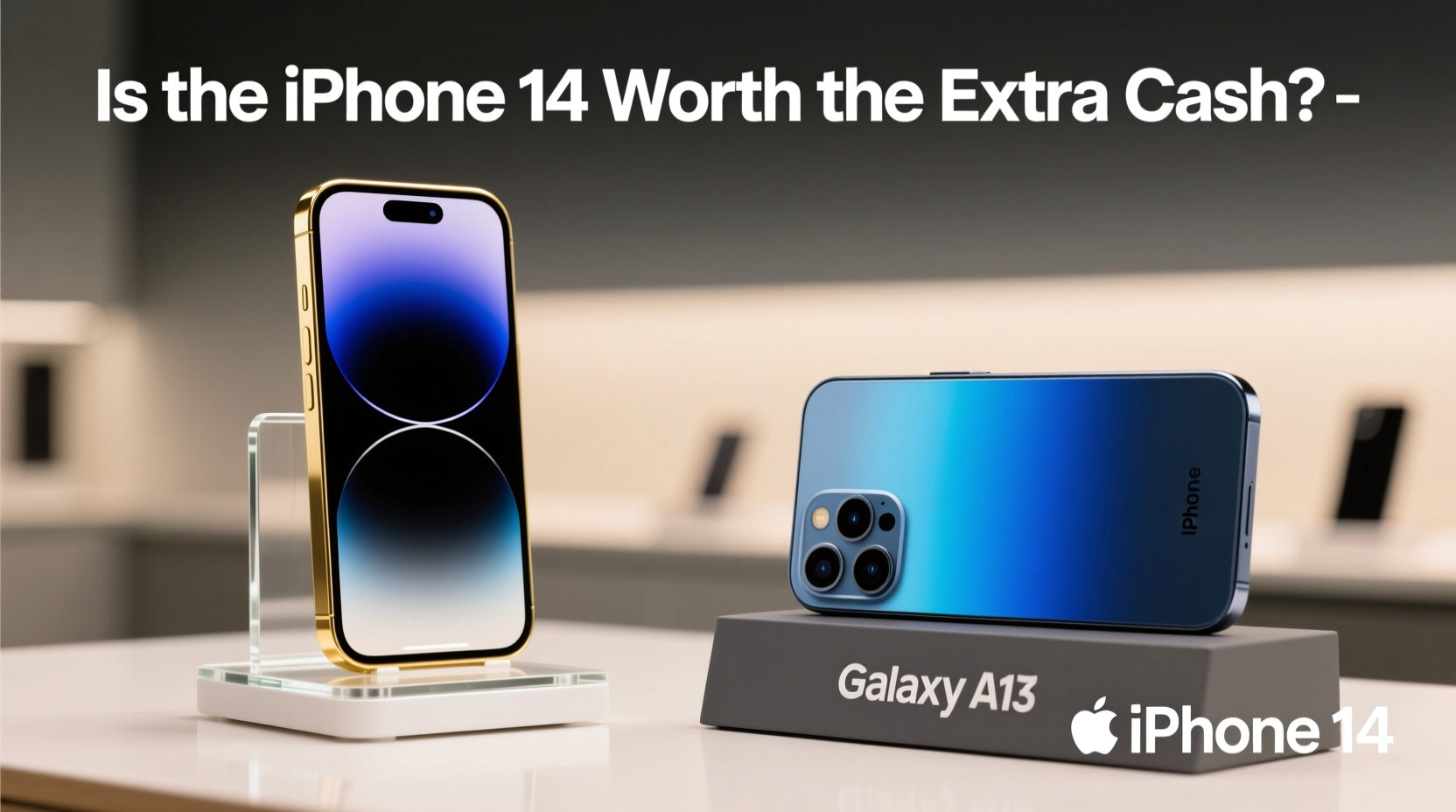
The smartphone market today offers an overwhelming range of choices across every price point. At one end, you have premium devices like the Apple iPhone 14, priced at around $799 at launch. On the other, budget-friendly models such as the Samsung Galaxy A13 sit comfortably under $300. The natural question arises: for users considering both options, is the iPhone truly worth nearly triple the cost?
This isn’t just about brand loyalty or design preferences—it’s about real-world performance, longevity, software experience, and overall value. Let’s dissect these two phones across key categories to determine whether the iPhone 14 delivers enough tangible benefits to justify its higher price tag.
Design and Build Quality
The iPhone 14 features a sleek aerospace-grade aluminum frame with a ceramic shield front cover, offering superior drop resistance. It’s compact, weighing just 172 grams, and feels solid in hand. Its IP68 water and dust resistance rating means it can survive submersion up to 6 meters for 30 minutes—ideal for accidental spills or rainy commutes.
In contrast, the Galaxy A13 uses a plastic body and lacks any official water resistance certification. While its 6.6-inch display provides more screen real estate, the device feels lighter and less premium. At 195 grams, it’s bulkier despite housing lower-tier materials. The trade-off is clear: Samsung prioritizes screen size and affordability over durability and refinement.
Tip: If you frequently use your phone outdoors or in unpredictable environments, build quality and water resistance are worth paying extra for.Performance and Longevity
The heart of any smartphone is its processor, and here the gap is stark. The iPhone 14 runs on Apple’s A15 Bionic chip—a powerhouse built on a 5nm process with six-core CPU and five-core GPU. Even years after release, this chip handles demanding games, multitasking, and video editing without breaking a sweat.
The Galaxy A13, meanwhile, uses the Exynos 850 or MediaTek Dimensity 700 (depending on region), both entry-level chips manufactured on older 8nm or 11nm processes. These processors struggle with heavier apps and multitasking, often leading to stuttering or app reloads when switching between tasks.
But raw speed isn’t the only factor. Software optimization plays a critical role. iOS is tightly integrated with Apple’s hardware, allowing even older iPhones to run smoothly for five years or more. Android phones, especially budget ones like the A13, typically receive only two major OS updates and may slow down noticeably within two years due to bloatware and inefficient background processes.
“Apple’s vertical integration gives them unmatched control over performance and update delivery. An iPhone from three years ago often outperforms new mid-range Android phones.” — David Kim, Mobile Analyst at TechInsight Weekly
Camera Comparison: Real-World Results
Both phones feature multiple rear cameras, but their output differs significantly in practice.
| Feature | iPhone 14 | Galaxy A13 |
|---|---|---|
| Main Sensor | 12MP, f/1.5 aperture, OIS | 50MP, f/1.8 aperture, no OIS |
| Ultra-Wide | 12MP, f/2.4 | 5MP, f/2.2 |
| Low-Light Performance | Excellent with Night mode | Poor detail retention, high noise |
| Video Recording | 4K at 60fps, cinematic mode | 1080p at 30fps max |
| Front Camera | 12MP, f/1.9, Deep Fusion | 8MP, f/2.2 |
The iPhone’s smaller megapixel count belies its superior image processing. Its larger sensor pixels capture more light, and optical image stabilization reduces blur in motion or low light. Smart HDR and Deep Fusion enhance dynamic range and texture without oversharpening.
The Galaxy A13’s 50MP main sensor sounds impressive on paper, but in reality, it combines pixels into 12.5MP photos, and the lack of OIS results in softer images, especially in dim conditions. Video quality is limited to Full HD, making it unsuitable for content creators or vloggers.
Battery Life and Charging
The Galaxy A13 has a 5000mAh battery, significantly larger than the iPhone 14’s 3279mAh unit. However, battery life isn’t solely determined by capacity. Efficiency matters.
Despite its smaller battery, the iPhone 14 lasts through a full day of moderate to heavy use thanks to the energy-efficient A15 chip and optimized iOS power management. Apple estimates up to 20 hours of video playback.
The Galaxy A13 also lasts a full day, sometimes stretching into a second, but this comes at the cost of screen-on time efficiency. With its 60Hz LCD panel and less efficient processor, it drains faster during streaming or gaming. Additionally, charging is limited to 15W, while the iPhone supports 20W fast charging (though no charger included).
Neither supports wireless charging, keeping costs down. But if long-term battery health is a concern, iPhones generally maintain battery capacity better over time due to optimized charging algorithms that reduce wear.
Software Experience and Updates
This is where the iPhone pulls far ahead. The iPhone 14 launched with iOS 16 and will likely receive updates through iOS 22 or beyond—six to seven years of support. Each update brings security patches, new features, and compatibility with future apps.
The Galaxy A13 shipped with Android 12 and is eligible for upgrades to Android 14—just two major versions. After that, it will only get security patches until 2025. Many third-party apps, including banking and productivity tools, eventually drop support for outdated OS versions, rendering older phones functionally obsolete.
iOS also offers tighter ecosystem integration. Features like iMessage, FaceTime, AirDrop, iCloud syncing, and seamless pairing with Macs, iPads, and Apple Watches add convenience that Android alternatives haven’t fully matched.
Tip: If you already own other Apple devices, the iPhone enhances their functionality—making the upgrade more valuable.Real-World Example: Maria’s Upgrade Dilemma
Maria, a college student, needed a new phone on a tight budget. She considered the Galaxy A13 for its low upfront cost. Her friend recommended the iPhone 14, noting long-term savings. Maria opted for the A13, saving $500. Within 18 months, she noticed constant lag, failed app updates, and degraded battery life. By year two, her phone couldn’t run basic social media apps smoothly.
She ended up buying a used iPhone SE, spending $300—still less than the iPhone 14, but more than she’d saved initially. Had she invested in the iPhone 14 earlier, she would’ve avoided the hassle and likely kept the same device through graduation.
Value Over Time: The True Cost of Ownership
Let’s examine total cost over three years:
- iPhone 14: $799 initial cost, lasts 4–5 years, retains ~50% resale value after 3 years (~$400).
- Galaxy A13: $279 initial cost, lasts 2–2.5 years, minimal resale value.
If you replace the A13 twice within five years, you spend nearly $558—almost 70% of the iPhone’s price—with worse performance and user experience. The iPhone not only lasts longer but also holds value if resold.
Checklist: Should You Choose the iPhone 14?
Ask yourself the following before deciding:
- Do I plan to keep my phone for more than two years?
- Do I value consistent software updates and security patches?
- Am I part of the Apple ecosystem (Mac, iPad, Apple Watch)?
- Do I take a lot of photos or record videos?
- Is build quality and durability important to me?
- Can I afford higher upfront cost for long-term savings?
If you answered “yes” to three or more, the iPhone 14 is likely the smarter investment.
Frequently Asked Questions
Can the Galaxy A13 handle everyday tasks like social media and calls?
Yes, the A13 performs adequately for basic tasks like browsing, messaging, and video calls. However, multitasking and app switching may feel sluggish over time.
Does the iPhone 14 have a headphone jack?
No, neither phone includes a headphone jack. Both require Bluetooth headphones or a Lightning-to-3.5mm adapter for wired audio.
Is the iPhone 14 waterproof?
It’s not fully waterproof but has an IP68 rating, meaning it can withstand temporary submersion in water up to 6 meters deep for 30 minutes. Always rinse with fresh water if exposed to salt or chlorine.
Final Verdict: Is the iPhone Worth the Extra Cash?
The answer depends on your priorities. If you need a phone immediately and are highly budget-constrained, the Galaxy A13 gets you online and functional at a fraction of the cost. It’s a viable short-term solution.
But if you value longevity, consistent performance, superior cameras, timely updates, and a cohesive digital ecosystem, the iPhone 14 justifies its price. You’re not just buying a phone—you’re investing in four to five years of reliable use, better resale value, and fewer frustrations.
For most users who can stretch their budget or opt for refurbished or carrier deals, the iPhone 14 delivers significantly better long-term value. The extra cash isn’t just for branding—it’s for engineering, support, and peace of mind.
🚀 Ready to make a smarter phone choice? Re-evaluate your usage patterns and upgrade cycle. Share your thoughts or experiences in the comments below—your insight could help someone avoid buyer’s remorse.