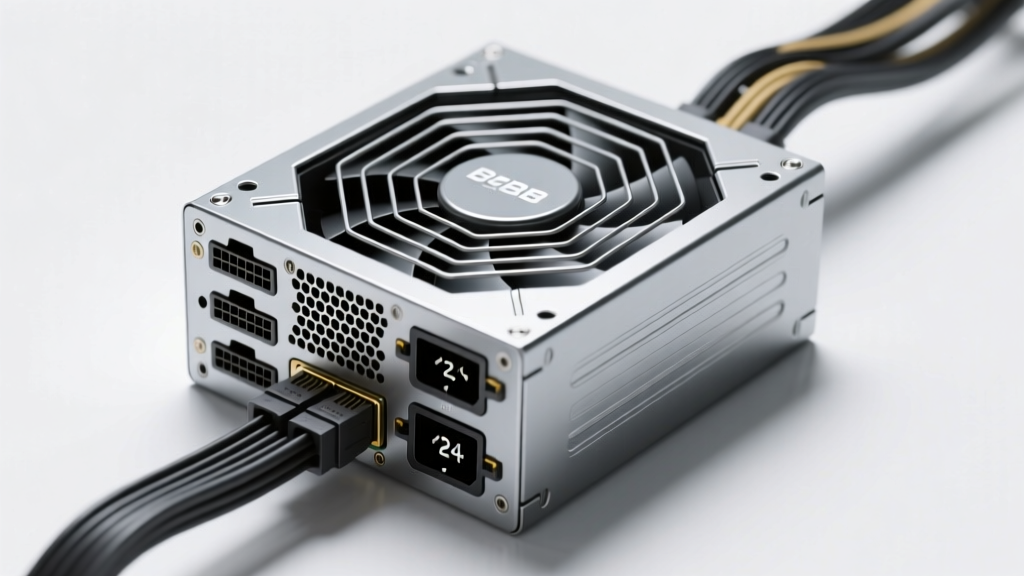
Types of ATX Industrial Power Supplies
An ATX industrial power supply is a critical component in industrial computing systems, delivering stable and reliable power to machinery, control systems, servers, and automation equipment. Unlike consumer-grade units, industrial ATX power supplies are built to withstand harsh environments, operate continuously, and meet strict safety and efficiency standards.
These power supplies vary significantly based on power capacity, efficiency ratings, modular design, redundancy features, and application-specific requirements. Below is a comprehensive breakdown of the most common types used across industrial sectors.
Standard ATX Power Supply
Designed for general-purpose industrial applications, these units provide reliable power output typically ranging from 500W to 1000W. They adhere to the ATX form factor and are compatible with most industrial motherboards and enclosures.
Advantages
- Cost-effective for standard applications
- Wide compatibility with industrial systems
- Easy to source and replace
- Suitable for non-critical continuous operations
Limitations
- Limited advanced protection features
- Lower efficiency compared to premium models
- May lack robust thermal management
Best for: Manufacturing control systems, network servers, and general automation equipment
High-Performance ATX Power Supply
Engineered for demanding environments, these units deliver high wattage (often 1000W+) and feature enhanced durability, advanced thermal regulation, and reinforced electrical protection. Built to operate under extreme temperatures and vibrations.
Advantages
- Superior reliability under load
- Enhanced cooling with industrial-grade fans
- Robust circuit protection (overvoltage, overcurrent, short-circuit)
- Longer lifespan in harsh conditions
Limitations
- Higher initial investment
- Increased power consumption if not optimized
- Bulkier design may require more space
Best for: Aerospace systems, defense electronics, telecommunications infrastructure, and heavy-duty industrial computing
Modular ATX Power Supply
These power supplies feature detachable cables, allowing users to connect only the necessary power lines. This modularity improves airflow, reduces cable clutter, and simplifies system upgrades and maintenance—critical in tightly packed industrial cabinets.
Advantages
- Improved airflow and thermal management
- Easier installation and service access
- Reduced risk of cable interference
- Scalable for changing system requirements
Limitations
- Slightly higher cost than non-modular units
- Connector durability depends on build quality
- Potential for loose connections if not secured properly
Best for: Industrial PCs, control panels, and server racks where space and airflow are constrained
High-Efficiency ATX Power Supply
Designed to minimize energy loss, these units are certified under standards such as 80 PLUS (Bronze, Silver, Gold, Platinum) or Energy Star. They convert AC to DC power with minimal heat generation, reducing operational costs and environmental impact.
Advantages
- Lower electricity consumption and utility bills
- Reduced heat output extends component life
- Environmentally friendly with lower carbon footprint
- Eligible for energy efficiency incentives
Limitations
- Premium pricing for higher efficiency tiers
- Efficiency peaks at specific load ranges
- May require compatible infrastructure to maximize benefits
Best for: Green manufacturing facilities, data centers, and operations focused on long-term cost savings
Redundant ATX Power Supply
These systems include multiple power units that operate in parallel. If one fails, the other(s) automatically take over without interruption. This fault-tolerant design is essential for mission-critical systems where downtime is unacceptable.
Advantages
- Zero downtime during power unit failure
- High availability and system reliability
- Hot-swappable units in advanced models
- Ideal for automated failover systems
Limitations
- Significantly higher cost and complexity
- Doubled power consumption when both units are active
- Requires specialized chassis and monitoring
Best for: Data centers, hospital life-support systems, emergency response networks, and industrial automation with no tolerance for failure
| Type | Power Range | Efficiency | Reliability | Best Application |
|---|---|---|---|---|
| Standard ATX | 500–1000W | 70–80% | Good | General manufacturing, network servers |
| High-Performance | 800–1500W+ | 80–90% | Excellent | Aerospace, defense, telecom |
| Modular | 500–1200W | 75–88% | Good | Compact systems, service-heavy environments |
| High-Efficiency | 400–1000W | 85–94% (80 PLUS Gold/Platinum) | Very Good | Energy-conscious operations, data centers |
| Redundant | Dual 500–800W units | 80–90% | Exceptional | Mission-critical systems, healthcare |
Expert Tip: When selecting an industrial ATX power supply, always consider the operating environment—temperature, dust, humidity, and vibration levels. Opt for units with conformal coating on circuits and IP-rated enclosures for enhanced protection in harsh conditions.
Industrial ATX Power Supply Features: Reliability and Performance in Harsh Environments
Industrial ATX power supplies are engineered to deliver stable, efficient, and continuous power in demanding environments where standard desktop power supplies would fail. Designed for 24/7 operation, these units are built to withstand extreme temperatures, dust, vibration, and electrical fluctuations. Their advanced design ensures uninterrupted performance in critical applications such as automation systems, industrial control panels, medical equipment, and outdoor kiosks.
Beyond durability, industrial ATX power supplies incorporate precision engineering to maintain clean power delivery, support multiple voltage requirements, and simplify integration into complex systems. Below is a detailed breakdown of the key features that set them apart from consumer-grade counterparts.
Durability and Build Quality
Industrial ATX power supplies are constructed for continuous operation in mission-critical environments. Unlike standard power supplies, they are built with reinforced internal components, conformal-coated circuit boards, and rugged metal enclosures that resist corrosion, impact, and electromagnetic interference (EMI).
These units are specifically designed to endure harsh conditions such as high humidity, airborne particulates, and mechanical vibrations commonly found in manufacturing plants, mining operations, and transportation systems. High-quality capacitors, MOSFETs, and transformers ensure long-term reliability, often rated for 7 years or more of continuous use.
Heat Dissipation and Cooling
Thermal management is critical in industrial settings where ambient temperatures can exceed 50°C. Industrial ATX power supplies feature advanced cooling solutions such as temperature-controlled fans with sealed bearings, oversized heat sinks, and intelligent fan speed regulation.
Some models even offer fanless designs using passive cooling via conduction or convection, eliminating moving parts and increasing reliability in dusty or explosive environments. Efficient thermal design not only prolongs component life but also maintains consistent output performance under sustained load.
Voltage Regulation and Ripple Control
Precision voltage regulation is essential for protecting sensitive industrial electronics. Industrial ATX power supplies maintain tight voltage tolerances (±1% to ±3%) across all output rails, even during input voltage fluctuations or sudden load changes.
Low output ripple and noise (typically <50mV peak-to-peak) prevent signal interference and ensure clean power delivery to microprocessors, sensors, and communication modules. This level of stability is crucial for maintaining data integrity and preventing unexpected shutdowns in PLCs, HMIs, and embedded controllers.
Multiple Output Rails
Industrial systems often require various voltage levels to power different components—such as +3.3V for logic circuits, +5V for USB and peripherals, and +12V for motors, fans, and drives. Industrial ATX power supplies provide multiple independent output rails to meet these diverse needs simultaneously.
These rails are isolated and regulated separately, ensuring stable power distribution without cross-interference. High current availability on the +12V rail supports power-hungry components like industrial GPUs or servo controllers, making them ideal for edge computing and machine vision applications.
Modular Cabling
Many industrial ATX power supplies come with modular cable configurations, allowing users to connect only the cables needed for their specific application. This reduces clutter inside control cabinets, improves airflow, and simplifies troubleshooting and maintenance.
Modular connectors are often locking or screw-terminal types to prevent accidental disconnection in high-vibration environments. The ability to customize cable lengths and types also enhances flexibility during system integration and retrofitting projects.
Additional Advanced Features
Beyond the core features, many industrial ATX units include enhanced functionalities such as:
- Wide Input Voltage Range: Operates from 85V to 264V AC, making it suitable for global deployment and resilient to brownouts or surges.
- Power Factor Correction (PFC): Active PFC improves energy efficiency and reduces harmonic distortion, complying with international standards like EN61000-3-2.
- Remote On/Off Control: Enables system-wide power management through digital signals, ideal for automated startups and emergency shutdowns.
- Overload, Overvoltage, and Short-Circuit Protection: Comprehensive safety circuits protect both the power supply and connected equipment.
| Feature | Industrial Benefit | Typical Specification |
|---|---|---|
| Durability & Enclosure | Resists dust, moisture, and physical stress | IP20–IP67 rated; aluminum or steel housing |
| Cooling System | Ensures stable operation in high-temp environments | Temp-controlled fan or fanless; up to 70°C operating temp |
| Voltage Regulation | Protects sensitive electronics from instability | ±1% to ±3% tolerance; ripple <50mV |
| Output Rails | Supports multi-voltage industrial systems | +3.3V, +5V, +12V (independent regulation) |
| Modular Design | Improves serviceability and reduces clutter | Plug-and-play connectors with locking mechanisms |
Important: When selecting an industrial ATX power supply, always verify compatibility with your system's power requirements, environmental conditions, and safety certifications (e.g., UL, CE, CCC). Using a consumer-grade PSU in an industrial setting can lead to premature failure, data loss, or safety hazards. Invest in certified industrial models to ensure long-term reliability and compliance.
How to Choose ATX Power Supply for Industrial Applications
Selecting the right ATX power supply for industrial environments is a critical decision that directly impacts system reliability, operational efficiency, and long-term maintenance costs. Unlike consumer-grade units, industrial power supplies must withstand harsh conditions and deliver consistent performance under demanding loads. Understanding key technical and environmental factors ensures optimal selection tailored to each application.
Power Requirements & Headroom
Wattage capacity is the foundational consideration when selecting an industrial ATX power supply. The unit should provide at least 20–30% more power than the total system consumption to ensure stable operation and accommodate future upgrades.
- Calculate total system draw by summing CPU, GPU, storage, and peripheral power usage
- High-performance industrial PCs with multiple GPUs or expansion cards require 750W or higher units
- Under-sizing leads to thermal throttling, instability, and reduced component lifespan
- Over-sizing beyond 50% headroom can reduce efficiency at low loads
Key consideration: Always verify peak transient power demands, not just average usage
Industrial Work Environment
Industrial settings often expose equipment to extreme temperatures, dust, vibration, and electrical noise. Standard desktop PSUs are ill-suited for such conditions.
- Look for units rated for extended temperature ranges (e.g., -10°C to +70°C)
- Dust-resistant designs with sealed fans or passive cooling options improve longevity
- Vibration-resistant internal components prevent solder cracks and connector wear
- Conformal coating on circuit boards protects against moisture and corrosion
Pro tip: In high-vibration environments (e.g., manufacturing floors), consider fanless or semi-passive models
Efficiency Ratings & Energy Savings
Power supply efficiency directly affects operating costs, heat generation, and environmental impact. Higher efficiency reduces energy waste and cooling requirements.
- 80 Plus Bronze: ≥85% efficiency at 50% load – suitable for light industrial use
- 80 Plus Gold: ≥90% efficiency – ideal for continuous operation systems
- 80 Plus Platinum/Titanium: ≥92–94% – best for data centers or energy-sensitive applications
- High-efficiency units generate less heat, reducing HVAC load in enclosed cabinets
Critical factor: Over a 5-year period, a 90% efficient PSU can save hundreds of dollars in electricity vs. 80%
Certifications & Quality Assurance
Industry-recognized certifications validate a power supply’s performance, safety, and durability claims.
- 80 Plus: Verifies efficiency across 20%, 50%, and 100% load levels
- CE/FCC: Ensures electromagnetic compatibility (EMC) and safety compliance
- IP Ratings: Indicate dust and moisture protection (e.g., IP54 for partial sealing)
- MTBF (Mean Time Between Failures): Look for 100,000+ hours for industrial reliability
Smart choice: Prioritize PSUs from manufacturers with ISO 9001 certification for quality control
Modularity & Cable Management
Modular power supplies offer significant advantages in industrial environments where space, airflow, and serviceability matter.
- Full or semi-modular designs allow customization of only necessary cables
- Reduced cable clutter improves airflow and simplifies maintenance
- Easier troubleshooting and replacement in tight enclosures or rack-mounted systems
- High-flexibility, industrial-grade cables resist cracking in moving machinery
Technical note: Locking connectors prevent accidental disconnection in high-vibration settings
Additional Industrial Features
Beyond basic specifications, advanced features enhance reliability and integration in industrial systems.
- PFC (Power Factor Correction): Active PFC improves energy utilization and reduces harmonic distortion
- Wide Input Voltage Range: 90–264V support ensures stability in regions with fluctuating power
- Remote On/Off Control: Enables integration with automation or monitoring systems
- Redundancy Support: Some models allow parallel operation for fail-safe applications
Time-saving tip: Choose PSUs with status LEDs or SNMP monitoring for remote diagnostics
Professional Recommendation: For most industrial applications, select a Gold-rated, semi-modular ATX PSU from a reputable brand with proven industrial deployment. Ensure it meets the environmental requirements of the installation site and provides adequate headroom for future expansion. When in doubt, consult the system integrator or OEM specifications to avoid compatibility issues.
| Application Type | Recommended PSU Tier | Key Features | Efficiency Rating |
|---|---|---|---|
| Industrial Control Panel (low-power) | Standard Industrial | Wide input voltage, dust resistance | 80 Plus Bronze |
| Mechanical Automation System | Mid-Range Industrial | Semi-modular, active PFC, high MTBF | 80 Plus Gold |
| Data Acquisition & Processing | Premium Industrial | Full modular, remote monitoring, redundancy | 80 Plus Platinum |
| Rugged Outdoor Enclosure | Heavy-Duty Industrial | Fanless, conformal coating, IP54+ | 80 Plus Gold |
Additional Considerations
- Warranty & Support: Industrial PSUs typically offer 5–7 year warranties; longer coverage indicates higher confidence in reliability
- Noise Levels: In occupied spaces, opt for units with temperature-controlled or low-noise fans (≤30 dB)
- Form Factor Compatibility: Confirm ATX 12V v2.4 or newer compliance for modern motherboards and CPUs
- Transient Response: Fast voltage regulation protects sensitive components during sudden load changes
- Brand Reputation: Leading industrial brands (e.g., Mean Well, Delta, Siemens) invest heavily in R&D and field testing
Scenarios for ATX Power Supply in Industrial Applications
ATX industrial power supplies are engineered for reliability, efficiency, and durability in mission-critical environments. Unlike standard consumer-grade units, industrial ATX power supplies are built with enhanced thermal management, robust voltage regulation, and high-quality internal components to withstand demanding operating conditions. As technology evolves, these power supplies are being integrated into an expanding range of applications—from automated manufacturing floors to life-supporting medical systems. Below is a detailed overview of the most common and critical use cases where industrial ATX power supplies play a vital role.
Critical Note: In industrial environments, power stability directly impacts system performance, data integrity, and even human safety. Choosing a certified, high-reliability ATX power supply with appropriate protection features (over-voltage, over-current, short-circuit) is essential for long-term operational success.
Manufacturing Systems
In modern manufacturing facilities, automation and real-time monitoring systems depend on uninterrupted and clean power delivery. Industrial ATX power supplies are commonly used to power programmable logic controllers (PLCs), human-machine interfaces (HMIs), industrial PCs, and sensor networks. These systems require consistent voltage output to ensure precise control of robotic arms, conveyor belts, and assembly lines.
Key requirements include:
- Robust voltage regulation to prevent malfunctions in sensitive control circuits
- Wide input voltage range to handle fluctuations in plant power grids
- High MTBF (Mean Time Between Failures) for continuous 24/7 operation
- Resistance to dust, vibration, and electromagnetic interference (EMI)
Failure in power delivery can lead to production downtime, defective products, or equipment damage—making reliable power supplies a cornerstone of smart manufacturing.
Data Centers
Data centers represent one of the most demanding environments for power infrastructure. They rely on industrial ATX power supplies to support servers, network switches, storage arrays, and edge computing devices. With thousands of systems running simultaneously, power efficiency and redundancy are paramount.
Essential features for data center applications include:
- High wattage output (ranging from 500W to over 1000W) to support multi-core processors and high-speed storage
- 80 PLUS certification for energy efficiency and reduced heat generation
- Redundant power configurations (N+1 or 2N) to maintain uptime during failures
- Active Power Factor Correction (PFC) for optimal energy utilization
- Remote monitoring capabilities via digital interfaces (e.g., PMBus)
The ultimate goal is to ensure 99.999% uptime (five nines) and protect against data loss, service interruptions, and hardware degradation caused by unstable power.
Aerospace and Defense Systems
In aerospace and defense applications, precision, reliability, and environmental resilience are non-negotiable. Industrial ATX power supplies are used in radar systems, flight control computers, communication satellites, and military-grade embedded systems. Even minor voltage fluctuations or ripple noise can compromise signal integrity, navigation accuracy, or mission-critical operations.
Design considerations for this sector include:
- Ultra-low ripple and noise (<1% output variation) for sensitive analog and RF circuits
- Military-grade component certification (e.g., MIL-STD-810 for shock/vibration, MIL-STD-461 for EMI)
- Wide operating temperature range (-40°C to +85°C) for extreme environments
- Conformal coating to protect against moisture, salt spray, and corrosion
- EMI/RFI filtering to prevent interference with onboard electronics
These power supplies often undergo rigorous testing and qualification to meet stringent defense and aviation standards.
Telecommunications Equipment
Telecom networks serve as the backbone of global communication, especially during emergencies and natural disasters. Base stations, fiber-optic nodes, switching systems, and backup communication hubs rely on industrial ATX power supplies to remain operational under all conditions.
Key power supply requirements in telecom include:
- Redundant power inputs (AC + DC or dual AC) for failover protection
- Support for multiple output voltages (±5V, ±12V, 3.3V) to power diverse circuitry
- Hot-swap capability for maintenance without system shutdown
- High efficiency to reduce cooling needs in enclosed cabinets
- Compliance with telecom standards such as NEBS (Network Equipment-Building System)
Because telecom systems often act as first responders during outages, their power infrastructure must be fault-tolerant and capable of extended operation on backup batteries or generators.
Medical Devices
In healthcare settings, power quality directly affects patient safety and diagnostic accuracy. Industrial ATX power supplies are integrated into imaging systems (MRI, CT scanners), patient monitors, surgical robots, and laboratory analyzers. Any power disturbance could lead to misdiagnosis, treatment delays, or equipment malfunction.
Critical specifications for medical-grade power supplies include:
- Extremely low electrical noise to prevent interference with sensitive measurements
- High voltage regulation accuracy (±1% or better)
- Compliance with medical safety standards (IEC 60601-1) for patient isolation and leakage current
- Double or reinforced insulation for operator and patient protection
- EMC compliance to function safely in hospital environments with other electronic equipment
Hospitals and clinics prioritize power solutions that deliver clean, stable energy to ensure uninterrupted operation of life-supporting and diagnostic systems.
| Industry | Primary Use Case | Key Power Requirements | Common Standards |
|---|---|---|---|
| Manufacturing | PLCs, HMIs, Industrial PCs | Voltage stability, EMI resistance, durability | IEC 61000, NEMA |
| Data Centers | Servers, Storage, Networking | High wattage, redundancy, efficiency | 80 PLUS, PMBus, UL 60950 |
| Aerospace & Defense | Flight systems, Radar, Comms | Low ripple, wide temp range, rugged design | MIL-STD-810, MIL-STD-461 |
| Telecommunications | Base stations, Switching systems | Redundancy, multi-voltage output, NEBS | NEBS Level 3, ITU-T |
| Medical | Imaging, Monitoring, Diagnostics | Low noise, patient safety, clean power | IEC 60601-1, FDA |
Expert Tip: When selecting an industrial ATX power supply, always verify compatibility with your system’s form factor, cooling requirements, and environmental conditions. Consider future scalability and serviceability—modular designs with replaceable fans or connectors can significantly reduce downtime and maintenance costs.
Additional Considerations for Industrial Deployment
- Implement regular power supply health checks using diagnostic tools or built-in monitoring features
- Use uninterruptible power supplies (UPS) in conjunction with ATX units for seamless backup during outages
- Ensure proper ventilation and thermal management to extend component lifespan
- Choose units with OCP, OVP, OPP, and SCP protections for enhanced system safety
- Opt for models with long-term availability (10+ years) to support product lifecycle stability
As industries continue to adopt IoT, AI, and edge computing, the demand for high-performance, reliable ATX industrial power supplies will only grow. Investing in quality power infrastructure today ensures system resilience, regulatory compliance, and operational continuity tomorrow.
Frequently Asked Questions About Industrial ATX Power Supplies
Q1: What are the typical efficiency ratings for an ATX power supply?The efficiency of an ATX power supply is a critical factor in determining its performance and energy consumption. Most industrial-grade ATX power supplies operate with efficiency ratings between 80% and 90%. This means that 80–90% of the electrical input is converted into usable power, while the remainder is lost as heat.
A widely recognized benchmark for efficiency is the 80 Plus certification, which ensures that a power supply delivers at least 80% efficiency at 20%, 50%, and 100% of rated load. However, this is just the baseline. The certification has evolved into several tiers, each offering higher efficiency:
- 80 Plus: ≥80% efficiency
- 80 Plus Bronze: ≥82% efficiency
- 80 Plus Silver: ≥85% efficiency
- 80 Plus Gold: ≥87% efficiency (common in high-performance industrial systems)
- 80 Plus Platinum: ≥90% efficiency
- 80 Plus Titanium: Up to 94% efficiency under optimal conditions
Higher efficiency not only reduces energy costs but also minimizes thermal output, contributing to longer component lifespan and improved system reliability—especially important in continuous-operation industrial environments.
Q2: What kind of maintenance does an ATX power supply require?Industrial ATX power supplies are designed for durability and require minimal maintenance under normal operating conditions. However, proactive care can significantly extend their service life and prevent unexpected failures. Key maintenance practices include:
- Dust Inspection and Cleaning: Dust accumulation acts as insulation, trapping heat and causing overheating. In environments with high particulate levels (e.g., manufacturing floors, workshops), cleaning every 3–6 months using compressed air or vacuum tools is recommended.
- Ventilation Check: Ensure that cooling vents are unobstructed and that surrounding airflow is adequate. Blocked airflow can lead to thermal throttling or shutdowns.
- Cable and Connection Inspection: Regularly examine power cables, connectors, and terminals for signs of wear, fraying, or corrosion. Loose connections can cause voltage drops, arcing, or intermittent power issues.
- Fan Operation Monitoring: Listen for unusual noises or reduced airflow from the internal fan. A failing fan can quickly lead to thermal damage.
- Environmental Monitoring: Use sensors to track temperature and humidity near the power supply, especially in harsh industrial settings.
Implementing a scheduled maintenance routine helps maintain consistent performance and reduces downtime in mission-critical applications.
Q3: Will there be any effect on the power supply if it is used in a harsh environment?Yes, operating a standard ATX power supply in a harsh industrial environment—such as one with extreme temperatures, high humidity, dust, vibration, or chemical exposure—can severely impact its performance and longevity. Standard units are typically built for controlled office or home environments and lack the ruggedization needed for industrial use.
In contrast, industrial-grade ATX power supplies are specifically engineered to withstand these challenges:
- Wide Operating Temperature Range: Typically -20°C to +70°C, compared to 0°C to +50°C for consumer models.
- Conformal Coating: Protects internal circuitry from moisture, dust, and corrosive gases.
- Enhanced Cooling Systems: Sealed fans or passive cooling options reduce vulnerability to dust ingress.
- Shock and Vibration Resistance: Reinforced components and mounting systems prevent damage in high-movement environments.
- Overvoltage and Surge Protection: Built-in safeguards guard against power fluctuations common in industrial power grids.
Using a certified industrial power supply ensures stable operation, reduces failure rates, and lowers long-term operational costs, even under demanding conditions.
Q4: Does the voltage of an ATX power supply vary across models?While there is some variation between models, ATX power supplies adhere to strict industry standards for output voltages to ensure compatibility across a wide range of hardware. The primary regulated voltage rails are:
| Voltage Rail | Standard Tolerance | Primary Use Cases |
|---|---|---|
| +3.3V | ±5% | Modern motherboards, RAM, and low-power ICs |
| +5V | ±5% | USB ports, logic circuits, older drives, and peripherals |
| +12V | ±5% | CPU, GPU, motors, fans, and high-power components |
| -12V | ±10% | Rarely used; legacy serial ports and certain analog circuits |
| +5VSB (Standby) | ±5% | Powering wake-on-LAN, USB charging when off, and system startup |
These standardized outputs allow seamless integration with industrial control systems, embedded computers, and automation equipment. Some specialized industrial models may offer additional customization, such as adjustable voltage rails or redundant outputs for critical applications.
Q5: What role do certifications play in selecting an industrial ATX power supply?Certifications are essential indicators of quality, safety, efficiency, and regulatory compliance when selecting an industrial ATX power supply. They provide third-party validation that the unit meets rigorous engineering and environmental standards. Key certifications include:
- 80 Plus Series (Bronze to Titanium): Validates energy efficiency, reducing operational costs and thermal load.
- CE Marking: Confirms compliance with European health, safety, and environmental protection standards.
- UL/cUL Listed: Indicates adherence to North American safety standards for fire and electrical hazards.
- RoHS Compliance: Ensures the power supply is free from hazardous substances like lead, mercury, and cadmium, supporting environmental sustainability.
- IP Rating (e.g., IP67): Specifies protection against dust and water ingress—critical for outdoor or washdown environments.
- EMC/EMI Certifications: Guarantee minimal electromagnetic interference, preventing disruptions in sensitive industrial electronics.
Selecting a power supply with relevant certifications not only ensures regulatory compliance but also enhances system reliability, reduces liability risks, and supports integration into global markets. Always verify that certifications match your specific application and regional requirements.