In 2014, smartphone buyers faced a defining choice: stick with Android or jump into Apple’s ecosystem. The Samsung Galaxy S5 and iPhone 6 Plus weren’t just competitors—they represented two divergent philosophies in mobile design, software experience, and long-term value. At launch, the iPhone 6 Plus carried a noticeable price premium over the Galaxy S5, especially on contract-free models. But did that extra cost translate into better real-world value? Looking back, the answer depends heavily on what users prioritized—hardware flexibility, camera quality, longevity, or ecosystem integration.
Design and Build: Plastic vs Premium Perception
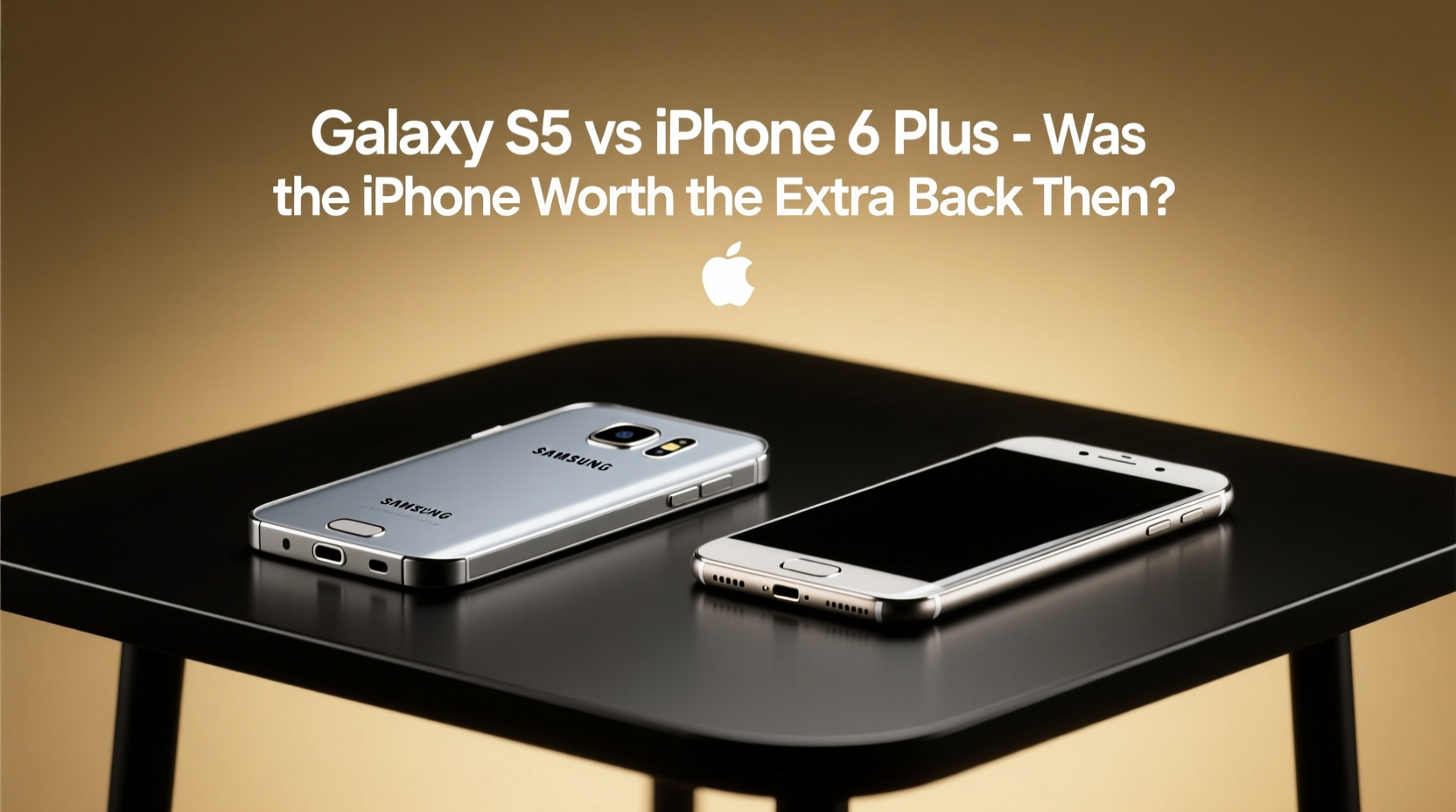
The Galaxy S5 featured a polycarbonate shell with a textured back and IP67 water resistance—a rarity at the time. It was functional, durable, and practical. However, its plastic construction drew criticism from users who associated metal with premium quality. In contrast, the iPhone 6 Plus introduced Apple’s signature aluminum unibody design, which felt more refined in hand and signaled a shift toward larger, sleeker devices.
While the S5 offered replaceable batteries and expandable storage via microSD, the iPhone doubled down on integration and minimalism. There was no water resistance, no SD card slot, and no removable battery—but it didn’t need to justify those omissions to its target audience. For many consumers, the iPhone simply looked and felt like a more “grown-up” device.
Tip: When comparing phones across ecosystems, consider not just materials but how they age—plastic resists scratches better; metal shows wear faster.Display and Size: Bigger Isn't Always Better
The Galaxy S5 came with a 5.1-inch Full HD Super AMOLED display (432 ppi), delivering deep blacks and vibrant colors typical of Samsung’s screens. The iPhone 6 Plus, meanwhile, launched with a 5.5-inch Retina HD display (401 ppi) using IPS LCD technology. While slightly lower in pixel density, Apple’s color calibration and brightness consistency were strong.
More importantly, the 6 Plus introduced “Display Zoom” and “Standard” view modes, allowing users to choose between maximizing screen utility or keeping interface elements larger for easier use. This flexibility helped ease the transition to larger iPhones.
However, early batches of the iPhone 6 Plus suffered from “bendgate,” where excessive pressure could warp the chassis. Though rare, the issue became a media sensation and raised questions about structural integrity under stress—something the sturdier S5 never faced.
Performance and Software Experience
Under the hood, the Galaxy S5 used either Qualcomm’s Snapdragon 801 or Samsung’s Exynos 5422 (depending on region), paired with 2GB of RAM. It ran Android 4.4 KitKat with TouchWiz, which, while feature-rich, added bloat and occasionally slowed responsiveness.
The iPhone 6 Plus shipped with Apple’s custom A8 chip and 1GB of RAM. On paper, this looked underpowered compared to the S5. Yet iOS 8 was highly optimized, resulting in smoother animations, faster app launches, and more consistent multitasking. Apple’s vertical integration meant hardware and software worked in harmony, minimizing lag even with fewer raw specs.
“People don’t buy iPhones for benchmarks—they buy them for reliability, polish, and peace of mind.” — David Kim, Mobile Analyst at TechPulse Insights
iOS also brought tighter security, uniform updates across devices, and longer support cycles. By 2019, both phones had stopped receiving major OS updates, but the iPhone 6 Plus received four full iOS upgrades (iOS 8 to iOS 12), while the S5 only got two major Android updates (KitKat to Lollipop).
Camera Comparison: Real-World Results Over Megapixels
Samsung packed a 16MP rear shooter into the S5, touting high resolution. But megapixels alone don’t define image quality. The sensor struggled in low light, producing grainy photos with inaccurate white balance. Its HDR mode helped, but processing was inconsistent.
The iPhone 6 Plus featured an 8MP iSight camera—an intentional decision by Apple to prioritize larger pixels and better light capture. Combined with improved optical stabilization (on the Plus model only) and superior tone mapping, it consistently delivered balanced, natural-looking photos. Video recording was equally impressive, offering 1080p at 60fps and excellent noise reduction.
In side-by-side comparisons, especially indoors or during sunset, the iPhone often produced cleaner, more pleasing images despite the lower resolution. For casual photographers and social media users, this made a tangible difference.
| Feature | Galaxy S5 | iPhone 6 Plus |
|---|---|---|
| Processor | Snapdragon 801 / Exynos 5422 | A8 Chip |
| RAM | 2GB | 1GB |
| Storage | 16GB + microSD | 16/64/128GB (no expansion) |
| Battery | 2800mAh (removable) | 2915mAh (non-removable) |
| Water Resistance | IP67 certified | No official rating |
| Rear Camera | 16MP, f/2.2 | 8MP, f/2.2 with OIS |
| OS Updates | 2 major Android versions | 4 major iOS versions |
| Launch Price (16GB) | $639 (unlocked) | $749 (unlocked) |
Real-World Example: Sarah’s Upgrade Dilemma
Sarah, a freelance graphic designer in 2014, needed a reliable phone for client communication, photo editing, and mobile presentations. She considered both the Galaxy S5 and iPhone 6 Plus. Her workflow relied on Adobe Creative Cloud apps, which performed better on iOS due to earlier optimization. She also valued long battery life and clean video output for projecting mockups.
She ultimately chose the iPhone 6 Plus despite its higher upfront cost. Over three years, she appreciated consistent performance, timely security patches, and seamless integration with her MacBook and iPad. Meanwhile, a colleague who bought the S5 found themselves replacing it after two years due to lag and lack of Android updates—especially once newer apps demanded more from the aging OS.
Sarah’s experience highlights a key insight: for professionals and power users, long-term usability often outweighs initial hardware advantages.
Was the iPhone Worth the Extra Cost?
At $110 more for the base model, the iPhone 6 Plus wasn’t cheap. But value isn’t measured solely by launch price. Consider these factors:
- Ecosystem Lock-In: If you owned other Apple devices, Handoff, AirDrop, and iCloud syncing provided unmatched convenience.
- Resale Value: iPhones retained value significantly better. After one year, the 6 Plus held about 60% of its value versus the S5’s 45%.
- App Optimization: Developers often prioritized iOS, meaning new apps launched faster and ran smoother on iPhones.
- Longevity: With four years of OS support, the 6 Plus remained functional longer than the S5 in daily use scenarios.
Frequently Asked Questions
Did the Galaxy S5 have any advantages over the iPhone 6 Plus?
Yes. The S5 offered water resistance, a removable battery, expandable storage, and a higher-resolution display. It also supported infrared blasters for use as a universal remote—a feature absent on the iPhone.
Which phone had better battery life?
In mixed usage, both lasted around one day. However, the S5’s removable battery allowed users to carry spares, giving it an edge for travelers or heavy users. The iPhone’s efficiency was good, but degradation over time was more impactful due to non-replaceable cells.
Why did the iPhone feel faster with less RAM?
iOS uses aggressive app suspension and memory management. Apps aren’t kept fully active in RAM, reducing overhead. Combined with fast storage and tight hardware-software integration, this created a snappier perceived performance despite lower specs.
Conclusion: Value Beyond the Price Tag
Back in 2014, choosing between the Galaxy S5 and iPhone 6 Plus wasn’t just about features—it was about philosophy. The S5 gave you control, customization, and practicality. The iPhone offered refinement, consistency, and long-term reliability. For users who valued staying current with apps, security, and ecosystem synergy, the iPhone’s premium was justified.
Today, that same principle holds true. The most expensive phone isn’t always the best value. Sometimes, paying more upfront saves money and frustration down the line. If you were someone who used your phone as a daily driver for work, creativity, and communication, the iPhone 6 Plus likely earned its place—and its price.
💬 Looking back, which phone would you have chosen in 2014? Share your thoughts and experiences in the comments below—your insights could help others understand how far we’ve come.