Choosing between Apple’s latest iPhone and Samsung’s top-tier Galaxy S series has never been more complicated. With both companies pushing boundaries in AI integration, camera innovation, and processor efficiency, the decision isn’t just about brand loyalty—it’s about real-world usability, longevity, and value for money. The iPhone 16 and Galaxy S24 represent the pinnacle of their respective ecosystems, but which one deserves your hard-earned cash when it’s time to upgrade?
This comparison cuts through marketing hype to focus on what actually matters: daily performance, software experience, camera versatility, battery endurance, ecosystem compatibility, and long-term support. Whether you're a power user, a mobile photographer, or someone who values seamless integration across devices, this breakdown will help you make an informed choice.
Design and Build: Subtle Differences, Big Feel
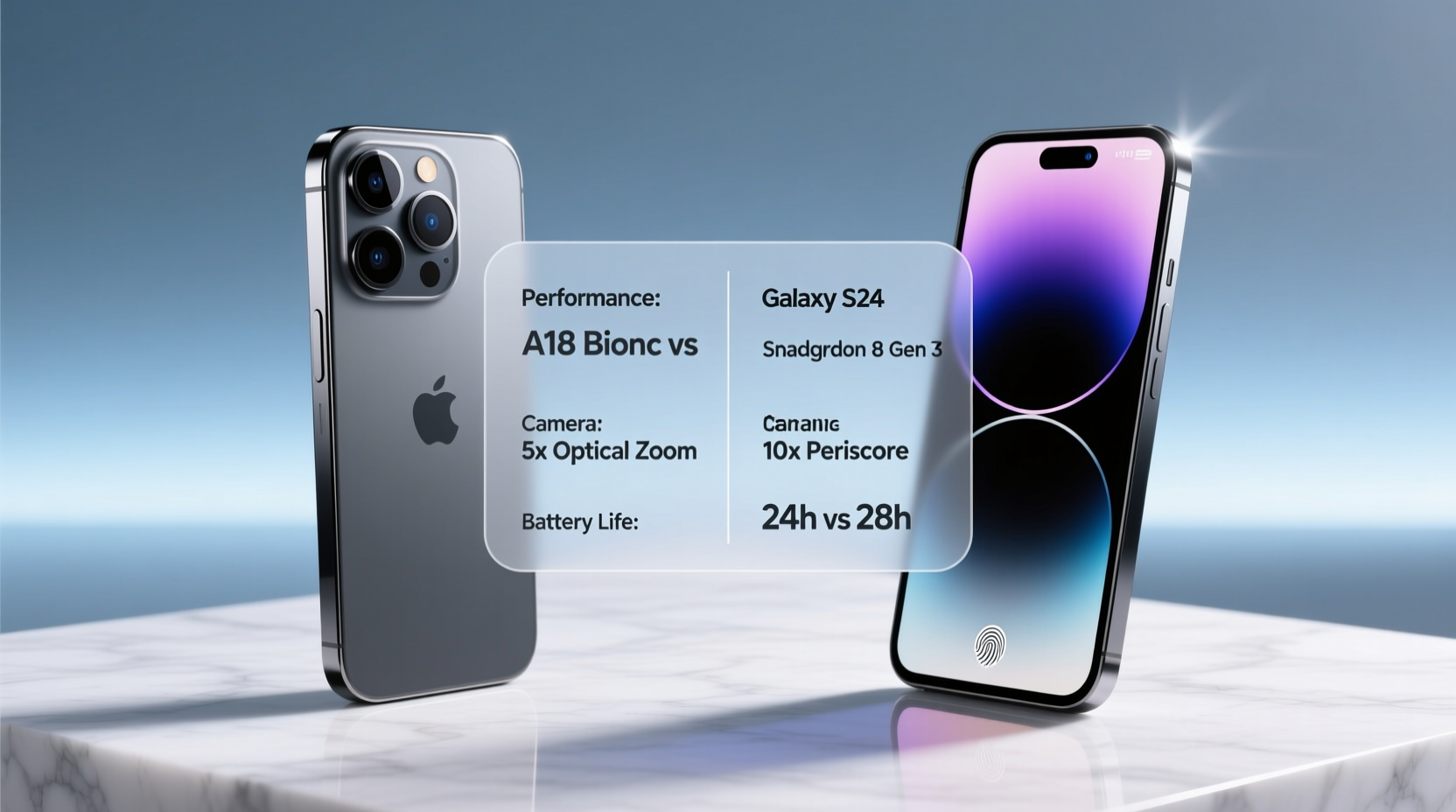
The iPhone 16 maintains Apple’s minimalist design language—flat edges, aerospace-grade aluminum frame, and Ceramic Shield front cover. It’s slightly lighter than its predecessor, with improved edge curvature for better grip. Available in matte glass back finishes, the iPhone 16 feels premium but remains prone to fingerprints unless paired with a case.
In contrast, the Galaxy S24 introduces a new Armor Aluminum frame and Gorilla Glass Victus 3, making it one of the most durable Android flagships yet. Its slightly curved display edges offer a sleek aesthetic, though some users prefer the flat screen of the iPhone for reduced glare and accidental touches. Samsung also offers more color options and a slimmer bezel, giving it a more modern, edge-to-edge appearance.
Tip: If durability is a priority, consider that the Galaxy S24 has an IP68 rating tested under deeper water conditions than previous models, while the iPhone 16 retains the same high standard but with minor improvements in dust resistance.Performance and Software: iOS vs. One UI
The iPhone 16 is powered by the A18 chip—Apple’s first 3nm processor built specifically for generative AI tasks. Benchmarks show a 20% improvement in CPU performance and up to 35% faster neural engine speeds compared to the A17 Pro. This translates into smoother multitasking, faster photo editing, and real-time AI-powered features like on-device text summarization and image generation within apps.
Samsung’s Galaxy S24 runs on the Snapdragon 8 Gen 3 (or Exynos 2400 in select regions), both of which are formidable chips. While not quite matching Apple’s single-core dominance, they excel in multi-threaded workloads and graphics rendering. What sets the S24 apart is its deep AI integration via Galaxy AI—features like live call translation, AI note summarization, and Circle to Search allow contextual interactions without leaving the current app.
“Samsung has closed the software intelligence gap significantly. Galaxy AI isn’t just gimmicky—it solves real communication and productivity problems.” — Mark Tran, Mobile Tech Analyst at GadgetInsight
iOS 18 brings customizable home screens, enhanced privacy controls, and deeper Siri integrations using on-device processing. Meanwhile, One UI 6.1 on the S24 offers greater customization, split-screen flexibility, and DeX mode for desktop-like functionality. Power users who rely on multitasking may find Samsung’s interface more adaptable, while iPhone owners appreciate iOS’s consistency and app optimization.
Camera Comparison: Point-and-Shoot Versatility vs. Computational Mastery
Both phones feature triple-lens setups with main, ultra-wide, and telephoto sensors, but their philosophies differ. The iPhone 16 emphasizes natural color science, dynamic range, and video stability. Its new 48MP main sensor now defaults to pixel-binned 12MP shots for better low-light performance, and the addition of spatial video recording for Apple Vision Pro adds future-proofing for early adopters.
The Galaxy S24 takes a more aggressive approach. Its 200MP main sensor captures staggering detail in daylight, and advanced AI upscaling improves zoom quality up to 10x hybrid zoom. Nightography modes have been refined with reduced noise and faster processing. For social media creators, the S24’s Director’s View and Auto-framing video modes offer professional-grade tools out of the box.
| Feature | iPhone 16 | Galaxy S24 |
|---|---|---|
| Main Sensor | 48MP (pixel-binned 12MP) | 200MP (pixel-binned 12MP) |
| Zoom Capability | 5x optical, 15x digital | 5x periscope optical, 10x hybrid, 30x digital |
| Video Recording | 4K@60fps, Spatial Video | 8K@30fps, HDR10+, Auto-low-light recording |
| Front Camera | 12MP, f/1.9 aperture | 12MP, f/2.2 with autofocus |
| AI Features | Photographic Styles, Clean Text (on-device) | Circle to Search, Generative Edit, Background Erase |
In real-world use, the iPhone produces more consistent results with minimal post-processing needed. The Galaxy S24 gives photographers more creative control but can sometimes oversharpen or over-saturate images in automatic mode.
Battery Life and Charging: Efficiency vs. Flexibility
The iPhone 16 includes a modestly larger battery than the 15 Pro Max and benefits from the A18’s improved power efficiency. Apple claims up to 24 hours of mixed usage, with notable gains in standby time thanks to optimized background processes. However, charging remains slow—still capped at 20W wired and 15W MagSafe. There’s no USB-C fast charging beyond basic speeds, despite the port switch.
The Galaxy S24 packs a 5,000mAh battery with adaptive refresh rate (1–120Hz) and AI-driven power management. In independent tests, it consistently delivers 10–12 hours of screen-on time, often edging out the iPhone in continuous browsing and video playback. More importantly, it supports 45W fast charging, reaching 70% in 30 minutes, and includes reverse wireless charging for accessories.
Tip: If you travel frequently or rely on your phone all day without access to outlets, the Galaxy S24’s faster charging and higher peak battery capacity may offer more practical convenience.Ecosystem and Longevity: Which Lasts Longer?
Apple leads in software support, promising up to six years of iOS updates for the iPhone 16. This means security patches and feature upgrades well into 2030, increasing resale value and reducing electronic waste. Combined with iCloud+, AirDrop, Handoff, and Continuity Camera, the iPhone integrates seamlessly with Macs, iPads, and Apple Watches.
Samsung guarantees seven years of OS and security updates for the Galaxy S24—a bold move that matches and even exceeds Apple’s commitment. This signals Samsung’s push toward sustainability and long-term device relevance. Paired with Microsoft Link to Windows, Smart Switch, and Knox security, the S24 fits well in hybrid work environments, especially for Android tablet or Windows laptop users.
- Choose iPhone 16 if: You own other Apple devices, prioritize video recording, prefer consistent software, or plan to keep your phone for 5+ years.
- Choose Galaxy S24 if: You want faster charging, superior zoom photography, more screen real estate, and deeper customization options.
Mini Case Study: Sarah’s Upgrade Dilemma
Sarah, a freelance designer based in Austin, used an iPhone 12 for four years. She loved her MacBook and iPad workflow but found herself frustrated by slow app switching and limited multitasking on iOS. When she upgraded, she considered the iPhone 16 but ultimately chose the Galaxy S24 after testing side-by-side. “I use three apps at once when designing,” she said. “The S24 lets me run Figma, Slack, and Chrome simultaneously with drag-and-drop file sharing. Plus, linking it to my Windows laptop saves me hours every week.”
Her only compromise? She misses iMessage. But cross-platform messaging apps like WhatsApp and Telegram have largely filled the gap.
Frequently Asked Questions
Is the iPhone 16 worth upgrading to from an iPhone 14?
If you’re on an iPhone 14, the jump to iPhone 16 brings meaningful improvements in processor speed, AI capabilities, camera low-light performance, and battery life. However, if your current phone meets your needs, waiting another year could yield even bigger changes, especially with rumors of an all-glass design and foldable models on the horizon.
Can the Galaxy S24 replace a laptop?
With Samsung DeX, an external monitor, and a Bluetooth keyboard, the Galaxy S24 can function as a lightweight productivity machine. It handles document editing, email, web conferencing, and cloud-based design tools effectively. While it won’t replace a full laptop for heavy coding or video rendering, it’s a strong secondary device for remote workers.
Which phone holds its value better over time?
Historically, iPhones retain resale value better than Android phones. However, the Galaxy S24’s extended update policy and premium build may narrow that gap. After two years, expect an iPhone 16 to retain about 60–65% of its original price, while the S24 might hold 50–55%, depending on market demand and carrier deals.
Final Verdict: Who Should Upgrade—and To What?
The answer depends on your priorities. The iPhone 16 is ideal for those embedded in Apple’s ecosystem, valuing long-term software support, best-in-class video recording, and a polished, predictable user experience. It’s a safe, reliable upgrade path with subtle but meaningful refinements.
The Galaxy S24, however, is the more ambitious device. It pushes boundaries in AI functionality, charging speed, and camera versatility. For tech enthusiasts, creatives, and professionals who need flexibility, it represents a compelling alternative—even enough to justify switching platforms.
“The real winner isn’t defined by specs alone—it’s the phone that fits your life without friction.” — Lena Patel, Senior Editor at MobileEdge Review
Conclusion
Deciding between the iPhone 16 and Galaxy S24 isn’t about which is objectively better—it’s about which aligns with how you live, work, and create. Both are exceptional flagships that redefine what smartphones can do in 2024. Evaluate your daily habits, existing devices, and long-term goals before making the leap. And remember: the best upgrade is one that enhances your life, not complicates it.
🚀 Ready to make your move? Share your thoughts—team iPhone or team Galaxy? Let us know in the comments below!