Types of 400V 904J Film Capacitors
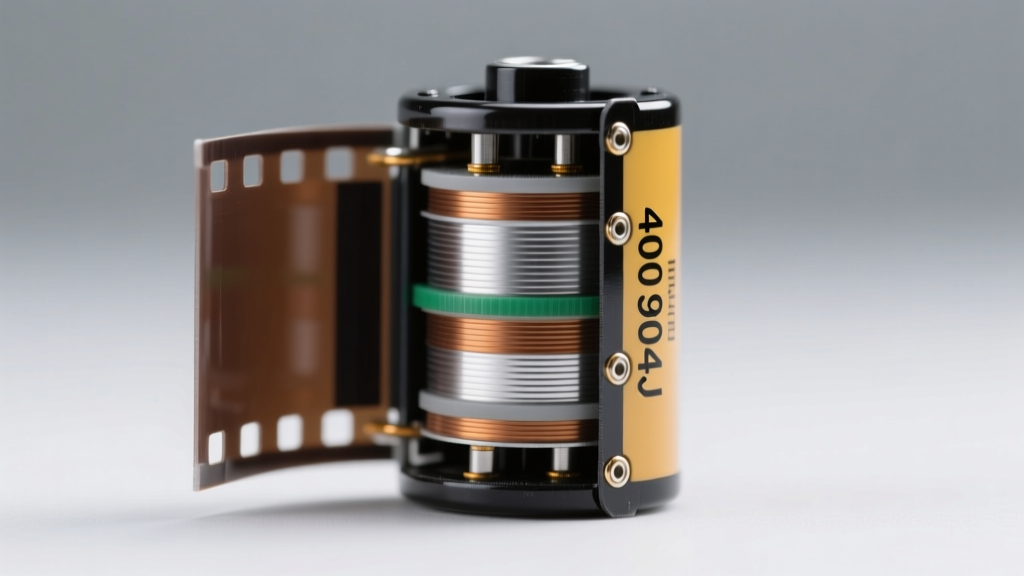
A 400V 904J film capacitor is an electronic component designed to store and release electrical energy, commonly used in power supplies, filtering circuits, and signal processing. The designation "904J" indicates a capacitance value of 90 × 10⁴ pF (0.9 µF) with a tolerance of ±5%. These capacitors are categorized by the type of dielectric material used, which significantly influences their performance in terms of temperature stability, insulation resistance, longevity, and application suitability.
Different dielectric materials offer unique advantages, making certain types ideal for specific environments—such as high-temperature, high-frequency, or outdoor applications. Below is a comprehensive overview of the most common types of 400V 904J film capacitors based on dielectric composition.
Polypropylene (PP) Film Capacitors
Utilizing polypropylene as the dielectric, these capacitors are known for excellent dielectric strength, low dissipation factor, and superior stability over a wide temperature range.
Advantages
- Low power loss and high insulation resistance
- Excellent frequency and temperature stability
- High pulse handling capability
- Ideal for precision analog circuits
Limitations
- Larger physical size compared to other types
- Less effective at very high frequencies
- Sensitive to UV and prolonged moisture exposure
Best for: Audio crossovers, snubber circuits, power factor correction, and high-fidelity amplifiers
Polyester (PET/Mylar) Film Capacitors
Constructed with polyethylene terephthalate (PET), commonly known as Mylar, these capacitors offer a cost-effective solution with moderate performance across various conditions.
Advantages
- Low cost and widely available
- Good volumetric efficiency (compact size)
- Adequate performance for general-purpose use
- Stable under normal operating conditions
Limitations
- Higher dielectric absorption
- Poorer temperature and frequency stability
- Higher losses at high frequencies
Best for: Decoupling, coupling, filtering in consumer electronics, and non-critical timing circuits
Polyethylene (PE) Film Capacitors
These capacitors use high-density polyethylene as the dielectric, prized for its excellent moisture resistance and chemical inertness.
Advantages
- Outstanding resistance to water and humidity
- Good dielectric properties at low frequencies
- High reliability in harsh environments
- Commonly used in RF and coaxial applications
Limitations
- Limited high-temperature performance
- Lower thermal stability
- Not suitable for high-frequency circuits
Best for: Outdoor equipment, marine electronics, industrial sensors, and underground cabling systems
Polyamide (Nylon) Film Capacitors
Featuring a nylon-based dielectric, these capacitors are engineered for extreme durability under mechanical stress and elevated temperatures.
Advantages
- Exceptional heat resistance (up to 125°C or higher)
- High mechanical strength and flexibility
- Resistant to oils, solvents, and abrasion
- Reliable in dynamic environments
Limitations
- Higher cost than standard film types
- Hygroscopic (absorbs moisture if unsealed)
- Less common in consumer applications
Best for: Automotive electronics, aerospace systems, engine control units, and industrial motor drives
Foil vs. Metalized Film Capacitors
This classification refers to the electrode construction rather than the dielectric. In foil film capacitors, metal foils (typically aluminum) serve as electrodes, while metalized film capacitors feature a thin vacuum-deposited metal layer directly on the dielectric film.
Advantages (Metalized)
- Self-healing capability after dielectric breakdown
- Smaller size and lighter weight
- Higher reliability in fault-prone environments
- Improved surge current tolerance
Limitations (Metalized)
- Slightly lower capacitance stability over time
- Higher ESR (Equivalent Series Resistance) in some cases
- Can degrade with repeated self-healing events
Best for: Compact power supplies, lighting ballasts, EMI filters, and applications requiring high reliability and space efficiency
| Type | Temperature Range | Stability | Cost | Typical Applications |
|---|---|---|---|---|
| Polypropylene (PP) | -55°C to +105°C | Excellent | Medium | Audio circuits, snubbers, PFC |
| Polyester (PET) | -55°C to +125°C | Good | Low | General-purpose filtering, decoupling |
| Polyethylene (PE) | -40°C to +85°C | Fair | Medium | Outdoor, RF, industrial sensors |
| Polyamide (PA) | -55°C to +125°C+ | Very Good | High | Automotive, aerospace, high-temp circuits |
| Metalized Film | Varies by dielectric | Good | Low to Medium | Compact electronics, EMI suppression |
Expert Tip: When selecting a 400V 904J film capacitor, consider not only the dielectric type but also the construction (foil vs. metalized). For applications prone to voltage spikes—like motor drives or switching power supplies—metalized film capacitors with self-healing properties offer greater long-term reliability.
Industrial Applications of 400V 904J Film Capacitor
The 400V 904J film capacitor is a high-performance passive electronic component known for its stability, reliability, and durability under varying electrical and environmental conditions. With a capacitance value of 0.1 µF (904J = 90 × 10⁴ pF = 0.1 µF) and a voltage rating of 400 volts, this capacitor is widely used across multiple industries due to its ability to filter noise, stabilize voltage, store energy, and ensure smooth operation of sensitive electronics. Below is a comprehensive overview of its key industrial applications.
Core Applications Across Industries
Electronics and Consumer Appliances
In consumer electronics such as televisions, radios, computers, and audio systems, the 400V 904J film capacitor plays a vital role in signal filtering, noise suppression, and power supply smoothing. Its low dielectric absorption and high insulation resistance make it ideal for maintaining clean, stable signals in analog circuits.
In household appliances like refrigerators, washing machines, and air conditioners, these capacitors assist in motor start-up and run phases by providing the necessary phase shift and energy storage. This ensures efficient and quiet operation while reducing wear on motor windings and extending appliance lifespan.
Power and Renewable Energy Systems
Within power electronics and energy infrastructure, the 400V 904J capacitor contributes to voltage stabilization and transient suppression. It is commonly found in inverters, converters, and power factor correction (PFC) circuits, where it helps maintain consistent output despite fluctuating input conditions.
In solar photovoltaic (PV) systems and wind turbines, these capacitors buffer rapid changes in power generation, absorb voltage spikes, and release stored energy during dips. Their high ripple current tolerance and thermal stability make them particularly suited for renewable energy applications that experience variable loads and harsh environmental conditions.
Automotive Electronics
Modern vehicles are increasingly reliant on advanced electronic systems—including infotainment, GPS navigation, ADAS (Advanced Driver Assistance Systems), and engine control units (ECUs)—all of which require stable power delivery. The 400V 904J film capacitor helps suppress electromagnetic interference (EMI), filter out voltage transients from the alternator or ignition system, and protect sensitive components from electrical noise.
Its robust performance under temperature extremes and vibration makes it suitable for under-hood and cabin-mounted electronics, ensuring long-term reliability even in demanding automotive environments.
Aerospace and Defense Systems
In aerospace and defense applications, where failure is not an option, the 400V 904J film capacitor is employed in mission-critical systems such as satellite communication modules, radar equipment, flight control systems, and navigation instruments. These capacitors provide precise timing, filtering, and energy storage functions with minimal signal distortion.
Thanks to their excellent temperature stability (typically operating from -55°C to +105°C), low ESR (Equivalent Series Resistance), and resistance to aging, they meet stringent military and aerospace standards (e.g., MIL-PRF-19978, ESA specifications) for long-duration and high-reliability operations in extreme altitudes, radiation, and thermal cycling conditions.
Industrial Machinery and Automation
In industrial settings, 400V 904J capacitors are integral to motor drives, programmable logic controllers (PLCs), robotics, and CNC machines. They help smooth DC bus voltage in variable frequency drives (VFDs), reduce harmonic distortion, and improve overall system efficiency.
Additionally, they serve in snubber circuits to suppress voltage spikes caused by switching inductive loads (e.g., relays, solenoids), thereby protecting semiconductors and enhancing equipment longevity. Their self-healing properties (in metallized film types) further increase reliability in continuous-operation environments.
Medical Devices
Precision and reliability are paramount in medical technology. The 400V 904J film capacitor is used in diagnostic and therapeutic equipment such as MRI scanners, ultrasound machines, X-ray generators, and defibrillators. Here, it ensures accurate signal processing, minimizes electrical noise, and provides stable energy discharge when needed.
Its non-polarized nature, low leakage current, and high dielectric strength make it ideal for patient-connected devices where safety and signal integrity are critical. Compliance with medical safety standards (such as IEC 60601) ensures these components support life-saving technologies without risk of failure.
| Industry | Primary Function | Key Benefits |
|---|---|---|
| Consumer Electronics & Appliances | Signal filtering, motor start/run support | Noise reduction, energy efficiency, long service life |
| Power & Renewable Energy | Voltage stabilization, ripple filtering | High ripple current handling, thermal stability |
| Automotive | EMI suppression, power conditioning | Vibration resistance, wide temperature range |
| Aerospace & Defense | Signal integrity, energy storage | Extreme environment reliability, low aging rate |
| Industrial Automation | Snubbing, motor control, filtering | Self-healing capability, high durability |
| Medical Devices | Signal accuracy, power stability | Low leakage, safety compliance, precision |
Why Choose the 400V 904J Film Capacitor?
Important: Always verify the capacitor's specifications (capacitance, voltage, tolerance, temperature rating) against your circuit requirements. Incorrect selection or installation can lead to premature failure, safety hazards, or system malfunction. Use only certified components from reputable suppliers, especially in medical, aerospace, and industrial safety-critical systems.
What to Consider When Selecting a 400V 904J Film Capacitor
Selecting the right 400V 904J film capacitor is crucial for ensuring circuit efficiency, safety, and long-term reliability. The "904J" designation indicates a capacitance value of 0.1 µF (microfarad) with a tolerance of ±5%, making precision and compatibility key factors. Below are the essential considerations to guide your selection process for optimal performance across various applications.
Capacitance Value (904J = 0.1 µF ±5%)
The capacitance value determines how much electrical energy a capacitor can store and release. For a 904J capacitor, this value is precisely 0.1 microfarads (µF), with a tight tolerance of ±5% (denoted by "J"). This level of accuracy is essential in timing circuits, filtering applications, and signal coupling where even minor deviations can affect system performance.
- Ensure the 0.1 µF value aligns with the circuit’s design requirements, especially in resonant or RC timing networks
- Match capacitance with inductance and resistance values to avoid phase shifts or frequency response issues
- In power supply filters, verify that the capacitance effectively smooths voltage ripple without overloading other components
Key consideration: Always cross-check the capacitance code (e.g., 904J) using standard conversion charts to prevent misinterpretation.
Voltage Rating (400V DC/AC)
The voltage rating specifies the maximum voltage the capacitor can safely handle. A 400V rating means the capacitor is designed for circuits where peak voltages do not exceed this threshold. Exceeding this limit risks dielectric breakdown, leading to short circuits, overheating, or even explosion.
- Apply a safety margin: operate at 70–80% of rated voltage (ideally ≤320V) for improved longevity
- For AC applications, confirm whether the 400V rating applies to peak or RMS voltage
- In switching power supplies or motor drives, account for voltage spikes and transients that may momentarily exceed nominal levels
Critical rule: Never use a 400V capacitor in a circuit with sustained voltages above 400V—derating enhances reliability and safety.
Environmental Resistance
Film capacitors are often deployed in environments with temperature extremes, humidity, or chemical exposure. The 400V 904J type should be selected based on its ability to withstand these conditions without degradation in performance.
- Look for capacitors rated for operating temperatures between -40°C and +85°C or higher, depending on application needs
- Hermetically sealed or epoxy-coated models offer superior moisture resistance for outdoor or industrial settings
- Chemical-resistant housings protect against solvents, oils, and corrosive atmospheres found in manufacturing or automotive environments
Pro tip: In high-humidity areas, choose capacitors with hydrophobic dielectrics like polypropylene (PP) or polyester (PET).
Stability and Long-Term Reliability
Film capacitors are known for excellent long-term stability compared to electrolytic types. They exhibit minimal capacitance drift and low dissipation factor over time, making them ideal for precision and safety-critical systems.
- Low aging rate ensures consistent performance over 10+ years of operation
- Negligible dielectric absorption benefits sample-and-hold and analog signal processing circuits
- High insulation resistance reduces leakage current, enhancing energy efficiency
Technical advantage: Film capacitors maintain stable ESR (Equivalent Series Resistance) under varying loads and frequencies.
Application-Specific Requirements
Different applications demand distinct capacitor characteristics. Understanding the functional role of the 400V 904J capacitor helps in selecting the appropriate dielectric material and construction type.
- Audio Equipment: Use polypropylene film capacitors for low distortion and neutral sound reproduction
- Power Supplies: Prioritize high ripple current capability and thermal stability
- EMI/RFI Filtering: Choose capacitors with low self-inductance and good high-frequency response
- Motor Run Circuits: Ensure continuous duty rating and high dV/dt tolerance
Design insight: Match the capacitor’s frequency response to the signal bandwidth of the application.
Metallized Film vs. Foil Construction
Metallized film capacitors offer significant advantages in size and self-healing properties. In a metallized design, a thin metal layer is vacuum-deposited on the plastic film, allowing the capacitor to "heal" itself if a dielectric flaw causes a short.
- Self-healing prevents catastrophic failure, increasing reliability in unattended systems
- Smaller footprint makes them ideal for compact PCB layouts and portable electronics
- Slight trade-off: lower surge current handling compared to foil types
- Foil types are better suited for high-pulse applications like snubbers or inverters
Smart choice: Opt for metallized polypropylene (MKP) for general-purpose 400V 904J applications requiring compact size and fault tolerance.
Professional Recommendation: When selecting a 400V 904J film capacitor, prioritize reputable manufacturers (e.g., Panasonic, WIMA, KEMET, Vishay) that adhere to IEC 60384 standards. Verify datasheet parameters such as dissipation factor (tan δ), insulation resistance, and temperature coefficient. For mission-critical or industrial applications, consider extended testing for endurance and climate cycling to ensure field reliability.
| Application Type | Recommended Dielectric | Key Performance Traits | Lifespan (Typical) |
|---|---|---|---|
| Audio Crossover Networks | Polypropylene (MKP) | Low distortion, high clarity | 15+ years |
| Switch-Mode Power Supplies | Polyester (MKT) or PP | High ripple current, thermal stability | 10–12 years |
| EMI/RFI Suppression | Polyester (X2 Class) | Safety-certified, high surge tolerance | 8–10 years |
| Industrial Motor Drives | Metallized Polypropylene | Self-healing, vibration resistant | 12+ years |
Additional Selection Criteria
- Size and Mounting: Axial or radial leads? Consider PCB space, mechanical stress, and automated assembly compatibility
- Standards Compliance: Look for safety certifications like UL, CE, or IEC for use in commercial and industrial equipment
- ESR and ESL: Low Equivalent Series Resistance and Inductance are vital for high-frequency performance
- Cost vs. Performance: While film capacitors are more expensive than ceramics, their stability justifies the investment in critical circuits
- Supplier Availability: Choose components with long-term availability and multiple sourcing options to avoid obsolescence
Q & A: Film Capacitor Technical Guide
Welcome to our comprehensive FAQ guide on film capacitors, designed to help electronics enthusiasts, engineers, and technicians better understand key specifications, applications, and performance characteristics. This section addresses common questions about capacitor markings, voltage ratings, high-frequency suitability, and comparisons with other capacitor types. Understanding these fundamentals is essential for selecting the right components in circuit design and repair.
Technical Note: Always verify capacitor specifications using the manufacturer's datasheet. Markings can vary between manufacturers, and incorrect interpretation may lead to circuit failure or safety hazards.
Q1: What does 904J mean in a film capacitor?
A1: The marking "904J" on a film capacitor contains two important pieces of information:
- Capacitance Value: The "904" follows the standard three-digit capacitor code. The first two digits (90) represent the significant figures, and the third digit (4) is the multiplier (10⁴). Therefore, 904 translates to 90 × 10⁴ pF = 900,000 pF = 90 nanofarads (nF) or 0.09 µF.
- Tolerance: The letter "J" indicates a capacitance tolerance of ±5%. This means the actual capacitance can vary by up to 5% above or below the nominal value.
- Temperature Rating (Clarification): Contrary to a common misconception, "904" does not refer to temperature endurance. Instead, temperature ratings are typically indicated by separate codes (e.g., "85/85/21" per IEC standards). The "904" is purely a capacitance code.
Pro Tip: Use a digital multimeter with capacitance measurement capability to verify the actual value, especially when working with older or unmarked components.
Q2: What are the typical applications for a 400V capacitor?
A2: A 400V-rated capacitor is designed to safely operate in circuits with voltages up to 400 volts DC or peak AC. These capacitors are widely used across various electronic and electrical systems due to their balance of safety margin and compact size. Common applications include:
- Power Supplies: Used in AC-DC converters, SMPS (Switch-Mode Power Supplies), and filtering stages to smooth voltage ripple.
- Motor Start/Run Circuits: Employed in single-phase induction motors (e.g., fans, compressors) to create a phase shift for starting torque.
- Audio Equipment: Found in crossover networks, tone controls, and coupling circuits due to their low distortion and stable performance.
- Signal Filtering: Act as noise filters, EMI/RFI suppression components, and decoupling capacitors in high-voltage signal paths.
- General-Purpose Circuits: Suitable for timing circuits, snubbers, and energy storage in medium-voltage applications.
Capacitors with 400V ratings are especially valued in applications requiring high reliability and long-term stability under continuous voltage stress.
| Application | Function | Capacitor Type Commonly Used | Key Requirement |
|---|---|---|---|
| Switch-Mode Power Supplies | Input/Output Filtering | Film, Ceramic, Electrolytic | Low ESR, High Ripple Current |
| Audio Crossovers | Frequency Separation | Polypropylene Film | Low Distortion, High Linearity |
| Motor Start | Phase Shifting | Metallized Polypropylene | High Surge Current Tolerance |
| EMI Filtering | Noise Suppression | X2 Safety Film | High Voltage, Safety Certified |
Q3: Are film capacitors good for high-frequency applications?
A3: Yes, film capacitors are excellent for high-frequency applications. Despite the original answer suggesting otherwise, film capacitors are widely preferred in high-frequency circuits due to several key advantages:
- Low Equivalent Series Resistance (ESR): Minimizes power loss and heating at high frequencies.
- Low Equivalent Series Inductance (ESL): Maintains effective capacitance even at RF frequencies, outperforming many other capacitor types.
- Excellent Stability: Minimal change in capacitance with temperature, voltage, and frequency.
- High Insulation Resistance: Reduces leakage current, crucial for precision circuits.
Film capacitors are commonly used in:
- RF (Radio Frequency) circuits and transmitters
- High-fidelity audio amplifiers and crossover networks
- Switching power supplies (for snubbing and filtering)
- Signal coupling and decoupling in high-speed digital systems
- Resonant and timing circuits
Polypropylene and polyester film types are particularly favored for their performance in these roles.
Design Insight: For optimal high-frequency performance, select surface-mount film capacitors or leadless radial designs to further minimize parasitic inductance.
Q4: How does a film capacitor compare to an electrolytic capacitor in terms of performance?
A4: Film and electrolytic capacitors serve different purposes and have distinct performance profiles. Here's a detailed comparison:
- Stability & Reliability: Film capacitors offer superior long-term stability, with minimal capacitance drift over time and temperature. They are non-polarized and do not degrade like electrolytics, which rely on a liquid or gel electrolyte that can dry out.
- Lifespan: Film capacitors typically last 10–20 years or more under normal conditions, while aluminum electrolytics may degrade in 5–10 years, especially in high-temperature environments.
- ESR & ESL: Film capacitors have significantly lower ESR and ESL, making them ideal for high-frequency and high-efficiency applications. Electrolytics, especially standard aluminum types, have higher losses.
- Voltage Handling: Film capacitors can handle higher voltages per unit volume and are often rated for 630V, 1000V, or more, whereas electrolytics are typically limited to lower voltages (though high-voltage electrolytics exist).
- Size & Cost: Electrolytic capacitors provide much higher capacitance values (e.g., 1000µF) in a compact, low-cost package. Film capacitors are physically larger and more expensive for the same capacitance, making them less suitable for bulk energy storage.
- Polarity: Film capacitors are non-polarized, allowing use in AC circuits. Electrolytics are polarized and must be connected with correct polarity.
| Parameter | Film Capacitor | Electrolytic Capacitor |
|---|---|---|
| Capacitance Range | 100pF – 100µF | 1µF – 100,000µF |
| Typical ESR | 0.01 – 0.1 Ω | 0.1 – 10 Ω |
| Lifespan | 10–20+ years | 5–10 years (temperature-dependent) |
| Polarity | Non-polarized | Polarized |
| Best For | Filtering, Timing, AC Coupling | Power Supply Smoothing, Energy Storage |
In summary, film capacitors excel in precision, stability, and high-frequency performance, while electrolytic capacitors are better suited for high-capacitance, cost-sensitive applications like power supply filtering. The choice depends on the specific circuit requirements.
Hybrid Approach: In power supply designs, engineers often combine both types—using electrolytics for bulk capacitance and film capacitors for high-frequency noise filtering—to achieve optimal performance.