The Dyson Purifier range has long been a benchmark in home air quality, combining sleek design with advanced filtration. The TP4A and TP7A are two recent models that serve similar purposes—cleaning indoor air using HEPA and activated carbon filters while doubling as fans. But with the TP7A being the newer release, many consumers wonder: is it truly better than its predecessor? Or is the TP4A still a smart buy? This article breaks down every key difference to help you decide whether upgrading makes sense.
Design and Build: Subtle Evolution, Not Revolution
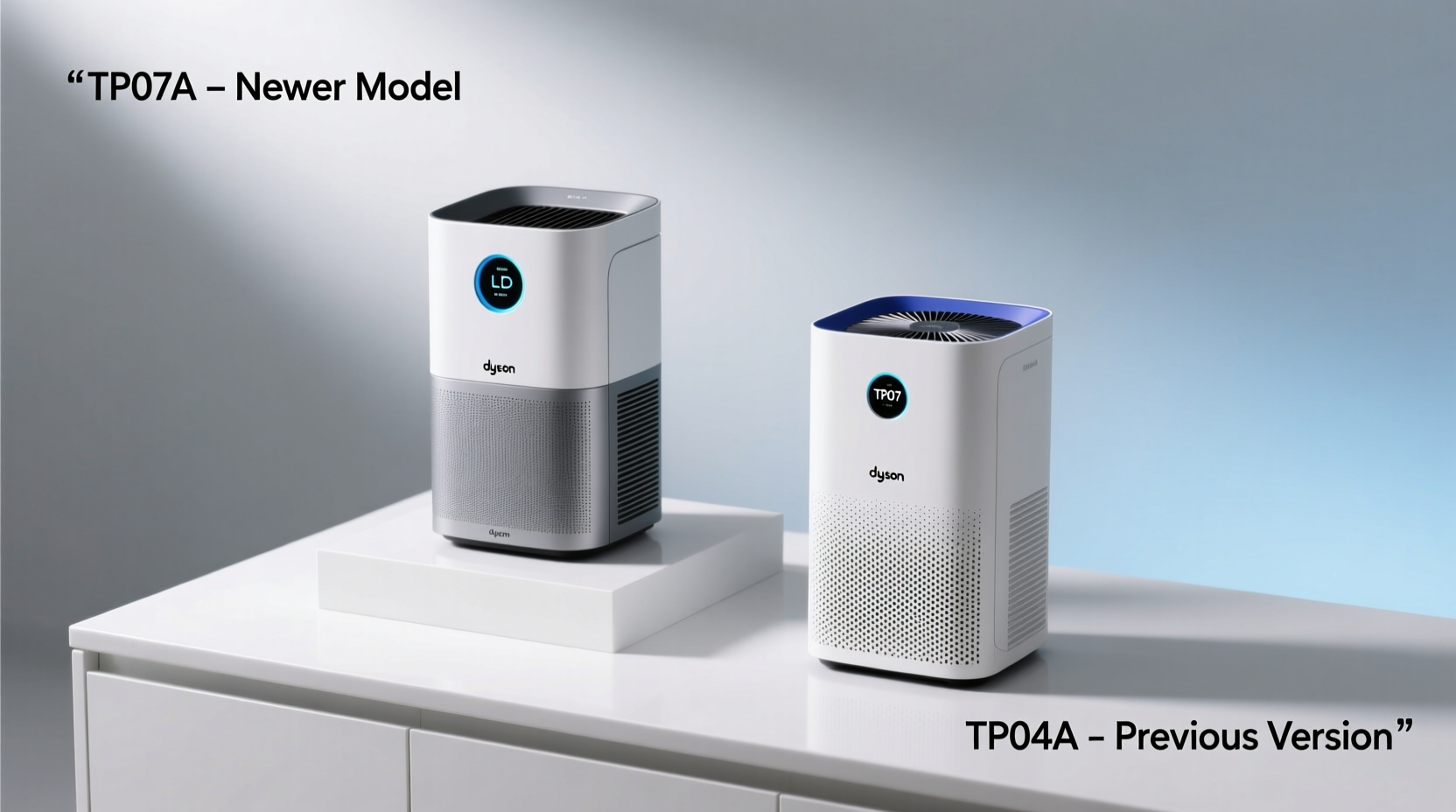
At first glance, the TP4A and TP7A look nearly identical. Both feature Dyson’s signature bladeless ring design, compact footprint, and high-quality plastic finish available in white/silver or black/nickel. The dimensions are almost the same—around 25 cm tall and 23 cm in diameter—making them suitable for small to medium rooms.
However, the TP7A introduces minor refinements. The base is slightly more streamlined, and the touch interface has been updated for smoother responsiveness. More importantly, the TP7A includes an improved oscillation mechanism that allows for quieter operation during sleep mode. While not a dramatic redesign, these tweaks reflect Dyson’s focus on user experience refinement.
Tip: Place your purifier at least 50 cm away from walls to ensure optimal airflow and filtration efficiency.Filtration Performance: Same Core, Smarter Monitoring
Both units use a combined HEPA H13 and activated carbon filter, capable of capturing 99.95% of particles as small as 0.1 microns—including pollen, dust, mold spores, and PM2.5 particulates. They also tackle gases like nitrogen dioxide (NO₂) and volatile organic compounds (VOCs), making them effective in urban homes or near busy roads.
Where they diverge is in sensor intelligence. The TP7A features upgraded sensors that detect particle levels and gases more frequently—up to three times per minute compared to the TP4A’s once-per-minute sampling. It also adds real-time NO₂ monitoring directly on the LCD screen, whereas the TP4A only shows general air quality status without gas-specific breakdowns.
This means the TP7A provides more granular feedback, allowing users to see exactly when traffic fumes or cooking emissions spike. For households with asthma sufferers or those in polluted areas, this level of detail can be valuable.
“Real-time gas detection is a game-changer for urban dwellers. Knowing when NO₂ peaks helps people adjust ventilation habits proactively.” — Dr. Lena Patel, Indoor Air Quality Researcher at Imperial College London
Noise Levels and Sleep Mode Efficiency
Noise output is critical for bedroom use. Both models operate quietly on low settings, but the TP7A improves upon the TP4A’s already strong performance. In sleep mode, the TP7A runs at approximately 28 decibels (dB), compared to the TP4A’s 30 dB—a subtle but noticeable reduction.
The TP7A also features adaptive night-time logic: the display dims completely, and fan speed adjusts based on air quality trends rather than abrupt spikes. This prevents sudden surges in noise that could wake light sleepers. Additionally, the TP7A uses a brushless DC motor with enhanced acoustic insulation, contributing to smoother airflow and reduced turbulence.
Smart Features and App Integration
Dyson’s Link app connects both models to smartphones, offering remote control, scheduling, and air quality history. However, the TP7A enhances this experience with faster Bluetooth Low Energy (BLE) pairing and improved Wi-Fi stability. Users report fewer disconnections and quicker response times when adjusting modes remotely.
The TP7A also supports multi-room tracking if you own multiple Dyson purifiers. You can view air quality data across different devices in one dashboard, which is useful for larger homes. The TP4A lacks this capability unless manually toggled through device switching in the app.
Another advantage: the TP7A integrates better with voice assistants. While both work with Alexa and Google Assistant, the TP7A responds faster and supports more precise commands like “set fan speed to 3” or “turn off display.”
Performance Comparison Table
| Feature | Dyson TP4A | Dyson TP7A |
|---|---|---|
| Filtration Type | HEPA H13 + Carbon | HEPA H13 + Carbon |
| Sensor Frequency | Every 60 seconds | Up to every 20 seconds |
| Gas Detection Display | General AQ Index | NO₂ & VOC Readings |
| Minimum Noise Level | 30 dB | 28 dB |
| Sleep Mode Intelligence | Basic auto-adjust | Adaptive trend-based control |
| App Multi-Room Support | No | Yes |
| Wi-Fi Stability | Good | Improved |
| Price Range (USD) | $599–$649 | $699–$749 |
Real-World Use Case: Urban Apartment Living
Sophia, a graphic designer living in downtown Toronto, owned a TP4A for two years. She noticed frequent morning congestion and suspected poor indoor air quality due to nearby construction and traffic. After upgrading to the TP7A, she began monitoring real-time NO₂ levels and discovered spikes every weekday between 7–9 AM—coinciding with rush hour.
Using the app, she scheduled her purifier to ramp up before she woke up. She also started opening windows during midday lulls in traffic. Within three weeks, her allergy symptoms decreased significantly. “I didn’t realize how much gas pollution was affecting me until the TP7A showed me the data,” she said. “It’s not just about dust—it’s about invisible gases too.”
Is the Upgrade Worth It? A Practical Checklist
If you're deciding whether to switch from the TP4A to the TP7A—or choose between them new—consider this checklist:
- ✅ Do you live in a city with high traffic pollution?
- ✅ Are you sensitive to gases like NO₂ or cooking fumes?
- ✅ Do you want more accurate, real-time air quality insights?
- ✅ Will you use the Dyson app regularly across multiple rooms?
- ✅ Is quiet nighttime operation a top priority?
If you answered yes to three or more, the TP7A justifies its $100 premium. But if your needs are basic—removing dust, pet dander, or seasonal allergens—the TP4A remains highly effective and often available at a discount.
Long-Term Value and Filter Costs
Filter replacement costs are identical: around $80 every 12 months under normal use. Both models alert you when a change is needed via the app and machine display. There's no difference in energy consumption either; both draw about 40 watts on high and less than 2 on low.
Resale value favors the TP7A slightly, especially as older models phase out of official support. Dyson typically provides firmware updates for five years, so buying a TP7A today ensures longer software relevance.
Frequently Asked Questions
Can the TP7A remove wildfire smoke effectively?
Yes. Its HEPA H13 filter captures fine particulate matter (PM2.5) common in wildfire smoke, and the carbon layer helps reduce associated odors. During fire season, running it on auto mode ensures rapid response to air quality drops.
Does the TP4A lack any essential safety certifications?
No. Both models meet UL, ETL, and CARB standards. The TP4A is fully certified for safe home use and does not emit ozone or harmful byproducts.
Is the app necessary to use either model?
No. All core functions—on/off, fan speed, oscillation, sleep mode—are accessible via the touchscreen. The app adds convenience and deeper insights but isn’t required for daily operation.
Final Verdict: Incremental Gains, Not a Leap
The Dyson TP7A isn’t a revolutionary upgrade over the TP4A—it’s an evolution. It delivers smarter sensing, quieter operation, and better digital integration. If you’re starting fresh and budget allows, the TP7A offers the most future-proof experience. But if you already own a TP4A, upgrading solely for marginal gains may not be cost-effective unless specific features like NO₂ tracking or ultra-quiet sleep mode are priorities.
For new buyers, the decision hinges on how deeply you want to engage with your indoor air quality. The TP4A excels at fundamentals. The TP7A adds precision and polish. Neither disappoints—but only one pushes the envelope.
🚀 Ready to breathe easier? Assess your environment, review your needs, and choose the purifier that matches your lifestyle—not just the latest label. Share your thoughts or experiences below.