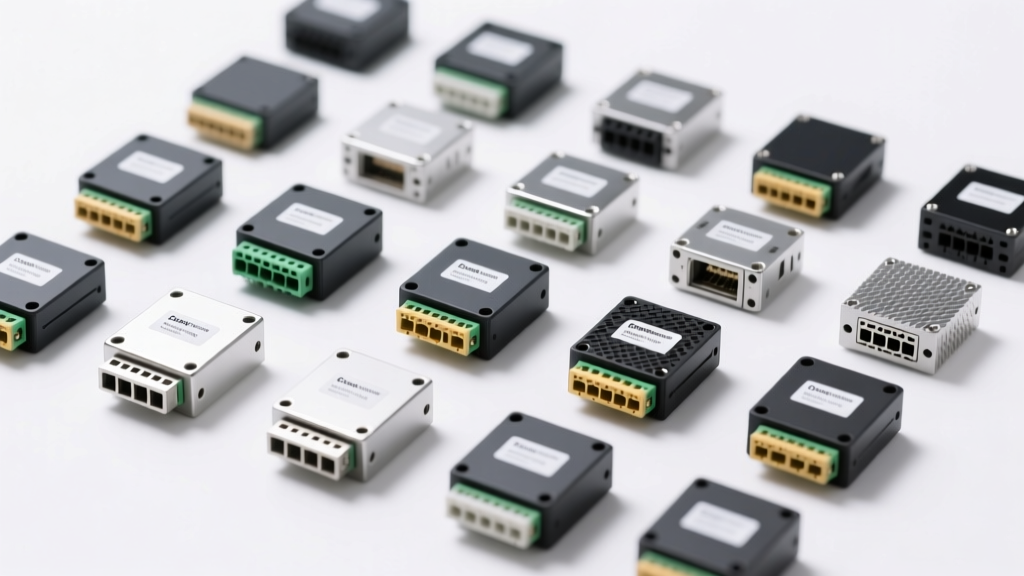
Types of Current Source Modules
A current source module is an essential electronic component designed to deliver a consistent or controllable electric current to a load, regardless of changes in voltage or resistance. These modules are vital in precision applications such as industrial automation, laboratory testing, power electronics, and advanced control systems. Depending on their design and functionality, current source modules are categorized into several types—each tailored for specific operational needs.
The choice of current source module significantly impacts system performance, energy efficiency, and reliability. Understanding the differences between fixed, adjustable, pulsed, and four-quadrant modules enables engineers and technicians to select the most suitable option based on application requirements such as stability, flexibility, control precision, and bidirectional power flow.
Fixed Current Source Modules
Delivers a constant, unchangeable current output optimized for stable and repetitive applications.
Advantages
- Simple to install and operate
- High reliability with minimal failure points
- Low maintenance requirements
- Cost-effective for standardized applications
- Excellent stability under consistent loads
Limitations
- No output adjustability
- Limited versatility across different tasks
- May require replacement when load conditions change
Best for: LED lighting systems, resistive heating elements, battery charging circuits, and basic consumer electronics
Adjustable Current Source Modules
Allows users to fine-tune the output current within a specified range for dynamic or variable-load applications.
Advantages
- High flexibility and adaptability
- Supports multiple applications with one device
- Precision control via manual or digital interfaces
- Reduces need for multiple fixed modules
- Ideal for prototyping and R&D environments
Limitations
- Slightly more complex setup
- Higher initial cost than fixed modules
- Potential for user error in configuration
Best for: Laboratory testing, calibration systems, motor drives, and development platforms requiring variable current levels
Pulsed Current Source Modules
Generates current in controlled bursts or pulses, ideal for time-sensitive and high-efficiency applications.
Advantages
- Minimizes heat buildup in sensitive components
- Enables precise energy delivery timing
- Improves efficiency in intermittent operations
- Extends lifespan of connected devices
- Supports high peak currents without continuous load
Limitations
- Not suitable for continuous operation needs
- Requires synchronization with control systems
- More complex circuitry and design
Best for: Resistance spot welding, pulsed laser drivers, medical treatment devices, radar systems, and digital communication circuits
Four-Quadrant Current Source Modules
Operates across all four quadrants of the voltage-current plane, capable of sourcing and sinking current with bidirectional voltage polarity.
Advantages
- Full bidirectional power flow capability
- Supports regenerative energy recovery
- Essential for active load simulation and motor control
- Enables real-time feedback and dynamic response
- Ideal for energy-efficient and smart grid applications
Limitations
- High complexity and cost
- Demanding control and cooling requirements
- Requires advanced system integration
Best for: Regenerative braking systems, electric vehicle testing, active filters, motor drives with dynamic braking, and bidirectional DC-DC converters
| Type | Adjustability | Control Precision | Energy Efficiency | Typical Applications |
|---|---|---|---|---|
| Fixed | None | High (for set point) | Good | Lighting, heating, basic electronics |
| Adjustable | Manual/Digital | Very High | Good to Excellent | Testing, prototyping, variable loads |
| Pulsed | Timing & Amplitude | Extremely High | Excellent (for burst use) | Welding, medical devices, comms |
| Four-Quadrant | Full Bidirectional | Precision Feedback | Outstanding (regenerative) | Motors, EVs, energy recovery systems |
Expert Tip: When selecting a current source module, always consider not only the nominal current requirement but also transient response, thermal management, and compatibility with your control system. For example, using a four-quadrant module in a regenerative application can reduce energy consumption by up to 30% compared to traditional unidirectional sources.
Important Features of Current Source Modules
Current source modules are essential components in modern electronic systems, providing precise and reliable current delivery for a wide range of applications—from semiconductor testing and medical instrumentation to LED lighting and industrial automation. Their performance hinges on several critical design and operational features that ensure efficiency, safety, and longevity. Understanding these key characteristics enables engineers and system designers to select the right module for their specific needs.
Core Features and Their Significance
Stability
Stability is one of the most crucial attributes of a current source module. A stable current output ensures that the delivered current remains constant despite fluctuations in load resistance or input voltage. This consistency is vital in high-precision environments such as semiconductor characterization, laboratory measurements, and calibration systems.
Advanced feedback control circuits and precision resistors are typically employed to maintain tight regulation of current output. High stability reduces measurement errors, enhances repeatability, and supports reliable operation in sensitive applications where even minor deviations can lead to significant inaccuracies.
Isolation
Electrical isolation is a fundamental safety and performance feature, especially in complex systems with multiple interconnected devices. Isolated current source modules prevent ground loops, suppress noise transmission, and protect sensitive downstream components from voltage spikes or power supply irregularities.
In North American industrial and medical applications, stringent safety standards require galvanic isolation between input and output circuits. This not only improves system reliability but also extends the lifespan of connected electronics by shielding them from transient surges, electrostatic discharge (ESD), and other electrical disturbances.
Compact Design
Modern current source modules are engineered for space efficiency without compromising performance. Their compact form factor makes them ideal for integration into consumer electronics, portable diagnostic devices, and advanced LED lighting systems where board space and enclosure size are limited.
Miniaturization is achieved through high-density PCB layouts, surface-mount components, and efficient thermal management designs. Despite their small size, these modules deliver robust current regulation and are often designed to be modular or stackable, enabling scalability in multi-channel applications such as LED arrays or sensor networks.
Heat Dissipation Mechanisms
Efficient thermal management is essential for maintaining performance and reliability under continuous or high-load operation. Current source modules generate heat due to internal power losses, particularly in linear regulators or high-current switching circuits.
To combat overheating, manufacturers incorporate various heat dissipation solutions such as integrated heat sinks, thermal pads, forced-air cooling (fans), or thermally conductive encapsulation materials. Effective heat management ensures stable output, prevents thermal shutdown, and significantly extends the operational life of the module—especially in enclosed or high-temperature environments.
| Feature | Primary Benefit | Typical Applications |
|---|---|---|
| Current Stability | Ensures accurate, repeatable output under varying conditions | Semiconductor testing, precision instrumentation, calibration labs |
| Galvanic Isolation | Protects circuits from noise, surges, and ground loops | Medical devices, industrial control systems, data acquisition |
| Compact Form Factor | Enables integration into space-constrained designs | Portable electronics, LED drivers, IoT sensors |
| Thermal Management | Maintains performance and longevity under load | High-power LEDs, industrial drivers, continuous-operation systems |
Why These Features Matter
Important: When selecting a current source module, always verify compatibility with your system’s voltage, current, and environmental requirements. Neglecting thermal design or isolation specifications can lead to premature failure or unsafe operating conditions. Consult manufacturer datasheets and application notes to ensure optimal performance and compliance with industry standards.
Commercial Uses of Current Source Modules
Current source modules are essential components in modern electronic systems, delivering stable and precisely controlled electrical current to a wide range of applications across industries. Their ability to maintain consistent current output regardless of load variations makes them indispensable in environments where accuracy, reliability, and efficiency are critical. From industrial automation to advanced medical diagnostics, these modules enable high-performance operation in complex systems.
Manufacturing and Industry
In industrial automation and manufacturing processes, current source modules play a pivotal role in powering and controlling sensors, actuators, and robotic systems. They ensure precise operation of electromechanical components, enhancing both productivity and process repeatability on production lines.
- Used in servo motors and linear actuators for accurate positioning in assembly robots
- Power critical feedback sensors (e.g., encoders, load cells) requiring stable excitation current
- Integrated into programmable logic controllers (PLCs) for analog signal conditioning
- Enable closed-loop control systems by providing consistent drive signals to valves and pumps
Key benefit: Improved system responsiveness and reduced downtime due to reliable current regulation under variable loads
Optoelectronics
Current source modules are fundamental in optoelectronic applications, where they drive light-emitting devices such as LEDs, laser diodes, and photodetectors. A constant current supply is crucial to prevent thermal runaway and ensure consistent optical output.
- Maintain uniform brightness in LED lighting arrays and display backlights
- Drive high-power laser diodes in fiber-optic communication systems with minimal signal distortion
- Support tunable light sources in spectroscopy and sensing equipment
- Enable pulse-width modulation (PWM) dimming without flicker in architectural and automotive lighting
Technical advantage: Constant current regulation extends device lifespan and improves color consistency in RGB LED systems
Automotive Applications
Modern vehicles rely heavily on current source modules for managing electrical loads in comfort, safety, and powertrain systems. Advanced modules, including four-quadrant designs, support bidirectional current flow, enabling regenerative control and energy recovery.
- Control power windows, seats, and mirrors with smooth, jerk-free motion
- Drive motorized sunroofs and adjustable suspension systems with precision
- Support battery management systems (BMS) in electric vehicles by regulating charging currents
- Enable active damping and steering assist systems with responsive motor control
Innovation spotlight: Quadrant current source modules improve energy efficiency in EVs by recovering kinetic energy during deceleration
Medical Devices
In medical technology, current source modules provide the precision and stability required for diagnostic imaging, therapeutic devices, and patient monitoring systems. Even minor fluctuations can compromise results, making high-accuracy current sources vital.
- Supply stable current to gradient coils in MRI machines for accurate image formation
- Power X-ray tubes with tightly regulated current to control radiation dosage
- Drive bio-sensors and electrochemical cells in blood analyzers and glucose monitors
- Support neural stimulation devices and infusion pumps requiring microamp-level accuracy
Critical feature: Jiateng Semiconductor Power Modules offer low-noise, ripple-free output ideal for sensitive biomedical instrumentation
Aerospace Systems
In aerospace and defense applications, current source modules are designed for high reliability, lightweight construction, and resistance to extreme environmental conditions. They are deployed in avionics, satellite payloads, and ground support equipment.
- Power flight control actuators and inertial navigation systems with minimal drift
- Support communication transceivers and radar systems in aircraft and satellites
- Enable in-orbit calibration of scientific instruments using programmable current sources
- Used in environmental monitoring systems on space stations and rovers
Design consideration: Variable current source modules allow adaptive testing and simulation of spacecraft subsystems under dynamic load conditions
Consumer Electronics
From smartphones to wearables, current source modules enable compact, energy-efficient designs that deliver high performance. Their miniaturized form factors and low power consumption make them ideal for portable devices.
- Power capacitive touchscreens with uniform current distribution for accurate gesture detection
- Drive ambient light and proximity sensors with low-noise current sources
- Support camera autofocus mechanisms and optical image stabilization (OIS)
- Enable haptic feedback motors with precise current control for realistic tactile response
Market trend: North America current source modules are increasingly integrating digital interfaces (I²C, SPI) for smart power management in next-gen gadgets
Research Laboratories
In scientific research, current source modules serve as foundational tools for experiments requiring precise electrical excitation. Their adjustability and accuracy are critical in fields ranging from quantum physics to materials science.
- Drive high-power laser systems in photonics and quantum optics labs
- Supply controlled current to electrochemical cells for battery and fuel cell research
- Enable Hall effect measurements and magnetoresistance studies in condensed matter physics
- Support cryogenic experiments where temperature-sensitive current stability is essential
Research advantage: Adjustable and programmable current sources allow rapid prototyping and real-time parameter tuning during experimental runs
Emerging Applications
As technology advances, current source modules are finding new roles in cutting-edge fields that demand precision power delivery and intelligent control.
- Neuromorphic computing: Mimic synaptic behavior using analog current programming
- Quantum computing: Provide ultra-stable current for superconducting qubit control
- Advanced driver assistance systems (ADAS): Power LiDAR and radar sensors with high-speed modulation
- Renewable energy: Optimize solar panel testing and MPPT (maximum power point tracking) algorithms
Future outlook: Integration with AI-driven power management systems will enable self-optimizing current delivery based on real-time load analysis
Professional Insight: When selecting current source modules for commercial applications, consider not only output specifications but also thermal management, electromagnetic compatibility (EMC), and long-term stability. Modules with built-in diagnostics, remote monitoring, and digital control interfaces offer greater flexibility and reduce integration time in complex systems. For mission-critical applications, prioritize components with rigorous testing certifications (e.g., ISO 13485 for medical, DO-160 for aerospace).
| Industry Sector | Key Application | Required Precision | Typical Current Range | Special Features |
|---|---|---|---|---|
| Manufacturing | Robotic Actuators | ±1% | 0.5A – 20A | Overcurrent protection, PWM input |
| Optoelectronics | Laser Diode Drivers | ±0.1% | 10mA – 5A | Low noise, soft-start, temperature compensation |
| Medical | MRI Gradient Coils | ±0.05% | 1A – 100A | High stability, EMI shielding, redundant monitoring |
| Automotive | EV Motor Control | ±0.5% | 5A – 300A | Four-quadrant operation, regenerative capability |
| Aerospace | Satellite Communications | ±0.2% | 100mA – 10A | Radiation-hardened, wide temperature range |
| Consumer Electronics | Smartphone Sensors | ±2% | 1mA – 500mA | Ultra-compact, low quiescent current |
Selection Guidelines for Commercial Use
- Accuracy and Stability: Choose modules with low drift over time and temperature for critical applications
- Thermal Performance: Ensure adequate heat dissipation, especially in enclosed or high-ambient-temperature environments
- Protection Features: Look for overcurrent, overvoltage, and thermal shutdown safeguards
- Control Interface: Analog (voltage input) vs. digital (I²C, SPI) depends on system integration needs
- Compliance: Verify adherence to industry standards (e.g., IEC 60601 for medical, AEC-Q100 for automotive)
- Scalability: Consider modular designs that allow parallel operation for higher current demands
How To Choose Current Source Modules: A Comprehensive Buyer's Guide
Selecting the right current source module is essential for ensuring stable, efficient, and reliable operation in electronic systems. Whether you're designing power supplies, LED drivers, or precision instrumentation, understanding key selection criteria will help you optimize performance and reduce long-term costs. This guide breaks down the most critical factors—current output range, load regulation, efficiency, thermal management, and application-specific requirements—with actionable insights and expert recommendations.
Important Note: Always match your current source module specifications to the operational demands of your system. Mismatched components can lead to inefficiency, overheating, or premature failure. When in doubt, consult technical datasheets or contact the manufacturer for compatibility verification.
1. Current Output Range: Matching Power to Demand
The current output range is the foundational specification when selecting a current source module. It defines the minimum and maximum current the module can deliver while maintaining accuracy and stability.
- Fixed-Output Modules: Ideal for applications with consistent power demands, such as LED lighting arrays or battery charging circuits. These modules offer simplicity, lower cost, and high reliability in stable environments.
- Adjustable-Output Modules: Best suited for dynamic systems where load requirements vary—such as laboratory equipment, motor controllers, or programmable power supplies. These allow fine-tuning via potentiometers, digital interfaces (I²C, SPI), or external control signals.
- Headroom Consideration: Always select a module with at least 10–20% higher maximum current than your peak load to accommodate transient spikes and ensure long-term reliability.
Proper selection prevents underperformance and avoids unnecessary energy waste, directly impacting system efficiency and component lifespan.
2. Load Regulation: Ensuring Stable Current Under Varying Conditions
Load regulation measures a module’s ability to maintain a constant current output despite changes in load resistance or input voltage. It is typically expressed as a percentage (e.g., ±0.5%), with lower values indicating superior performance.
This feature is critical in applications requiring precise control, such as:
- LED Drivers: Inconsistent current causes flickering or uneven brightness. High load regulation ensures uniform light intensity across varying thermal or electrical conditions.
- Laser Diodes and Sensors: Require extremely stable current to maintain accuracy and prevent signal drift.
- Industrial Automation: Systems with fluctuating loads benefit from modules that maintain setpoints without feedback recalibration.
Modules from North America-based manufacturers often feature advanced feedback circuitry and precision current sensing, offering excellent load regulation—making them ideal for complex, mission-critical electronics.
3. Efficiency: Reducing Energy Loss and Operating Costs
Efficiency refers to the ratio of useful output power to total input power. High-efficiency current source modules convert more energy into usable current and waste less as heat.
Key benefits of high-efficiency designs include:
- Lower electricity consumption, reducing operational costs over time
- Reduced thermal stress on surrounding components
- Extended lifespan due to less internal degradation from heat
- Smaller cooling requirements, enabling compact system designs
For example, Jiateng Semiconductor Power Modules are engineered with optimized switching topologies and low-loss semiconductors, achieving efficiencies above 92%. This makes them particularly suitable for densely packed PCBs, embedded systems, and energy-conscious applications like IoT devices and renewable energy systems.
4. Thermal Management: Preventing Overheating and Ensuring Longevity
Even efficient modules generate heat, especially under continuous operation or high-current loads. Effective thermal management is crucial to prevent performance degradation and component failure.
Consider the following cooling strategies based on your application:
- Passive Cooling: Heat sinks and thermally conductive pads work well in low-to-moderate power applications with adequate airflow.
- Active Cooling: Integrated fans or forced-air systems are necessary for high-power modules or enclosed environments.
- Thermal Interface Materials (TIMs): High-quality thermal pads or grease improve heat transfer between the module and heatsink.
- PCB Layout: Use thermal vias and copper planes to dissipate heat efficiently in surface-mounted designs.
Modules with built-in thermal shutdown protection add an extra layer of safety, automatically reducing output or shutting down when temperatures exceed safe limits.
5. Point of Application: Tailoring Selection to System Requirements
The intended application should drive your module selection. Different systems have unique priorities:
- Precision Instruments: Prioritize stability, accuracy, low noise, and tight regulation. Look for modules with low ripple and high line/load regulation.
- Motors and Actuators: Focus on robustness, surge current handling, and durability under mechanical stress. Modules with overcurrent and short-circuit protection are essential.
- LED Lighting: Emphasize constant current control, dimming compatibility, and thermal stability to maintain color consistency.
- Telecommunications & Networking: Require high reliability, wide input voltage ranges, and EMI compliance.
North American current source modules are widely recognized for meeting rigorous industry standards (e.g., UL, CE, RoHS) and are designed to perform reliably across diverse sectors—from medical devices to automotive systems—thanks to their robust engineering and quality control.
| Selection Criteria | Key Considerations | Recommended Features | Ideal Applications |
|---|---|---|---|
| Current Output Range | Fixed vs. adjustable; peak vs. average load | Adjustable trim, soft-start, current limiting | Lab equipment, variable lighting, motor drives |
| Load Regulation | Stability under load transients | ±0.5% or better, closed-loop feedback | LED drivers, sensors, precision instruments |
| Efficiency | Energy loss, heat generation | ≥90%, synchronous rectification | Portable devices, high-density systems |
| Thermal Management | Ambient temperature, enclosure size | Integrated heatsink, fan control, thermal shutdown | Enclosed systems, industrial controls |
| Application Type | Environmental conditions, reliability needs | IP rating, EMI shielding, rugged packaging | Medical, automotive, outdoor electronics |
Expert Tip: When evaluating current source modules, request full performance curves from the manufacturer—not just headline specs. These graphs show efficiency, regulation, and thermal behavior across operating ranges, giving a more accurate picture of real-world performance.
Final Recommendations for Optimal Selection
- Always verify compatibility with your input voltage, control interface, and physical footprint.
- Check for protection features: overcurrent, overvoltage, overtemperature, and reverse polarity.
- Consider modules with digital monitoring (e.g., PMBus) for smart power management in advanced systems.
- Evaluate long-term availability and manufacturer support to avoid obsolescence issues.
- Test prototypes under real operating conditions before full deployment.
Choosing the right current source module goes beyond basic specifications. By carefully assessing your system’s current needs, environmental conditions, and performance goals, you can select a solution that delivers reliability, efficiency, and scalability. Whether you're using high-efficiency modules from Jiateng Semiconductor or precision-engineered units from North American suppliers, informed decisions lead to superior system performance.
Frequently Asked Questions About Current Source Modules
Q1. What is the primary function of the current source module?A1. The primary function of a current source module is to deliver a precise and constant electric current to a connected load, regardless of fluctuations in voltage, resistance, or environmental conditions. Unlike voltage sources, which maintain a fixed voltage, current sources ensure that the current remains stable even when the load impedance changes.
This capability is essential in applications where consistent current is critical for optimal operation. For example:
- LED Lighting: LEDs require stable current to maintain consistent brightness and prevent thermal runaway, which can shorten lifespan.
- Sensors: Many sensors (e.g., photodiodes, gas sensors) rely on constant current excitation for accurate and repeatable measurements.
- Electrochemical Systems: Processes like electrolysis, battery charging, and plating depend on controlled current to ensure predictable reaction rates and material deposition.
High-quality current source modules often include feedback mechanisms and regulation circuits to maintain accuracy across temperature variations and supply voltage changes.
Q2. How do pulsed current modules benefit welding applications?A2. Pulsed current modules are highly beneficial in welding—particularly in advanced techniques like pulsed MIG (Metal Inert Gas) or TIG (Tungsten Inert Gas) welding—because they deliver current in precisely timed, high-frequency bursts rather than a continuous flow.
Key advantages include:
- Heat Control: By alternating between high peak current and lower background current, pulsed modules allow the weld pool to cool slightly between pulses, reducing overall heat input. This minimizes warping, distortion, and damage to heat-sensitive materials like thin metals or aluminum.
- Improved Weld Quality: The pulsing action helps control metal transfer across the arc, resulting in cleaner, spatter-free welds with better fusion and stronger joints.
- Greater Precision: Operators can fine-tune pulse frequency, duration, and amplitude to match specific materials and joint types, enhancing control over penetration depth and bead profile.
- Reduced Residual Stress: Lower average heat input reduces internal stresses in the welded structure, improving structural integrity and longevity.
These features make pulsed current modules ideal for high-precision industrial applications, automotive manufacturing, and aerospace welding, where quality and consistency are paramount.
Q3. In consumer electronics, why are current source modules very important?A3. In modern consumer electronics, current source modules play a vital role in powering and managing sensitive components that require stable, regulated current for reliable performance. As devices become smaller and more complex, consistent power delivery becomes increasingly critical.
Key applications include:
- Touchscreens and Displays: OLED and AMOLED screens use constant current drivers to ensure uniform brightness and color accuracy across all pixels, preventing flickering or hotspots.
- Proximity and Ambient Light Sensors: These sensors often operate using current-driven circuits to maintain sensitivity and responsiveness under varying lighting conditions.
- Camera Modules: Image sensors and autofocus actuators benefit from stable current to reduce noise and improve image quality.
- Battery Management: Constant current charging is used during the initial phase of lithium-ion battery charging to safely bring the battery to full capacity without overheating.
Additionally, integrated current source modules help reduce power consumption and heat generation, contributing to longer battery life and improved device reliability. Their compact design supports miniaturization trends in smartphones, wearables, and IoT devices.
Q4. What is the significance of load regulation in current source modules?A4. Load regulation is a critical performance metric that measures how well a current source module maintains its specified output current despite changes in the load resistance or impedance. It is typically expressed as a percentage deviation from the nominal current over a defined load range.
For example, a module with excellent load regulation (e.g., ±0.1%) will deliver nearly identical current whether the load is 10Ω or 100Ω, whereas poor regulation could lead to significant current drift.
The importance of load regulation includes:
- Stability in Dynamic Environments: In real-world applications, loads can vary due to temperature changes, mechanical movement, or component aging. Good load regulation ensures consistent operation despite these fluctuations.
- Accuracy in Measurement Systems: Precision instruments such as laboratory sensors, medical devices, and test equipment rely on stable current for accurate data acquisition.
- Reliability in Industrial Control: Automated systems using actuators, solenoids, or motors need predictable current to function correctly and avoid malfunctions.
- Compliance with Standards: Many industries require strict adherence to electrical specifications, and poor load regulation may result in non-compliance or safety risks.
High-performance current source modules employ advanced feedback loops, low-drift components, and temperature compensation to achieve superior load regulation.
Q5. What Should One Consider When Selecting a Current Source Module?A5. Choosing the right current source module requires careful evaluation of several technical and operational factors to ensure compatibility, efficiency, and long-term reliability. Key considerations include:
| Selection Factor | Description | Impact on Performance |
|---|---|---|
| Current Output Range | The minimum and maximum current the module can deliver (e.g., 0–5A). | Must match the requirements of the target application; insufficient range can limit functionality. |
| Accuracy and Stability | How precisely the module maintains the set current over time and conditions. | High accuracy is essential for measurement, calibration, and sensitive electronics. |
| Load Regulation | Ability to maintain constant current despite load variations. | Poor regulation leads to inconsistent performance and potential system errors. |
| Thermal Management | Heat dissipation capability (e.g., heatsinks, fan cooling, thermal shutdown). | Prevents overheating and ensures safe, continuous operation under load. |
| Efficiency | Ratio of output power to input power; higher efficiency reduces energy loss and heat. | Improves battery life in portable devices and lowers operating costs. |
| Form Factor & Integration | Physical size, mounting options, and interface compatibility (analog/digital control). | Determines suitability for compact or embedded systems. |
| Application Requirements | Specific needs such as pulsing capability, remote sensing, or programmability. | Ensures the module supports desired functionality (e.g., PWM control for LEDs). |
By evaluating these parameters in the context of the intended use—whether in industrial automation, medical devices, or consumer electronics—you can select a current source module that delivers optimal performance, durability, and value.