
Ankle pain after running is more than just a minor annoyance—it’s often a warning sign that something in your biomechanics or gear needs attention. Whether you're logging miles on city sidewalks or hitting trails on weekends, persistent discomfort around the ankle joint shouldn’t be ignored. Left unaddressed, it can escalate into chronic instability, tendonitis, or even stress fractures.
The good news? Most post-run ankle pain stems from correctable issues—particularly poor running form and inappropriate footwear. By identifying the root cause, adjusting technique, and selecting supportive, well-fitted shoes, many runners find relief within weeks. This guide breaks down the most common culprits behind ankle soreness, offers practical fixes, and helps you make smarter choices about your running shoes.
Why Ankle Pain Happens: The Biomechanical Breakdown
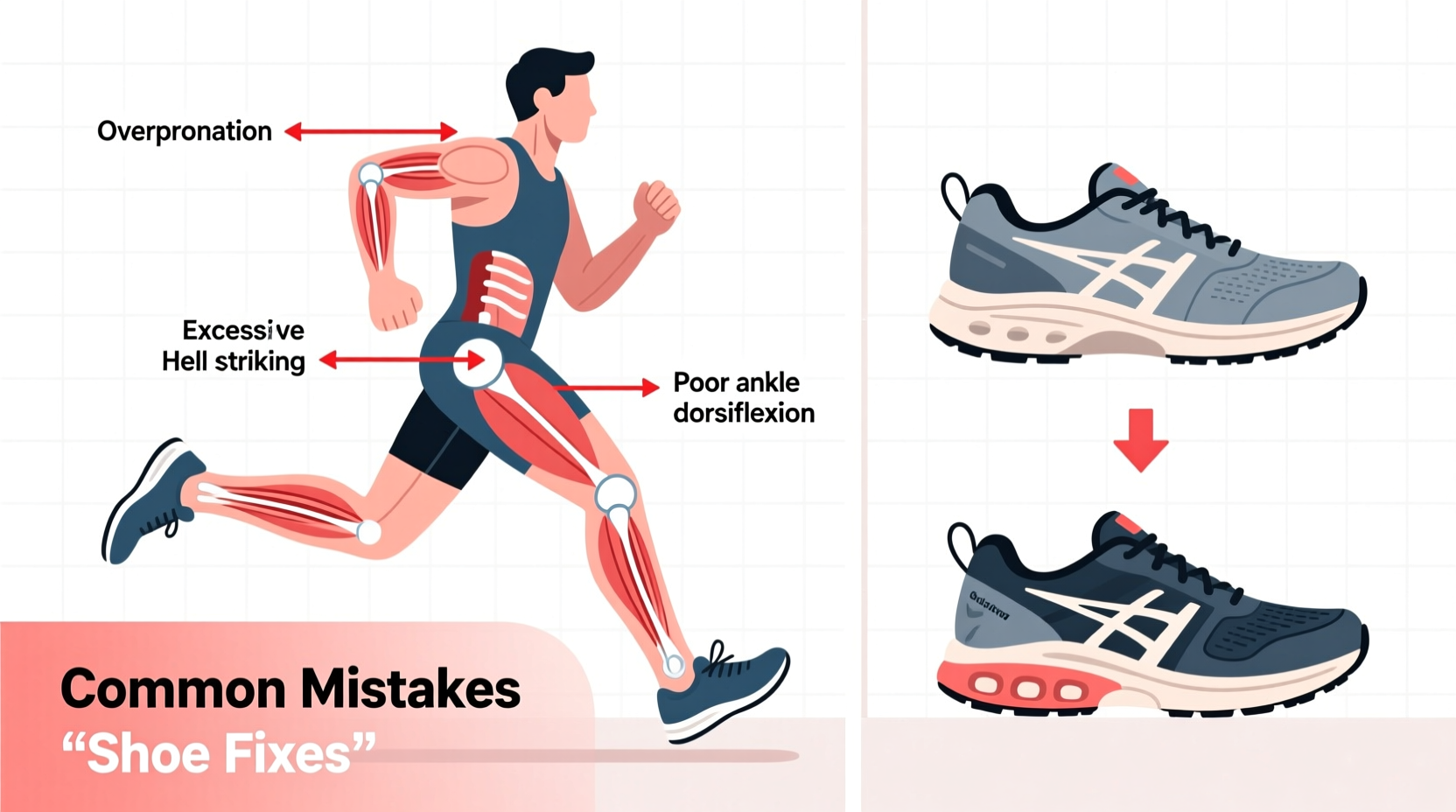
Your ankle plays a critical role in propulsion, shock absorption, and balance during running. Each stride places 3–5 times your body weight in force through the lower leg, making precision in movement essential. When form deviates from optimal mechanics, stress redistributes unevenly across ligaments, tendons, and bones.
Common anatomical contributors to post-run ankle pain include:
- Inversion or eversion overload: Excessive inward (pronation) or outward (supination) rolling of the foot stresses the lateral and medial ankle structures.
- Tendon strain: The peroneal tendons (outside) and posterior tibialis (inside) are prone to overuse if stability is compromised.
- Ligament irritation: Repeated micro-trauma to the anterior talofibular ligament (ATFL), especially in those with prior sprains, leads to inflammation.
- Joint compression: Poor dorsiflexion (upward foot movement) limits range of motion, increasing pressure on the front of the ankle.
While acute injuries like sprains are obvious causes, subtle inefficiencies in gait accumulate over time. These “slow burn” issues often go unnoticed until pain becomes consistent.
“Most runners I see with chronic ankle discomfort aren’t injured—they’re misaligned. Small tweaks in stride and shoe selection resolve symptoms faster than rest alone.” — Dr. Lena Torres, Sports Physical Therapist
Top 5 Running Form Mistakes That Strain Your Ankles
Even experienced runners develop habits that compromise ankle health. Here are the most frequent technical errors linked to post-run soreness:
1. Overstriding
When your foot lands too far in front of your center of gravity, it creates a braking effect. This increases ground reaction forces and forces the ankle to stabilize abruptly, straining the joint capsule and surrounding tissues.
Tip: Focus on landing with your foot under your hip, not out in front. A cadence of 170–180 steps per minute naturally reduces overstriding.2. Inconsistent Foot Strike Pattern
Switching between heel, midfoot, and forefoot striking without consistency disrupts muscle recruitment patterns. Sudden changes in impact distribution fatigue stabilizing muscles like the tibialis anterior and peroneals, leading to instability.
3. Poor Ankle Dorsiflexion During Stance Phase
Limited upward mobility at the ankle prevents smooth forward motion over the foot. Runners compensate by leaning excessively forward or hiking the hip, which alters pelvic alignment and increases torque on the lower leg.
4. Weak Hip and Glute Activation
Weak glutes fail to control femoral rotation, causing internal knee collapse (valgus). This kinetic chain flaw translates down to excessive pronation, stressing the medial ankle and plantar fascia.
5. Lack of Core Engagement
A weak core allows excessive trunk sway or rotation. To maintain balance, runners overcorrect with their feet and ankles, increasing lateral stress on ligaments.
Shoe Selection: How the Wrong Pair Wrecks Your Ankles
Your running shoes are more than cushioning—they’re dynamic support systems that influence every aspect of foot function. Wearing the wrong type can amplify existing biomechanical flaws or create new ones.
Consider these common mismatches:
| Runner Profile | Wrong Shoe Choice | Resulting Ankle Stress |
|---|---|---|
| Overpronator | Neutral cushioned shoe | Excess inward roll strains medial ligaments and posterior tibialis tendon |
| Supinator / Underpronator | Firm stability shoe | Forces foot inward, irritating lateral tendons and ATFL |
| Low arches + flat feet | Minimalist or racing flats | Lack of arch support increases strain on spring ligament and deltoid complex |
| High arches + rigid feet | Hard platform trainers | Poor shock absorption transfers impact to ankle joint and subtalar joint |
| All runners | Worn-out shoes (>300–500 miles) | Collapsed midsole destabilizes foot, increasing risk of inversion sprains |
Beyond fit and category, consider stack height and drop. Shoes with a high heel-to-toe drop (10–12mm) reduce Achilles and calf load but may limit ankle mobility over time. Lower drops (4–6mm) encourage natural movement but require stronger calves and better dorsiflexion.
Tip: Replace running shoes every 300–500 miles. Track mileage using apps like Strava or Nike Run Club to avoid overuse.Step-by-Step Fix: Correcting Form and Footwear in 6 Weeks
Rebuilding ankle resilience takes time, but structured adjustments yield fast results. Follow this six-week plan to address both movement quality and equipment.
- Week 1–2: Assess and Reset
- Record a side and rear video of yourself running on a treadmill.
- Look for overstriding, foot flare, or excessive bounce.
- Visit a specialty running store for a gait analysis and shoe recommendation.
- Begin daily ankle mobility drills: wall dorsiflexion stretches (3 sets of 30 seconds per leg).
- Week 3–4: Strengthen and Stabilize
- Add single-leg balance work: stand on one foot for 1 minute, eyes closed, on a pillow (progressively harder).
- Perform resistance band exercises: 3 sets of 15 reps for eversion (peroneals) and inversion (tibialis posterior).
- Incorporate hill strides: 4 x 20-second uphill sprints focusing on quick turnover and midfoot strike.
- Replace old shoes if past 300 miles.
- Week 5–6: Integrate and Test
- Run two short sessions (2–3 miles) in your new shoes, noting comfort and stability.
- Practice cadence drills: run 30 seconds at +5–10 steps/minute above normal, then return to baseline.
- Do a controlled tempo run (2 miles at moderate pace), checking in with ankle sensation post-run.
- Reassess video footage to compare form improvements.
By the end of week six, most runners report reduced stiffness, improved push-off efficiency, and greater confidence in uneven terrain.
Real Runner Case: From Chronic Ankle Pain to Injury-Free Miles
Mark, a 34-year-old recreational runner training for his first half marathon, began experiencing sharp lateral ankle pain after every run. He’d rolled his ankle twice in college but considered them “fully healed.” His typical routine included 4-mile runs on concrete paths in neutral-cushioned shoes he’d owned for nine months.
After seeing a physical therapist, Mark learned he was still compensating for old ligament laxity. His weak peroneals couldn’t control supination, and his worn-out shoes offered no lateral support. Worse, he was overstriding by nearly 6 inches, creating a jarring impact pattern.
The fix?
- Fitted for a lightweight stability shoe with medial posting and a 6mm drop.
- Started a daily routine of banded ankle strengthening and single-leg balance.
- Reduced weekly mileage by 30%, replacing some runs with cycling.
- Used metronome app to increase cadence from 162 to 176 spm.
Within five weeks, Mark’s ankle pain disappeared. He completed his half marathon without issue and now rotates two pairs of shoes to extend life and vary stress patterns.
Checklist: Prevent Ankle Pain After Running
Use this actionable checklist before your next run:
- ✅ Check shoe mileage – replace if over 300–500 miles
- ✅ Confirm proper fit – thumb’s width between longest toe and end of shoe
- ✅ Warm up with dynamic movements: leg swings, ankle circles, walking lunges
- ✅ Activate glutes pre-run: 2 sets of clamshells and bridges
- ✅ Focus on cadence: aim for 170+ steps per minute
- ✅ Land midfoot, under your hips – avoid heel striking ahead of body
- ✅ Cool down with static stretching: calf raises, tibialis anterior stretch, plantar fascia roll
FAQ: Common Questions About Ankle Pain and Running
Can wearing the wrong shoes cause long-term ankle damage?
Yes. Consistently running in unsupportive or poorly fitting shoes can lead to chronic instability, especially in those with prior sprains. Over time, repeated microtrauma may result in ligamentous laxity, tendon degeneration, or early joint arthritis.
Should I stop running if my ankles hurt?
Not necessarily—but modify. Switch to softer surfaces, shorten runs, and reduce intensity. If pain persists beyond 2–3 days or worsens with activity, consult a physical therapist or sports medicine specialist.
Are minimalist shoes bad for ankle health?
They’re not inherently bad, but they demand strong feet and good form. Runners transitioning to minimalists should do so gradually—no more than 10% increase in distance per week—and strengthen intrinsic foot muscles first.
Conclusion: Protect Your Ankles, Preserve Your Runs
Ankle pain after running isn’t normal, and it’s rarely unavoidable. More often, it’s a signal that your body is working harder than it should to stay balanced and efficient. By refining your form, respecting your biomechanics, and choosing footwear aligned with your foot type, you can eliminate preventable strain and keep running strong for years.
Start today: pull out your current running shoes, check the mileage, and assess your last few runs for signs of overstriding or instability. Then commit to one small improvement—whether it’s adding ankle drills, visiting a specialty store, or filming your gait. Small actions compound into lasting change.
💬 Have a story about overcoming ankle pain? Share your experience below—your insight could help another runner stay injury-free.








