
When planning a picnic—especially during cooler months or in shaded outdoor areas—staying warm becomes just as important as packing the perfect sandwich. Many people turn to cozy accessories like Sanrio-themed thin blankets or compact sleeping bags to stay comfortable. But when it comes to actual warmth, which option truly performs better? While the Sanrio blanket offers charm and whimsy, the sleeping bag promises serious insulation. This article breaks down both options across key performance factors: thermal efficiency, portability, practicality, comfort, and situational suitability.
Understanding Warmth in Outdoor Settings
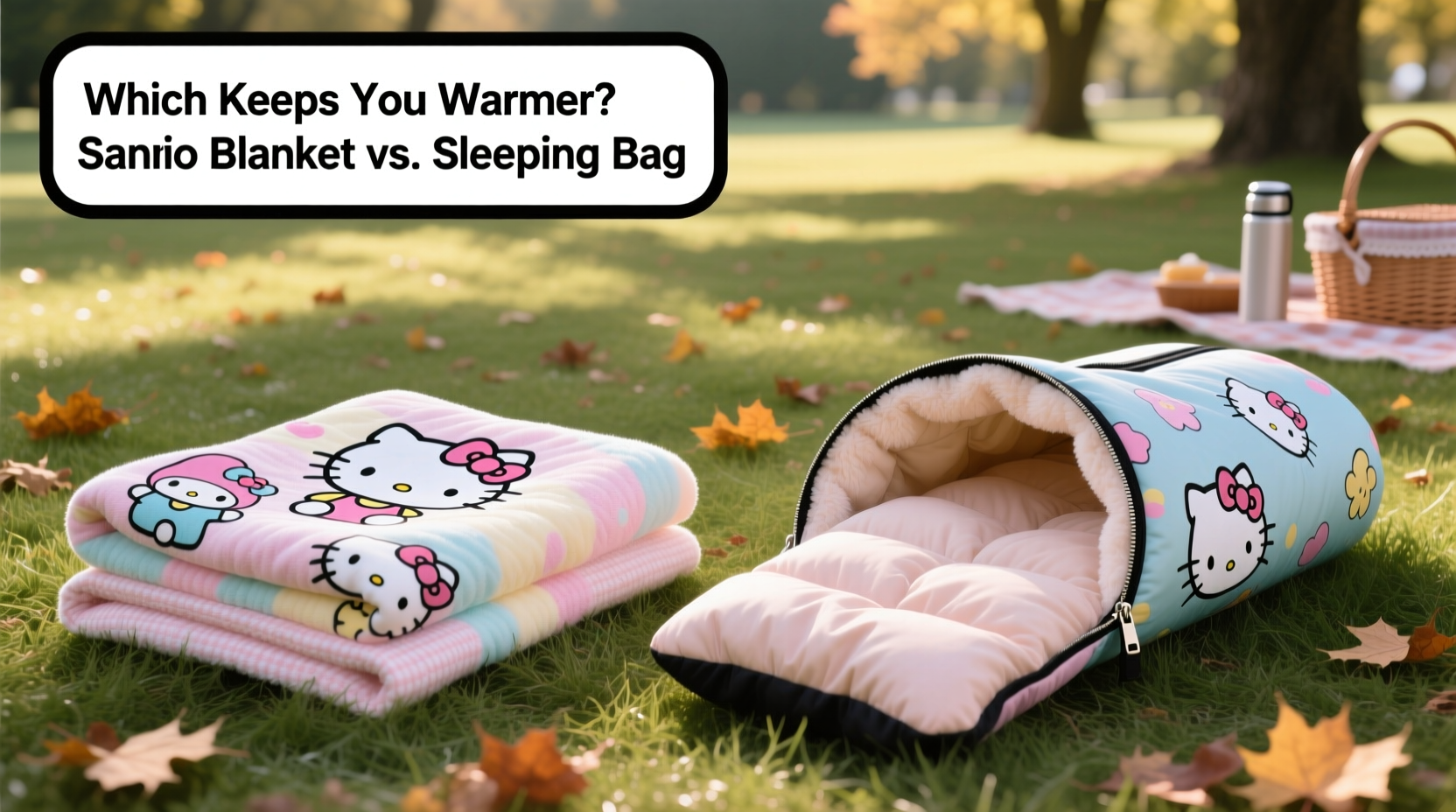
Before comparing the two items, it's essential to understand how warmth works outdoors. Body heat dissipates quickly in open air, especially with wind or damp grass beneath you. Insulation depends on three main principles: trapping body heat, blocking wind, and preventing ground moisture from cooling you down. Materials, thickness, and coverage area all play critical roles.
A thin polyester or fleece blanket—like most Sanrio designs—provides minimal insulation because it doesn’t fully enclose the body. In contrast, a sleeping bag is engineered to retain heat by surrounding the user and minimizing air exchange. Even lightweight summer sleeping bags are rated for specific temperature ranges, making them inherently more functional in cool conditions.
“Passive warmth relies on containment. The less exposed surface area, the more efficiently heat is retained.” — Dr. Lena Torres, Outdoor Thermal Performance Researcher
Design & Insulation: A Material Breakdown
Sanrio thin blankets are typically made from soft polyester fleece or acrylic knit. They’re lightweight (usually under 500g), easy to fold, and feature beloved characters like Hello Kitty or My Melody. However, their construction prioritizes aesthetics over function. Most are single-layered, lack lining, and offer no wind resistance.
Sleeping bags, even budget-friendly mummy or rectangular models designed for fair-weather camping, use layered fabrics and synthetic insulation (such as hollowfibre or siliconized polyester). These materials trap warm air close to the body. Many also feature draft collars, zippers with baffle tubes, and snug hoods—all designed to reduce heat loss.
Tip: If using a thin blanket outdoors, layer it over a waterproof groundsheet and wear insulating clothing to compensate for poor thermal retention.Comparative Analysis: Key Factors Side-by-Side
| Feature | Sanrio Thin Blanket | Sleeping Bag |
|---|---|---|
| Weight | Light (300–500g) | Moderate (1–2kg) |
| Folded Size | Palm-sized or small pouch | Bulkier (often 40–50cm long when packed) |
| Warmth Retention | Low – only covers lap or legs | High – full-body enclosure with insulation |
| Wind Protection | None | Moderate to high (depending on design) |
| Ground Moisture Barrier | No – absorbs dampness | Yes – often has durable outer shell |
| Aesthetic Appeal | Very high – cute, collectible designs | Limited – mostly utilitarian styles |
| Portability | Excellent – fits in tote or backpack | Good – but requires dedicated space |
| Care & Maintenance | Machine washable, dries fast | May require gentle cycle and air drying |
Real-World Use Case: A Spring Picnic in the Park
Consider Sarah, who plans a mid-April picnic in a city park. The forecast shows 14°C (57°F) with light breeze and morning dew lingering on the grass. She brings her favorite Sanrio pastel blanket, excited to match her aesthetic theme. Once seated, she drapes the blanket over her legs. Within 20 minutes, she feels a chill creeping up her back and notices the bottom of the blanket absorbing moisture from the damp ground. She ends up cutting the outing short.
Her friend Jamie brings a lightweight rectangular sleeping bag. After laying down a tarp, Jamie sits inside the open sleeping bag like a poncho, zipping it halfway. The insulated base keeps them off the wet grass, and the fabric blocks the breeze. Even after an hour, they remain comfortably warm and extend their stay to read a book.
This scenario illustrates that while the Sanrio blanket enhances visual appeal, it lacks the structural benefits needed for sustained warmth in variable outdoor conditions.
When Each Option Makes Sense
The best choice depends on context. Neither product is universally superior—they serve different needs.
- Choose the Sanrio thin blanket if:
- You're picnicking in warm, dry weather (above 20°C / 68°F).
- Style and photo opportunities matter more than warmth.
- You're sitting at a picnic table or elevated bench (not on the ground).
- Portability is critical—you’re carrying minimal gear.
- Choose a sleeping bag if:
- Temperatures are below 18°C (65°F).
- You plan to sit for extended periods on grass, sand, or soil.
- Wind or unexpected rain could occur.
- You want maximum comfort and thermal security.
Step-by-Step: How to Stay Warm During a Cool-Weather Picnic
- Check the weather forecast – Know expected temperatures, humidity, and wind speed.
- Layer your clothing – Wear a moisture-wicking base, insulating mid-layer, and wind-resistant outer layer.
- Use a ground barrier – Lay down a tarp, folding mat, or picnic rug to prevent conductive heat loss.
- Select your warmth tool – Opt for a sleeping bag if cold; use a thin blanket only if supplemented with layers.
- Position strategically – Sit in sunlight when possible and avoid windy spots near trees or open fields.
- Bring hot drinks – A thermos of tea or cocoa helps maintain internal body temperature.
- Stay active – Stand up, stretch, or walk briefly every 30 minutes to stimulate circulation.
FAQ: Common Questions About Picnic Warmth Solutions
Can I use a Sanrio blanket as a substitute for a sleeping bag?
Only in very mild conditions. A thin blanket lacks the insulation, coverage, and moisture resistance of a sleeping bag. It may provide temporary comfort but won’t sustain warmth in cool or damp environments.
Are there cute sleeping bags with character designs?
Yes—some brands offer kawaii-style sleeping bags featuring anime, cartoon, or Sanrio-inspired prints. These combine aesthetic appeal with functional warmth, though they tend to be pricier and heavier than standard thin blankets.
How do I clean a sleeping bag after a picnic?
Follow manufacturer instructions. Generally, use a front-loading washing machine on gentle cycle with mild detergent. Avoid top-loaders with agitators. Air dry completely before storing to prevent mold and insulation clumping.
Final Verdict: Which Is Actually Better for Warmth?
For pure thermal performance, the sleeping bag is unequivocally better. Its design, materials, and full-body coverage make it far more effective at retaining heat than any thin decorative blanket. The Sanrio blanket excels in portability and visual charm but fails to deliver meaningful warmth in anything but ideal conditions.
If your priority is staying warm during a picnic—particularly in spring, fall, or shaded areas—a sleeping bag is the smarter investment. However, if you value aesthetics and are picnicking in warm, dry weather, a Sanrio blanket can still enhance the experience when paired with proper clothing and ground protection.
Ultimately, the best solution might be combining both: use the sleeping bag for insulation and comfort, then drape the Sanrio blanket over your lap for that extra touch of whimsy. Function and cuteness don’t have to be mutually exclusive.
💬 Have a favorite picnic setup that balances style and warmth? Share your tips and experiences in the comments—we’d love to hear how you stay cozy outdoors!








