
The rivalry between KT Sonicboom and Samsung Thunders has long been one of the most compelling in Korean professional basketball. Both teams represent powerhouse corporate franchises with deep pockets, elite coaching staffs, and a history of competitive excellence. As this season unfolds, fans and analysts alike are asking: who truly holds the upper hand? Is it KT’s balanced attack and veteran leadership, or Samsung’s explosive young core and defensive intensity? The answer isn’t simple—but by analyzing recent form, player dynamics, and strategic depth, a clearer picture emerges.
Roster Composition and Key Players
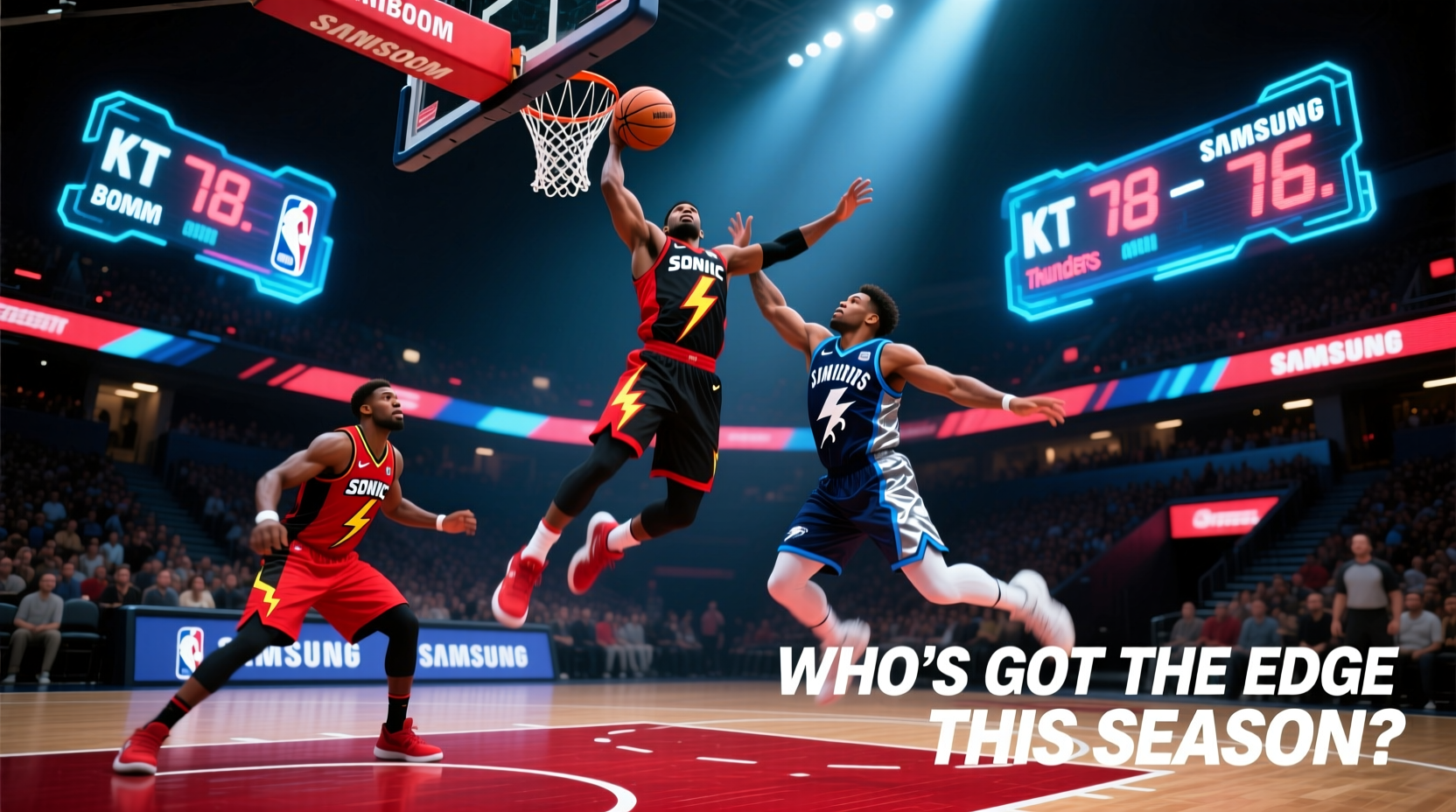
At the heart of any basketball matchup lies the talent on the court. KT Sonicboom continues to rely on a mix of seasoned professionals and rising stars. Their point guard, Yang Hee-jong, remains a steady presence despite his advancing age, offering leadership and floor control that few in the league can match. Complementing him is外援 (foreign player) Chris McCullough, whose athleticism and scoring versatility have made him a nightly threat in the paint and mid-range.
Samsung Thunders, meanwhile, have built their identity around youth and defensive pressure. Guard Oh Se-keun may be past his peak, but his basketball IQ still elevates the team’s half-court execution. The real story, however, is rookie sensation Lee Hyun-seung, whose breakout performances have energized the squad. Paired with foreign import Terrico White—known for his slashing ability and clutch shooting—Samsung boasts one of the fastest backcourts in the KBL.
Tip: Watch how each team manages foul trouble for their starting guards—this often dictates tempo and offensive efficiency.Team Performance and Season Trends
So far this season, KT Sonicboom has posted a slightly better win-loss record, sitting comfortably in the top four of the KBL standings. Their consistency stems from strong half-court execution and an ability to close out tight games. They rank second in offensive efficiency and third in turnover margin, reflecting disciplined ball movement and smart decision-making.
Samsung Thunders, while just outside the top four, have shown marked improvement compared to last season. Their defense has tightened significantly, allowing 78.3 points per game—the third-lowest in the league. However, they struggle in road games and lack depth beyond their starting five, which becomes evident during extended stretches against physical opponents.
“Samsung’s ceiling is higher if their young players stay healthy and confident. But KT has the composure needed to win when the pressure mounts.” — Park Jung-sang, KBL Analyst, MBC Sports+
Head-to-Head Comparison: Strengths and Weaknesses
| Category | KT Sonicboom | Samsung Thunders |
|---|---|---|
| Offensive Rating | 85.6 (2nd) | 82.1 (6th) |
| Defensive Rating | 80.3 (5th) | 78.3 (3rd) |
| Three-Point Accuracy | 37.8% | 35.2% |
| Turnover Margin | +2.1 (Best in league) | -0.8 |
| Bench Scoring | 28.4 PPG | 22.1 PPG |
| Home Record | 14–4 | 11–7 |
| Road Record | 10–8 | 6–12 |
The data reveals a clear contrast: KT excels in stability and execution, while Samsung thrives on defensive energy but falters in consistency and depth. KT’s superior bench allows them to maintain intensity through rotations, whereas Samsung often sees sharp drops in performance once starters rest.
Strategic Matchup Breakdown
In their two meetings this season, KT has won both contests—by six and three points, respectively. The outcomes were shaped by critical differences in game management:
- Pace Control: KT consistently slows the game, forcing Samsung into half-court sets where their offense stagnates.
- Rebounding Edge: KT outrebounded Samsung by an average of 9.5 per game, particularly on the offensive glass.
- Free Throw Disparity: KT attempted 22.3 free throws per game against Samsung; Samsung managed only 15.1—a sign of KT’s aggressive drives and Samsung’s discipline issues.
Samsung’s best chance lies in pushing the tempo and exploiting transition opportunities. When they force turnovers and sprint the floor, they’ve shown they can rattle KT’s older lineup. But sustaining that pace over 40 minutes remains a challenge.
Mini Case Study: January 14th Clash – How KT Sealed the Win
In their most recent meeting, Samsung led by eight at halftime, fueled by Lee Hyun-seung’s 17 first-half points. But KT adjusted by switching to a zone defense that clogged driving lanes and forced contested jumpers. In the third quarter, KT outscored Samsung 24–15, highlighted by three consecutive three-pointers from Kim Ji-hoon. The final dagger came with 1:04 left—Yang Hee-jong drew a charge on Terrico White, leading to a fast-break dunk that put KT up by five. This moment exemplified KT’s experience: poise under pressure, tactical adaptation, and flawless execution in crunch time.
What Each Team Needs to Succeed Down the Stretch
As the regular season winds down and playoff positioning heats up, both teams face pivotal challenges.
KT Sonicboom: Maintain Health and Manage Minutes
With several key players over 32, injury prevention is paramount. Coach Yoo Chang-hyun must carefully manage playing time, especially for Yang Hee-jong and forward Ha Seung-jin. Depth will be tested in March, when the schedule intensifies with four back-to-back games.
Samsung Thunders: Develop Bench Consistency
Their starters are capable of beating anyone. But without reliable contributions from the second unit, fatigue becomes a liability. Young big man Joo Min-soo needs to step up defensively and avoid foul trouble. Additionally, Samsung’s assistant coaching staff has begun emphasizing off-ball movement to create easier shots for role players.
Tip: Samsung should prioritize pick-and-roll coverage—KT runs more of these than any other team in the league.Step-by-Step: Keys to Victory for Each Team
- For KT to Win:
- Control tempo and limit transition opportunities.
- Exploit mismatches in the post using McCullough.
- Hit open threes when double-teams come.
- Protect the ball—avoid careless passes against Samsung’s press.
- For Samsung to Win:
- Force turnovers early to build momentum.
- Attack the rim relentlessly to draw fouls.
- Limit three-point attempts from KT’s shooters like Kim Ji-hoon.
- Keep the game fast—don’t settle into half-court patterns.
Frequently Asked Questions
Who has the better foreign player this season?
Chris McCullough (KT) edges out Terrico White (Samsung) in overall impact. While White scores more in bursts, McCullough contributes across rebounding, shot-blocking, and playmaking, giving KT greater versatility.
Which team is more likely to go deeper in the playoffs?
KT holds the advantage due to superior depth and experience. Playoff basketball rewards composure and consistency—two areas where KT outperforms Samsung. That said, if Samsung makes it past the first round, their athleticism could surprise higher-seeded teams.
Do injuries affect either team significantly?
Yes. KT recently lost backup guard Park Chan-hee to a hamstring strain, thinning their guard rotation. Samsung’s Lee Hyun-seung missed two games with ankle soreness—any prolonged absence would severely hamper their offensive flow.
Final Verdict: Who Holds the Edge?
Right now, KT Sonicboom holds the edge—not by a wide margin, but by enough to matter. Their combination of veteran savvy, balanced scoring, and superior bench depth gives them a strategic advantage in high-pressure situations. Samsung Thunders are improving rapidly and possess the raw talent to upset KT on any given night, especially at home. Yet until they prove they can sustain performance over full games and develop reliable secondary options, they remain the underdogs.
This rivalry is far from settled. With both teams likely to meet again in the postseason, the narrative is still being written. But as of today, KT stands taller—not because they’re flawless, but because they make fewer mistakes when it counts.
💬 Who do you think has the edge—KT Sonicboom or Samsung Thunders? Share your take and join the debate in the comments!








