
Selecting the right running and workout watch can transform your fitness journey. More than just a timepiece, modern sports watches track heart rate, pace, elevation, recovery, and even sleep quality. With so many options—from budget-friendly wearables to high-end multisport GPS devices—it’s easy to feel overwhelmed. The key is matching the watch’s capabilities to your goals, training habits, and lifestyle.
Whether you're a weekend jogger, marathon aspirant, or cross-training enthusiast, this guide breaks down the essential factors to consider before buying. From GPS accuracy and durability to smart features and battery longevity, we’ll help you make an informed decision that supports your long-term performance.
Understand Your Training Needs
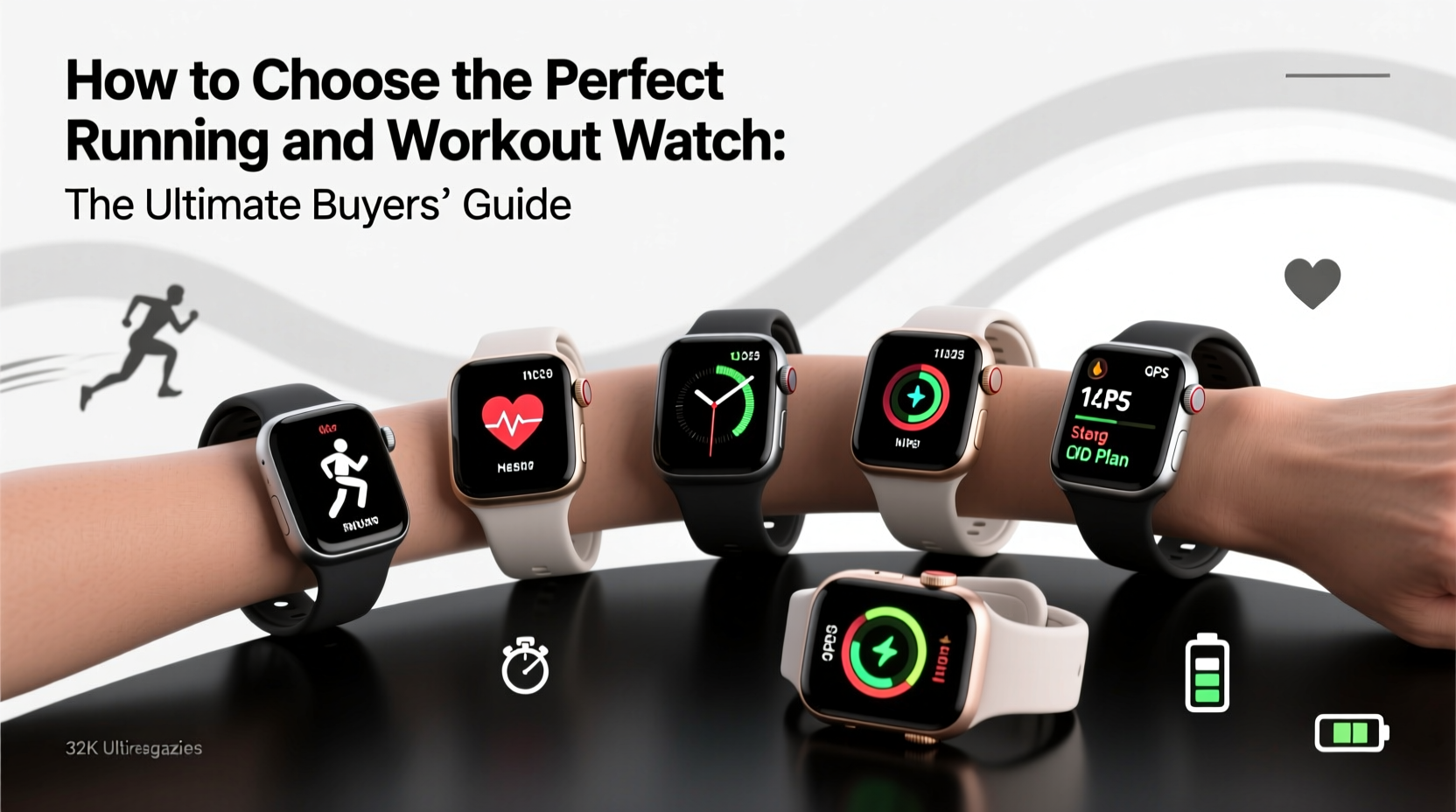
The first step in selecting the right watch is defining how you use it. A casual runner logging 5Ks twice a week has different needs than a triathlete preparing for an Ironman. Consider these questions:
- Do you train indoors, outdoors, or both?
- Are you focused on running, or do you incorporate strength, cycling, swimming, or HIIT?
- Do you need real-time coaching or post-workout analysis?
- How important are health metrics like stress levels or recovery time?
If you run primarily on trails, GPS precision and route navigation become critical. For pool swimmers, water resistance beyond basic splash protection is non-negotiable. CrossFit athletes benefit from durable builds and advanced rep counting. Matching functionality to your routine prevents overspending on unused features—or worse, missing out on ones you actually need.
Tip: Don’t buy based on brand popularity alone. Test the interface and sensor layout—can you access key functions mid-run without fumbling?Key Features to Evaluate
Modern fitness watches offer dozens of features, but not all are equally valuable. Focus on core functionalities that deliver measurable benefits.
GPS Accuracy and Connectivity
Precise GPS tracking ensures accurate distance, pace, and route mapping. Look for watches with multi-band or multi-system GNSS support (e.g., GPS, GLONASS, Galileo). These lock onto satellites faster and maintain signal in dense urban areas or forested trails. Single-band GPS may drift during sharp turns or under tree cover.
Heart Rate Monitoring
Optical wrist-based sensors have improved significantly, but chest straps still offer superior accuracy during interval training. If you rely on heart rate zones for training, consider whether the watch supports Bluetooth chest straps. Also check if it provides HRV (Heart Rate Variability) data, useful for gauging recovery status.
Battery Life
Battery varies widely—from two days in smartwatch mode to over three weeks in basic training mode. GPS-heavy activities drain power quickly. For ultramarathoners or backpackers, extended battery (10+ hours in full GPS mode) is essential. Recharge frequency matters too: daily charging disrupts consistency.
Durability and Design
A workout watch should withstand sweat, rain, dust, and occasional drops. Check IP or MIL-STD ratings. For swimmers, ensure at least 5 ATM water resistance (suitable for shallow diving). Materials like fiber-reinforced polymer keep weight low; sapphire glass resists scratches but increases cost.
Smart Coaching and Recovery Insights
Top-tier models analyze training load, suggest rest days, and estimate VO₂ max. Garmin’s Body Battery, Coros’ Training Effect, and Polar’s FuelWise provide actionable feedback. While not essential for beginners, these tools help experienced athletes avoid overtraining.
“Investing in a watch with reliable recovery metrics reduces injury risk by up to 30% in endurance athletes.” — Dr. Lena Torres, Sports Physiologist at Boulder Performance Lab
Comparison Table: Top Watches by Use Case
| Watch Model | Best For | GPS Accuracy | Battery (GPS Mode) | Price Range |
|---|---|---|---|---|
| Garmin Forerunner 265 | Runners wanting color AMOLED & training insights | Multi-GNSS, excellent | Up to 17 hours | $499 |
| Coros Pace 3 | Budget-conscious runners needing long battery | Good (dual-band GPS) | Up to 38 hours | $249 |
| Apple Watch Ultra 2 | Users in Apple ecosystem needing smart + rugged | Very good with dual-frequency GPS | Up to 36 hours | $799 |
| Polar Vantage V3 | Triathletes & data-driven training | Excellent with Precision Prime 5.0 | Up to 14 days (smart), 40h (GPS) | $699 |
| Fitbit Charge 6 | Casual exercisers wanting health focus | Fair (basic GPS) | 7 days (no GPS) | $159 |
Step-by-Step Guide to Choosing Your Watch
Follow this sequence to narrow your options efficiently:
- Define your primary activity: Running? Swimming? Gym workouts? This determines required sensors and durability.
- Set a realistic budget: Entry-level ($150–$250), mid-tier ($300–$500), premium ($600+).
- Check compatibility: Does it sync with your phone OS? Preferred apps (Strava, TrainingPeaks)?
- Evaluate battery needs: Estimate weekly training hours with GPS to determine minimum runtime.
- Test the interface: Visit a store if possible. Is the menu intuitive? Can you start a workout in seconds?
- Read verified user reviews: Look for consistent feedback on comfort, GPS drift, and software bugs.
- Consider after-sales support: Warranty length, customer service responsiveness, software update history.
Real-World Example: Choosing for Trail Racing
Sophie, an intermediate trail runner training for her first 50K race, needed a watch that could handle rugged terrain, long battery life, and offline maps. She initially considered the Apple Watch due to its sleek design but realized it wouldn’t last beyond 10 hours in GPS mode—insufficient for race day. After testing several models, she chose the Coros Vertix 2 for its 40-hour GPS battery, barometric altimeter, and downloadable topo maps. During her race, the watch’s breadcrumb navigation helped her retrace steps after missing a marker, proving its value beyond metrics.
Tip: Always enable “battery saver” modes during ultra-distance events to extend life without losing core tracking.Frequently Asked Questions
Can I use a fitness tracker instead of a running watch?
Basic trackers like Fitbit or Xiaomi bands offer step counting and heart rate but lack precise GPS, advanced running dynamics, or customizable workouts. They’re suitable for light jogging or gym sessions but fall short for serious runners needing cadence, stride length, or elevation gain.
Do I need a chest strap with a built-in optical sensor?
For steady-state cardio, wrist-based sensors are generally accurate. However, during high-intensity intervals or rapid heart rate changes, chest straps reduce lag and improve zone accuracy. Many elite coaches recommend pairing both for validation.
Are expensive watches worth the upgrade?
If you train more than 5–6 hours per week, analyze performance data, or compete regularly, yes. Premium models offer better sensor fusion, longer battery, and deeper analytics. For casual users, mid-range options like the Coros Pace 3 or Garmin Forerunner 255 offer excellent value.
Final Checklist Before Buying
- ✅ GPS type matches your environment (urban, trail, indoor)
- ✅ Battery lasts longer than your longest session
- ✅ Water resistance meets your activity needs (swimming, rain)
- ✅ Compatible with your smartphone and preferred fitness apps
- ✅ Wrist size and weight are comfortable for all-day wear
- ✅ Includes essential metrics (pace, HR, distance, elevation)
- ✅ Offers firmware updates and responsive customer support
Take the Next Step
Your running and workout watch isn’t just a gadget—it’s a training partner. The right one keeps you motivated, informed, and safe. Whether you're chasing a PR or building consistency, invest in a device that grows with you. Now that you know what to look for, compare models within your budget, try them on, and trust data over marketing hype. Your future self—faster, stronger, and better recovered—will thank you.
💬 Found your ideal watch? Share your experience or ask questions in the comments—help others find their perfect match!








