
Baseball, a sport deeply rooted in American culture and widely played across Japan, Latin America, and parts of Europe, has long been a point of fascination for Olympic enthusiasts. Despite its global reach and passionate fan base, baseball is not a permanent fixture in the Olympic Games. Its presence has been inconsistent—appearing as a medal sport in certain years, only to be dropped or reinstated based on shifting priorities within the International Olympic Committee (IOC). Understanding why baseball isn’t consistently included requires a look at historical decisions, structural conflicts, and broader trends in international sports.
A Brief History of Baseball in the Olympics
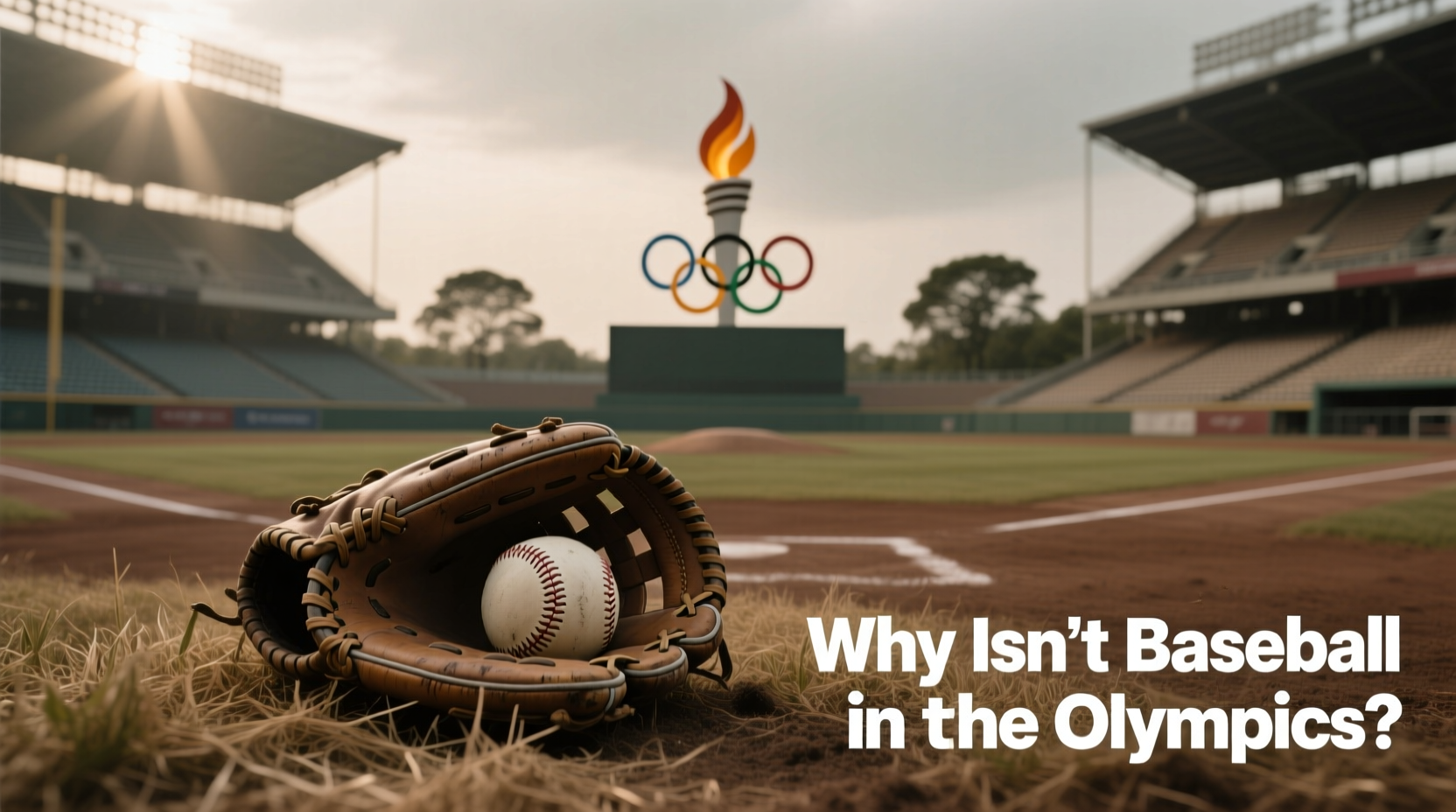
Baseball first appeared as a demonstration sport at the 1904 Summer Olympics in St. Louis but wasn’t officially recognized as a medal event until the 1992 Barcelona Games. From 1992 to 2008, baseball was a regular part of the Summer Olympics, with countries like Cuba, the United States, Japan, and South Korea fielding competitive teams. However, after the 2008 Beijing Olympics, the IOC voted to remove baseball (along with softball) from the official program, citing lack of global appeal, absence of top professional players, and scheduling conflicts.
The sport returned briefly for the 2020 Tokyo Olympics—held in 2021 due to the pandemic—thanks to Japan’s strong cultural connection to baseball and their bid proposal. Yet, it was absent again at the 2024 Paris Games, underscoring its precarious status.
Tip: The inclusion of any sport in the Olympics often depends more on political negotiation and host nation influence than on popularity alone.Structural Challenges Facing Olympic Baseball
One of the primary reasons baseball struggles for consistent Olympic inclusion lies in its professional structure, particularly in Major League Baseball (MLB), the sport’s premier league. Unlike soccer or basketball, where top-tier athletes routinely participate in international competitions, MLB does not pause its season to release players for the Olympics. The timing of the Games—typically in July and August—falls during the heart of the MLB season, making player availability nearly impossible without disrupting league operations.
This creates a credibility gap. When national teams are composed primarily of minor leaguers, college athletes, or retired professionals, the competition lacks the prestige associated with other Olympic events. As a result, fans and broadcasters perceive Olympic baseball as a second-tier version of the sport.
“Olympic baseball can’t reach its potential unless the world’s best players are allowed to compete. Without that, it’s hard to justify its place on the global stage.” — John Thorn, Official Historian of Major League Baseball
Globalization and Competitive Imbalance
While baseball enjoys strong followings in specific regions, its global footprint remains uneven. Countries like the Dominican Republic, Venezuela, and Cuba have produced elite talent, but large swaths of Europe, Africa, and Asia have minimal grassroots infrastructure. This limits the number of truly competitive nations, which runs counter to the IOC’s goal of promoting universal participation.
In contrast, sports like rugby sevens or skateboarding were added to broaden geographic and demographic appeal. Baseball, despite its regional strength, hasn’t demonstrated the same expansion momentum. Even when included, medal contention typically revolves around just five or six nations, reducing the element of surprise and wide engagement that the Olympics thrive on.
| Country | Olympic Baseball Medals (1992–2020) | MLB Player Output (Top 5 Nations) |
|---|---|---|
| Cuba | 3 (1 Gold, 2 Bronze) | 70+ |
| United States | 2 (1 Gold, 1 Bronze) | 500+ |
| Japan | 1 Gold | 60+ |
| South Korea | 1 Gold | 20+ |
| Netherlands | 1 Silver | 10+ |
The data shows dominance by a small group of nations, reinforcing concerns about competitive imbalance. While development programs exist, they haven’t yet translated into widespread international parity.
Step-by-Step: How Baseball Could Return Permanently
For baseball to secure a lasting place in the Olympics, a coordinated effort across multiple stakeholders is necessary. Here’s a realistic timeline and action plan:
- Negotiate with MLB and Players’ Union: Establish a formal agreement allowing active MLB players to participate every four years, possibly through a condensed schedule or roster exemptions.
- Align with WBSC Priorities: The World Baseball Softball Confederation (WBSC) must demonstrate growth in emerging markets and invest in youth development in underrepresented regions.
- Adjust Tournament Format: Reduce game length or adopt a tournament model similar to the World Baseball Classic to fit Olympic scheduling constraints.
- Leverage Host Nation Interest: Future bidding nations with strong baseball traditions (e.g., Japan, South Korea, or even the U.S.) should include baseball as a condition of hosting.
- Secure Broadcast and Sponsorship Deals: Prove commercial viability by attracting global media partners and sponsors ahead of inclusion votes.
Mini Case Study: Tokyo 2020’s Impact
The 2020 Tokyo Olympics marked a pivotal moment for Olympic baseball. With Japan hosting, organizers successfully lobbied for the sport’s return. The tournament featured six teams: Japan, United States, South Korea, Mexico, Israel, and the Dominican Republic. Japan won gold in a dramatic final against the U.S., drawing record viewership in Asia.
Despite logistical hurdles caused by the pandemic, the event demonstrated that high-level competition could generate excitement. MLB released a limited number of players from affiliated minor league teams, though no active major leaguers participated. Still, the tournament revitalized conversations about baseball’s Olympic future and proved that context-specific inclusion can work.
Checklist: What Needs to Happen for Baseball’s Olympic Comeback
- ✅ MLB agrees to release players for future Olympics
- ✅ WBSC expands development programs in Africa, Southeast Asia, and Eastern Europe
- ✅ Olympic format adapts to shorter schedules (e.g., 6-team, double-elimination)
- ✅ At least two consecutive host cities advocate for baseball inclusion
- ✅ Broadcast ratings from Tokyo 2020 are used to justify renewed interest
Frequently Asked Questions
Why was baseball removed from the Olympics?
Baseball was dropped after the 2008 Beijing Games due to concerns over global participation, lack of top professional players, and scheduling conflicts with Major League Baseball. The IOC sought sports with broader international appeal and easier integration into the Olympic calendar.
Will baseball be in the 2028 Los Angeles Olympics?
As of current planning, baseball is not officially on the program for the 2028 Los Angeles Games. However, discussions are ongoing. Given the U.S. is a baseball powerhouse and LA has strong ties to the sport, there is growing advocacy for its return, especially if MLB supports player participation.
Is softball also affected by baseball’s Olympic status?
Yes. Softball was removed alongside baseball in 2008 and reinstated only for Tokyo 2020. It shares many of the same challenges—limited global reach and professional league conflicts—though women’s softball has seen stronger international development in recent years.
Conclusion: The Path Forward
Baseball’s absence from the Olympics isn’t due to a lack of passion or skill, but rather a complex web of institutional barriers. The sport has proven it can deliver compelling moments on the Olympic stage, as seen in Tokyo. But sustainability requires more than nostalgia—it demands cooperation between leagues, federations, and the IOC.
The dream of seeing Shohei Ohtani, Mike Trout, or Juan Soto wearing their national uniforms in an Olympic final isn’t unrealistic. It simply requires vision, compromise, and a shared commitment to globalizing the game. For fans, players, and organizers alike, the next decade will be critical in determining whether baseball becomes a staple of the Summer Games—or remains a periodic guest.
💬 Do you think baseball deserves a permanent spot in the Olympics? Share your thoughts and join the conversation on the future of international baseball!








