Passport covers serve more than just an aesthetic purpose—they protect one of your most important travel documents from wear, moisture, and damage. Yet, too many travelers buy covers based on guesswork, only to end up with a case that’s too tight, too loose, or simply incompatible. The key to a perfect fit lies in accurate measurement. Whether you're shopping online or custom-ordering a leather sleeve, knowing your passport's exact dimensions ensures both functionality and style.
This guide walks through the precise steps to measure any passport correctly, explains common sizing standards, and helps you avoid costly mistakes when selecting a cover.
Why Accurate Passport Measurement Matters
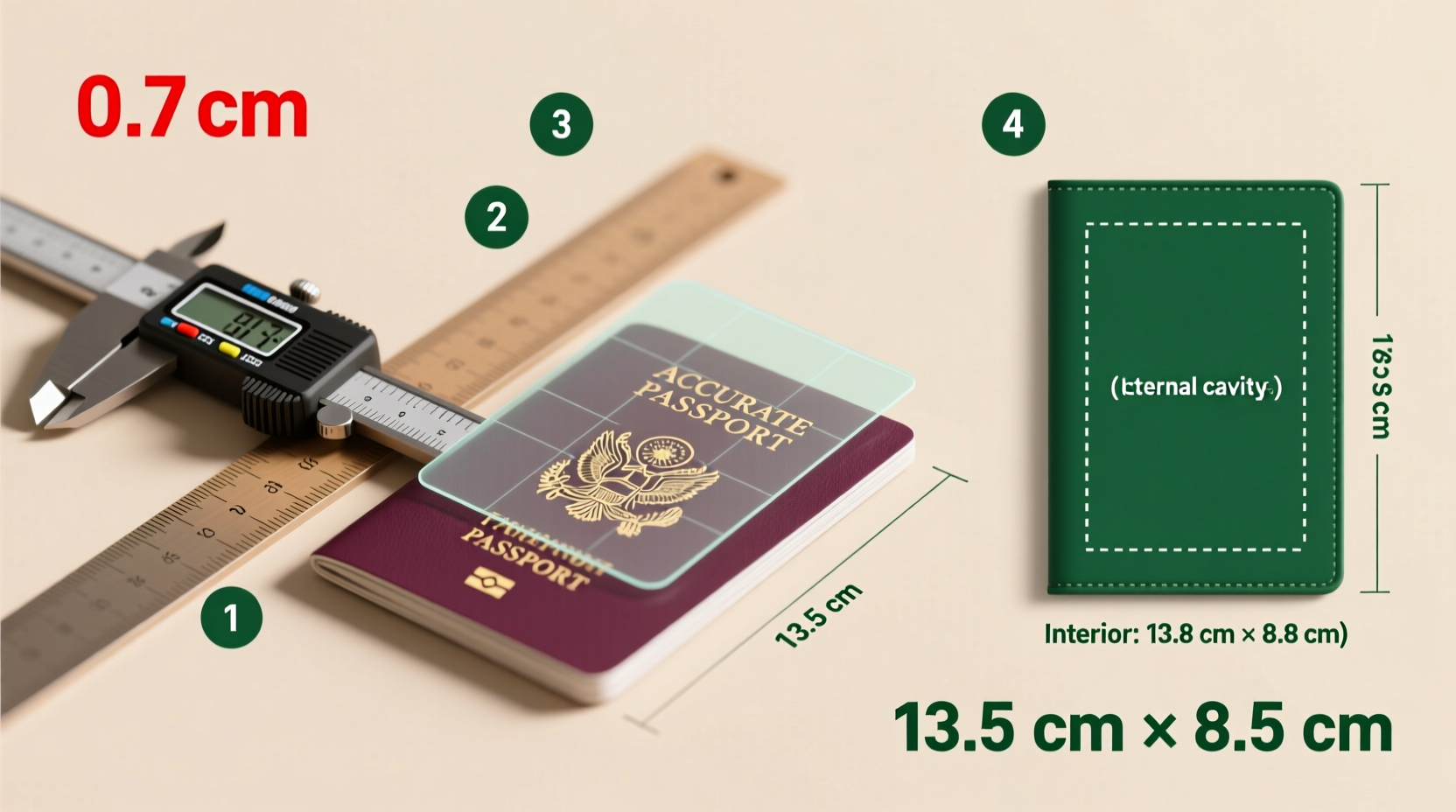
A well-fitting passport cover should slide on smoothly without strain, stay securely closed, and allow easy access to your document. A cover that’s too snug can damage the spine or binding over time; one that’s too loose risks dropping the passport during transit. Additionally, oversized covers may not fit into carry-on pockets or boarding pass holders, creating unnecessary hassle.
Different countries issue passports in slightly varying sizes. While many follow the ICAO (International Civil Aviation Organization) Doc 9303 standard, minor deviations exist—especially with older models or special editions like biometric or jumbo passports. Measuring your own ensures compatibility regardless of origin.
Tip: Always measure your actual passport—not someone else’s or a generic size chart—even if it’s the same country of issue.Step-by-Step Guide to Measuring Your Passport
- Gather your tools: Use a ruler or measuring tape calibrated in millimeters or inches. A flat, hard surface and good lighting help ensure precision.
- Close your passport fully: Ensure all pages are aligned and the cover is shut. Do not force it open or closed beyond its natural position.
- Measure the height: Place the ruler vertically along the spine edge. Measure from the topmost point to the bottommost point. Record the number in millimeters (preferred) or inches.
- Measure the width: With the passport closed, measure horizontally across the front cover—from the left edge to the right edge.
- Check the thickness: Press the passport gently together and measure across the spine. This determines whether your cover needs extra room for expansion (e.g., frequent travelers with visa stamps).
- Note any protrusions: Some passports have RFID-blocking layers, embedded chips, or textured covers that add slight bulk. Account for these when choosing a snug-fit design.
- Double-check each dimension: Take each measurement twice to confirm accuracy. Even 2–3 mm can affect fit quality.
Record these numbers clearly before browsing covers. Most reputable sellers list internal dimensions—compare yours directly against those specs.
Standard Passport Sizes and What to Expect
The ICAO recommends a standard size of 125 mm × 88 mm (approximately 4.92 in × 3.46 in), commonly referred to as \"Type B.\" Most modern passports—including those from the U.S., U.K., Canada, Australia, and EU nations—fall within this range. However, small variations do occur.
| Country | Average Height (mm) | Average Width (mm) | Common Thickness (mm) |
|---|---|---|---|
| United States | 125 | 88 | 8–10 |
| United Kingdom | 125 | 88 | 7–9 |
| Germany | 125 | 88 | 6–8 |
| Japan | 128 | 90 | 7–10 |
| Brazil (older models) | 130 | 92 | 10+ |
As shown, some national issues exceed standard dimensions. Jumbo or extended passports (often issued to frequent flyers) can be significantly thicker due to additional visa pages. Always verify your specific model.
“Even within standardized categories, manufacturing variances mean no two passports are *exactly* alike. Custom accessories must accommodate individual differences.” — Dr. Lena Torres, Travel Document Design Consultant, International Border Security Group
Choosing the Right Cover Based on Your Measurements
Once you’ve recorded your passport’s height, width, and thickness, compare them to the product specifications. Look for phrases like “internal dimensions” or “fits up to X mm.” Avoid vague terms such as “standard size” unless backed by exact metrics.
- Fits snugly? Ideal for slim leather sleeves designed for protection and elegance. Allow 1–2 mm extra per side for smooth insertion.
- Need room for expansion? Opt for elasticated corners or expandable gussets if you frequently collect stamps or use multiple visas.
- Planning to store cards or tickets? Multi-functional covers often have added pockets but may increase overall bulk—ensure they don’t compromise passport accessibility.
Mini Case Study: Maria’s Misfit Cover
Maria ordered a sleek Italian leather passport holder online for her upcoming European tour. Confident her U.S. passport was “standard size,” she skipped measuring it. When the cover arrived, she struggled to insert the document—the spine was slightly too thick, and forcing it risked damaging the stitching. After contacting customer support, she learned the cover had zero tolerance for thickness variation. She returned it and instead measured her passport precisely: 126 mm × 89 mm × 10.5 mm. Her second purchase, tailored to those specs, fit perfectly and lasted three years of global travel.
Essential Checklist Before Buying a Passport Cover
- ✅ Measure your passport in three dimensions:
- Height, width, and closed thickness.
- ✅ Verify internal dimensions of the cover:
- Ensure listed specs match or slightly exceed your measurements.
- ✅ Consider future use:
- Will you accumulate stamps? Choose a design with flexibility.
- ✅ Check material stretch:
- Leather may loosen slightly over time; neoprene or elastic fabrics offer give.
- ✅ Confirm closure type:
- Snap buttons, zippers, or elastic bands should not obstruct scanning or handling.
Frequently Asked Questions
Can I use the same cover for different passports?
Only if both passports fall within the cover’s dimensional tolerance. Frequent travelers with dual citizenship should consider separate, properly fitted covers to prevent wear or misalignment.
Do biometric passports require special covers?
Yes. Many biometric passports contain RFID chips near the cover. Use an RFID-blocking sleeve only if necessary, and ensure it doesn’t interfere with airport scanners. Never place metal-lined covers directly over the chip zone unless designed for it.
What if my passport is damaged or warped?
A bent or swollen passport may not fit even in a correctly sized cover. Replace the document first if severely compromised—protecting a damaged passport with a tight cover could worsen the issue.
Final Thoughts: Precision Protects Your Journey
Your passport is more than a document—it’s a record of your journeys and a gateway to new experiences. Treating it with care starts with something as simple as a properly fitted cover. By taking just five minutes to measure accurately, you ensure lasting protection, smoother travel, and peace of mind at every checkpoint.
💬 Take action today: Grab your ruler, pull out your passport, and record its true dimensions. Share this guide with fellow travelers who still guess their cover size—it might save their next trip.








