
For homeowners, DIYers, and weekend warriors, the toolbox is sacred. But with limited space and budget, every purchase must earn its place. One common dilemma: should you own both an electric screwdriver and a drill? At first glance, they seem to do similar things—drive screws and bore holes. But their performance, efficiency, and ideal use cases differ more than most realize. Understanding these differences can prevent unnecessary spending and ensure you’re equipped for real-world tasks.
Understanding the Core Functions
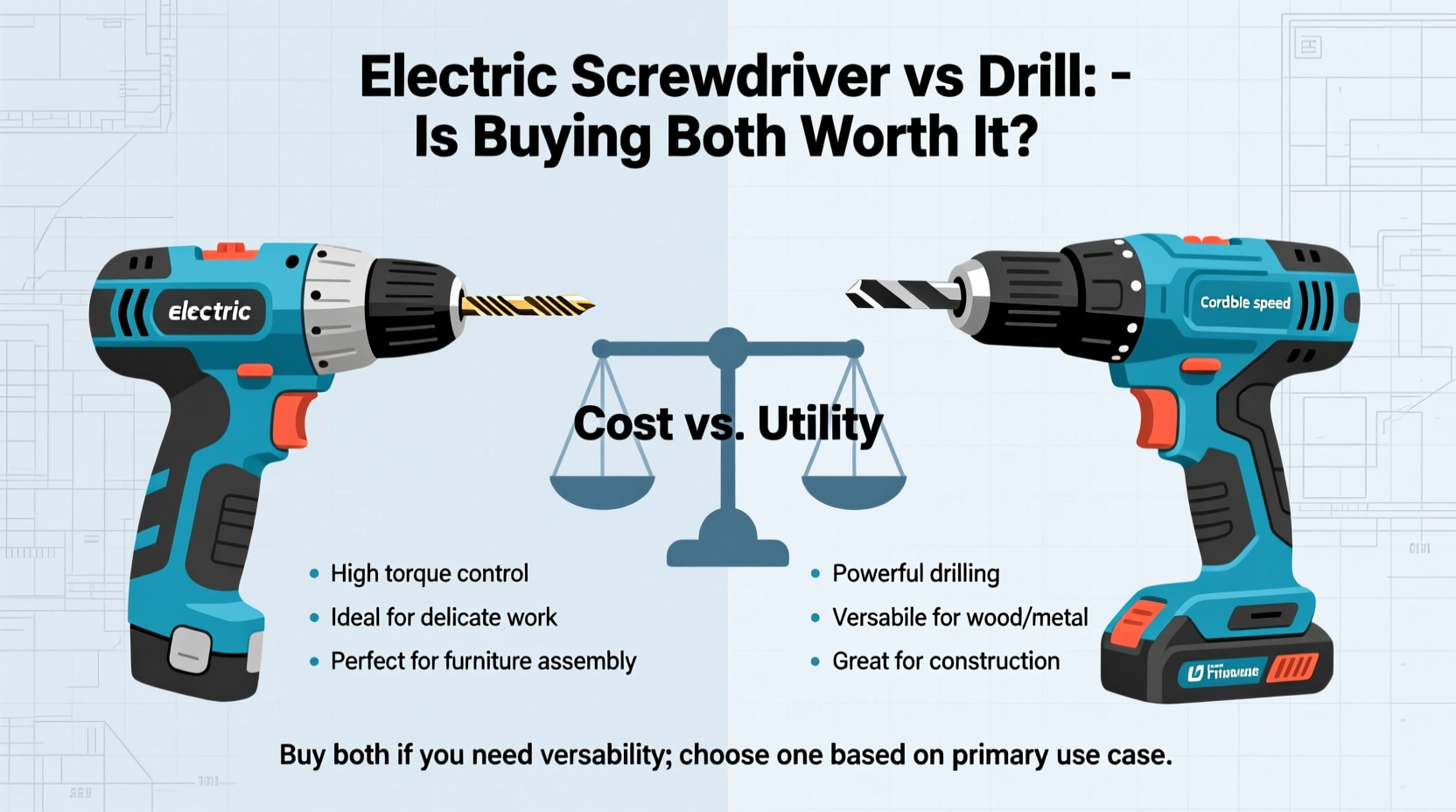
An electric screwdriver and a drill are both motorized tools designed to drive fasteners, but their design philosophies diverge significantly. An electric screwdriver prioritizes precision, control, and ease of use for light-duty fastening. It’s typically compact, lightweight, and often features automatic torque shutoff to prevent overdriving screws. Most models operate at lower RPMs and deliver modest torque, making them ideal for assembling furniture, installing light fixtures, or working with delicate materials like drywall or plastic.
A drill, by contrast, is built for versatility and power. Even basic cordless drills can switch between drilling and driving modes, handle a wide range of bit sizes, and generate enough torque to tackle hardwood, masonry (with the right bit), and structural fasteners. Many modern drills also include adjustable clutch settings, allowing fine control over screw depth—something once exclusive to dedicated electric screwdrivers.
Tip: If your projects involve frequent hole drilling or heavy-duty assembly, a drill will almost always outperform an electric screwdriver.Key Differences in Performance and Use
The real question isn’t just about function—it’s about efficiency, ergonomics, and long-term utility. Let’s break down the core distinctions:
- Torque Output: Drills typically offer 200–500 in-lbs of torque; electric screwdrivers rarely exceed 100 in-lbs.
- Speed Range: Drills operate from 500 to 2,000+ RPM; electric screwdrivers usually max out around 300 RPM.
- Chuck Type: Drills use keyless chucks that accept various bits; electric screwdrivers often use 1/4\" hex quick-change holders.
- Battery System: Drill batteries are generally higher capacity and interchangeable across tool lines; electric screwdriver batteries are smaller and often proprietary.
- Ergonomics: Electric screwdrivers excel in tight spaces and overhead work due to their shorter length and lighter weight.
“Most people don’t need both—but if you do repetitive, precision-driven tasks like cabinet installation or electronics repair, having a dedicated screwdriver saves time and reduces fatigue.” — Marcus Tran, Professional Handyman & Tool Instructor
When You Might Actually Need Both
While a good cordless drill can technically replace an electric screwdriver for most jobs, there are scenarios where owning both makes practical sense:
- Furniture Assembly Marathons: Building multiple IKEA-style units in one day? An electric screwdriver’s auto-stop feature prevents stripped screws and reduces wrist strain.
- Overhead Work: Installing ceiling fans or mounting shelves above head height is easier with a lightweight, nose-heavy electric screwdriver.
- Delicate Materials: Driving screws into MDF, laminate, or thin plastics without cracking requires precise torque control—something many drills lack at low settings.
- Tool Sharing: If two people are working simultaneously—one drilling pilot holes, the other driving screws—having both tools avoids downtime.
Mini Case Study: The Home Office Renovation
Julia spent a weekend converting her spare room into a home office. She needed to assemble a desk, install floating shelves, mount a pegboard, and drill through studs for cable management. Initially, she used only her 12V drill. While it handled everything, she found herself constantly switching bits, adjusting the clutch, and struggling with overdriven screws on the pegboard. After borrowing a friend’s electric screwdriver, she completed the final shelf assembly in half the time—with cleaner results. She later purchased a compact model specifically for interior trim and light assembly, keeping her drill free for heavier tasks.
Cost-Benefit Comparison
| Feature | Electric Screwdriver | Cordless Drill |
|---|---|---|
| Average Price | $30–$70 | $80–$150+ |
| Best For | Screw driving, light assembly | Drilling, driving, versatility |
| Portability | Excellent (compact) | Good (larger footprint) |
| Battery Life (typical) | 2–3 hours continuous | 1–2 hours (higher drain) |
| Multitool Compatibility | Rare | Common (18V platforms) |
| Learning Curve | Minimal | Moderate (clutch, speed settings) |
Smart Buying Checklist: Do You Need Both?
Before purchasing either—or both—ask yourself the following:
- ✅ Do I frequently drive screws into soft materials where over-tightening is a risk?
- ✅ Do I work in tight or overhead spaces where a full-sized drill is awkward?
- ✅ Am I doing large-scale furniture assembly or cabinetry?
- ✅ Do I already own a drill? Is it underpowered (e.g., 10V or less)?
- ✅ Is battery sharing important? (Stick to one brand ecosystem.)
- ✅ Will I use the tool more than a few times a year?
If you answered “yes” to three or more, investing in both may be justified. Otherwise, prioritize a mid-range cordless drill (12V or 18V) with a good clutch and variable speed trigger.
FAQ
Can a drill replace an electric screwdriver completely?
Yes, for most users. Modern drills have adjustable clutches and low-speed settings that mimic screwdriver precision. However, drills are bulkier and can be tiring for extended screw-driving sessions.
Is a cheap electric screwdriver worth it?
Only for occasional use. Budget models often lack torque control and durable gears. If you plan to use it regularly, spend $50+ on a reputable brand with replaceable bits and decent battery life.
Can I use drill bits in an electric screwdriver?
Only if they have a 1/4\" hex shank. Most standard twist bits won’t fit. Look for bits labeled “for impact drivers” or “hex-shank” for compatibility.
Step-by-Step: Choosing Your Power Tool Strategy
- Assess your typical projects: List the last five things you built or repaired. Were screws or holes more common?
- Test what you have: Try using your current drill at low speed with a Phillips bit. Can it drive screws without stripping them?
- Determine frequency: Will you use the tool monthly, seasonally, or yearly?
- Set a budget: Decide whether to invest in one versatile tool or two specialized ones.
- Buy smart: Choose a drill from a scalable system (e.g., 18V platform) so future tools share batteries.
- Try before you commit: Rent or borrow tools to test ergonomics and performance.
Conclusion: Stop Wasting Money—Start Using Smarter
You’re not inherently wasting money by considering both an electric screwdriver and a drill—but you could be if you buy without purpose. A drill is the essential foundation of any home toolkit. An electric screwdriver is a niche upgrade, best suited for those who value precision, speed, and comfort in repetitive fastening tasks. For casual users, one quality drill is enough. For serious DIYers, carpenters, or anyone doing frequent interior work, owning both can improve results and reduce physical strain.
Focus not on the number of tools, but on how well they serve your actual needs. Invest in durability, compatibility, and usability—not redundancy. With the right approach, you’ll spend less over time and accomplish more with confidence.
💬 Have experience choosing between these tools? Share your story or advice in the comments—help others avoid buyer’s remorse and build smarter!








