For runners and walkers plagued by plantar fasciitis, finding the right shoe isn’t just about comfort—it’s about pain relief, recovery, and long-term foot health. Hoka One One has emerged as a leader in maximalist footwear, with two of its most popular models—the Clifton and the Bondi—frequently recommended by podiatrists and physical therapists alike. Both offer plush cushioning and a signature rocker-shaped sole, but when it comes to managing plantar fasciitis, subtle differences can make a significant impact.
This detailed breakdown compares the Hoka Clifton and Bondi across key factors like midsole density, heel support, weight, and biomechanical alignment. Whether you’re logging miles on pavement or spending hours on your feet at work, understanding how each shoe performs under real-world conditions will help you choose the one that supports your foot without aggravating inflammation.
Understanding Plantar Fasciitis and Shoe Needs
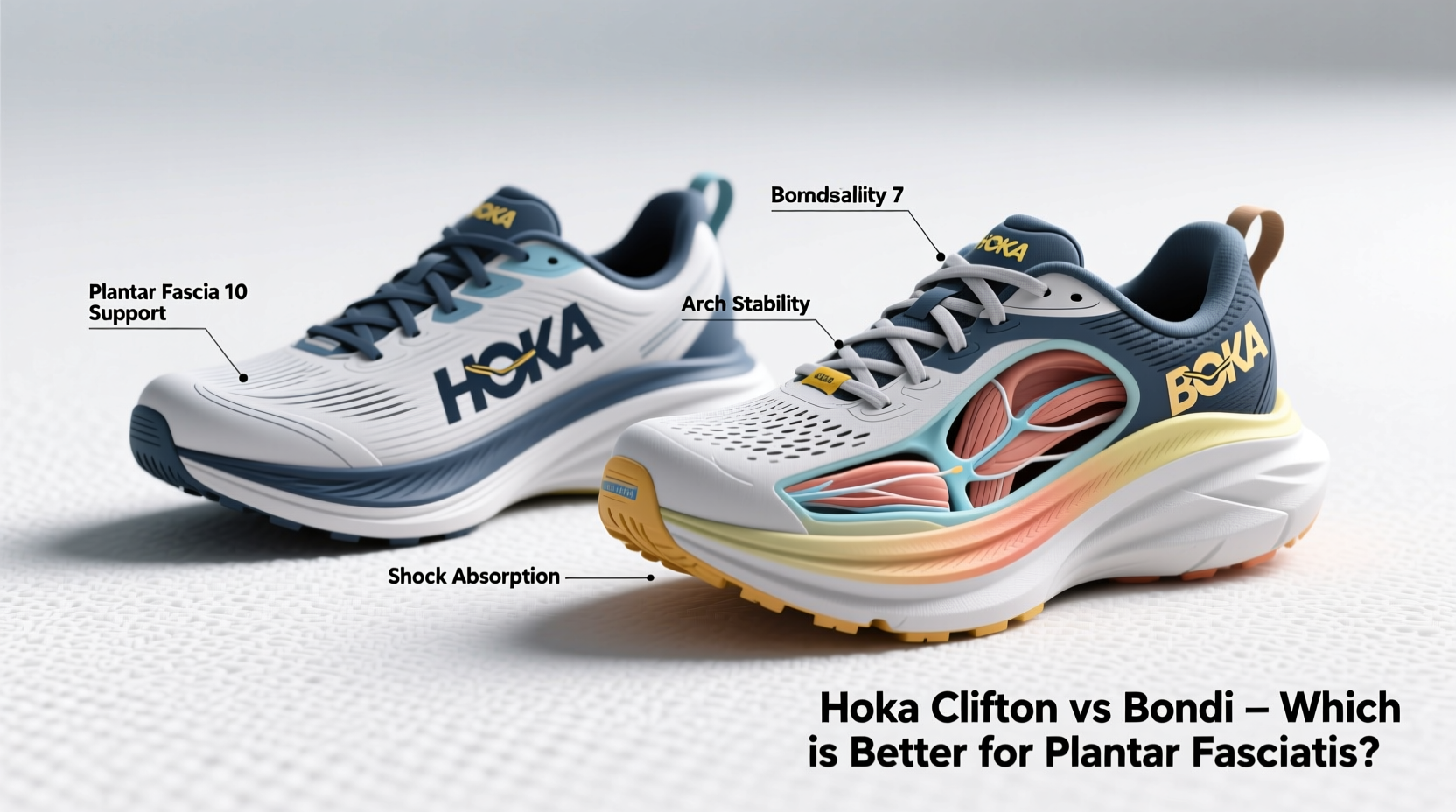
Plantar fasciitis is the most common cause of heel pain, affecting over 1 million people annually in the U.S. alone. It occurs when the thick band of tissue connecting the heel bone to the toes—called the plantar fascia—becomes inflamed due to repetitive strain, poor foot mechanics, or inadequate support.
Effective footwear plays a critical role in both treatment and prevention. Ideal shoes for plantar fasciitis should provide:
- Deep heel cups to stabilize the rearfoot and reduce micro-motions.
- Firm arch support or compatibility with custom orthotics.
- Controlled flexibility—especially through the forefoot—to encourage a smooth roll-off.
- Ample cushioning in the heel to absorb shock and reduce impact forces.
- A slight heel-to-toe drop (6–8mm) to ease tension on the Achilles and plantar fascia.
Hoka designs inherently align with many of these requirements. However, the Clifton and Bondi take different approaches to cushioning and responsiveness, which affects their suitability for sensitive feet.
Tip: If you're experiencing morning heel pain—a hallmark sign of plantar fasciitis—prioritize shoes with structured heel counters and high-rebound midsoles to reduce initial step stress.Design and Construction: Clifton vs Bondi
The Hoka Clifton and Bondi share the brand’s DNA: oversized EVA foam midsoles, meta-rocker geometry, and lightweight uppers. But their engineering philosophies diverge in ways that matter for foot health.
Hoka Clifton: Balanced Performance
The Clifton series is designed as Hoka’s daily trainer—lightweight, responsive, and versatile. Now in its 9th generation, the Clifton offers a balanced blend of softness and structure. The midsole uses compression-molded EVA foam that’s softer than traditional running foams but still maintains resilience after hundreds of miles.
Key features relevant to plantar fasciitis:
- Heel-to-toe drop: 5mm (slightly lower than average, promoting natural gait).
- Midsole thickness: Generous but not excessive; less bulk than the Bondi.
- Arch profile: Moderate, with a gentle curve that accommodates neutral to mildly flat feet.
- Weight: Approximately 8.7 oz (men's size 9), making it easier to wear all day.
The Clifton’s rocker design encourages a smooth transition from heel strike to toe-off, reducing strain on the plantar fascia during push-off. Its engineered mesh upper provides breathability and snug lockdown around the midfoot, minimizing slippage that could irritate inflamed tissue.
Hoka Bondi: Maximum Cushioning
The Bondi is Hoka’s most cushioned model—designed for maximum shock absorption. First released in 2013, it remains a favorite among nurses, travelers, and those recovering from injury. The latest version (Bondi 8) uses EVA foam so dense it feels almost springy underfoot.
Features beneficial for plantar fasciitis:
- Heel-to-toe drop: 6mm, slightly higher than the Clifton, offering more Achilles slack.
- Midsole stack height: Among the tallest in the industry (~34mm in the heel), delivering superior impact protection.
- Heel counter: Firm and deeply contoured, providing excellent rearfoot stability.
- Weight: Around 10.3 oz (men's size 9)—noticeably heavier than the Clifton.
The Bondi’s full-length meta-rocker is more pronounced than the Clifton’s, creating an almost rolling motion that minimizes bending effort at the forefoot. This can be a major advantage for those whose plantar fasciitis flares during toe-off.
“Patients with chronic plantar fasciitis often benefit from shoes that offload tension throughout the entire gait cycle. The Bondi’s rocker profile does this exceptionally well.” — Dr. Lena Torres, DPM, Sports Podiatrist
Comparative Analysis: Key Differences That Matter
To determine which shoe performs better for plantar fasciitis, let’s break down the core differences in a side-by-side format.
| Feature | Hoka Clifton 9 | Hoka Bondi 8 |
|---|---|---|
| Midsole Material | Compression-molded EVA | Full EVA with enhanced rebound |
| Stack Height (Heel) | 31mm | 34mm |
| Heel-to-Toe Drop | 5mm | 6mm |
| Weight (Men’s Size 9) | 8.7 oz | 10.3 oz |
| Rocker Prominence | Moderate | High |
| Arch Support Level | Medium | Medium-high |
| Orthotic-Friendly? | Yes (removable insole) | Yes (deep internal space) |
| Best For | Daily walking, light running, moderate standing | Prolonged standing, recovery, severe heel pain |
The data shows a clear distinction: the Clifton prioritizes agility and efficiency, while the Bondi emphasizes protection and passive support. For someone with mild or intermittent plantar fasciitis, the Clifton may feel more natural and less cumbersome. But for those dealing with acute pain or extended periods on their feet, the Bondi’s extra cushioning and guided gait cycle can significantly reduce discomfort.
Real-World Use Case: Nurse with Chronic Heel Pain
Sarah M., a 42-year-old ICU nurse from Portland, had been struggling with plantar fasciitis for over a year. Her 12-hour shifts involved constant standing, quick turns, and hard flooring—all exacerbating her condition. She initially tried the Hoka Clifton 8, drawn by its lighter weight and sleeker look.
“I liked how easy they were to move in,” she said, “but by hour nine, my heel started burning again. I felt every tile underfoot.”
After switching to the Bondi 7, her experience changed dramatically. “The first time I wore them, I noticed less jarring when walking fast. The heel didn’t ache in the morning anymore. I’ve now gone six months without needing a cortisone shot.”
Her case illustrates a broader trend: individuals with high-impact lifestyles or advanced symptoms often respond better to maximalist designs like the Bondi, even if they sacrifice some agility.
Step-by-Step: How to Choose Between Clifton and Bondi
Selecting the right shoe shouldn’t be guesswork. Follow this practical decision framework:
- Assess your pain pattern. Is it worst in the morning (indicating overnight tightening)? Or does it build gradually during the day? Morning pain often responds better to firmer heel support—favoring the Bondi.
- Evaluate your daily activity level. More than 8 hours on your feet? Frequent walking on concrete? The Bondi’s superior shock absorption becomes essential.
- Consider your existing orthotics. Both shoes have removable insoles, but the Bondi offers more internal volume. If you use thick custom inserts, try the Bondi first.
- Test the rocker effect. Walk in both shoes barefoot inside a store or at home. Does one guide your foot forward more smoothly? A stronger rocker (Bondi) reduces strain during toe-off.
- Weigh comfort against fatigue. Lighter doesn’t always mean better. Some users report leg fatigue with ultra-light shoes due to reduced damping. If you feel “bouncy” or unstable in the Clifton, the Bondi’s mass may actually improve endurance.
FAQ: Common Questions About Hokas and Plantar Fasciitis
Can Hoka shoes cure plantar fasciitis?
No single shoe can cure plantar fasciitis, but proper footwear is a cornerstone of treatment. Hokas like the Clifton and Bondi help manage symptoms by reducing mechanical stress, supporting healthy gait patterns, and improving comfort during recovery. They should be used alongside stretching, night splints, and professional care when needed.
Is the Bondi too soft for long-term use?
Some users worry that excessive cushioning leads to instability. While the Bondi is very soft, its structured heel counter and wide base prevent excessive pronation. For most people with plantar fasciitis, the benefits of shock absorption outweigh concerns about \"too much foam.\" However, if you have balance issues or weak ankles, the Clifton might offer better proprioception.
Do I need to replace these shoes sooner if I have plantar fasciitis?
Yes. When managing foot pain, worn-out cushioning can delay healing. Replace your Hokas every 300–500 miles or when you notice flattening in the heel area. Even if the outsole looks fine, compressed midsoles lose their protective properties.
Final Verdict: Which One Should You Choose?
If you're dealing with active, painful plantar fasciitis—especially if you spend long hours on hard surfaces—the Hoka Bondi is likely the better choice. Its superior heel cushioning, deep heel cup, and aggressive rocker design actively reduce strain on the plantar fascia throughout the gait cycle. The added weight is a fair trade-off for the level of protection it offers.
The Hoka Clifton, on the other hand, excels as a preventive or maintenance shoe. If your symptoms are mild, occasional, or in remission, the Clifton delivers enough support and cushioning for daily wear without feeling bulky. It’s also ideal for those who want a shoe that transitions easily from walking to light jogging.
Ultimately, the \"better\" shoe depends on your stage of recovery, lifestyle demands, and personal comfort preferences. Many users find value in owning both: the Bondi for workdays and flare-ups, the Clifton for active days and transitional use.
“The right shoe won’t fix plantar fasciitis overnight, but the wrong one can keep you stuck in a cycle of pain.” — Dr. Rajiv Mehta, Physical Therapist and Gait Specialist
Take Action Today for Healthier Feet
Your footwear choices today shape your mobility tomorrow. Whether you lean toward the responsive balance of the Clifton or the enveloping comfort of the Bondi, prioritize fit, freshness, and function. Don’t wait for pain to dictate your decisions—intervene early with supportive shoes, consistent stretching, and smart habits.
Try both models if possible. Walk in them, stand in them, mimic your daily routine. Your feet will tell you which one truly supports your journey back to pain-free movement.
💬 Have experience with the Hoka Clifton or Bondi for plantar fasciitis? Share your story in the comments—your insights could help someone find relief faster.








