
Deadlifting is one of the most effective compound movements in strength training, engaging the back, glutes, hamstrings, and forearms. However, as weights increase, grip strength often becomes the limiting factor—not because the body can’t handle the load, but because the hands can’t hold it. This is where grip aids like gym chalk and lifting straps come into play. Both are widely used in powerlifting, CrossFit, and general strength training, yet they serve different purposes and carry distinct implications for safety, progression, and long-term development.
The choice between gym chalk and lifting straps isn’t about which is “better” in absolute terms, but rather which tool aligns with your goals, experience level, and training philosophy. Understanding the mechanics, benefits, and risks of each will help you make informed decisions that enhance both performance and joint integrity.
How Grip Failure Limits Deadlift Progression
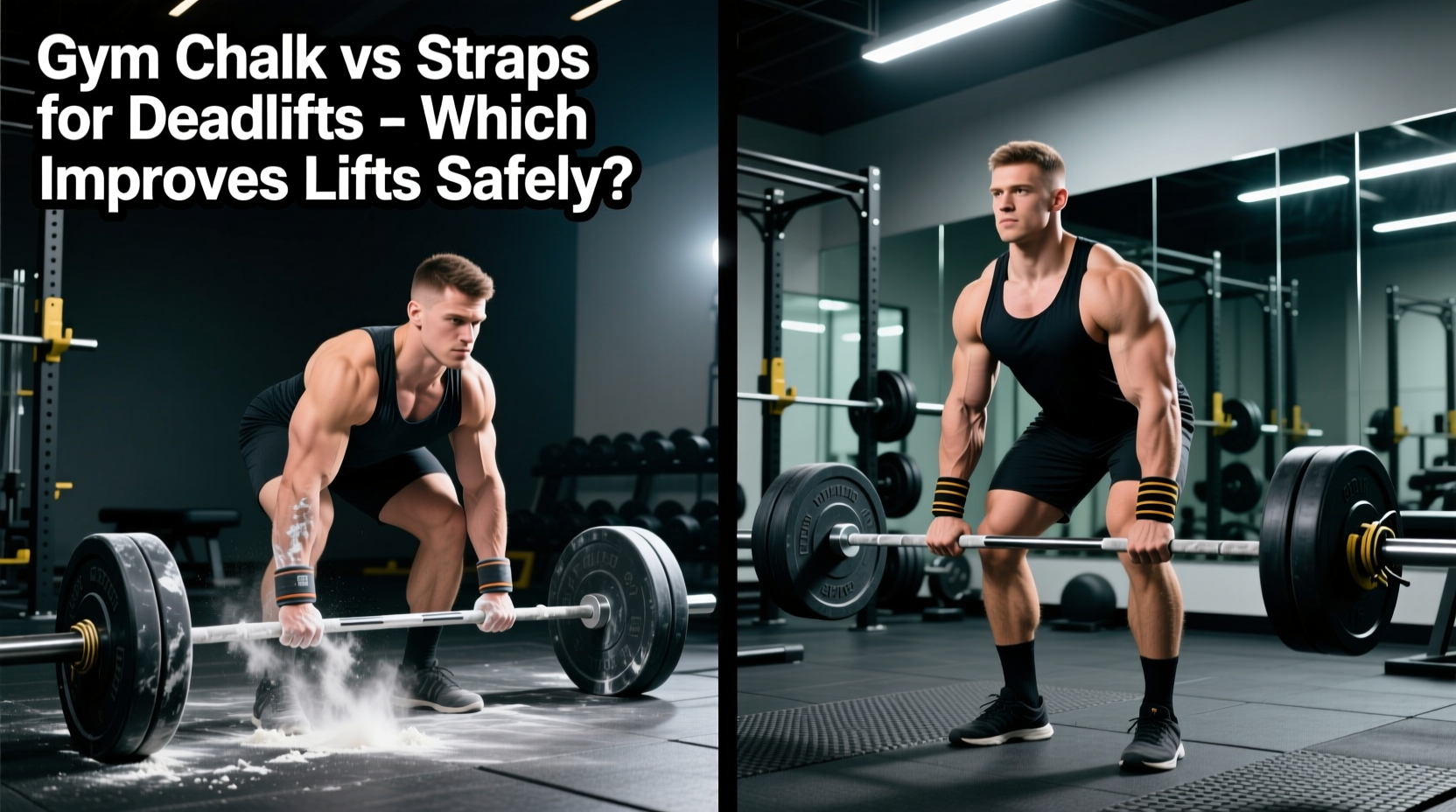
Grip failure occurs when the muscles in the hands and forearms fatigue before the primary movers—such as the posterior chain—are fully taxed. In a conventional deadlift, this typically manifests as the barbell slipping from the fingers despite proper form and adequate leg and back engagement.
This mismatch creates a plateau. Lifters may be capable of moving heavier loads biomechanically, but their grip holds them back. Over time, this can lead to inconsistent progress, frustration, and even compromised form as lifters adjust their technique to compensate for slipping.
Two primary solutions exist: improve grip endurance naturally or use external aids. While grip training should always be part of a well-rounded program, external tools like chalk and straps offer immediate functional support. The key is knowing when and how to use them without undermining long-term development.
Gym Chalk: Enhancing Natural Grip
Gym chalk, typically made from magnesium carbonate, absorbs moisture from the hands, reducing slippage and increasing friction between the skin and the barbell. Unlike mechanical aids, chalk doesn’t alter how force is transferred—it simply optimizes the existing grip.
When hands sweat during intense sets, the loss of traction can be dramatic. A dry, chalked grip can increase holding capacity by up to 30%, according to anecdotal reports from competitive lifters and coaches. This makes chalk especially valuable in high-rep deadlifts, farmer’s carries, or workouts involving multiple pulling movements.
Tip: Apply chalk evenly across palms and fingers, focusing on contact points with the bar. Avoid clumping, which can reduce tactile feedback.Chalk is permitted in most powerlifting federations (including IPF, USAPL, and others), making it a staple in competition preparation. It supports natural movement patterns and doesn’t bypass grip engagement—meaning the forearm and hand muscles still work at full capacity.
However, chalk has limitations. It won’t help if your grip strength is fundamentally underdeveloped. Additionally, excessive use can create messy environments, degrade barbell knurling over time, and irritate respiratory systems in poorly ventilated gyms.
Lifting Straps: Bypassing the Grip Bottleneck
Lifting straps are fabric or leather loops that wrap around the wrist and barbell, effectively transferring load from the hands to the forearms and upper body. They allow lifters to hold significantly heavier weights without relying on finger strength.
Straps are particularly useful during maximal deadlift attempts, back-loaded accessory work (like heavy rows), or hypertrophy-focused sets where maintaining grip would cut volume short. By eliminating grip fatigue, straps let athletes focus on activating the correct muscle groups with proper form, even at near-maximal loads.
That said, straps change the mechanics of the lift. Because tension is partially offloaded from the hands, the nervous system receives less feedback from the grip—which plays a role in overall motor control. Overreliance on straps can lead to weak grip development and reduced proprioception.
“Straps are a tool, not a crutch. Use them strategically to overload the posterior chain, not as a default for every set.” — Dan John, strength coach and author of *Intervention*
Many elite powerlifters use straps only during assistance work, reserving raw pulls (with chalk) for technique refinement and grip conditioning. This hybrid approach balances performance enhancement with foundational strength building.
Chalk vs Straps: A Practical Comparison
| Feature | Gym Chalk | Lifting Straps |
|---|---|---|
| Mechanism | Improves friction via moisture absorption | Transfers load from hands to wrists/forearms |
| Grip Engagement | Full engagement required | Bypasses finger flexors |
| Competition Legal? | Yes, in most federations | No (except in specific events) |
| Best For | Technique work, competition prep, grip endurance | Maximal strength, volume loading, rehab phases |
| Risk of Dependency | Low | High if misused |
| Learning Curve | Minimal | Moderate (proper wrapping technique needed) |
The table highlights a critical distinction: chalk enhances what you already have; straps substitute part of the process. Neither is inherently superior, but their applications differ significantly.
When to Use Each: A Strategic Framework
Choosing between chalk and straps should follow a purpose-driven strategy. Consider the following guidelines based on training phase, goal, and experience level.
Use Gym Chalk When:
- You’re preparing for a powerlifting meet (where straps aren’t allowed).
- Your goal is to build grip endurance alongside posterior chain strength.
- You're performing moderate to high-rep sets (5+ reps).
- Training in a gym that prohibits loose chalk (consider liquid chalk as an alternative).
Use Lifting Straps When:
- You’re working above 85% of your 1RM and grip fails before form breaks down.
- Doing back-off sets after max effort pulls to accumulate volume.
- Rehabbing a minor grip or forearm injury (under supervision).
- Performing heavy rows or rack pulls where deadlift mechanics are secondary.
Mini Case Study: Building a Safer, Stronger Pull
Consider Mark, a 28-year-old intermediate lifter with a 405 lb deadlift. He wanted to reach 450 lbs within six months but kept stalling at 415 lbs due to grip slip on double overhand pulls. His coach implemented a periodized plan:
- Weeks 1–4: All deadlifts performed with chalk only. Double overhand grip enforced until failure. Farmer’s walks added twice weekly.
- Weeks 5–8: Mixed grip introduced at >80% 1RM. Chalk used consistently. Straps allowed only on final back-off set.
- Weeks 9–12: Straps permitted for top set above 85%. All other sets remained raw with chalk.
- Ongoing: Monthly deload weeks focused on grip-specific training—towel hangs, plate pinches, and timed dead hangs.
By week 14, Mark pulled 455 lbs raw with chalk. The strategic use of straps during peak loading phases allowed him to reinforce neural drive and posterior chain recruitment without sacrificing grip integrity. Meanwhile, consistent raw work ensured his hands kept pace with his back and legs.
Do’s and Don’ts: Maximizing Safety and Gains
| Action | Do | Don't |
|---|---|---|
| Using Chalk | Apply lightly and reapply as needed | Create clouds of dust or skip wiping bars afterward |
| Using Straps | Wrap securely around wrist and bar, keeping thumbs on top | Let straps hang loosely or rely on them for warm-up sets |
| Training Grip | Incorporate static holds, thick-bar work, and pinch exercises | Neglect grip training while using straps frequently |
| Progression | Track both raw and assisted maxes separately | Compare strapped PRs directly to raw lifts |
FAQ: Common Questions About Chalk and Straps
Can I use both chalk and straps together?
Absolutely. In fact, it’s recommended. Chalk improves hand-to-bar contact even when using straps, preventing irritation and ensuring a secure anchor point. Most lifters who use straps also apply chalk to prevent sliding inside the strap loop.
Are lifting straps bad for beginners?
Not inherently, but they should be avoided in early stages. Beginners need to develop baseline grip strength, body awareness, and movement efficiency. Using straps too soon can mask technical flaws and delay foundational adaptations. Wait until you’ve mastered the deadlift pattern and hit a consistent grip plateau before introducing straps.
Does chalk damage barbells or equipment?
Prolonged buildup of chalk residue can accelerate wear on barbell knurling and sleeve mechanisms, especially in high-use commercial gyms. Always brush off excess chalk after use and wipe down bars if required by facility rules. Liquid chalk minimizes mess while offering similar performance.
Expert Insight: Balancing Tools and Fundamentals
“The best lifters aren’t the ones who use the most gear—they’re the ones who know exactly when to use it. Chalk keeps you connected to the bar. Straps let you push past temporary limits. But nothing replaces consistent, disciplined practice.” — Dr. Quinn Henoch, DPT and former USA Weightlifting National Team Coach
This perspective underscores a central truth: tools amplify intent. Whether you choose chalk, straps, or both, the outcome depends on how thoughtfully they’re integrated into your programming.
Conclusion: Make Grip Work for You, Not Against You
The debate between gym chalk and lifting straps isn’t about picking a winner—it’s about leveraging each tool appropriately to support safe, sustainable progress. Chalk preserves natural movement while enhancing control. Straps unlock greater loads and training volume but require discipline to avoid dependency.
To maximize deadlift performance safely, adopt a dual-track approach: build grip strength relentlessly through dedicated work, and use external aids strategically to overcome short-term barriers. Let chalk be your everyday ally and straps your occasional amplifier. Track your progress, respect the process, and remember that true strength includes the ability to hold on—literally and figuratively.
💬 What’s your go-to grip strategy for heavy deadlifts? Share your experience with chalk, straps, or mixed techniques in the comments below—your insight could help others find their optimal balance.








