
For many outdoor enthusiasts, the appeal of camping lies in disconnecting from daily routines and reconnecting with nature. Yet as technology becomes more integrated into our lives—even during leisure time—the question arises: should you bring a portable power station on your weekend camping trip? These compact devices promise to keep phones charged, lights powered, and even run small appliances off-grid. But do they deliver enough value to justify their cost and added weight?
The answer isn’t universal—it depends on how you camp, what gear you bring, and how much convenience you're willing to trade for authenticity. This article breaks down the practicality, benefits, limitations, and real-world performance of portable power stations in typical weekend camping scenarios.
Understanding Portable Power Stations
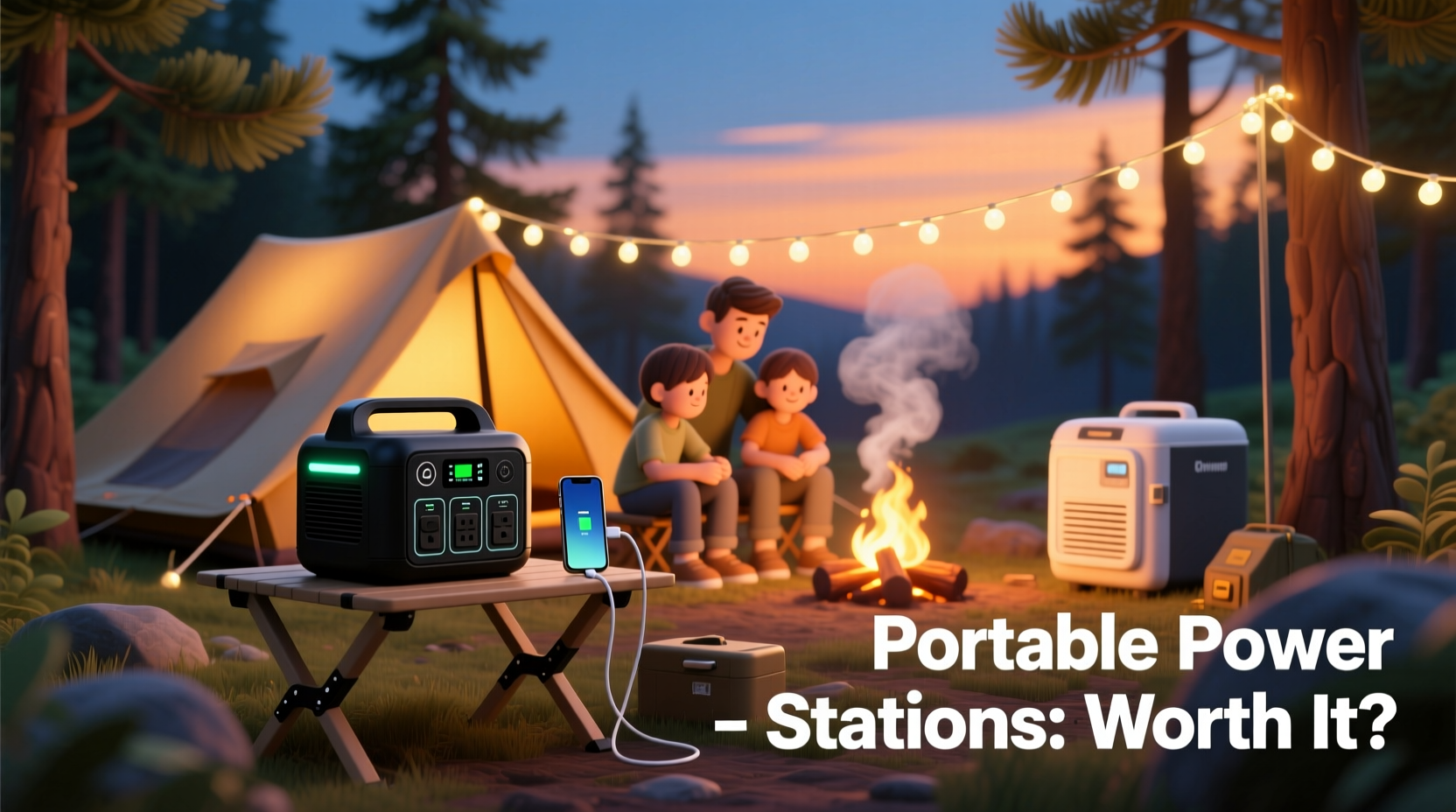
A portable power station is a battery-powered generator designed to store electricity and deliver it through AC outlets, USB ports, DC outputs, and sometimes even wireless charging pads. Unlike traditional gas generators, they operate silently, produce no emissions, and require minimal maintenance. They’re typically charged via wall outlets, car chargers, or solar panels before being transported to remote locations.
Capacity is measured in watt-hours (Wh), which indicates how much energy the unit can store. For example, a 300Wh station might power a laptop for several hours or charge a smartphone 20+ times. Output is measured in watts (W), showing how much power can be delivered at once—important when running high-draw devices like mini-fridges or electric kettles.
While early models were bulky and expensive, recent advancements have made them lighter, more efficient, and accessible to casual campers. Brands like Jackery, EcoFlow, Anker, and Bluetti now offer options tailored specifically for outdoor recreation.
Tip: Always check both capacity (Wh) and output (W) before purchasing—a high-capacity unit may still fail if its maximum output doesn't support your intended devices.When a Portable Power Station Adds Real Value
Not all camping styles benefit equally from a portable power station. The decision hinges largely on your setup and expectations. Here are common situations where these units prove genuinely useful:
- Digital connectivity needs: If you rely on GPS navigation, communication apps, or emergency radios, keeping smartphones and two-way radios charged is essential—especially in areas without cell service.
- Lights and ambiance: LED string lights, lanterns, and headlamps enhance safety and comfort after dark. A power station eliminates the need for disposable batteries.
- Food preparation: Campers using electric coolers, coffee makers, or induction burners often find that a single night drains smaller battery packs. A mid-sized power station (300–600Wh) handles such loads reliably.
- Families and groups: Larger parties generate higher demand for device charging. Instead of juggling multiple power banks, one shared station simplifies logistics.
- Accessibility camping: Those relying on medical devices like CPAP machines or insulin coolers gain peace of mind knowing consistent power is available.
“Over half of weekend campers now bring at least one electronic device beyond a phone—whether it’s a camera, speaker, or lighting system. Having reliable backup power reduces stress and enhances the experience.” — Dr. Lena Torres, Outdoor Recreation Technologist, University of Colorado
Cost vs. Benefit Analysis
Purchase prices range from $200 for entry-level models (e.g., 200Wh) to over $1,000 for premium units with fast charging and solar compatibility. To assess whether this investment pays off, consider usage frequency, alternative solutions, and long-term durability.
| Scenario | Power Need | Alternative Solutions | Worth It? |
|---|---|---|---|
| Solo backpacker using only a phone and headlamp | Low (~50Wh) | Power bank, hand-crank charger | No – overkill for minimal needs |
| Couple car camping with lights, cooler, and coffee maker | Moderate (~400Wh) | Battery jump starter, multiple power banks | Yes – consolidates charging and supports appliances |
| Family of four with CPAP, tablets, and lighting | High (>600Wh) | Gas generator (noisy, requires fuel) | Yes – quieter, cleaner, safer option |
| Renter using RV park hookups | None needed | Grid power | No – redundant infrastructure |
The sweet spot emerges among car campers who prioritize comfort without sacrificing environmental responsibility. For these users, a mid-range power station acts as a silent, emission-free substitute for noisy gas generators while offering greater versatility than individual battery packs.
Real-World Example: A Weekend Trip to Big Sur
Mark and Sarah planned a three-day getaway to a forested campground near Big Sur. Their gear list included a 40-quart electric cooler, two smartphones, a DSLR camera, a portable projector for stargazing videos, and a Bluetooth speaker. They initially considered bringing only power banks but realized their cooler alone would drain a standard bank in under eight hours.
They rented a 510Wh EcoFlow River 2 Pro for $40 from a local outdoor co-op. After fully charging it at home and topping it up with a 110W solar panel during daylight hours, the unit powered their cooler continuously, charged all devices twice, ran the projector for two nights, and kept the speaker going throughout the trip.
Despite adding 13 pounds to their load, they found the convenience outweighed the burden. “We didn’t worry about battery life,” Mark said. “It let us focus on hiking and relaxing instead of rationing screen time or turning off the cooler.”
This case illustrates a growing trend: recreational campers treating power not as a luxury, but as a functional necessity—similar to water filters or first-aid kits.
Step-by-Step Guide: Choosing the Right Unit for Your Trip
Selecting a suitable portable power station involves calculating your energy needs and matching them to technical specs. Follow this process to make an informed choice:
- Inventory your devices: List every item you plan to power, including estimated wattage and usage duration.
- Calculate total watt-hours needed: Multiply each device’s wattage by hours used per day. Sum all values. Add 20% buffer for inefficiency.
- Check output requirements: Ensure the station’s peak output exceeds the highest-wattage device (e.g., a 1000W surge for some blenders).
- Consider recharging options: Will you have access to grid power pre-trip? Can you use solar panels onsite? Look for models with dual-input charging.
- Evaluate portability: Balance capacity against weight. Units above 700Wh often exceed 30 lbs—manageable for car camping but impractical for hikes.
- Compare warranties and safety features: Opt for brands offering at least a 2-year warranty and built-in protections (overload, short circuit, temperature control).
Common Misconceptions and Limitations
Despite their popularity, portable power stations aren’t magic boxes. Several myths persist that can lead to disappointment:
- Myth: Solar panels can fully recharge a station in one day. Reality: Even with ideal sun exposure, a 100W panel takes 4–8 hours to charge a 500Wh unit—and weather, angle, and shading affect efficiency.
- Myth: All USB-C ports support fast charging. Reality: Check if the port delivers sufficient voltage (e.g., 60W PD) for laptops; many stations limit USB-C output.
- Myth: Lithium iron phosphate (LiFePO4) batteries last forever. Reality> While LiFePO4 cells endure 3,000+ cycles versus 500–1,000 for standard lithium-ion, they degrade faster when stored at low charge or exposed to extreme temperatures.
Additionally, these units perform poorly in sub-freezing conditions. Most lose 20–40% capacity below 32°F (0°C), and charging below freezing can permanently damage internal batteries.
Practical Checklist Before Buying or Renting
Use this checklist to determine if a portable power station aligns with your camping habits:
- ☐ I camp primarily by car (not backpacking)
- ☐ I use at least two electronic devices requiring AC or DC power
- ☐ I value quiet operation and zero emissions
- ☐ I currently carry multiple power banks or disposable batteries
- ☐ I own or am willing to buy compatible solar panels for extended trips
- ☐ My budget allows for a one-time investment of $250–$600
- ☐ I have secure storage space at home and in my vehicle
If four or more apply, a portable power station likely offers tangible benefits.
Frequently Asked Questions
Can I leave a portable power station plugged in all weekend?
Yes, most modern units include auto-shutoff or trickle charging to prevent overuse. However, monitor heat buildup and avoid covering the unit during discharge. Also, ensure ventilation around the station, especially in enclosed tents or vehicles.
How long do portable power stations last?
With proper care, expect 5–7 years of regular use. Lithium-ion models typically retain 80% capacity after 500 charge cycles; LiFePO4 versions may last 2,000–3,000 cycles. Store at 50–80% charge when not in use, and recharge every 3–6 months.
Are they safe to use inside a tent?
Yes, because they emit no fumes. However, avoid placing them near bedding or flammable materials. Keep vents unobstructed and never modify the casing. Units with UL certification meet rigorous safety standards.
Final Verdict: Are They Worth It?
For weekend campers focused on comfort, convenience, and digital integration, portable power stations are increasingly worth the investment. They eliminate the anxiety of dead batteries, enable modern conveniences in the wild, and provide critical support for health-related electronics—all without noise or pollution.
However, minimalist hikers, infrequent campers, or those already connected to campground utilities may find them unnecessary. The key is alignment between your camping philosophy and the tool’s capabilities.
As outdoor lifestyles evolve, so too does the definition of “roughing it.” Today, having a cold drink from an electric cooler or sharing photos around a projector doesn’t diminish the wilderness experience—it enhances it for many. A portable power station isn’t about dependency on technology; it’s about thoughtful empowerment.
🚀 Ready to upgrade your next camping trip? Evaluate your power needs using the step-by-step guide above, then test a mid-range model on your next outing. Share your experience with fellow campers—your insight could help others decide whether to go cordless or go home.








