A medium-sized skinless sweet potato contains approximately 3.8 grams of dietary fiber, making it one of the most nutrient-dense sources of complex carbohydrates and digestive support among common root vegetables. This fiber is composed of both soluble and insoluble forms, contributing to sustained energy release, improved gut health, and better blood sugar regulation. As consumers increasingly prioritize whole-food nutrition and plant-based fiber intake, the humble sweet potato has emerged as a staple in balanced diets—from diabetes management plans to athletic fueling strategies. Understanding the precise fiber contribution of a skinless sweet potato allows home cooks, health-conscious eaters, and clinical nutrition planners to leverage its full functional potential.
Definition & Overview
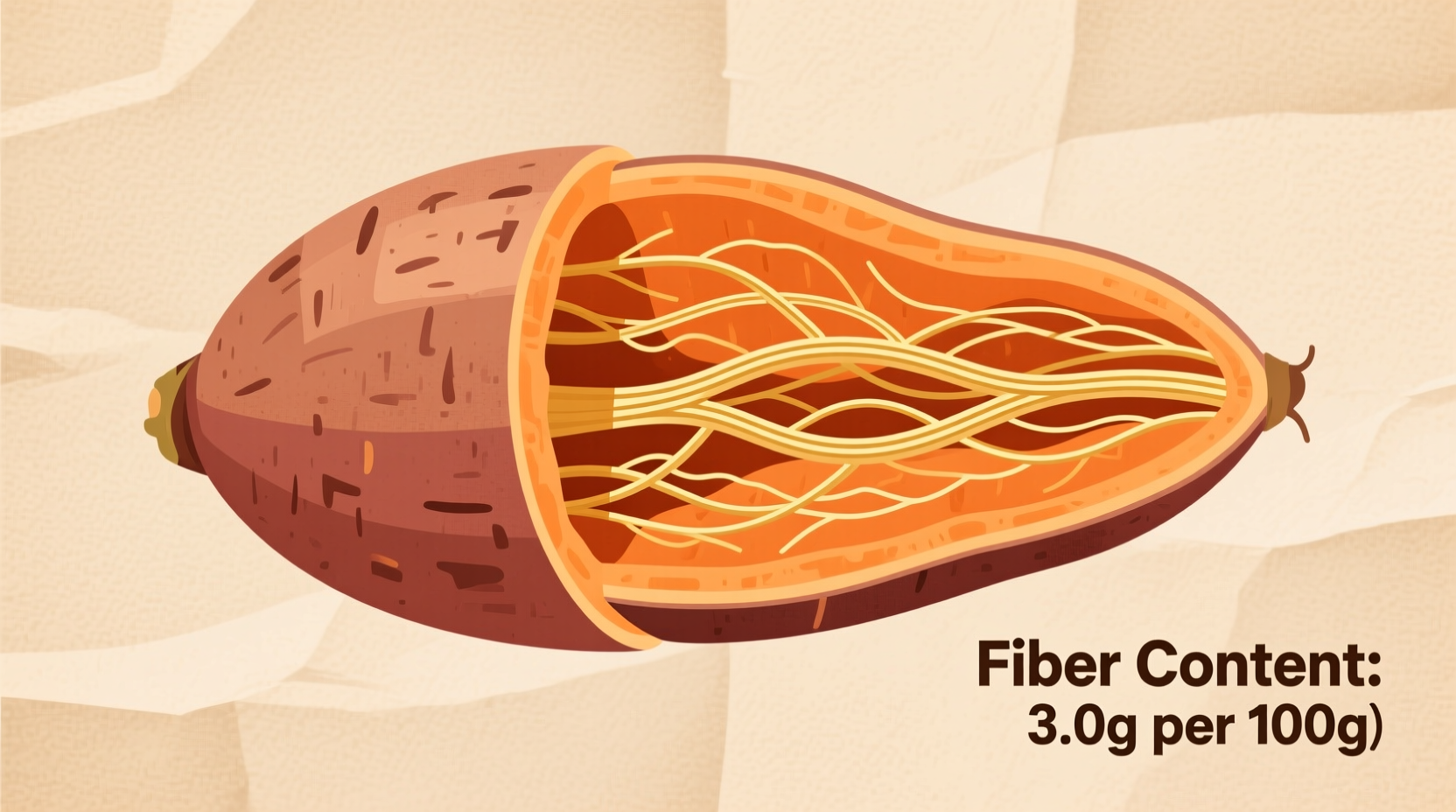
The sweet potato (Ipomoea batatas) is a dicotyledonous plant belonging to the morning glory family, Convolvulaceae. Unlike the common white potato (Solanum tuberosum), which is a nightshade, sweet potatoes are storage roots grown for their starchy, sweet-tasting flesh. They originated in Central or South America over 5,000 years ago and are now cultivated globally in tropical and subtropical regions due to their adaptability and high yield.
When prepared skinless—typically boiled, baked, or steamed—the sweet potato loses minimal fiber content compared to its with-skin counterpart, since most of its fiber resides within the inner parenchyma tissue rather than just beneath the peel. The flesh varies by cultivar: orange-fleshed varieties (like Beauregard or Jewel) are richest in beta-carotene; purple-fleshed types (such as Okinawan) contain anthocyanins; and white or cream-fleshed versions offer milder flavor and lower sugar content.
In culinary applications, skinless sweet potatoes are prized for their smooth texture, natural sweetness, and ability to integrate seamlessly into both savory and sweet dishes. Their fiber profile enhances satiety and slows glucose absorption, positioning them as a functional food in preventive nutrition.
Key Characteristics
| Attribute | Description |
|---|---|
| Flavor Profile | Sweet, earthy, with nutty undertones; intensity increases when roasted |
| Aroma | Mildly floral when raw; caramelized, malty scent when cooked |
| Color/Form | Orange, purple, white, or yellow flesh; elongated tuber shape |
| Fiber Content (per 130g skinless) | 3.6–4.0 g total dietary fiber (29% DV) |
| Soluble vs Insoluble Ratio | Approximately 1:3 — predominantly insoluble with significant pectin-based soluble fiber |
| Culinary Function | Thickener, binder, natural sweetener, textural enhancer |
| Shelf Life (raw, peeled) | 3–5 days refrigerated in water; up to 12 months frozen |
Practical Usage
The fiber in skinless sweet potatoes plays multiple roles in cooking beyond nutrition. It contributes viscosity to purees, stabilizes emulsions in vegan sauces, and improves moisture retention in baked goods. Because the fiber matrix remains largely intact after peeling and cooking, it continues to influence mouthfeel and structural integrity across preparations.
For everyday home use, consider these techniques:
- Pureeing: Boil peeled cubes until tender, then blend into a silky mash. Use as a base for soups, baby food, or grain-free pancakes. The pectin-rich fiber acts as a natural thickener without requiring flour or starch.
- Baking Substitute: Replace up to half the butter or oil in muffins or quick breads with mashed skinless sweet potato. This reduces fat content while enhancing fiber and moisture.
- Savory Bowls: Roast peeled chunks at 400°F (200°C) for 25 minutes to develop caramelization. Toss into grain bowls with black beans, avocado, and lime for a fiber-packed meal exceeding 10g per serving.
- Dough Enhancer: In gluten-free pizza crusts or flatbreads, incorporate ¼ cup mashed sweet potato per cup of flour to improve elasticity and reduce crumbling—thanks to the gel-forming properties of its soluble fiber.
“Sweet potatoes are not only rich in fiber but also deliver resistant starch when cooled after cooking—a double benefit for gut microbiota. That makes leftover sweet potato salad a smarter choice than many realize.” — Dr. Elena Torres, Registered Dietitian and Gut Health Specialist
Professional kitchens utilize skinless sweet potatoes in more refined ways:
- Vegan Cheese Analogues: Combined with cashews, nutritional yeast, and lemon juice, the fiber helps mimic the chew of dairy cheese in cold-set spreads.
- Infant Nutrition Formulations: Pureed skinless sweet potato is a first-food favorite due to its low allergenicity, mild taste, and prebiotic fiber content that supports early microbiome development.
- Functional Beverage Bases: Blended into smoothies or plant-based lattes, it adds body and slow-digesting carbs without artificial thickeners.
Pro Tip: To maximize fiber retention during prep, cut sweet potatoes into large chunks before boiling. Excessive surface area exposure can leach some water-soluble components. Always save the cooking liquid—it contains dissolved nutrients and oligosaccharides—and use it as broth in soups or risotto.
Variants & Types
While all sweet potatoes provide meaningful fiber, different cultivars vary in concentration, texture, and functional behavior. Choosing the right type depends on your intended application and nutritional goals.
Orange-Fleshed Varieties (e.g., Garnet, Jewel)
Highest in beta-carotene and moderately moist, these are ideal for roasting, mashing, and baking. Fiber averages 3.8g per 130g serving. Their slightly sticky consistency when cooked makes them excellent binders in veggie burgers.
Purple-Fleshed Varieties (e.g., Okinawan, Stokes)
Denser and drier, with a subtly sweet, almost chestnut-like flavor. Contain similar total fiber (about 3.7g), but higher levels of anthocyanins and resistant starch. Best used in steamed or boiled applications where color vibrancy matters—such as dumpling fillings or colorful noodles.
White/Cream-Fleshed Varieties (e.g., Hannah, O’Henry)
Lowest in sugar and most neutral in flavor, resembling yuca or regular potato. Slightly less fibrous (3.4g per 130g), but preferred in savory stews or curries where sweetness might clash. Retain firmness well after cooking.
Pre-Cooked & Canned Options
Canned skinless sweet potatoes are convenient but may lose 10–15% of original fiber due to leaching into syrup or brine. Opt for those packed in water and rinse before use. Frozen peeled cubes retain nearly all fiber and are suitable for rapid pureeing or reheating.
| Type | Fiber (per 130g, skinless) | Best Culinary Use | Resistant Starch Potential |
|---|---|---|---|
| Orange-Fleshed | 3.8 g | Mashes, bakes, roasts | Moderate (increases when cooled) |
| Purple-Fleshed | 3.7 g | Steaming, dumplings, noodles | High |
| White-Fleshed | 3.4 g | Savory stews, curries | Low-Moderate |
| Canned (in water) | 3.2 g | Quick purees, casseroles | Low |
| Frozen (peeled) | 3.6 g | Smoothies, emergency sides | Moderate |
Comparison with Similar Ingredients
Sweet potatoes are often confused with yams, regular potatoes, and other tubers. Despite visual similarities, their fiber profiles and metabolic impacts differ significantly.
- Sweet Potato vs White Potato: A skinless medium white potato contains about 2.6g fiber—roughly 30% less than a sweet potato. Additionally, sweet potatoes have a lower glycemic index (GI 54 vs 78 for white potato), partly due to higher fiber and polyphenol content.
- Sweet Potato vs Yam: True yams (Dioscorea species) are starchier, drier, and less sweet. While fiber content is comparable (~4g per 130g), yams lack beta-carotene and are rarely consumed in Western diets. Confusion arises because many \"yams\" sold in U.S. grocery stores are actually orange sweet potatoes labeled for marketing distinction.
- Sweet Potato vs Butternut Squash: Both are orange-fleshed and sweet, but butternut squash provides only 2.8g fiber per 130g serving. It’s also higher in water content, leading to thinner purees unless reduced.
- Sweet Potato vs Carrot: Carrots offer 3.4g fiber per 130g but are much smaller in typical servings. They lack the complex starch structure and satiating power of sweet potatoes.
To clarify: There are no true yams in mainstream U.S. supermarkets. What’s labeled “yam” is usually an orange sweet potato variety designated to distinguish it from older, paler cultivars. True yams originate in Africa and Asia, require tropical climates, and possess rough, bark-like skins and minimal sweetness.
Practical Tips & FAQs
How does cooking method affect fiber content?
The total dietary fiber in a skinless sweet potato remains stable across standard cooking methods. Boiling, baking, and steaming do not degrade fiber significantly. However, roasting concentrates fiber per gram by reducing water content, making roasted portions slightly denser in fiber by weight.
Does cooling increase fiber benefits?
Yes. Cooling cooked sweet potatoes promotes the formation of resistant starch—a type of fiber that resists digestion in the small intestine and feeds beneficial colon bacteria. Refrigerating mashed or cubed sweet potatoes for 12–24 hours increases resistant starch by up to 30%, enhancing prebiotic effects.
Can I freeze skinless sweet potatoes?
Absolutely. Peel, cook, and mash or cube sweet potatoes before freezing. Store in airtight containers for up to 12 months. Thaw in the refrigerator or reheat directly. Freezing does not reduce fiber content and may even enhance resistant starch formation upon thawing.
Is canned sweet potato healthy?
Canned options are acceptable when fresh isn’t available, but check labels. Those packed in heavy syrup add unnecessary sugars and dilute fiber density. Choose “unsweetened” or “in water” versions and drain thoroughly.
Are there anti-nutrients in sweet potatoes?
Sweet potatoes contain negligible amounts of oxalates and no lectins in harmful quantities. Unlike white potatoes, they do not produce solanine when exposed to light. They are safe for daily consumption, including for individuals with kidney concerns or autoimmune conditions.
How much should I eat for optimal fiber intake?
The Institute of Medicine recommends 25g (women) to 38g (men) of fiber daily. One medium skinless sweet potato provides nearly 15% of this target. Including it 3–4 times weekly contributes meaningfully to meeting fiber goals without supplementation.
Actionable Fiber Optimization Checklist
- ✔ Choose orange or purple-fleshed varieties for highest fiber and phytonutrient content
- ✔ Cook and cool before eating to boost resistant starch
- ✔ Retain cooking water for use in soups or grains
- ✔ Pair with protein (e.g., chicken, lentils) and healthy fats (e.g., olive oil, nuts) to balance blood sugar
- ✔ Limit added sugars in recipes—sweet potatoes need little enhancement
- ✔ Store raw peeled pieces in cold water to prevent oxidation and nutrient loss
Summary & Key Takeaways
The fiber content in a skinless sweet potato—averaging 3.8 grams per 130-gram serving—is both substantial and functionally versatile. Its combination of soluble and insoluble fiber supports digestive health, sustained energy, and long-term metabolic wellness. Unlike refined starches, sweet potatoes deliver fiber alongside essential micronutrients like vitamin A, potassium, and antioxidants.
Chefs and home cooks alike can exploit its textural properties in everything from vegan cheeses to gluten-free baking. Cooling cooked sweet potatoes further amplifies their prebiotic value through resistant starch formation, turning leftovers into a gut-health powerhouse.
Among root vegetables, sweet potatoes outperform white potatoes and carrots in fiber density and offer unique advantages over squashes and yams. With proper selection and preparation, they serve as a foundational ingredient in modern, health-forward cuisine.
Next time you prepare a meal, consider swapping a refined carbohydrate side for a serving of skinless sweet potato. Whether mashed, roasted, or blended, you’ll gain not just flavor and color—but measurable improvements in dietary fiber intake and overall meal quality.









