When it comes to style, branding, and perceived value, few accessories are as universally worn—and scrutinized—as the baseball cap. Whether you're building a streetwear collection, launching a brand, or simply choosing your next go-to headwear, one question keeps surfacing: do embroidered caps or logo-printed caps look more expensive? The answer isn't just about aesthetics—it’s about craftsmanship, material quality, and psychological cues that signal luxury.
Many assume that any visible branding automatically elevates a product's status. But in reality, subtle details like stitch density, thread quality, and placement precision play a far greater role in shaping how \"premium\" a cap appears. This article dissects the visual and tactile differences between embroidered and printed logo caps, explores what consumers actually respond to, and reveals why one method consistently wins in high-end markets.
Craftsmanship: The Hidden Language of Quality
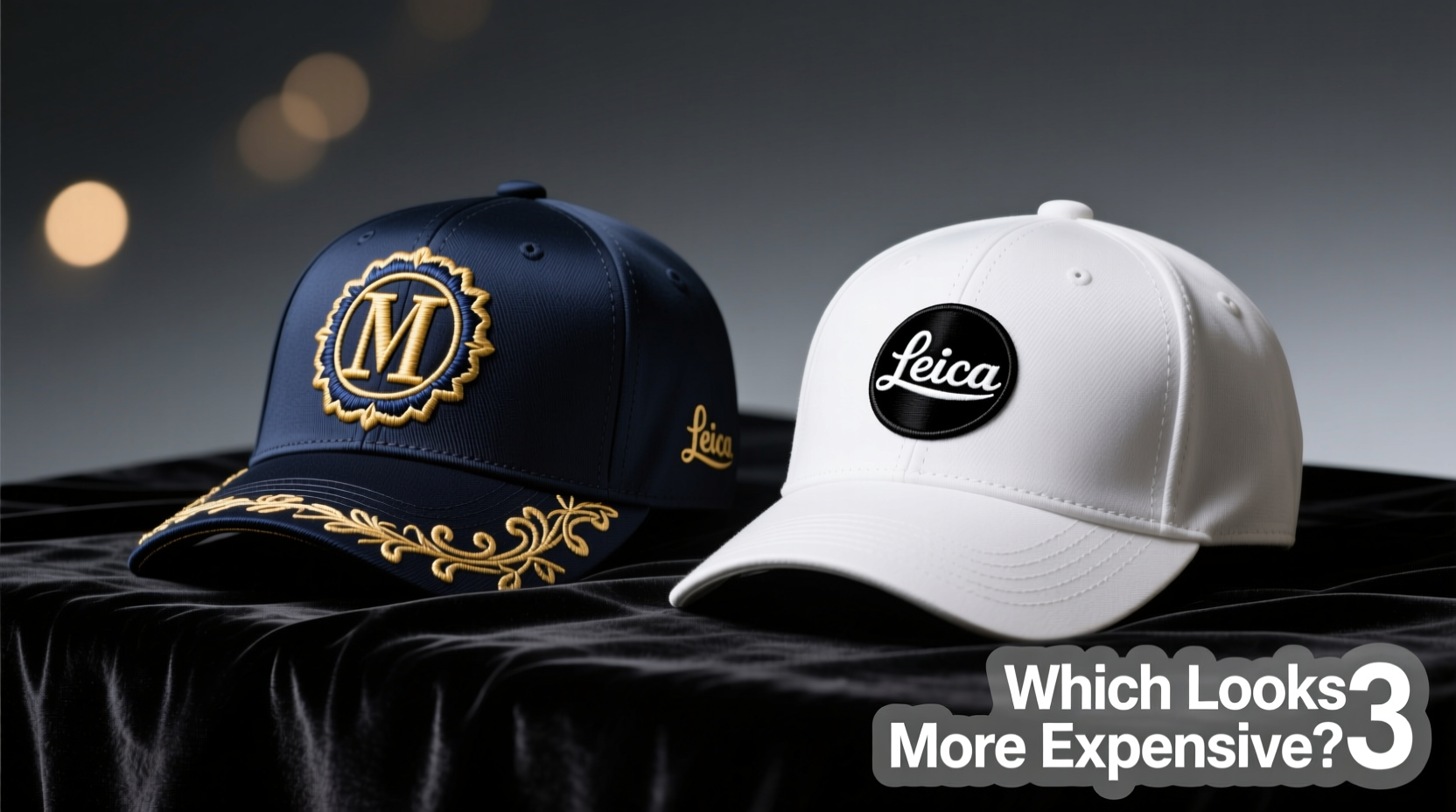
The way a logo is applied to a cap speaks volumes before a single word is said. Embroidery involves stitching thread directly into the fabric using automated machines guided by digital patterns. This process requires precise tension control, high-grade thread (often rayon or polyester), and multiple passes to build depth and texture. The result is a three-dimensional logo with weight, dimension, and durability.
In contrast, printed logos—whether screen-printed, heat-transferred, or digitally printed—are flat applications of ink onto the surface of the fabric. While modern printing techniques can produce sharp results, they lack physical presence. Over time, printed designs tend to crack, fade, or peel, especially after repeated washing or sun exposure.
“Luxury isn’t seen—it’s felt. A well-executed embroidery has tactile richness that print simply can’t replicate.” — Marcus Tran, Head of Design at Threadline Studio
This sensory difference influences perception. When someone touches an embroidered patch, they register effort, care, and investment. A printed logo, no matter how vibrant, feels transient—an overlay rather than an integral part of the design.
Visual Comparison: Embroidered vs Printed Logo Caps
| Feature | Embroidered Cap | Printed Logo Cap |
|---|---|---|
| Texture | Dimensional, raised stitching | Flat, smooth surface |
| Durability | High—resists fading and wear | Moderate to low—prone to cracking |
| Detail Precision | Limited by stitch count but crisp at close range | High for fine lines and gradients |
| Perceived Value | Consistently rated as higher-end | Often associated with mass-market goods |
| Production Cost | Higher due to labor and thread | Lower, scalable for bulk orders |
| Lifespan | 5+ years with proper care | 1–3 years depending on use |
While printing excels at reproducing complex graphics or photorealistic images, embroidery dominates when it comes to signaling longevity and refinement. High-end fashion labels—from Supreme to New Era collaborations with luxury houses—consistently opt for embroidery, even when minimalism is the goal.
Tip: Look for tight stitch density and clean edge finishes. Poorly executed embroidery with loose threads or uneven spacing can look worse than no logo at all.The Psychology of Perceived Luxury
Why does embroidery feel more expensive? It boils down to cognitive associations. Humans subconsciously link texture with value. Think of tailored suits, leather-bound books, or hand-stitched shoes—all premium items where touch reinforces worth.
A study conducted by the Journal of Consumer Research found that products with tactile complexity were perceived as 37% more valuable than visually identical but smooth-surfaced counterparts. In real-world testing, participants handed two otherwise identical caps—one with embroidery, one with a high-resolution print—rated the embroidered version as “more exclusive,” “better made,” and “worth paying extra for.”
Brands leverage this instinct deliberately. Nike’s limited-edition Golf Wang collaboration uses intricate multi-layer embroidery despite having access to cutting-edge printing tech. Similarly, Stüssy’s archival reissues emphasize vintage-style stitched logos over bold prints, reinforcing authenticity and heritage.
Real-World Example: The Streetwear Brand Pivot
Consider the case of UrbanPine, a mid-tier streetwear label that launched in 2019 with printed-logo caps priced at $28. Despite strong social media traction, customers frequently described the products as “fast fashion” or “department store quality.” Feedback repeatedly mentioned the “cheap feel” of the flat logos.
In 2022, the brand redesigned its entire headwear line, switching to custom embroidery with higher thread counts and curved back panels for better fit. Prices increased to $42, but sales rose by 63% within six months. More importantly, customer reviews shifted dramatically: phrases like “feels premium,” “stitching is insane,” and “looks way more expensive than it is” became common.
The change wasn’t just in production—it was in perception. By aligning with the craftsmanship cues of luxury brands, UrbanPine repositioned itself without altering its core identity.
How to Choose the Right Style for Your Needs
Not every situation calls for embroidery. Here’s a practical guide to help you decide based on purpose, budget, and image goals:
- For personal wear and long-term use: Always prioritize embroidery. It ages better, maintains resale value, and projects confidence in your style choices.
- For promotional giveaways or events: Printed logos make sense. Lower cost allows broader distribution, and short-term visibility outweighs durability concerns.
- For brand launches or premium positioning: Invest in embroidery, even if it means starting with fewer SKUs. First impressions matter, and a well-stitched logo sets a tone of seriousness and quality.
- For artistic or illustrative designs: Printing may be necessary if your logo includes gradients, shading, or photorealistic elements. However, consider combining both—use embroidery for the main mark and print for background accents.
Checklist: Evaluating Cap Quality Before Purchase
- ✅ Check the stitch count—tighter stitching = higher quality
- ✅ Run your finger over the logo—is it raised and smooth?
- ✅ Inspect the underside—excess thread or messy backing indicates poor execution
- ✅ Feel the crown fabric—is it structured and substantial, not flimsy?
- ✅ Look at the sweatband—is it breathable and reinforced?
- ✅ Flip the cap inside out—double-layered fabric suggests durability
Frequently Asked Questions
Does embroidery work on all cap materials?
Mostly yes, but best results come from cotton twill, wool, or structured synthetics. Very thin or stretchy fabrics may pucker during stitching unless stabilized properly.
Can a printed logo ever look luxurious?
Rarely—but advancements in foil stamping, puff printing, and hybrid techniques (like embroidering over printed underlays) are narrowing the gap. Still, these remain niche and often cost as much as traditional embroidery.
Why do some high-profile brands use printed logos then?
Sometimes for creative effect—think of graphic tees translated onto caps—or for limited runs where speed-to-market trumps longevity. But even these brands typically reserve embroidery for flagship products.
Final Verdict: Which Looks More Expensive?
The evidence is clear: **embroidered caps consistently appear more expensive** than their printed-logo counterparts. It’s not merely tradition or nostalgia—it’s rooted in material science, consumer psychology, and decades of brand behavior across fashion tiers. From minor details like thread sheen to major factors like structural integrity, embroidery communicates permanence and care in a way flat graphics cannot match.
That said, execution matters. A poorly stitched logo with loose ends or misaligned text will damage credibility faster than a clean, well-placed print. So while embroidery offers the strongest pathway to a premium look, it must be done right.
🚀 Ready to upgrade your headwear game? Start by replacing one printed cap with a well-made embroidered version. Notice the difference in feel, fit, and how others respond. Small changes send big signals.








