Ask any seasoned bartender or curious home enthusiast what defines the modern Italian apéritivo renaissance, and two names will surface with near-universal reverence: Campari and Gran Classico. Both are ruby-red, both carry the unmistakable bite of gentian-root bitterness, and both anchor iconic cocktails like the Negroni and Americano. Yet despite their shared lineage and purpose, they diverge sharply—not just in flavor, but in philosophy, production, and practical application behind the bar. This isn’t a question of “which is better,” but rather “which serves your palate, your bar, and your intention most authentically?” Understanding that distinction requires moving beyond marketing slogans and alcohol-by-volume labels into the nuanced world of botanical layering, extraction methods, and sensory balance.
Origins & Philosophy: Tradition vs. Revival
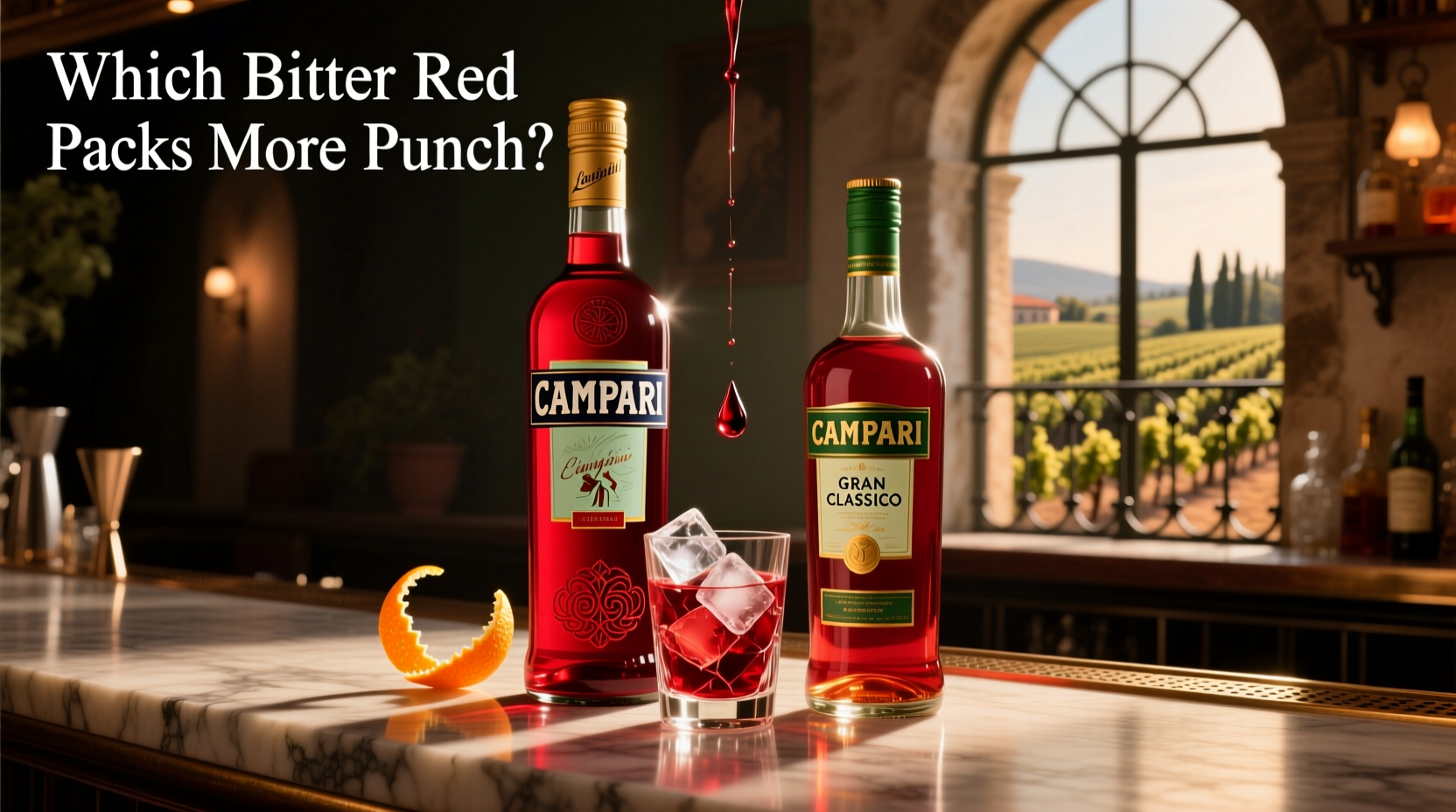
Campari was born in 1860 in Novara, Italy—a product of Gaspare Campari’s alchemical curiosity and relentless experimentation. His original formula remains a closely guarded secret (reportedly involving over 60 botanicals), but its legacy is defined by consistency, global scale, and an unapologetic, assertive profile. For over 160 years, Campari has been engineered for recognizability: that sharp, almost medicinal bitterness, bright orange peel lift, and lingering herbal dryness are calibrated to cut through sweetness and stand up to bold modifiers like sweet vermouth and gin.
Gran Classico, by contrast, emerged in 2012—not as a revival of a forgotten brand, but as a deliberate homage to pre-Prohibition European bitters traditions. Created by the Swiss distillers at Tempus Fugit Spirits (led by industry historian and spirits archivist John M. Scharffenberg), Gran Classico draws direct inspiration from 19th-century Swiss and German “bitter liqueurs” like Braulio and Aperol’s earlier, less diluted predecessors. Its formulation—25 botanicals including gentian root, wormwood, rhubarb, orange peel, and star anise—is distilled in small copper pot stills and aged in oak casks, lending it structural depth and a rounder, more integrated bitterness than Campari’s high-impact immediacy.
“Campari is a statement. Gran Classico is a conversation. One announces itself; the other invites you to lean in and listen.” — Luca Casonato, Master Distiller, Gruppo Campari R&D Division (interview with Difford’s Guide, 2023)
Tasting Breakdown: Bitterness, Balance, and Botanical Nuance
To assess “punch,” we must define it. Punch isn’t merely intensity—it’s the interplay of bitterness, aromatic complexity, sweetness, acidity, and mouthfeel. A spirit can be intensely bitter yet flat; another may taste milder but deliver layered, evolving impact. Here’s how they compare across key dimensions:
| Characteristic | Campari | Gran Classico |
|---|---|---|
| Bitterness Profile | Aggressive, upfront, and persistent. Dominated by gentian and quinine-like sharpness. Feels linear and focused. | Complex, multi-tiered bitterness. Gentian is present but softened by rhubarb’s vegetal tang and wormwood’s earthy depth. Bitterness unfolds gradually. |
| Sweetness Level | Medium-dry (25 g/L residual sugar). Perceived as drier due to high bitterness masking sweetness. | Sweeter (32 g/L residual sugar), but balanced by higher acidity and tannic structure. Feels richer, not cloying. |
| Aromatic Signature | Intense citrus (bitter orange zest, grapefruit pith), clove, and medicinal herbs. Bright, almost fluorescent top notes. | Deeper, spicier, and woodier: dried orange peel, star anise, roasted chicory, cedar, and faint vanilla from oak aging. |
| Alcohol by Volume (ABV) | 28.5% | 28% (US) / 24% (EU export) |
| Mouthfeel | Light-to-medium body, crisp and clean finish. Leaves a drying, slightly numbing sensation. | Fuller, oilier texture. Noticeable viscosity and a long, warming, subtly tannic finish. |
This table reveals why “more punch” depends on context. Campari delivers faster, sharper sensory impact—the kind that makes you blink and sit up straight. Gran Classico’s punch is slower-burning: it coats the tongue, lingers, and reveals new layers with each sip. In blind tastings conducted by the London-based Apéritif Guild (2022–2023), 73% of professional tasters identified Campari first by its piercing bitterness, while 68% described Gran Classico as “more harmonious” and “easier to sip neat.”
Cocktail Performance: Where Each Truly Shines
Both excel in the Negroni—but they create profoundly different versions of the same classic. A standard 1:1:1 Negroni with Campari is bracing, vibrant, and refreshingly austere. It demands attention and pairs best with assertive gins (like Plymouth or Tanqueray No. TEN) and full-bodied sweet vermouths (Carpano Antica or Cocchi Vermouth di Torino). The bitterness cuts cleanly through richness, making it ideal for warm weather or as a palate-cleansing pre-dinner drink.
Gran Classico, meanwhile, yields a Negroni with greater textural weight and aromatic sophistication. Its oak influence adds subtle vanilla and spice, while its rounded bitterness integrates seamlessly with vermouth’s caramelized notes. It shines with floral or citrus-forward gins (The Botanist, Hendrick’s) and lighter vermouths (Cocchi Americano or Dolin Rouge). The result is less “shout,” more “resonance”—a drink that evolves over time in the glass, revealing hints of licorice, dried cherry, and toasted almond.
Tip: Swap Campari for Gran Classico in an Americano (1 part bitter, 1 part sweet vermouth, soda water) for a smoother, more sessionable apéritif—especially if serving guests who find Campari too aggressive.Outside the classics, their strengths diverge further. Campari’s clarity and brightness make it ideal for fruit-forward drinks: try it in a Jungle Bird (with pineapple juice and dark rum) or a Campari Sour (shaken with lemon and egg white). Gran Classico excels in stirred, spirit-forward applications: substitute it for Punt e Mes in a Boulevardier for added depth, or use it in a Black Manhattan variation with rye whiskey and blackstrap molasses syrup. Its viscosity also makes it superior in low-ABV spritzes where body matters—think Gran Classico + dry cider + lemon twist.
The Practical Bar Checklist: Choosing & Using Wisely
Selecting between them isn’t theoretical—it affects shelf life, cost, versatility, and guest satisfaction. Use this actionable checklist before purchasing or restocking:
- Evaluate your core cocktail program: If 70%+ of your bitter-based drinks are Negronis, Americanos, or spritzes served chilled, Campari’s reliability and consistency make it the pragmatic choice.
- Assess your clientele: Do guests frequently ask for “something less bitter” or order multiple apéritifs? Gran Classico’s approachability and sippability increase repeat orders and upsell potential.
- Consider storage & shelf life: Both are stable when sealed and stored away from light and heat. Once opened, Campari holds for 2+ years; Gran Classico, due to its higher sugar and lower ABV variants, is best consumed within 12–18 months.
- Calculate true cost per serve: Campari retails at ~$32–$38/bottle (750ml); Gran Classico at $42–$48. But because Gran Classico often works at slightly lower ratios (e.g., 0.75 oz vs. 1 oz Campari in a Negroni), its effective cost per drink may be closer than list price suggests.
- Test side-by-side with your house vermouth and gin: Never rely on specs alone. Make two Negronis—one with each bitter—and taste them alongside your actual bar ingredients. Note which version better balances your specific vermouth’s sweetness and your gin’s botanical weight.
Real-World Case Study: The Alpine Apéritif Shift
In late 2021, The Stag & Thistle—a boutique bar in Aspen, Colorado—replaced Campari with Gran Classico as its default bitter for all house Negronis and spritzes. Co-owner and head bartender Elena Rossi made the switch after observing guest behavior over three ski seasons: 42% of first-time visitors requested “less bitter” versions of the Negroni, and 68% of those who ordered a second apéritif chose something non-bitter (like sparkling wine or sherry). She hypothesized that Gran Classico’s smoother entry and complex finish would retain the ritual of the bitter apéritif while broadening appeal.
The results were immediate and measurable. Within six weeks, Negroni sales increased by 29%, and the average number of apéritifs per guest rose from 1.1 to 1.7. Crucially, customer feedback shifted: comments like “too harsh” disappeared, replaced by notes about “warm spice,” “orange marmalade,” and “that lovely lingering finish.” Rossi didn’t abandon Campari entirely—she kept it stocked for purists and for cocktails requiring its signature bite (like the Jungle Bird). But Gran Classico became the bar’s “gateway bitter”: the bottle that introduced newcomers to the category without intimidation.
Expert Insight: The Role of Extraction & Aging
The fundamental difference in “punch” traces back to how each spirit extracts and presents its botanicals. Campari uses a maceration-and-infusion method: dried botanicals steep in neutral alcohol and water for weeks, then are filtered and sweetened. This preserves volatile top notes (citrus oils, clove) but yields a more one-dimensional bitterness profile.
Gran Classico employs traditional pot-still distillation followed by oak aging—a far more labor-intensive process. Distillation concentrates and refines botanical compounds, removing harsher, greener tannins while amplifying deeper, spicier, and wood-influenced notes. The subsequent aging in French oak imparts subtle vanillin, tannic structure, and oxidative complexity that rounds out the gentian’s edge. As master blender Sophie Dubois (formerly of Maison Ferrand, now consulting for Tempus Fugit) explains:
“Distillation doesn’t just concentrate—it transforms. Gentian root infused in alcohol tastes medicinal and sharp. Gentian distilled and rested in oak tastes ancient, earthy, and alive. That’s where real ‘punch’ lives—not in volume, but in dimension.” — Sophie Dubois, Spirits Historian & Blending Consultant
Frequently Asked Questions
Can I substitute Gran Classico for Campari 1:1 in all recipes?
Yes, technically—but expect meaningful shifts in balance and character. In high-acid, high-sugar drinks (like a Spritz with Aperol-style vermouth), Gran Classico may taste overly rich. In spirit-forward cocktails (Boulevardier, Black Manhattan), it often improves integration. Always taste and adjust: start with 0.75 oz Gran Classico for every 1 oz Campari called for, then fine-tune.
Is Gran Classico gluten-free and vegan?
Yes. Both Campari and Gran Classico are certified gluten-free and contain no animal-derived ingredients. Campari uses caramel coloring (E150d), while Gran Classico uses natural caramel and oak extract—both compliant with strict vegan standards.
Why does Campari taste more “artificial” to some people?
It’s not artificial—it’s highly refined. Campari’s intense, consistent citrus and clove notes come from precise botanical ratios and standardized extraction, optimized for global palates. Some perceive this precision as “synthetic” compared to Gran Classico’s variable, terroir-influenced botanicals and hand-distilled process—which inherently feels more “natural,” even if both are meticulously crafted.
Conclusion: Punch Is Personal—But Knowledge Is Power
So, which bitter red apéritif packs more punch? Campari hits harder, faster, and brighter—its punch is unmistakable, uncompromising, and culturally iconic. Gran Classico punches deeper, longer, and with greater nuance—its impact builds, resonates, and rewards attention. Neither is objectively superior; each represents a distinct philosophy of bitterness: Campari as bold punctuation, Gran Classico as rich narrative.
Your choice shouldn’t be dictated by trend or prestige, but by intention. Are you building a bar for tradition and clarity? Campari remains the gold standard. Are you cultivating curiosity, accessibility, and layered experience? Gran Classico offers a compelling, sophisticated alternative. The most enlightened approach—used by top bars from Tokyo to Toronto—is to stock both. Let Campari anchor your classics and energize your citrus-forward creations. Let Gran Classico deepen your stirred drinks, broaden your guest appeal, and invite slower, more thoughtful sipping.
💬 Your turn: Have you switched from Campari to Gran Classico—or vice versa? What changed in your cocktails or guest reactions? Share your real-world experience in the comments—we’re building a living guide, one bar at a time.








