For outdoor enthusiasts, staying connected—even while off-grid—often means relying on portable power. Solar-powered chargers have gained popularity as a sustainable, lightweight option for charging devices during camping trips. But despite their eco-friendly appeal, many campers remain skeptical: are they truly reliable, or do they fall short when sunlight is limited, weather turns bad, or your phone battery drops at the worst possible moment?
The answer isn’t a simple yes or no. Solar chargers can be dependable tools in the right conditions, but their effectiveness hinges on several factors including technology, environment, device compatibility, and user expectations. This article dives into real-world performance, compares them with traditional alternatives, and provides practical guidance for choosing and using solar chargers effectively in the wild.
How Solar Chargers Work in Outdoor Conditions
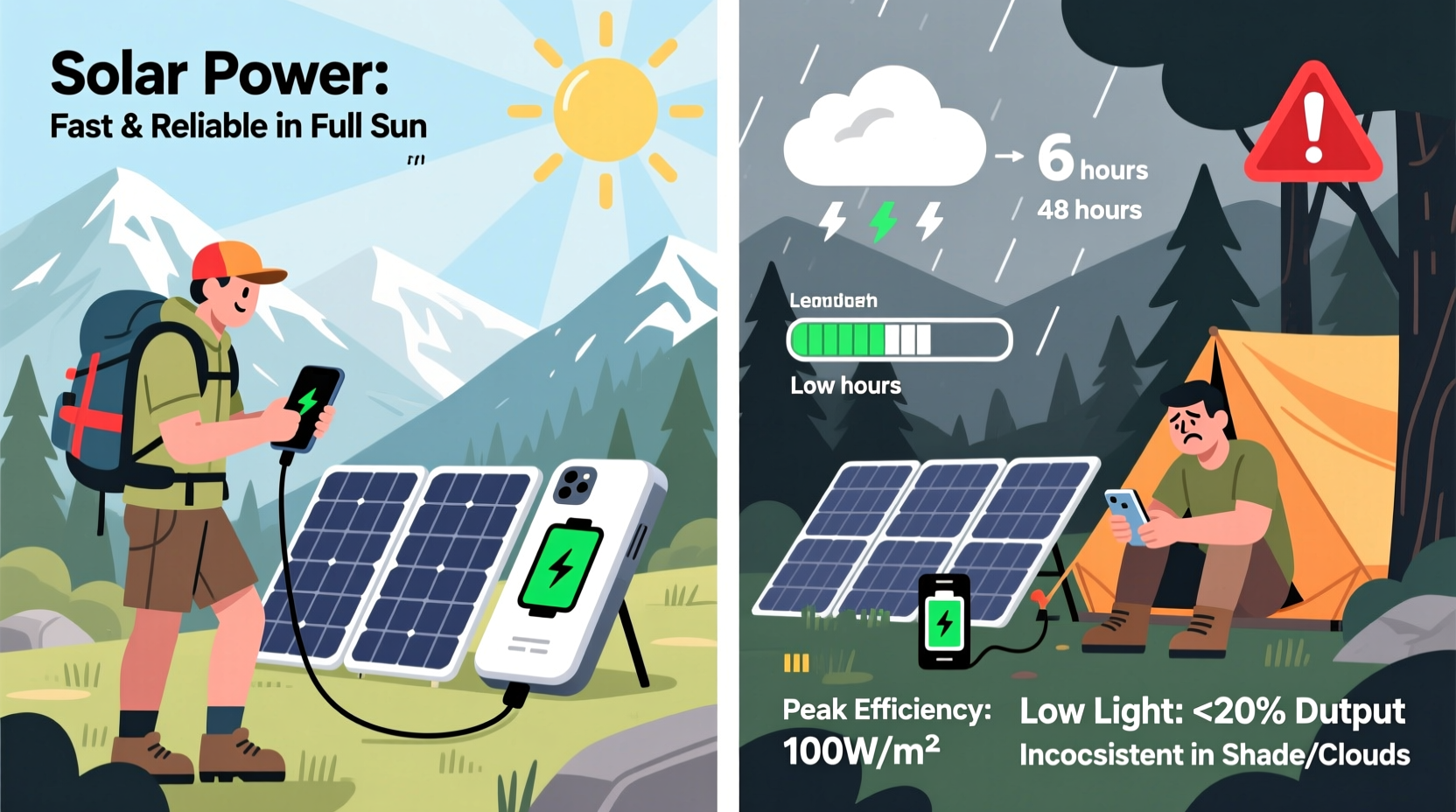
Solar chargers convert sunlight into electrical energy using photovoltaic (PV) cells. Most portable models use monocrystalline or polycrystalline silicon panels, which differ in efficiency and durability. Monocrystalline panels are generally more efficient, especially in low-light conditions, making them better suited for mountainous regions or cloudy days.
These chargers typically output power via USB ports, allowing direct connection to smartphones, GPS units, headlamps, or external battery packs. Some models include built-in batteries to store energy for later use—a critical feature when sun exposure is intermittent.
However, real-world charging speed depends heavily on environmental variables:
- Sun intensity: Direct midday sun yields maximum output; early morning or late afternoon light reduces efficiency significantly.
- Angle and orientation: Panels must face the sun directly. Tilting or shading—even partial—can cut power generation by 50% or more.
- Weather: Cloud cover, rain, or snow drastically reduce output. Overcast skies may deliver only 10–25% of rated wattage.
- Temperature: While solar panels need sunlight, not heat, extreme temperatures (especially above 35°C/95°F) can reduce efficiency.
Performance: Speed vs. Reliability Compared to Alternatives
To assess reliability, it’s useful to compare solar chargers against common alternatives: power banks and hand-crank generators.
| Power Source | Charging Speed | Consistency | Weight & Portability | Environmental Dependence |
|---|---|---|---|---|
| Solar Charger (5W–10W) | Slow to moderate (3–6 hrs for phone) | Variable (sunlight-dependent) | Lightweight, foldable options available | High (needs sunlight) |
| Power Bank (10,000mAh) | Fast (under 2 hrs for phone) | High (consistent output) | Moderate (adds weight) | None (pre-charged) |
| Hand-Crank Generator | Very slow (minutes of cranking per % charge) | Low (user fatigue) | Heavy, bulky | None |
As shown, solar chargers lag behind power banks in speed and consistency but offer indefinite recharging potential if sunlight is available. They’re ideal for extended trips where resupply isn’t possible. Power banks, while faster, eventually deplete and require pre-trip charging—making them less sustainable over multi-week expeditions.
“Solar isn’t about instant gratification—it’s about energy resilience. In remote environments, a slow trickle of power beats no power at all.” — Dr. Lena Patel, Renewable Energy Researcher at Mountain Tech Institute
Real-World Example: A 7-Day Backpacking Trip in the Rockies
Consider Sarah, an experienced hiker embarking on a week-long trek through Colorado’s Maroon Bells-Snowmass Wilderness. She carries a 10W foldable solar charger with a built-in 10,000mAh battery, a smartphone for navigation, a headlamp, and a GPS tracker.
Day 1–2: Clear skies. She sets up the panel near her tent each morning. By noon, the internal battery is fully charged, and she tops off her phone during lunch breaks. No issues.
Day 3: Thunderstorms roll in. She packs the panel away for safety. No solar input, but the stored energy in the charger keeps her GPS running.
Day 4–5: Partial cloud cover. Charging slows, but placing the panel on a south-facing rock during breaks generates enough power to maintain her devices at 40–60% throughout the day.
Day 6–7: Return trail under mixed conditions. She uses the remaining stored charge to send a check-in message via satellite messenger.
Verdict: The solar charger wasn’t fast, but it provided consistent baseline power across diverse conditions. Without it, she would have risked device failure on Day 4.
Choosing a Reliable Solar Charger: What to Look For
Not all solar chargers are created equal. To avoid disappointment in the field, focus on these key features:
- Wattage (5W minimum): A 10W panel charges most phones in 3–5 hours under ideal sun. Below 5W, expect very slow results.
- Built-in battery: Models with integrated power banks allow energy storage, decoupling charging from sunlight availability.
- Weather resistance: Look for IPX4 or higher rating to withstand splashes and light rain.
- Durability: Ripstop fabric, reinforced corners, and sturdy connectors prevent damage from wind or rough handling.
- USB output specs: Dual USB ports with 2.4A total output ensure faster charging for tablets or multiple devices.
- Foldable, compact design: Essential for backpackers who need to save space and weight.
Best Practices for Maximizing Solar Efficiency While Camping
Even the best solar charger underperforms without proper use. Follow this step-by-step guide to get the most out of yours:
- Pre-charge before departure: Ensure any internal battery is full before hitting the trail.
- Position strategically: During daylight hours, place the panel where it receives unobstructed sunlight—on a rock, tent pole, or backpack (if moving slowly).
- Avoid shade: Even tree dapples or your own shadow can reduce output dramatically.
- Angle for optimal exposure: Adjust the panel angle every few hours if stationary. A 30–45° tilt toward the sun works best in mid-latitudes.
- Use a power bank buffer: Instead of charging devices directly, charge a high-capacity power bank during the day, then use that to charge gadgets at night.
- Clean the surface: Wipe dust or snow off the panel with a soft cloth to maintain efficiency.
- Monitor weather forecasts: Plan charging windows around expected sunny periods.
Common Misconceptions About Solar Chargers
Several myths persist about solar charging in outdoor settings:
- Myth: “Solar chargers work like wall outlets.”
Reality: They generate power gradually. Expect 50–70% less output than advertised due to real-world inefficiencies. - Myth: “They work fine on cloudy days.”
Reality: Heavy clouds reduce output to 10–20%. Light overcast may allow 30–50%, but don’t rely on it. - Myth: “Any USB device will charge at full speed.”
Reality: Many solar panels lack sufficient current (measured in amps) to fast-charge modern smartphones or tablets. - Myth: “More panels = more power.”
Reality: If not properly wired or regulated, extra panels can cause voltage spikes or inefficient distribution.
When Solar Chargers Fall Short—and What to Do Instead
Solar isn’t a one-size-fits-all solution. It struggles in:
- Dense forests with limited canopy penetration
- Winter camping with short daylight hours
- High-latitude regions during fall/winter
- Emergency situations requiring immediate power
In these cases, consider hybrid strategies:
- Solar + power bank combo: Use solar to recharge a large-capacity battery pack during the day.
- Hybrid generators: Some models combine solar with hand-crank or USB charging inputs for redundancy.
- Portable lithium stations: Devices like the Anker 500 or Jackery 500 offer high-capacity storage and can be recharged via car, wall, or solar—but add significant weight.
Checklist: Is a Solar Charger Right for Your Next Trip?
Before purchasing or packing a solar charger, ask yourself:
- ✅ Will I be off-grid for more than 3 days?
- ✅ Am I traveling in an area with predictable sunlight?
- ✅ Do I need to charge more than just a phone (e.g., GPS, camera, radio)?
- ✅ Can I afford some weight and bulk for long-term energy security?
- ✅ Am I prepared to manage charging proactively (positioning, timing, etc.)?
If you answered “yes” to most, a solar charger is likely a smart addition. If you're on a short weekend trip with access to car charging, a simple power bank may suffice.
FAQ
Can I charge my phone directly from a solar panel?
Yes, but only if the panel has a stable USB output and sufficient wattage (at least 5W). Charging will be slower than a wall outlet and may pause if clouds pass overhead. Using a power bank as an intermediary is more reliable.
How long does it take to charge a phone with a 10W solar panel?
Under direct, unobstructed sunlight, a 10W panel typically charges a standard smartphone (3,000–4,000mAh) in 3 to 5 hours. Real-world conditions often extend this to 5–8 hours due to movement, shadows, or suboptimal angles.
Do solar chargers work in winter?
They can, but with limitations. Shorter days, lower sun angles, and frequent cloud cover reduce output. Snow cover on the panel blocks charging entirely. However, cold temperatures improve panel efficiency—so if the panel is kept clear and angled correctly, winter solar charging is feasible, albeit slower.
Conclusion: Rethinking Reliability in the Wild
Solar-powered chargers aren’t magic devices that guarantee full batteries regardless of conditions. They are tools of endurance, not speed. Their value lies not in how quickly they charge, but in their ability to provide incremental, renewable power over time—especially on long trips where other options run dry.
Calling them “inconsistent” overlooks their role in a broader energy strategy. Paired with a quality power bank and used with intention, solar chargers become a dependable part of a resilient off-grid setup. They won’t replace conventional charging methods for everyone, but for those willing to adapt their habits and expectations, they offer a sustainable lifeline in the backcountry.
🚀 Ready to go solar on your next adventure? Start by testing your charger in your backyard under different light conditions. Learn its limits before trusting it in the wild. Share your experiences or questions below—your insights could help fellow campers make smarter choices.








