
Few beauty tools have captured public attention quite like the facial roller. From jade to rose quartz, these sleek stones have become staples on bathroom counters and social media feeds alike. But behind the glossy photos and influencer endorsements lies a pressing question: Are facial rollers actually beneficial for your skin, or are they merely decorative props designed for aesthetic appeal?
The answer isn’t as simple as “yes” or “no.” While facial rollers won’t replace medical-grade skincare treatments or reverse deep wrinkles, they can offer tangible short-term benefits when used correctly. The key is understanding what they can—and cannot—do, separating evidence-based outcomes from viral trends.
The Rise of the Facial Roller: From Tradition to Trend
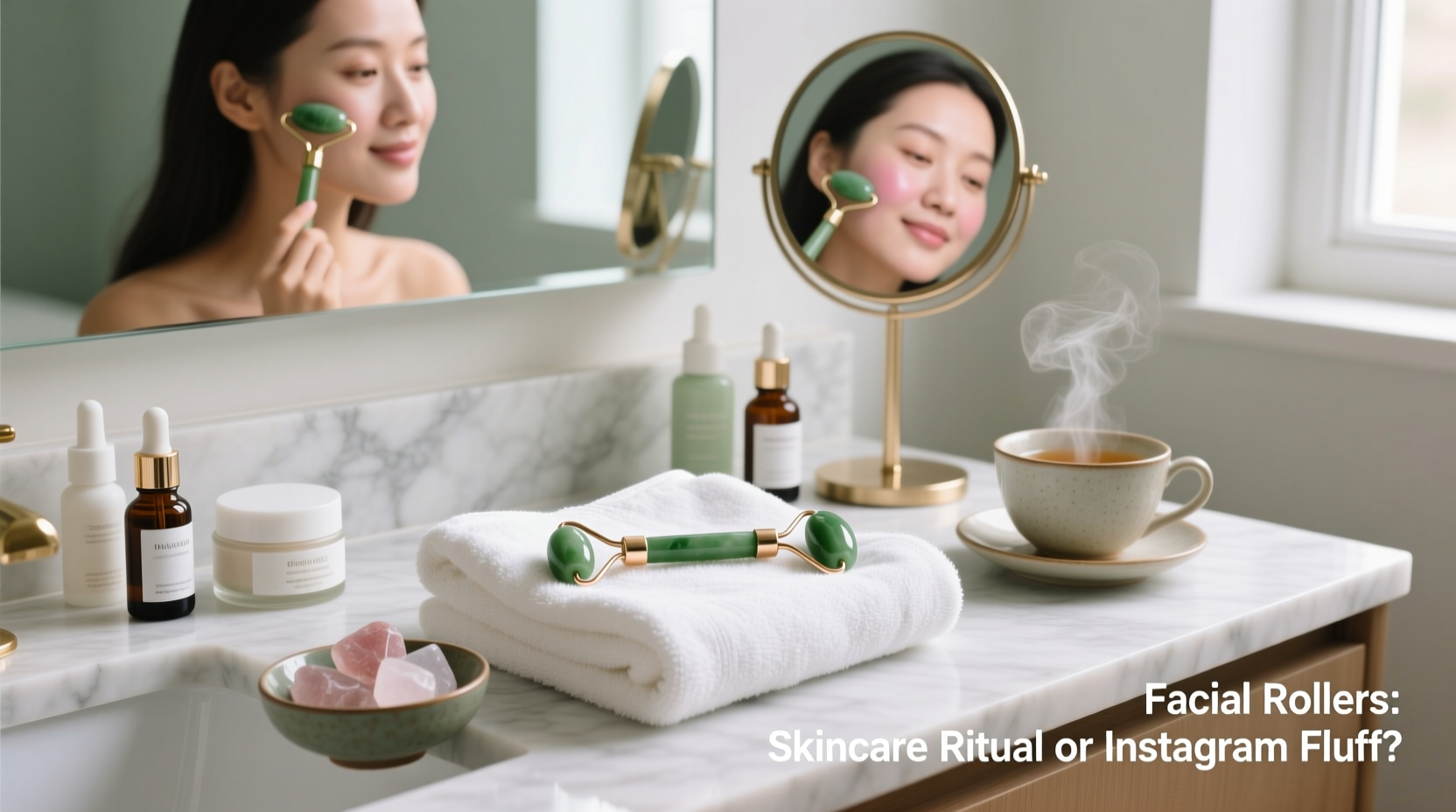
Facial rolling has roots in traditional Chinese medicine, where practitioners used smooth stones to stimulate energy flow and promote circulation. The modern version—typically a handheld tool with one large and one small roller—emerged in the West as part of the broader wellness movement. By the mid-2010s, influencers began showcasing their nightly rituals with glowing skin and calming ASMR-like rolling sounds, turning the once-niche tool into a global sensation.
Today, facial rollers come in various materials—jade, rose quartz, amethyst, stainless steel, even cryo versions—each marketed with unique claims. Jade is said to balance energy; rose quartz promotes self-love; metal rollers offer cooling effects. But does the material matter, or is it all branding?
“Facial massage tools have legitimate physiological effects, but expectations must be realistic. They’re adjuncts, not miracles.” — Dr. Lena Patel, Board-Certified Dermatologist
What Science Says About Facial Rolling
There is limited peer-reviewed research specifically on facial rollers, but studies on facial massage and lymphatic drainage provide insight. A 2019 study published in *Clinical, Cosmetic and Investigational Dermatology* found that regular facial massage improved microcirculation and skin elasticity over time. Another study noted temporary reductions in puffiness after manual lymphatic drainage techniques—similar to those used with rollers.
The mechanical action of rolling applies gentle pressure along the face’s lymphatic pathways, primarily around the jawline, cheeks, and under the eyes. This may encourage fluid movement away from tissues, reducing morning puffiness. Additionally, increased blood flow delivers more oxygen and nutrients to the skin, potentially enhancing radiance.
However, no study has shown that facial rollers reduce acne, eliminate fine lines, or tighten sagging skin long-term. Any lifting effect is temporary, much like how massaging a swollen ankle reduces swelling briefly—it doesn’t heal the injury.
Tip: For maximum de-puffing benefit, store your roller in the refrigerator overnight. The cold temperature enhances vasoconstriction and soothes inflammation.Real Benefits vs. Marketing Hype
It's important to distinguish between measurable outcomes and aspirational promises. Below is a breakdown of what facial rollers can realistically achieve versus what remains unproven.
| Claim | Supported by Evidence? | Notes |
|---|---|---|
| Reduces facial puffiness | ✅ Yes (temporary) | Especially effective in the morning or after salty meals |
| Improves product absorption | 🟡 Partially | Rubbing any tool can help press serums into skin, but no data shows rollers outperform fingers |
| Enhances glow/radiance | ✅ Yes (short-term) | Due to increased blood flow, similar to post-exercise flush |
| Lifts sagging skin | ❌ No | No structural change occurs; any tightness fades within hours |
| Reduces wrinkles | ❌ No | Collagen production requires deeper stimulation than surface rolling |
| Promotes relaxation/stress relief | ✅ Yes | Gentle facial massage activates parasympathetic nervous system |
As the table shows, the most consistent benefits are cosmetic and transient. That doesn’t mean they’re worthless—many people enjoy the ritualistic aspect of using a facial roller, which can improve consistency in skincare routines and contribute to mental well-being.
How to Use a Facial Roller Effectively
If you choose to incorporate a facial roller into your routine, technique matters more than the tool itself. Improper use can lead to irritation or ineffective results. Follow this step-by-step guide for optimal outcomes.
- Cleanse first: Always start with a clean face to avoid pushing dirt into pores.
- Apply a serum or oil: Use a slip-friendly product to prevent tugging. Hyaluronic acid serums or facial oils work best.
- Begin at the center of the face: Start with the forehead, rolling outward toward the temples.
- Move downward: Roll from the nose to the ears, then from the chin along the jawline.
- Use upward motions on cheeks: Glide from the corners of the mouth up toward the cheekbones.
- Spend extra time under the eyes: Use the smaller end gently in tapping or sweeping motions—never press hard.
- Finish at lymph nodes: End each stroke near the ears and neck, where lymphatic drainage occurs.
- Limit sessions to 3–5 minutes: Overuse can cause redness or sensitivity.
- Clean the roller weekly: Wipe with a soft cloth and mild soap to prevent bacterial buildup.
Material Comparison: Does It Matter?
While aesthetics play a big role in choosing a roller, some materials offer functional differences:
- Jade: Naturally cool to the touch, lightweight, believed to have balancing properties (though scientifically unproven).
- Rose Quartz: Denser and heavier than jade, retains coolness longer, popular for its emotional symbolism.
- Stainless Steel: Offers stronger cooling effect, often used in professional settings, easier to sanitize.
- Cryo Rollers: Designed to be refrigerated, maximize depuffing through extreme cold.
In practice, the physical effect depends more on technique and temperature than mineral composition. However, users often report greater satisfaction with heavier stones like rose quartz due to enhanced sensory feedback.
Mini Case Study: Real User Experience
Sophia, a 34-year-old marketing executive from Portland, struggled with chronic under-eye puffiness exacerbated by stress and irregular sleep. After seeing facial rollers featured in a wellness podcast, she purchased a rose quartz model and committed to using it every morning for two weeks.
She followed proper technique: applying eye cream first, rolling gently from inner to outer corners, finishing at the temples. Within five days, she noticed her morning puffiness was visibly reduced. Her coworkers commented that she looked “more rested,” even on nights when she’d slept poorly.
“I didn’t expect dramatic changes,” Sophia said. “But it’s become part of my wake-up ritual. It only takes two minutes, and I feel more awake—not just because of the skin effect, but because it forces me to slow down.”
After six months, Sophia still uses the roller daily. She hasn’t seen improvements in fine lines or firmness, but values the consistency it brings to her skincare and the subtle de-puffing benefit. She now recommends it to friends with similar concerns about morning swelling.
Common Mistakes to Avoid
Even with the right tool, poor habits can diminish results or harm the skin. Watch out for these pitfalls:
- Rolling too hard: Excessive pressure can damage capillaries, leading to broken veins or bruising.
- Using on irritated skin: Avoid rolling over rosacea flare-ups, eczema patches, or open blemishes.
- Skipping cleansing: Rolling over dirty skin spreads debris and increases clogged pores.
- Expecting anti-aging miracles: No amount of rolling will replace retinoids, sunscreen, or professional treatments.
- Not cleaning the tool: Bacteria accumulation can trigger breakouts, especially if shared or stored improperly.
Expert Tips Checklist
To get the most out of your facial roller, follow this actionable checklist:
- ✅ Cleanse your face before rolling
- Prevents transferring oils and bacteria.
- ✅ Use a glide-friendly product
- Apply serum, oil, or moisturizer first.
- ✅ Apply light pressure
- Let the weight of the roller do the work.
- ✅ Roll in upward and outward motions
- Follow lymphatic flow paths.
- ✅ Store in the fridge for added cooling
- Enhances de-puffing, especially in the morning.
- ✅ Clean the roller weekly
- Wipe with soapy water and dry thoroughly.
- ✅ Be consistent—but patient
- Use 3–7 times per week for cumulative effects.
Frequently Asked Questions
Can facial rollers really contour your face?
No. There is no scientific basis for permanent facial reshaping through rolling. Temporary reduction in puffiness may create the illusion of sharper contours, but bone structure and fat distribution remain unchanged.
How often should I use a facial roller?
Daily use is safe for most skin types, particularly in the morning to reduce puffiness or at night to enhance relaxation. Limit sessions to 3–5 minutes to avoid overstimulation.
Are expensive rollers worth the price?
Not necessarily. While high-end stones like natural jade or rose quartz feel luxurious, affordable alternatives made from synthetic materials or stainless steel can deliver similar functional benefits. Focus on ergonomics and ease of cleaning rather than brand prestige.
Conclusion: Worth It or Not?
Facial rollers sit at the intersection of tradition, science, and social media culture. They are not miracle workers, nor are they entirely frivolous. When used with realistic expectations, they can provide meaningful short-term benefits: reducing puffiness, boosting circulation, and enhancing the sensory experience of skincare.
Their true value often lies beyond the physical. In a world of fast-paced living, taking three minutes to gently massage your face can be an act of mindfulness—a small pause that reconnects you with your body and routine. That psychological benefit, combined with visible but temporary improvements, makes facial rollers a worthwhile addition for many, even if they don’t belong in the same category as clinically proven treatments.
If you're considering one, go in with clarity: you’re investing in a supportive tool, not a solution. Pair it with sunscreen, hydration, and proven ingredients like vitamin C and retinol for actual long-term results. And if you enjoy the ritual? That alone might be reason enough.
🚀 Ready to try it mindfully? Pick a roller, learn the technique, and track how it fits into your routine for two weeks. Share your honest experience—was it worth it for you?








