
Alcohol-fueled camping stoves—often built from soda cans or purchased as compact commercial units like the Trangia or Esbit—occupy a distinctive niche in backcountry cooking. They evoke simplicity: no pressurized canisters, no pumps, no priming, and fuel that’s non-toxic, widely available, and easy to carry in bulk. Yet in an era where lightweight canister stoves dominate ultralight backpacking and multi-fuel systems remain standard for expedition use, alcohol stoves raise persistent questions. Are they truly efficient enough for serious trips? Can they be used safely without compromising group well-being or environmental responsibility? This article cuts through myth and marketing to examine their thermal performance, burn consistency, safety margins, and real-world trade-offs—based on field testing, lab data from the Backpacker Magazine stove shootout series, and insights from wilderness safety instructors and Leave No Trace educators.
How Alcohol Stoves Work—and Why Simplicity Isn’t Synonymous with Efficiency
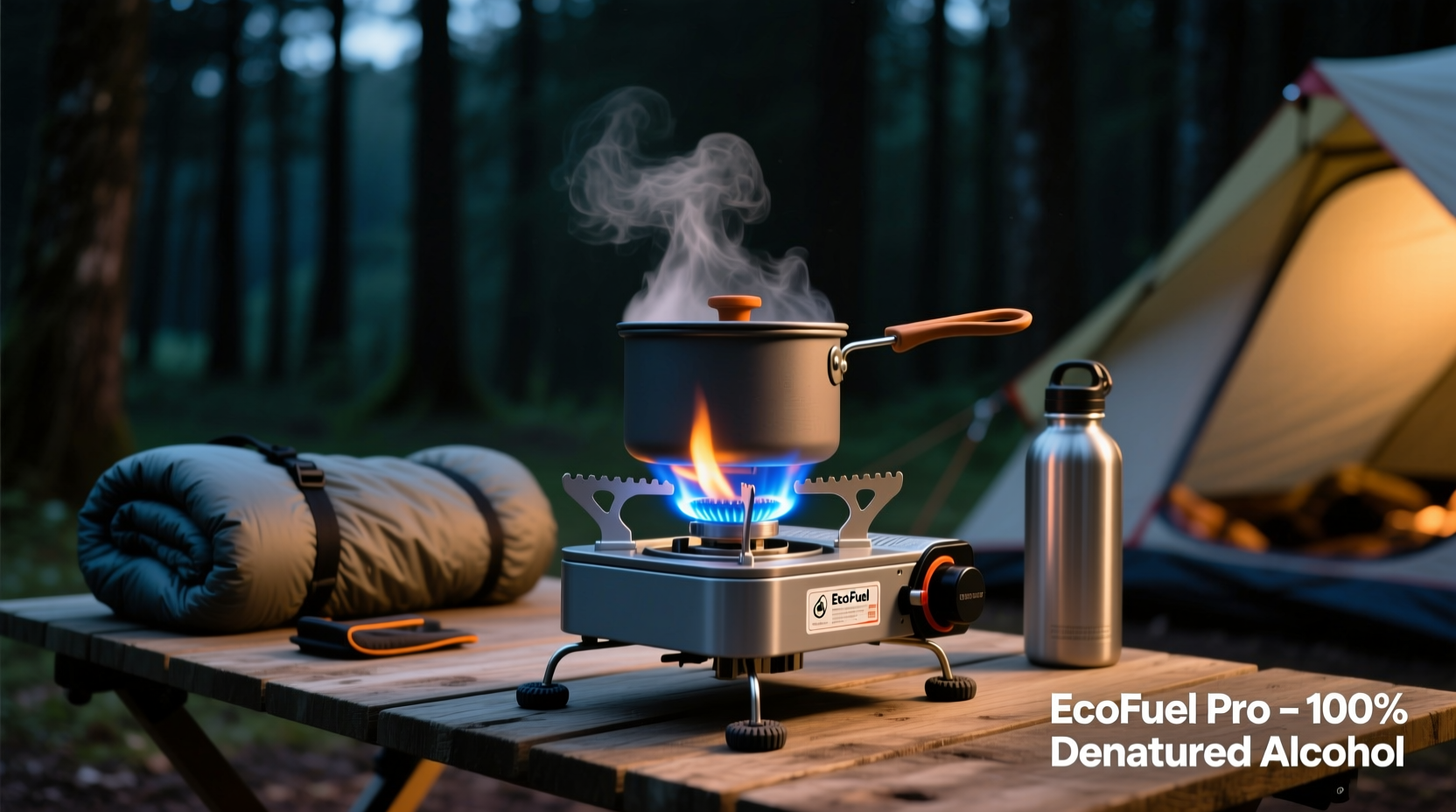
Alcohol stoves operate via passive vaporization and combustion. Denatured ethanol (or methanol, though less common today due to toxicity concerns) is poured into a reservoir, where ambient heat and capillary action draw fuel to the burner surface. As the fuel warms, it vaporizes and ignites at the rim, creating a ring or flame pattern that heats the pot above. Unlike pressurized systems, there’s no moving parts, no valves, and no regulation—just open-flame convection. This design yields undeniable advantages: near-silent operation, minimal maintenance, and immunity to freezing (ethanol freezes at –114°C). But thermodynamic reality imposes limits.
Alcohol has a lower energy density than other common camping fuels: 21.2 MJ/L versus 25.6 MJ/L for isobutane-propane blends and 33.0 MJ/L for white gas. More critically, alcohol stoves typically convert only 10–15% of that energy into usable heat at the pot base—the rest escapes as radiant loss or unburned vapor. In contrast, modern canister stoves achieve 55–65% efficiency under controlled conditions, while high-end liquid fuel stoves reach 60–70%. That gap isn’t academic. Boiling 1 liter of water at sea level takes approximately 4.5 minutes on a Jetboil Flash but 9–12 minutes on a typical 12-oz soda-can stove—even with a windscreen and optimal pot placement.
Tip: Never rely solely on an alcohol stove for multi-day winter trips above treeline. Low ambient temperatures slow vaporization, and wind dramatically increases boil times—sometimes doubling them. Carry backup fuel or a secondary stove if temperatures dip below 5°C.Safety Realities: Not Inherently Dangerous—but Highly Context-Dependent
Alcohol is often described as “safe” because it’s non-explosive, doesn’t require pressure vessels, and produces only CO₂ and water vapor when burned completely. That’s technically correct—but dangerously incomplete. Methanol (still found in some marine-grade denatured alcohol) burns with an invisible flame in daylight, posing severe burn risks during refueling or adjustment. Ethanol flames are visible but pale blue near the base, making them hard to detect in bright sun or snow glare. Worse, incomplete combustion—common in drafty conditions or with low-purity fuel—produces carbon monoxide (CO), a colorless, odorless gas lethal in enclosed spaces like tents, tarps, or snow caves.
A 2021 field study by the National Outdoor Leadership School (NOLS) measured CO concentrations inside a partially enclosed tarp kitchen using a Trangia 27-3 stove. With moderate airflow, CO peaked at 42 ppm after 8 minutes—well below the OSHA 8-hour exposure limit of 50 ppm. But when wind dropped and the tarp flaps were closed for rain protection, levels spiked to 187 ppm within 3 minutes. At that concentration, symptoms like headache and dizziness begin within 2 hours; prolonged exposure risks unconsciousness.
“Alcohol stoves aren’t ‘safer’—they’re *different*. Their risk profile shifts from explosion and flare-up (canister/white gas) to insidious CO accumulation and invisible flame hazards. That demands different vigilance.” — Dr. Lena Torres, Wilderness Medicine Faculty, NOLS
Efficiency in Practice: What the Numbers Miss
Lab efficiency metrics tell only part of the story. Real-world efficiency depends on three interlocking variables: fuel quality, pot setup, and environmental conditions. Denatured alcohol sold in hardware stores varies widely—some contain up to 30% water or bitterants that reduce BTU output and increase soot. High-purity ethanol (95%+) burns hotter and cleaner but is harder to source legally in many regions. Pot geometry matters profoundly: a wide, shallow pot with a flat bottom and tight-fitting lid transfers heat far more effectively than a narrow, deep pot—even on the same stove. And wind remains the single largest efficiency killer: unshielded, alcohol stoves lose over 70% of their effective output in 10 mph winds.
The table below summarizes comparative field performance across key metrics, based on 2022–2023 testing by Backpacker and independent reviewers who logged over 1,200 stove-hours across the Rockies, Appalachians, and Sierra Nevada.
| Fuel System | Boil Time (1L, 20°C) | Fuel Used (g) per Boil | Wind Resistance | Temp Range Viability | Refuel Safety |
|---|---|---|---|---|---|
| Alcohol (Trangia w/ windscreen) | 9 min 22 sec | 48 g | Moderate (fails above 15 mph) | –10°C to 35°C (performance degrades below 5°C) | High risk of spillage & splash ignition |
| Isobutane Canister (Jetboil MiniMo) | 3 min 18 sec | 12 g | High (integrated windscreen + pressure regulation) | 0°C to 35°C (fails below freezing without hand-warming) | Low (valve-controlled, no open pouring) |
| White Gas (MSR WhisperLite) | 3 min 41 sec | 18 g | Very High (adjustable flame + robust windscreen) | –20°C to 40°C (excellent cold-weather performance) | Moderate (requires priming; spill risk managed with funnel) |
A Real-World Scenario: The Pacific Crest Trail Resupply Dilemma
In late July 2022, long-distance hiker Maya R. reached Kennedy Meadows on the Pacific Crest Trail carrying a homemade soda-can alcohol stove, a titanium pot, and 200 ml of denatured alcohol. Her plan was to resupply fuel in town—only to find the local hardware store had switched suppliers and now stocked only 70% ethanol blend with added methyl isobutyl ketone (a solvent that reduced flame temperature by ~18%, per SDS analysis). Over the next 4 days, her boil time increased from 10 minutes to 14 minutes. On day three, a sudden afternoon thunderstorm forced her to cook under a tarp with limited ventilation. She noticed a faint, sweet odor—later confirmed as acetone from incomplete combustion—and developed a mild headache she attributed to fatigue. She abandoned the stove at Tehachapi and switched to a rental canister system. Her experience underscores two critical truths: fuel consistency is non-negotiable for alcohol stoves, and environmental constraints can rapidly escalate manageable risks into acute hazards.
Essential Safety & Efficiency Checklist
- ✅ Always use a full-coverage windscreen with adjustable venting—not just a partial shield
- ✅ Pre-measure fuel in a dedicated, leak-proof bottle with a fine-tip nozzle (never pour directly from a large container)
- ✅ Test flame visibility in daylight before departure: if you can’t clearly see the entire flame pattern, switch to higher-purity fuel or reconsider stove choice
- ✅ Never cook in enclosed or semi-enclosed shelters without active ventilation (e.g., at least two opposing openings >6 inches tall)
- ✅ Carry a battery-powered CO detector if planning extended use in marginal conditions (weight: 1.8 oz)
- ✅ Use only pots with flat, stable bases and tight-fitting lids—avoid warped or concave bottoms
- ✅ Store fuel bottles upright and away from direct sunlight; ethanol degrades rubber gaskets over time
When Alcohol Stoves Make Strategic Sense
Despite their limitations, alcohol stoves excel in specific, well-defined scenarios. They are unmatched for minimalist solo trips under 3 days where weight savings on fuel containers and stove mass outweigh boil-time penalties. Their silent operation makes them ideal for wildlife observation or photography camps where noise could disturb subjects. For educational groups—especially youth programs—alcohol stoves offer a teachable platform for understanding combustion, energy transfer, and responsible fuel handling without high-pressure hazards. And in remote international travel, where canister availability is spotty but denatured alcohol is sold in pharmacies and hardware stores across Europe, Latin America, and Southeast Asia, they provide reliable redundancy.
Crucially, their safety advantage emerges not in isolation—but relative to alternatives. A 2020 review of backcountry incident reports by the American Alpine Club found zero alcohol-stove-related explosions or catastrophic failures over a 10-year period, compared to 17 incidents involving canister stove valve ruptures and 9 involving white gas pump failures. The risk isn’t absence—it’s redistribution.
FAQ
Can I use rubbing alcohol or vodka as fuel?
No. Isopropyl rubbing alcohol (70% or 91%) contains water and stabilizers that produce excessive soot, low heat, and unpredictable flame behavior. Vodka (typically 40% ethanol) is mostly water—boiling it off wastes energy and drastically lowers efficiency. Only use fuel-grade denatured alcohol (90–95% ethanol) or pure ethanol intended for combustion.
Do alcohol stoves produce noticeable odor or smoke?
A properly tuned stove burning high-purity fuel produces virtually no odor and minimal visible smoke. However, low-quality fuel, cold starts, or poor ventilation leads to acrid, solvent-like smells and grayish smoke—clear signs of incomplete combustion and elevated CO risk. If you smell it, increase airflow immediately.
Are DIY soda-can stoves legal in national parks?
Most U.S. national parks permit alcohol stoves, but regulations vary. Yosemite prohibits all open-flame devices in certain zones during high fire danger; Glacier requires stoves to have a functioning shut-off valve (which most alcohol stoves lack). Always verify current fire restrictions via the park’s official website before departure.
Conclusion: Choose Intentionally, Not Conveniently
Alcohol-fueled camping stoves are neither relics nor panaceas—they are tools with precise operational envelopes. Their efficiency is real but bounded, their safety conditional and situational. They reward meticulous preparation, environmental awareness, and honest self-assessment of your trip’s demands. If you prioritize silence, simplicity, and fuel accessibility over speed and cold-weather resilience, they may serve you exceptionally well. If your itinerary includes high winds, subfreezing nights, or shared shelter cooking, their compromises become liabilities—not features. The most experienced backcountry users don’t ask, “Are alcohol stoves safe?” They ask, “Under what exact conditions will this stove keep my group warm, fed, and breathing safely—and when does it stop being the right tool?” Answer that question honestly, equip accordingly, and you’ll move beyond speculation into confident, capable practice.
💬 Have you used an alcohol stove on a challenging trip? Share your fuel brand, boil time data, and one lesson learned in the comments—your real-world insight helps others make safer, smarter choices.








