Summer hiking offers some of the most rewarding outdoor experiences—longer daylight hours, wildflowers in bloom, and trails free of snow. But choosing the right footwear is critical to comfort, safety, and endurance on the trail. While high-end hiking boots can cost over $200, many hikers don’t need or want to spend that much. The good news: there are several affordable and reliable options that deliver excellent support, breathability, and traction without breaking the bank.
Whether you're planning weekend day hikes or a multi-day trek through dry, rocky terrain, selecting the right summer hiking boot comes down to balancing price, performance, and protection. This guide explores top budget-friendly models, key features to consider, and practical advice from seasoned hikers and outdoor gear experts.
What Makes a Great Summer Hiking Boot?
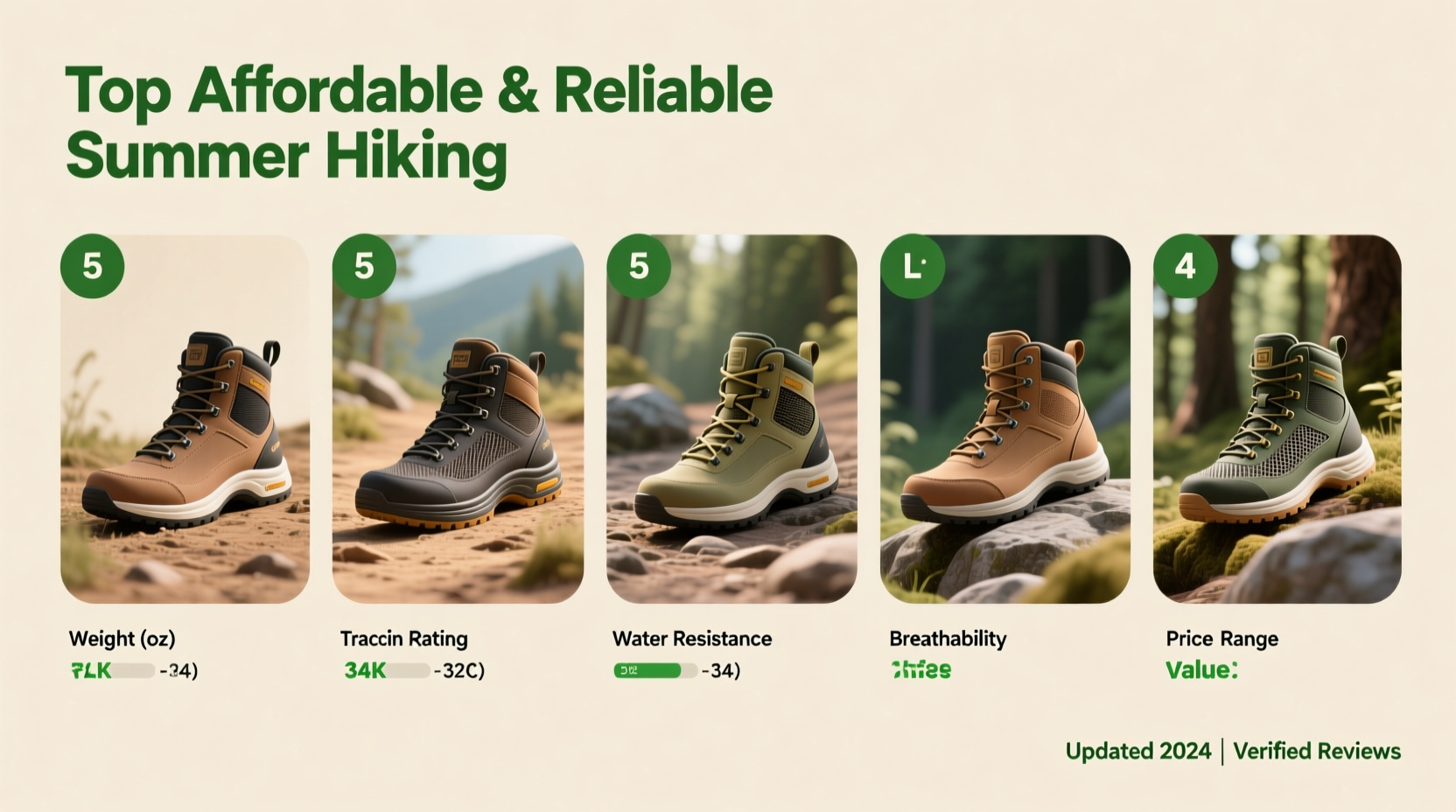
Summer conditions demand different qualities than winter or alpine boots. Heat, dust, moisture, and trail abrasion all play a role in how well your boots perform. A great summer hiking boot should meet several criteria:
- Breathability: Mesh panels or lightweight uppers prevent overheating and reduce sweat buildup.
- Lightweight design: Reduces fatigue during long hikes and improves agility on uneven terrain.
- Durable outsoles: Vibram® or comparable rubber compounds offer grip on loose gravel, rocks, and dirt paths.
- Moderate ankle support: Enough to stabilize on uneven ground without restricting movement.
- Quick-drying materials: Essential if crossing streams or encountering morning dew.
- Comfortable break-in period: Minimal break-in time means you can hit the trail faster.
Top 5 Affordable & Reliable Summer Hiking Boots
The following models have earned strong reputations among budget-conscious hikers, outdoor retailers, and review platforms like REI, OutdoorGearLab, and Backpacker Magazine. All are priced under $130 and consistently deliver value beyond their cost.
| Boot Model | Price Range | Weight (per boot) | Key Features | User Rating |
|---|---|---|---|---|
| Merrell Moab 3 Ventilator | $95–$110 | 1 lb 5 oz | Ventilated mesh upper, Vibram outsole, EVA midsole | 4.7/5 |
| Salewa Alp Trainer Mid GTX | $110–$130 | 1 lb 10 oz | Gore-Tex lining, climbing lacing, heel rand | 4.6/5 |
| Columbia Redmond V2 | $80–$95 | 1 lb 3 oz | Omni-Grip outsole, Techlite cushioning, quick-dry lining | 4.5/5 |
| Solomon X Ultra 4 GTX | $110–$125 | 1 lb 6 oz | Advanced chassis stability, Gore-Tex waterproofing, Contagrip MA | 4.6/5 |
| Keen Targhee III Vent | $100–$115 | 1 lb 7 oz | PFG-inspired outsole, breathable mesh, wide toe box | 4.5/5 |
Among these, the Merrell Moab 3 Ventilator stands out as a benchmark for affordable summer hiking boots. It’s been a bestseller for over a decade due to its consistent performance, availability in wide sizes, and ability to handle everything from desert trails to forest paths.
“We’ve tested over 40 hiking boots in the past five years. The Moab series remains one of the few budget models that doesn’t sacrifice longevity for price.” — Mark Tran, Senior Gear Tester at Trailline Reviews
How to Choose the Right Fit and Support
Finding the correct fit is more important than brand loyalty. Ill-fitting boots are the leading cause of blisters, foot fatigue, and even long-term joint strain. Follow this step-by-step process when shopping:
- Measure your feet late in the day: Feet swell slightly after walking, so measuring them in the evening ensures accuracy.
- Wear hiking socks: Bring the socks you plan to hike in when trying on boots.
- Check toe room: There should be about a thumb’s width between your longest toe and the end of the boot.
- Walk on an incline: Many outdoor stores have ramps to simulate uphill hiking. Pay attention to heel slippage or pressure points.
- Lace them properly: Use a “heel lock” lacing technique to prevent slippage during descent.
Consider width as seriously as length. Brands like Altra and Keen offer wider toe boxes, which help prevent bunions and allow natural toe splay—especially beneficial on long hikes.
Real Hiker Experience: A Weekend in Zion National
Jamie R., a recreational hiker from Colorado, recently completed a two-day loop through Angels Landing and Observation Point wearing her Merrell Moab 3 Vents. She carried a 20-pound pack over sun-baked sandstone and steep switchbacks.
“I was skeptical about spending under $100 on boots, but they handled the heat better than my old Salomons. My feet stayed cool, and I didn’t get a single blister—even on the 1,500-foot descent off Walter’s Wiggles.”
She attributed the success not just to the boot’s ventilation but also to proper sock layering and taking rest breaks every 45 minutes to air out her feet.
Essential Care Tips to Extend Boot Life
Affordable boots don’t have to mean disposable. With proper care, even sub-$100 hiking boots can last 500+ trail miles. Here’s how to maximize lifespan:
Tip: After each hike, remove the insoles and let boots air dry overnight—never near direct heat or radiators.- Brush off mud and debris with a soft-bristle brush.
- Use a mild cleaner formulated for hiking footwear (avoid dish soap).
- Reapply water-repellent treatment every 3–4 months, especially for leather-uppered models.
- Rotate between two pairs if hiking weekly—this reduces continuous wear and moisture retention.
- Store in a cool, dry place away from UV light, which degrades adhesives and fabrics.
Checklist: Preparing Your Summer Hiking Boots
- ✅ Confirm fit with hiking socks
- ✅ Break in boots on short walks (minimum 10–15 miles)
- ✅ Apply water-resistant spray (even on non-waterproof models)
- ✅ Trim toenails and tape known blister zones
- ✅ Pack moleskin and spare laces
- ✅ Check tread depth and sole integrity
Frequently Asked Questions
Are waterproof boots necessary for summer hiking?
Not always. Waterproof linings like Gore-Tex can trap heat and make boots less breathable. In dry climates, non-waterproof ventilated boots (like the Moab 3 Vent) keep feet cooler. Reserve waterproof models for areas with frequent stream crossings or unpredictable rain.
Can I use running shoes instead of hiking boots in summer?
For well-maintained, flat trails, trail runners are a viable alternative. However, on rugged, rocky, or uneven terrain, hiking boots provide superior ankle support, durable soles, and protection from sharp objects. If you choose trail runners, opt for models with aggressive lugs and rock plates.
How long do affordable hiking boots typically last?
With moderate use (3–5 hikes per month), quality budget boots last 1.5 to 2.5 years, or roughly 300–600 miles. Signs it’s time to replace them include delaminating soles, loss of cushioning, or visible creasing in the midfoot area.
Final Thoughts: Smart Choices for Smarter Hikes
You don’t need to spend hundreds to find a dependable summer hiking boot. Models like the Merrell Moab 3, Columbia Redmond V2, and Keen Targhee Vent prove that affordability and reliability can go hand in hand. The key is knowing what features matter most for your terrain and climate, ensuring a precise fit, and maintaining your boots properly.
Investing time in research and foot care pays dividends in comfort and confidence on the trail. Whether you're exploring local trails or preparing for a backcountry adventure, the right pair of boots makes all the difference.
💬 Have a favorite budget hiking boot? Share your experience or trail tip in the comments below—your insight could help another hiker make the perfect choice!








