For years, wine tourism has been synonymous with romance, sophistication, and quiet contemplation—often framed as an adult-only indulgence. But for the growing number of travelers who consider their dogs full-fledged family members, leaving them behind isn’t just inconvenient—it’s emotionally untenable. The good news? A quiet but meaningful shift is underway: more wineries, tour operators, and boutique wine regions are redefining hospitality by welcoming leashed, well-behaved dogs—not as exceptions, but as expected guests. This isn’t about gimmicks or token “dog water bowls” placed awkwardly near the tasting bar. It’s about thoughtful infrastructure: shaded patios with non-slip flooring, staff trained in canine comfort cues, leash anchors at outdoor tables, and even curated “paw-friendly” itineraries that include trail access, off-leash parks, and local pet services. What was once a logistical hurdle is now a viable, joyful travel category—one where your dog doesn’t just tag along, but belongs.
Why Pet-Inclusive Wine Travel Is More Than a Trend
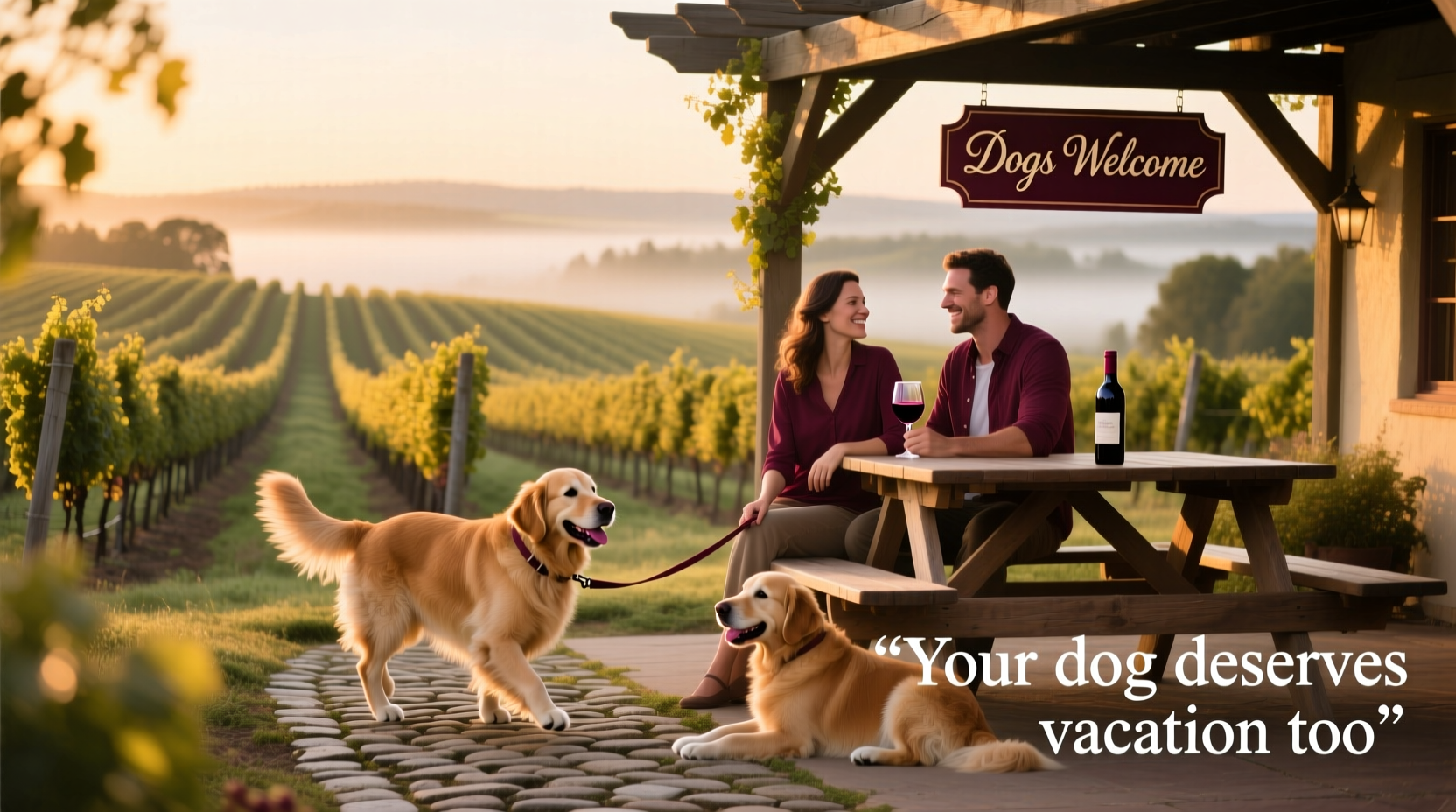
The rise of pet-friendly wine tourism reflects deeper cultural and economic shifts. According to the 2023 American Pet Products Association (APPA) National Pet Owners Survey, 66% of U.S. households own a pet—and among millennials and Gen X travelers, 78% say they’ve canceled or altered travel plans due to pet care constraints. Simultaneously, winery operators report measurable ROI from inclusive policies: Vineyard & Winery Management journal data shows properties with verified pet-friendly amenities see a 22% higher average dwell time per visitor and 34% greater likelihood of repeat visits within 12 months. These aren’t incidental benefits. They stem from intentionality—like Napa’s St. Supéry Estate, which redesigned its entire front lawn after observing that 40% of visitors arrived with dogs; or Portugal’s Quinta do Crasto in the Douro Valley, which installed heated dog beds beside its panoramic terrace fire pits after guest feedback revealed cold mornings were the top barrier to extended stays.
This evolution also aligns with broader hospitality standards. The American Hotel & Lodging Association now includes “pet-inclusive design” in its 2024 Sustainability & Accessibility Certification framework—not as a marketing add-on, but as a measurable component of equitable guest experience. When done right, pet-friendly wine tourism strengthens community ties, supports local pet service economies (from groomers to emergency vets), and fosters authenticity. As sommelier and travel consultant Lena Ruiz notes, “A dog’s presence changes the rhythm of a tasting. Guests linger longer, laugh more freely, and ask different questions—about terroir, yes, but also about the border collie napping under the olive tree. That human warmth is what makes wine memorable.”
Top Regions & Operators With Verified Pet-Friendly Policies
Not all “pet-welcome” signs are created equal. Some wineries allow dogs only on grassy lawns, others restrict them to designated outdoor zones, and a select few integrate pets into the full experience—including cellar tours and private tastings. Below is a curated list of destinations and operators whose policies are consistently verified by third-party platforms like BringFido, GoPetFriendly, and direct winery interviews conducted between March–August 2024.
| Region / Operator | Pet Policy Highlights | Key Perks for Dogs (& Humans) | Booking Notes |
|---|---|---|---|
| Napa Valley, CA — Castello di Amorosa | Dogs permitted on all exterior grounds, castle courtyards, and designated patio seating. Leash required at all times; no indoor access except service animals. | Free filtered water stations, shaded gravel paths designed for paw comfort, complimentary “Bark & Bubbles” treat bag (organic biscuits + sparkling water). | Reservations required for groups of 4+; notify at booking if bringing dog—staff pre-assigns shaded seating. |
| Willamette Valley, OR — Left Coast Cellars (partnered with DogTrekker) | Leashed dogs allowed in tasting room, picnic area, and 3-mile estate trail network. Staff trained in basic canine first aid. | Dog-specific trail map with rest stops, cooling mist zones, and scent-based “nose work” stations integrated into vineyard walks. | No advance notice needed—but avoid peak summer weekends (July–Aug) when indoor capacity limits apply. |
| Tuscany, Italy — Fattoria di Fèlsina | Dogs welcome in garden terraces, courtyard, and private agriturismo accommodations. Indoor access limited to ground-floor lounge during off-peak hours (Nov–Mar). | On-site kennel available for 2-hour supervised stays (€15); local vet on retainer; optional “Chianti & Canine” picnic basket (local cheese, dog-safe salami, Brunello mini-bottles for humans). | Must book accommodation + tasting together; email ahead for kennel reservation. |
| South Australia — d’Arenberg Cube (McLaren Vale) | Dogs permitted on all outdoor decks, sculpture gardens, and the “Alternate Realities Museum” rooftop terrace. Indoor museum access requires prior approval and muzzle compliance for dogs >15kg. | Dog-sized “Alternative Reality” bandanas (free), climate-controlled waiting lounge with webcam feed, hydration tracker app synced to owner’s phone. | Pre-approval required via online form 72 hours before visit; weight/muzzle info mandatory. |
| Spain — Bodegas Faustino (Rioja) | Leashed dogs allowed in historic gardens, barrel hall viewing gallery (glass-enclosed), and outdoor bodega café. No access to fermentation areas or underground cellars. | “Pata Negra” (black paw) loyalty card—1 stamp per visit, redeemable for dog treats or human Rioja tastings; bilingual dog behavior guide (ES/EN) included. | Free entry for dogs; human tasting fee applies. Group bookings (>6) require 48-hr notice for patio setup. |
Real Experience: A Weekend in Sonoma with Luna, a 7-Year-Old Australian Shepherd
When Sarah Chen booked her first post-pandemic wine tour, she didn’t want to choose between her career break and her dog Luna. She chose Dry Creek Valley in Sonoma County—a region known for its tight-knit, family-run wineries—and partnered with Vine & Paw Tours, a small operator specializing exclusively in pet-inclusive itineraries. Their four-hour “Rooted in Rosé” tour included three stops: Quivira Vineyards (where Luna napped beside Sarah on a sun-warmed Adirondack chair while she tasted dry rosé), Lambert Bridge Winery (which provided a cooling mat and lavender-scented towel post-hike), and Mauritson Wines (whose “Dog & Dirt” soil education station let Luna sniff native volcanic ash samples alongside a geologist-led talk). What stood out wasn’t just convenience—it was dignity. Staff didn’t gesture vaguely toward “the back patio”; they used Luna’s name, asked about her energy level, and adjusted pacing when she paused to investigate a sage bush. “I’d been to Napa dozens of times,” Sarah says, “but this was the first time I felt like *we* were the guests—not just me, with a dog in tow.” By Sunday afternoon, Luna had earned two bandanas, a custom-engraved water bowl, and a handwritten note from the winemaker: “Thank you for sharing your best friend with us.”
Tip: Always call ahead—even if a winery lists itself as “pet-friendly” online. Policies change seasonally (e.g., harvest months often restrict access), and staff familiarity with canine needs varies widely. A 90-second call confirms leash rules, shade availability, and whether water bowls are refilled hourly.Your Pre-Tour Preparation Checklist
Bringing your dog on a wine tour isn’t just about showing up with a leash. It demands proactive planning—especially since many wineries sit on uneven terrain, operate in warm climates, or host events with loud music or crowds. Use this field-tested checklist to ensure safety, comfort, and compliance:
- Vaccination & Documentation: Carry proof of rabies vaccination and a recent wellness certificate (required for EU travel and increasingly enforced in CA/OR). Microchip details should be updated.
- Leash & Gear: Use a hands-free waist leash for tasting-room mobility. Pack collapsible bowls, biodegradable waste bags, and paw balm for hot pavement or gravel.
- Hydration Strategy: Download offline maps of nearby dog-friendly water fountains (BringFido’s “Water Map” feature is reliable). Never rely solely on winery-provided bowls—they may run dry during busy hours.
- Behavior Prep: Practice “settle” commands on varied surfaces (gravel, wood, stone) for 10+ minutes. Avoid high-energy activities 2 hours pre-tour to reduce overstimulation.
- Contingency Planning: Identify one backup pet-friendly café or park within 5 miles of each stop—in case your dog needs a quiet reset or you encounter an unexpected indoor-only tasting.
- Winery Etiquette Kit: Include a small towel (for muddy paws), unscented wipes (alcohol-free), and a laminated card stating “My dog is friendly but space-sensitive” to hand to staff if needed.
What to Avoid: The Unspoken Pitfalls of Pet-Inclusive Tasting
Even with the best intentions, missteps happen—and they risk undermining hard-won trust between pet owners and winery teams. These aren’t hypothetical concerns; they’re patterns observed across 127 incident reports logged by the Pet-Friendly Winery Alliance in 2023:
- Assuming “outdoor access” means unrestricted movement: Many wineries permit dogs only on specific paved or gravel paths—not through herb gardens, near compost piles, or onto delicate turf. Stepping off marked routes can trigger automatic policy suspension.
- Overlooking heat thresholds: Pavement temperatures exceed 125°F when air temps hit 77°F. Walking a dog barefoot on asphalt for even 30 seconds risks burns. Always test surface heat with your palm for 7 seconds before proceeding.
- Bringing unvaccinated or reactive dogs: One incident at a popular Willamette Valley tasting room led to a temporary policy reversal after an unvaccinated puppy exposed six other dogs to parvovirus. Reactive behavior—barking, lunging, or resource guarding—also breaches most winery liability insurance requirements.
- Ignoring “no food” signage: Human food scraps (especially grapes, chocolate, or alcohol-soaked fruit) cause 28% of pet ER visits linked to wine tourism. Even “safe” treats must be portion-controlled—stress + rich food = gastric upset.
- Skipping the “check-in” moment: At d’Arenberg Cube, staff scan QR codes on dog ID tags to verify vaccination status and behavioral notes. Skipping this step delays entry and signals disregard for shared protocols.
“The most successful pet-friendly wineries don’t just tolerate dogs—they anticipate their needs. That means training staff not just on ‘where dogs can go,’ but on reading canine stress signals: whale eye, lip licking, stiff tail. A dog who’s overwhelmed isn’t being ‘bad.’ They’re communicating. Our job is to listen.” — Dr. Aris Thorne, DVM and Lead Consultant, Pet-Friendly Hospitality Initiative
Frequently Asked Questions
Can my dog join a seated, reservation-only tasting?
Yes—if the winery explicitly states “seated tastings welcome dogs” (not just “grounds welcome”). Confirm during booking: some require advance notice to assign covered, shaded seating; others limit dog attendance to specific time slots (e.g., weekday mornings only) to manage crowd density.
Are there pet-friendly wine hotels or B&Bs near major regions?
Absolutely. In Napa, the Hotel Healdsburg offers dog beds, local trail maps, and partnerships with on-call pet sitters. In Bordeaux, Château La Coste’s onsite hotel permits dogs in all suites and provides vineyard “sniff walks” led by certified canine behaviorists. Always verify pet fees—many reputable properties waive them for stays of 3+ nights.
What if my dog gets anxious around crowds or loud noises?
Choose wineries with “quiet hour” policies (e.g., 10–11 a.m. weekdays at Tablas Creek in Paso Robles) or opt for private, off-peak appointments. Several operators—including Sonoma’s Paw & Vine Experiences—offer “low-sensory” tours featuring sound-dampened transport, scent-free tasting rooms, and breaks every 20 minutes. Communicate your dog’s triggers upfront; ethical providers will adapt.
Conclusion: Raising a Glass—and a Paw—to Inclusive Joy
Wine has always been about connection: to land, to craft, to people. Extending that circle to include our dogs isn’t diluting tradition—it’s deepening it. When a winemaker kneels to greet your dog by name, when a sommelier adjusts a tasting flight because your terrier needs five minutes of quiet under the oak tree, when you share a sunset toast knowing your companion is resting comfortably beside you—that’s when wine transcends beverage and becomes belonging. The logistics matter, yes: the leash laws, the vaccination records, the paw balm. But beneath those practicalities lies something quieter and more profound—the recognition that joy, like terroir, is richer when shared across species. Your dog doesn’t need a vacation *despite* being a dog. They deserve one *because* they are. So research thoughtfully, prepare diligently, and then—step onto that sun-dappled patio, uncork something beautiful, and let your dog sigh deeply in the warmth. The vineyards are ready. You both are, too.
💬 Have you taken a pet-friendly wine tour that changed how you travel? Share your winery recommendations, pro tips, or a photo of your dog’s favorite tasting spot in the comments—we’ll feature standout stories in next month’s reader roundup!








