
The Super Bowl halftime show is one of the most-watched live performances in the world, blending music, spectacle, and cultural significance. When Serena Williams made a surprise appearance during Usher’s 2024 halftime performance, it sparked widespread curiosity. At first glance, a tennis legend on a stage dominated by pop stars seemed unexpected. But upon closer inspection, her presence was both symbolic and strategic. Far from a random cameo, Williams’ appearance carried layered meaning—honoring legacy, bridging athletic excellence with artistic expression, and reinforcing the interconnectedness of Black excellence across industries.
A Symbolic Entrance: Serena’s Role in the Performance
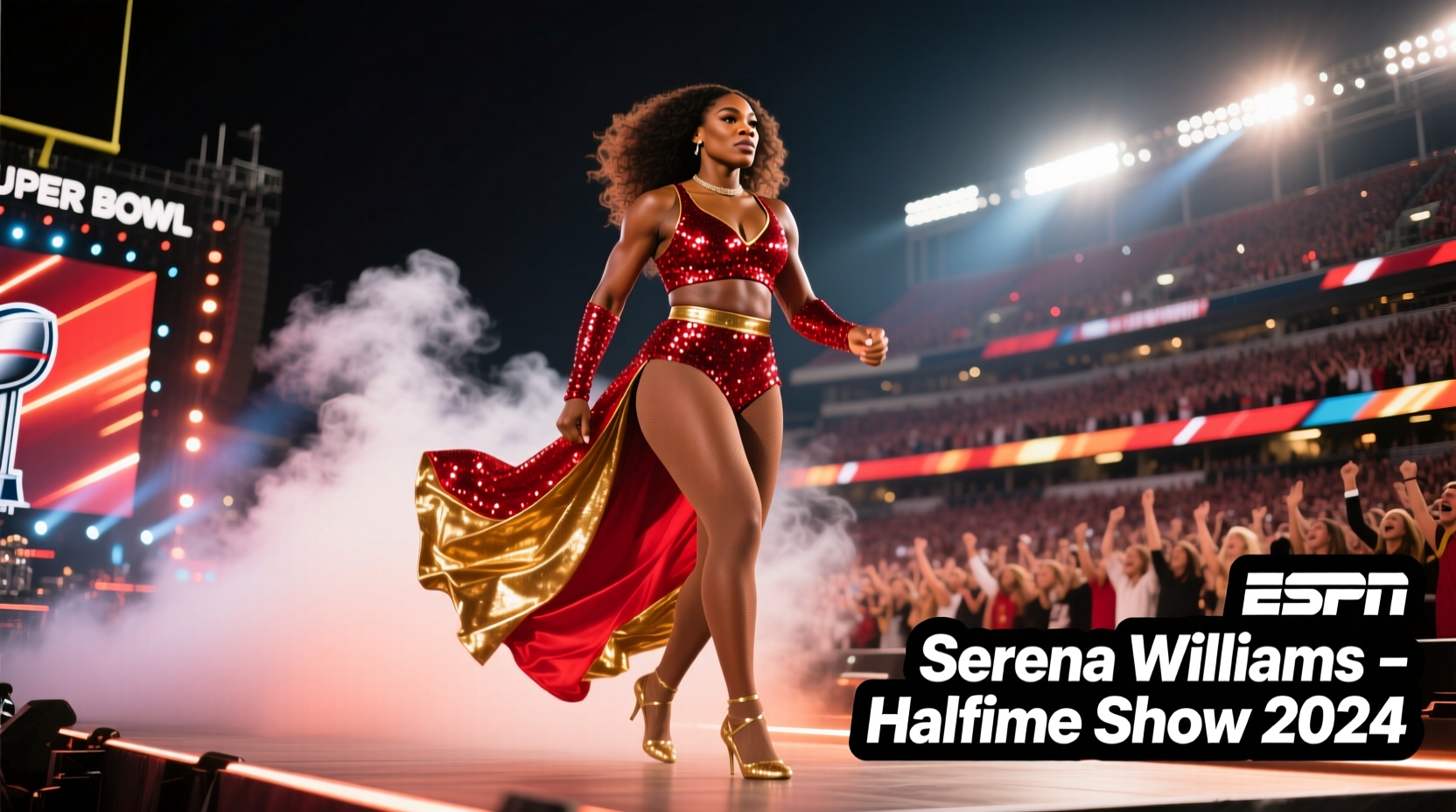
Serena Williams walked onto the stage during Usher’s rendition of “Bad Girl,” a track that pays homage to strong, independent women. Dressed in a sleek black bodysuit with a tennis racket in hand, she mimed serving a ball toward the crowd before passing the racket to dancer Shanice Stewart. The moment was brief but powerful—a visual metaphor linking athleticism, power, and grace.
This wasn’t a musical contribution; it was a statement. By integrating a global sports icon into a high-energy musical act, the producers elevated the narrative beyond entertainment. They emphasized resilience, dominance, and the breaking of barriers—themes central to both Usher’s career and Williams’ legacy.
Tip: When interpreting celebrity appearances at major events, look beyond surface-level roles—many are symbolic gestures rooted in cultural storytelling.Celebrating Black Excellence Across Domains
The 2024 halftime show, headlined by Usher, was widely praised for its celebration of Black artistry, particularly Southern Black culture and the legacy of R&B and hip-hop. Including Serena Williams extended that tribute into the realm of sports. Her inclusion acknowledged that Black excellence isn’t confined to one field—it thrives in stadiums, boardrooms, courts, and concert stages alike.
As one of the most decorated athletes in history, Williams has long transcended tennis. She’s a fashion designer, entrepreneur, investor, and advocate for maternal health and gender equity. Her public identity aligns perfectly with the halftime show’s broader mission: to showcase multidimensionality within Black achievement.
“Serena represents more than victory. She embodies transformation—from athlete to icon, competitor to cultural force.” — Dr. Keisha L. Cooper, Cultural Historian, Howard University
Historical Context: Athletes in Halftime Shows
While uncommon, Serena Williams isn’t the first athlete to appear during a Super Bowl halftime performance. In 2013, LeBron James introduced Beyoncé during her iconic solo comeback performance. In 2022, Mickey Guyton was joined onstage by several prominent Black women, including former NFL executive Sarah Fuller, blurring lines between sports and music.
What makes Williams’ appearance distinct is her direct integration into the choreography and thematic arc. Unlike a simple introduction or endorsement, she became part of the story—symbolizing strength, precision, and unapologetic ambition. Her presence echoed earlier moments when athletes lent their stature to amplify cultural messages, such as Colin Kaepernick’s national anthem protest being referenced in Jennifer Lopez and Shakira’s 2020 performance.
Behind the Scenes: How the Collaboration Came Together
According to production insiders, the idea originated with director Hamish Hamilton and Usher himself, who have long admired Williams’ influence beyond sports. The concept was to create a “passing of the torch” moment—not literal, but symbolic—where different forms of mastery intersect.
Williams was approached weeks in advance. Though retired from professional tennis, she remained physically active and open to creative projects that aligned with her values. After reviewing the performance theme and script, she agreed to participate, viewing it as an opportunity to inspire young girls who see themselves in both sports and the arts.
Timeline of Key Events Leading to the Appearance
- November 2023: Halftime creative team begins brainstorming guest appearances.
- December 5, 2023: Usher suggests featuring a non-musical Black icon to broaden the narrative.
- December 18, 2023: Serena Williams is formally invited via a personal call from the production lead.
- January 10, 2024: First rehearsal held in Atlanta; Williams works with choreographers to adapt movements.
- February 11, 2024: Live performance at Allegiant Stadium, Las Vegas.
Public Reaction and Media Coverage
Reactions were swift and largely positive. Social media lit up with praise for the symbolism. On X (formerly Twitter), fans used hashtags like #QueenSerena and #TennisInHalftime, celebrating the crossover moment. Sports analysts noted how rare it is for a tennis player to be featured in mainstream pop culture spectacles, given the sport’s traditionally elite image.
Critics also pointed out deeper implications: in an era where female athletes fight for equal visibility and pay, seeing Serena command the same space as A-list musicians sent a powerful message about value and recognition.
| Aspect | Positive Feedback | Critical Concerns |
|---|---|---|
| Symbolism | Praised as empowering and culturally resonant | Some called it vague or under-explained |
| Representation | Celebrated inclusion of a Black female athlete | Few other athletes represented |
| Integration | Seamless and meaningful within the act | Brief duration limited impact |
Why It Matters: Broader Implications for Culture and Sport
Serena Williams’ appearance wasn’t just about one night’s entertainment. It signaled a shift in how we recognize greatness. For decades, athletes and artists operated in separate spheres. Today, the boundaries are dissolving. Stars like Drake, Rihanna, and Travis Kelce move fluidly between music, sports, and fashion. Williams has been ahead of this curve for years—launching her own venture fund, designing clothing lines, and advocating for change in multiple arenas.
Her halftime moment reinforced the idea that excellence is not siloed. Whether you dominate on a tennis court or a concert stage, the qualities required—discipline, creativity, resilience—are universal.
Tip: Look for patterns in how icons cross industries—they often reflect larger cultural shifts in visibility and power.Mini Case Study: Serena’s Legacy Beyond the Baseline
In 2022, Serena announced her evolution away from professional tennis, framing retirement not as an end but a transition. Since then, she has increased her involvement in Silicon Valley startups, invested in wellness brands, and launched her children’s book series. Her appearance at the Super Bowl fits this new chapter perfectly: she’s no longer defined by wins and losses, but by influence and inspiration.
Consider the ripple effect on young viewers—especially young Black girls—who saw someone who looks like them, dressed in athletic gear, commanding the world’s biggest entertainment stage. That image doesn’t just entertain; it redefines what’s possible.
Frequently Asked Questions
Did Serena Williams perform music during the halftime show?
No, she did not sing or play an instrument. Her role was symbolic and visual, representing strength and legacy within the performance’s narrative.
Has Serena appeared at the Super Bowl before?
She has attended the Super Bowl as a spectator and supporter—particularly of teams like the Kansas City Chiefs, where she has connections through ownership groups—but this was her first official on-stage appearance.
Was her appearance related to any brand promotion?
While Serena has partnerships with Nike and other brands, her participation was not tied to a commercial endorsement. Sources confirm she did not receive payment, viewing it as a cultural contribution rather than a marketing opportunity.
Checklist: Understanding Celebrity Crossovers in Major Events
- Identify whether the appearance is symbolic or functional (e.g., performer vs. guest)
- Research the individual’s recent public roles or advocacy work
- Analyze the event’s broader theme—does the guest reinforce it?
- Review historical precedents for similar crossovers
- Monitor audience reactions to gauge cultural resonance
Conclusion: More Than a Cameo
Serena Williams’ presence at the Super Bowl halftime show was far more than a celebrity cameo. It was a carefully considered moment of cultural alignment—bridging sports and music, legacy and innovation, individual triumph and collective pride. In fewer than two minutes, she reminded millions that greatness wears many uniforms: sometimes a tennis dress, sometimes a spotlight-lit stage.
As boundaries between industries continue to blur, expect to see more icons like Serena stepping into unexpected spaces—not because they need the exposure, but because their presence elevates the moment. The next time you see an athlete on a stage or an artist in a locker room, remember: these aren’t stunts. They’re signals of a changing world where excellence speaks every language.
💬 What did Serena’s appearance mean to you? Share your thoughts in the comments and join the conversation about the evolving face of fame and achievement.








