If your cat has recently started meowing at night—especially if it’s loud, persistent, or out of character—it can be unsettling. You might find yourself lying awake wondering what’s wrong. While occasional nighttime vocalization can be normal, a sudden change in behavior warrants attention. Cats don’t typically alter their routines without reason, and nighttime meowing can signal anything from boredom to serious medical issues.
Understanding the root cause is essential not only for your sleep but also for your cat’s well-being. This article explores the most common reasons behind sudden nighttime meowing, highlights warning signs that indicate a need for veterinary care, and offers practical solutions to restore peace to your home.
Common Reasons Cats Start Meowing at Night
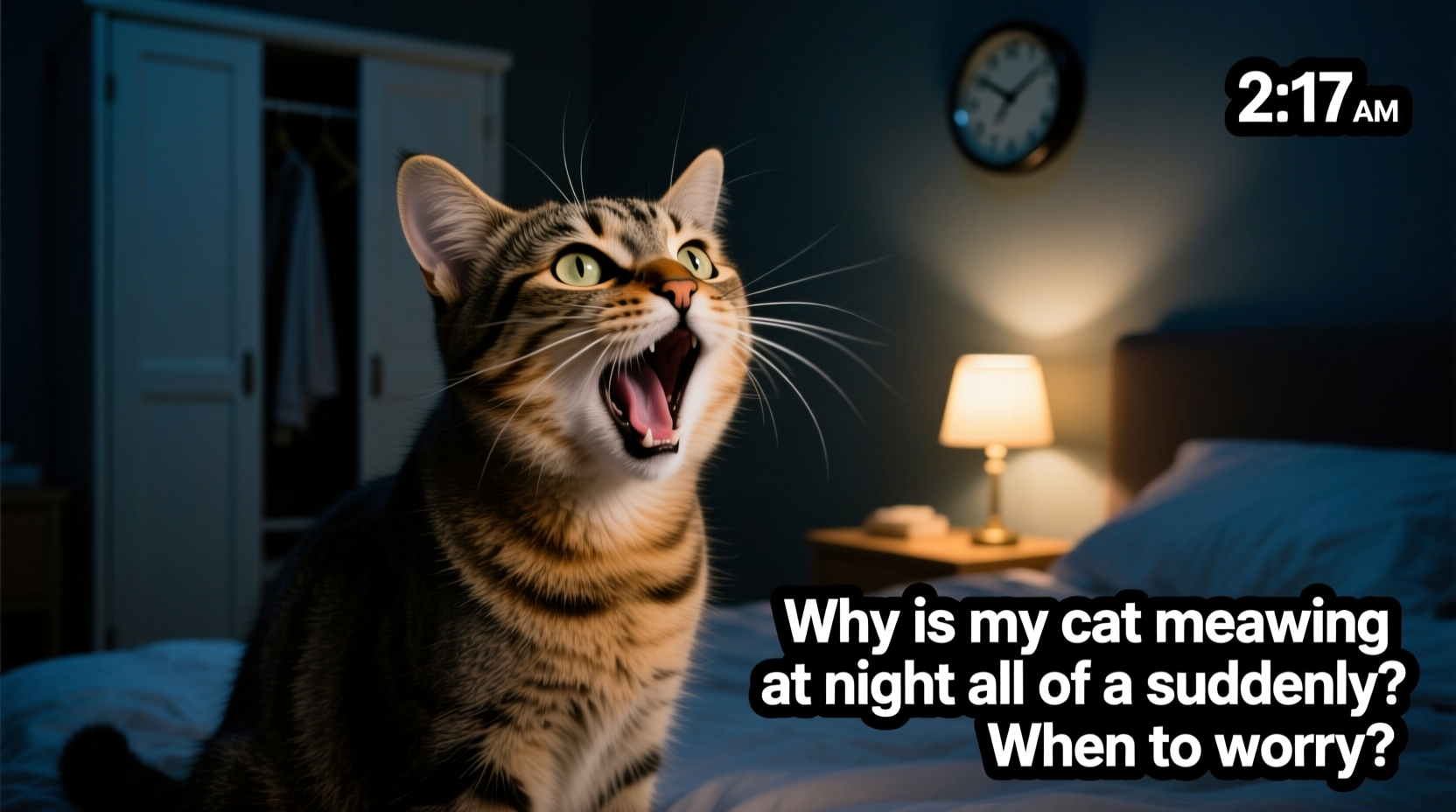
Cats are creatures of habit, but changes in their environment, health, or routine can prompt new behaviors. Sudden nighttime vocalization often stems from one or more of the following factors:
- Increased hunger or thirst: If feeding schedules have changed, your cat may be genuinely hungry during the night.
- Boredom or lack of stimulation: Indoor cats with limited daytime activity may become restless at night when the house is quiet.
- Attention-seeking behavior: Some cats learn that meowing brings interaction—even if it’s scolding—which reinforces the behavior.
- Age-related cognitive decline: Older cats may experience confusion, disorientation, or altered sleep-wake cycles, especially with feline cognitive dysfunction (FCD).
- Environmental stressors: New pets, moving, loud noises, or changes in household dynamics can trigger anxiety and vocalization.
- Mating behavior: Unspayed or unneutered cats may yowl at night due to hormonal urges.
Medical Conditions That Trigger Nighttime Meowing
Sudden vocalization, particularly in older cats, should never be dismissed as \"just aging.\" Several medical conditions can cause discomfort, confusion, or physiological changes that lead to increased meowing at night.
Hypertension and Hyperthyroidism
Hyperthyroidism, common in senior cats, increases metabolism and can cause restlessness, increased appetite, weight loss, and excessive vocalization. High blood pressure (hypertension), often linked to hyperthyroidism or kidney disease, can affect the brain and sensory organs, leading to disorientation and nighttime crying.
Pain and Discomfort
Cats in pain—whether from arthritis, dental disease, or internal illness—may vocalize more at night when the house is quiet and distractions are minimal. They may also struggle to find a comfortable resting position.
Kidney Disease
Chronic kidney disease (CKD) is prevalent in older cats and leads to increased thirst and urination. A cat waking frequently to drink water or use the litter box may meow due to discomfort or confusion.
Sensory Decline
Vision or hearing loss can make a cat feel vulnerable at night. They may call out seeking reassurance or because they’re disoriented in familiar spaces.
“Persistent nighttime meowing in a previously quiet cat should be evaluated by a veterinarian. It’s often the first behavioral sign of an underlying medical issue.” — Dr. Lena Patel, DVM, Feline Internal Medicine Specialist
When to Worry: Red Flags That Require Immediate Attention
Not all nighttime meowing is a cause for alarm, but certain patterns and accompanying symptoms should prompt a vet visit. Here’s how to distinguish between benign behavior and potential health concerns:
| Behavior or Symptom | May Be Normal | Reason to Worry |
|---|---|---|
| Occasional soft meows | Yes – could be checking in | No |
| Frequent, loud, or plaintive cries | No | Yes – possible pain or distress |
| New onset after age 7 | Rarely | Yes – cognitive or medical issue likely |
| Accompanied by pacing or restlessness | No | Yes – neurological or hypertensive crisis |
| Increased thirst/urination | No | Yes – kidney or thyroid disease |
| Changes in appetite or grooming | No | Yes – systemic illness |
Urgent Warning Signs
Seek veterinary care immediately if your cat exhibits any of the following:
- Yowling accompanied by stumbling, head pressing, or seizures
- Sudden aggression or extreme clinginess
- Inability to settle or constant pacing
- Loud vocalization that seems involuntary or distressed
Step-by-Step Guide to Addressing Nighttime Meowing
Resolving nighttime meowing requires a structured approach. Follow this timeline to identify and address the cause effectively:
- Day 1–2: Document the Behavior
Keep a log noting when the meowing occurs, its duration, tone (soft vs. loud), and any triggers (e.g., turning off lights). Also record changes in eating, drinking, or litter box habits. - Day 3: Evaluate the Environment
Check for recent changes—new furniture, pets, construction noise, or altered routines. Consider whether your cat is getting enough mental and physical stimulation during the day. - Day 4–5: Adjust Daily Routine
Engage your cat in active play before bedtime. Use puzzle feeders or automatic toys to simulate hunting. Feed a larger meal in the evening to reduce hunger overnight. - Day 6: Implement Environmental Supports
Leave a nightlight on to help disoriented cats. Place familiar bedding near you or use a pheromone diffuser (like Feliway) to reduce anxiety. - Day 7: Schedule a Veterinary Checkup
If meowing persists beyond a week despite behavioral adjustments, book a vet appointment. Request blood work, blood pressure check, and a geriatric screening if your cat is over 7 years old.
Mini Case Study: Bella, the 12-Year-Old Calico
Bella had always been a quiet cat. But over two weeks, her owner noticed she began yowling around 2 a.m., pacing from room to room, and staring at walls. At first, the owner assumed Bella wanted food or attention and occasionally fed her during these episodes. The behavior worsened.
A veterinary exam revealed high blood pressure and elevated T4 levels—indicating hyperthyroidism. After starting medication and adjusting her evening routine with calming play and a nightlight, Bella’s nighttime vocalizations stopped within ten days. Her owner later said, “I thought she was just getting senile. I had no idea it was something treatable.”
This case underscores how medical issues can manifest solely through behavior changes—and why early intervention matters.
Prevention and Long-Term Management Checklist
Whether addressing current meowing or preventing future episodes, use this checklist to support your cat’s health and comfort:
- ✅ Schedule annual vet exams (biannual for cats over 7)
- ✅ Monitor water intake and litter box use weekly
- ✅ Provide daily interactive play sessions (10–15 minutes, twice a day)
- ✅ Use timed feeders for consistent evening meals
- ✅ Install nightlights in key areas (hallways, litter room)
- ✅ Reduce environmental stress with hiding spots and vertical space
- ✅ Consider pheromone diffusers for anxious or aging cats
- ✅ Neuter or spay unaltered cats to prevent mating-related yowling
Frequently Asked Questions
Is it normal for older cats to meow at night?
While more common in senior cats due to cognitive decline or medical issues, frequent nighttime meowing is not \"normal\" in the sense of being harmless. It’s a signal that something may be wrong. Up to 40% of cats over 10 years old show signs of cognitive dysfunction, which often includes nocturnal vocalization. Always rule out medical causes first.
Should I ignore my cat when they meow at night?
It depends. If your cat is healthy and the behavior is attention-based, ignoring the meowing—while reinforcing quiet behavior during the day—can be effective. However, if the meowing is new, intense, or accompanied by other symptoms, ignoring it could delay diagnosis of a serious condition. Use judgment based on your cat’s overall health and history.
Can diet affect nighttime meowing?
Indirectly, yes. Poor nutrition can contribute to metabolic imbalances, such as those seen in kidney or thyroid disease. Additionally, feeding late at night may reinforce the expectation of food, encouraging vocalization. A balanced, age-appropriate diet supports overall stability in behavior and physiology.
Conclusion: Listen to Your Cat—They’re Trying to Tell You Something
Nighttime meowing is more than a sleep disruptor—it’s communication. Whether your cat is expressing discomfort, confusion, or unmet needs, their vocalizations deserve attention. By observing patterns, making thoughtful environmental adjustments, and partnering with your veterinarian, you can uncover the cause and improve your cat’s quality of life.
Don’t wait months hoping the behavior will pass. Early investigation often leads to simpler, more effective solutions—especially when medical conditions are involved. Your cat relies on you to interpret their signals, even when they come in the middle of the night.
��� Has your cat suddenly started meowing at night? Share your experience or questions below—your story might help another pet owner recognize a warning sign early.








