Tinsel, with its shimmering strands and festive sparkle, is a holiday staple in many homes. But anyone who’s ever decorated with it knows the frustration: while you’re trying to drape it gracefully over your Christmas tree, it stubbornly clings to your sweater, socks, pet’s fur, and even the curtains—anywhere but where it’s supposed to go. The culprit? Static electricity. But why does this phenomenon occur so selectively? Why does tinsel seem magnetically drawn to everything except the tree itself?
The answer lies in the physics of static charge, material composition, and environmental conditions—all of which combine to create a seasonal paradox of attraction and repulsion. Understanding this not only demystifies a common holiday annoyance but also offers practical ways to manage it.
The Science Behind Static Cling
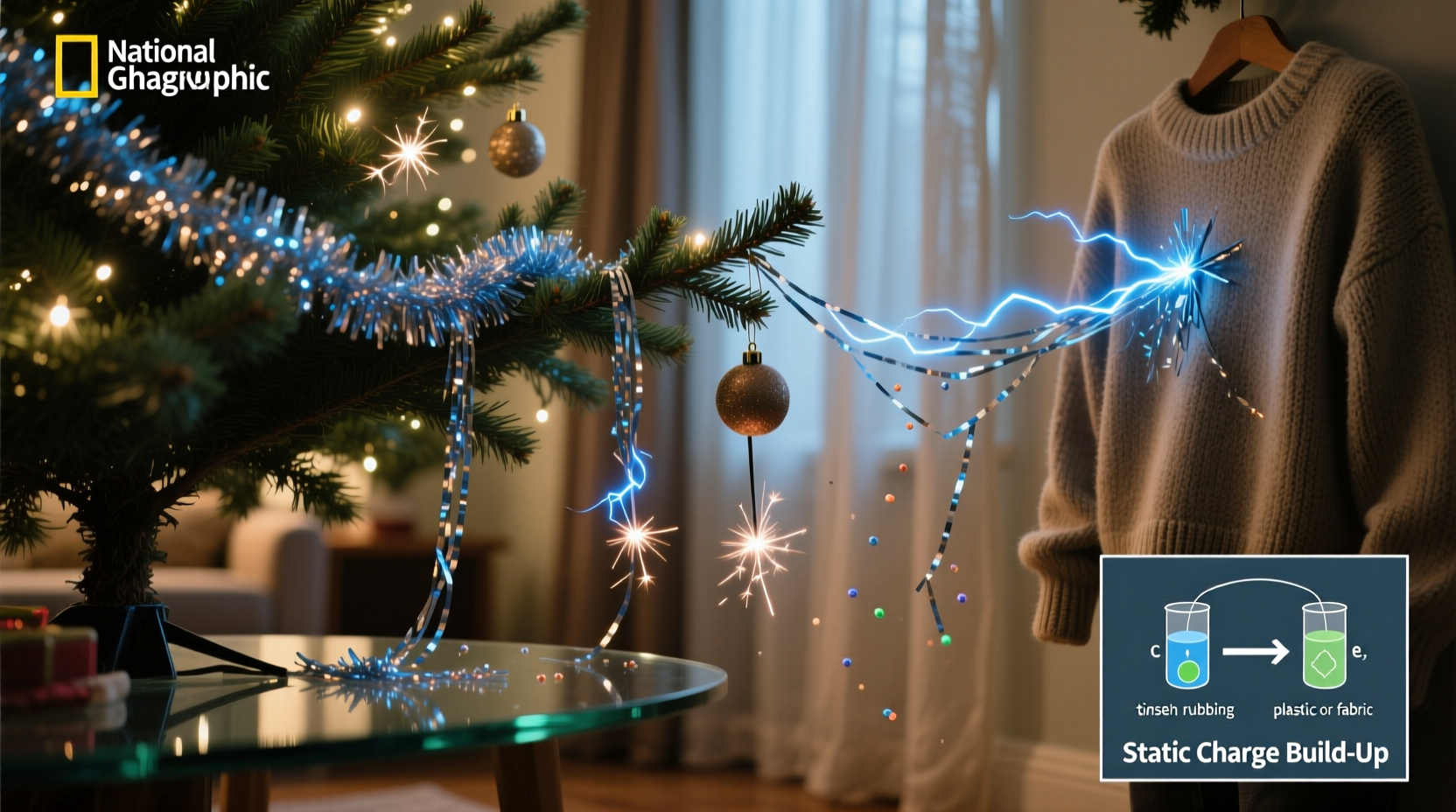
Static electricity occurs when two surfaces come into contact and then separate, causing electrons to transfer from one material to another. This creates an imbalance of electric charge—one surface becomes positively charged, the other negatively charged. When these charged surfaces are near each other or near conductive materials, they attract, leading to what we commonly call “static cling.”
Tinsel is especially prone to this because it’s typically made from thin strips of metallized plastic—often polyethylene terephthalate (PET) coated with aluminum. These materials are excellent at gaining or losing electrons during friction, making them highly susceptible to static buildup. As you handle tinsel, your hands rub against the strands, transferring electrons and charging both the tinsel and your clothing.
Once charged, the tinsel seeks out oppositely charged or neutral surfaces to balance the charge. Unfortunately for decorators, human skin, wool sweaters, synthetic fabrics, and even dry air contribute to ideal conditions for static attraction.
“Materials like plastic-coated tinsel are insulators—they hold onto static charge rather than dissipating it. That’s why they cling so persistently to nearby objects.” — Dr. Lena Patel, Physicist specializing in electrostatics, University of Colorado Boulder
Why the Tree Resists Tinsel (Unlike Everything Else)
If static electricity causes tinsel to stick, why doesn’t it adhere well to the very object it’s meant for—the Christmas tree? The answer involves several factors related to the tree’s structure, moisture content, and electrical properties.
Natural trees, such as firs or pines, contain moisture in their needles and bark. Water is a conductor, allowing any built-up static charge to dissipate quickly. A fresh, well-watered tree acts like a natural grounding point, preventing the accumulation of static that would otherwise attract tinsel.
In contrast, artificial trees are usually made of PVC or other plastics—materials that are also insulators. However, artificial trees often have a smoother surface texture and less exposed surface area compared to loose fabric fibers on clothing. The rigid branches don’t generate as much friction during handling, reducing electron transfer. Moreover, artificial trees are generally grounded by being placed on carpet or flooring, which may slightly reduce overall charge buildup.
Still, neither type of tree holds a strong electrostatic charge—making them poor “targets” for clinging tinsel. Meanwhile, your fuzzy sweater, freshly dried laundry, or pet’s coat easily become charged and offer textured surfaces for tinsel to latch onto.
Tip: Lightly misting artificial trees with water before decorating can help neutralize static charges and improve tinsel adhesion.Environmental Factors That Worsen the Problem
Static cling isn’t just about materials—it’s heavily influenced by the environment, particularly indoor humidity levels. During winter, cold outdoor air holds less moisture, and when heated indoors, relative humidity drops dramatically. Homes heated by forced-air systems can see indoor humidity fall below 30%, creating ideal conditions for static buildup.
In dry environments, insulating materials like tinsel, synthetic clothing, and carpets cannot release accumulated charges easily. This leads to stronger and more persistent static cling. The lower the humidity, the more dramatic the effect.
Additionally, modern homes often feature wall-to-wall carpeting, synthetic upholstery, and low-pile rugs—all of which generate friction and retain charge. Walking across a room in socks can build up thousands of volts of static potential, enough to make tinsel leap toward you like metallic confetti.
| Humidity Level | Static Risk | Effect on Tinsel Behavior |
|---|---|---|
| Below 30% | Very High | Tinsel clings aggressively to clothes, hair, pets |
| 30–50% | Moderate | Some clinging; manageable with care |
| Above 50% | Low | Minimal static; tinsel drapes more naturally |
This table illustrates why homes in arid climates or those using aggressive heating report worse tinsel issues. It also explains why tropical regions rarely experience this problem, even during holiday seasons.
Practical Solutions to Reduce Tinsel Static Cling
While you can't eliminate physics, you can significantly reduce static-related tinsel chaos with a few strategic interventions. Here's how to keep tinsel where it belongs—on the tree—and off your cat.
Step-by-Step Guide to Static-Free Tinsel Application
- Condition the environment: Use a humidifier to raise indoor humidity to at least 40%. This helps dissipate static charges throughout the room.
- Pre-treat the tinsel: Spray a light mist of water mixed with a drop of fabric softener onto the tinsel (from a distance). Let it sit for 30 seconds before handling. This reduces surface resistance and neutralizes charge.
- Ground yourself: Touch a metal faucet or appliance before handling tinsel to discharge any personal static buildup.
- Wear natural fibers: Avoid wool, nylon, or polyester clothing while decorating. Cotton is less likely to generate static.
- Apply tinsel in sections: Work in small batches rather than unraveling entire rolls at once. This minimizes airborne movement and uncontrolled clinging.
- Use anti-static spray: Lightly apply commercial anti-static spray to carpets and furniture near the tree area.
Checklist: Prevent Tinsel Chaos This Holiday Season
- ✅ Check indoor humidity with a hygrometer
- ✅ Run a humidifier in the living room 24 hours before decorating
- ✅ Wash hands and avoid lotion (which can increase charge)
- ✅ Choose cotton clothing for decorating day
- ✅ Pre-mist tinsel with diluted fabric softener solution
- ✅ Keep pets and children away during initial application
- ✅ Store unused tinsel in a sealed anti-static bag
Real Example: The Johnson Family’s Tinsel Troubles
The Johnsons in Denver, Colorado, had a recurring holiday issue: every year, their attempt to decorate the tree with silver tinsel turned into a comedy of errors. The tinsel would stick to their dog Max, their daughter’s leggings, and even the ceiling fan. One strand famously wrapped around a passing drone during a family video call.
Determined to solve the mystery, Mr. Johnson measured the humidity in their home and found it was only 22%. After researching static electricity, he invested in a large-capacity humidifier and switched to cotton robes for decoration day. He also began lightly misting the tinsel before use.
The difference was immediate. That year, the tinsel stayed on the tree, Max remained tinsel-free, and the ceiling fan operated without incident. The Johnsons now start their holiday prep with a “humidity check,” treating it as seriously as buying lights or ornaments.
“We used to think it was bad luck. Turns out it was just bad physics.” — Sarah Johnson, homeowner and amateur holiday scientist
Frequently Asked Questions
Can I use hairspray to keep tinsel on the tree?
No. While hairspray might temporarily hold tinsel in place, it creates a sticky residue that attracts dust and can damage both the tinsel and tree branches. Over time, it may also discolor the tinsel and degrade plastic components. Instead, focus on reducing static through humidity and pre-treatment.
Is there such a thing as static-free tinsel?
Not entirely, but some modern alternatives are better. Cloth tinsel (made from rayon or cotton) generates less static than plastic versions. Additionally, wider, heavier tinsel strands tend to cling less due to greater weight overcoming weak electrostatic forces. Some manufacturers now offer “low-static” tinsel treated with anti-static coatings during production.
Why does tinsel sometimes repel itself?
When multiple strands of tinsel carry the same charge (e.g., all negative), they repel each other due to electrostatic repulsion. This is why tinsel can appear to “float” or spread out unnaturally instead of draping smoothly. Increasing ambient humidity or grounding the strands briefly can help equalize the charge and allow for better arrangement.
Conclusion: Take Control of the Sparkle
Tinsel’s tendency to stick to everything except the Christmas tree isn’t magic—or mischief. It’s a predictable outcome of physics playing out in our dry, synthetic-filled winter homes. By understanding the role of static electricity, material choices, and environmental conditions, you can reclaim control over your holiday decor.
With simple adjustments—like using a humidifier, wearing cotton, and pre-treating tinsel—you can transform a frustrating ritual into a smooth, joyful tradition. No more chasing glittering strands off the cat or pulling tinsel out of your hair for days. The tree deserves its shine, and you deserve a stress-free setup.
💬 Have a tinsel disaster story or genius fix? Share your experience in the comments—your tip might save someone’s holiday décor!








