Nonstick pans are a kitchen staple for good reason—they make cooking easier, reduce the need for oil, and simplify cleanup. But over time, many home cooks notice that their once-smooth surface begins to stick, leaving food residue behind and making frying eggs or searing fish more of a chore than a joy. When this happens, it’s natural to wonder: what went wrong? And more importantly, can it be fixed?
The truth is, nonstick coatings aren’t indestructible. They degrade due to heat, improper cleaning, and everyday wear. However, with proper understanding and care, you can often slow down the damage—or even temporarily restore some functionality before replacement becomes necessary.
Understanding Nonstick Coatings
Most modern nonstick pans use a coating made from polytetrafluoroethylene (PTFE), commonly known by the brand name Teflon. This synthetic polymer creates a slick, low-friction surface that resists food adhesion when used correctly. Some newer models use ceramic-based coatings, which offer similar benefits but differ in durability and heat tolerance.
Despite their convenience, these coatings are not permanent. PTFE begins to degrade at temperatures above 500°F (260°C), releasing potentially harmful fumes and losing its nonstick properties. Ceramic coatings, while marketed as safer, often wear out faster under high heat or abrasive use.
The key to longevity lies in understanding what damages the coating—and how to prevent it.
Tip: Never preheat an empty nonstick pan on high heat—this can quickly exceed safe temperature limits and damage the coating.Why Your Nonstick Pan Starts Sticking
Several factors contribute to the decline of a nonstick surface. Identifying the cause is the first step toward restoration or prevention.
1. High Heat Exposure
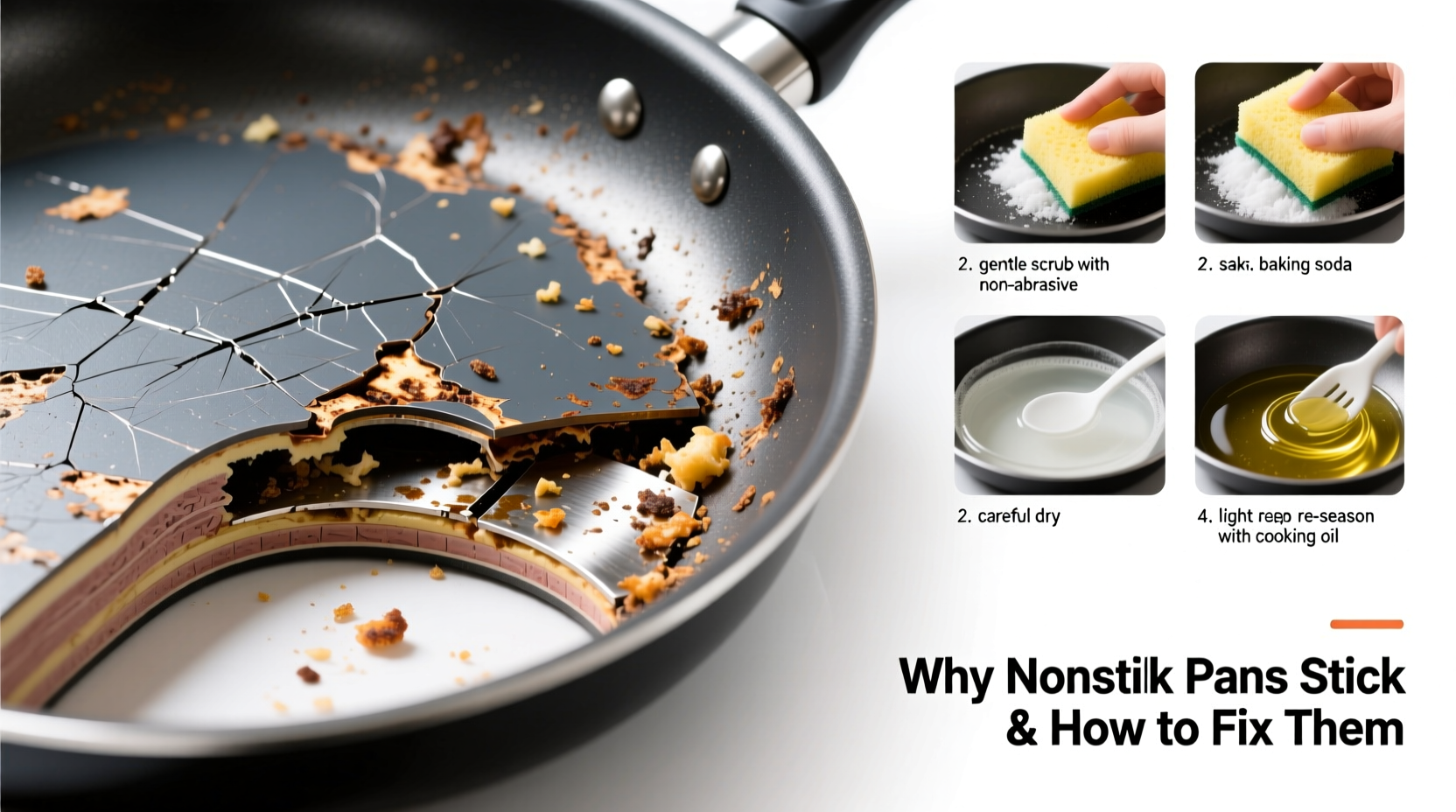
One of the most common culprits is excessive heat. Many people crank up the stove to get a quick sear, unaware that nonstick pans are not designed for high-temperature cooking. Prolonged exposure to heat above 500°F breaks down the PTFE molecules, creating microscopic cracks and pits where food particles can lodge.
2. Use of Metal Utensils
Metal spatulas, whisks, or tongs can scratch the surface, even if the marks aren’t immediately visible. These micro-scratches compromise the integrity of the coating, allowing food to bond directly to exposed areas.
3. Improper Cleaning Methods
Scrubbing with steel wool, abrasive sponges, or harsh detergents accelerates wear. Even dishwasher use can be detrimental—high water pressure and strong chemicals degrade the coating over time.
4. Oil Buildup and Residue
Frequent use without thorough cleaning leads to a buildup of cooking oils and food residues. Over time, this layer carbonizes and forms a sticky film that interferes with the pan’s performance. Ironically, this type of sticking isn’t due to coating failure—it’s due to neglect.
5. Age and Natural Wear
Even with perfect care, nonstick pans have a limited lifespan. Most manufacturers recommend replacing them every 2–5 years, depending on usage. As the coating thins, its ability to repel food diminishes.
“Nonstick pans are convenience tools, not workhorses. Treat them gently, and they’ll serve you well—but expect to replace them periodically.” — Dr. Lena Torres, Materials Scientist at Culinary Innovation Lab
How to Restore a Sticking Nonstick Pan
If your pan has started to stick but shows no deep scratches or peeling, there’s a chance you can revive its performance. The goal is to remove built-up residue and recondition the surface. Note: this won’t repair physical damage, but it can improve functionality in the short term.
Step-by-Step Restoration Guide
- Boil a Cleaning Solution: Mix 1 cup of water, ½ cup of white vinegar, and 2 tablespoons of baking soda in the pan. Bring to a gentle boil over medium heat and let simmer for 5–10 minutes. This loosens stubborn residues and helps dissolve oil buildup.
- Cool and Scrub Gently: After boiling, let the pan cool completely. Use a soft sponge or nylon brush to wipe away any loosened debris. Avoid abrasive pads.
- Rinse and Dry Thoroughly: Wash with mild dish soap and warm water, then dry immediately with a soft towel to prevent water spots or mineral deposits.
- Recondition the Surface: Apply a thin layer of peanut or canola oil (avoid olive oil, which carbonizes easily) to the interior. Heat the pan on low for 1–2 minutes, then let it cool and wipe off excess oil with a paper towel. This creates a temporary barrier that mimics nonstick behavior.
- Test Performance: Fry an egg on low heat. If it slides easily, the restoration worked—at least temporarily.
Do’s and Don’ts for Nonstick Pan Care
| Do’s | Don’ts |
|---|---|
| Use wooden, silicone, or plastic utensils | Use metal utensils or knives in the pan |
| Cook on low to medium heat | Preheat empty pan or use high heat |
| Hand-wash with mild soap and soft sponge | Put in the dishwasher |
| Dry thoroughly after washing | Leave wet or stack pans without protection |
| Store with protective liner or cloth between pans | Stack pans directly, causing scratches |
| Replace pan if coating is peeling or deeply scratched | Continue using a damaged pan—ingesting flakes is unsafe |
Real Example: A Home Cook’s Wake-Up Call
Sarah, a busy mother of two from Portland, prided herself on her efficient weeknight meals. She relied heavily on one trusted nonstick skillet for scrambled eggs, pancakes, and grilled cheese. After about three years of daily use, she noticed eggs began to stick despite using butter. She tried scrubbing harder, increasing oil, and even soaking overnight—nothing helped.
She posted a photo online asking for advice. A cookware specialist pointed out visible micro-scratches from her metal spatula and suggested she had likely overheated the pan multiple times. Following a restoration attempt using the vinegar-baking soda method, Sarah saw improvement—but only briefly. Within weeks, the sticking returned.
She finally replaced the pan and adopted new habits: switching to silicone tools, lowering her burner settings, and hand-washing immediately after use. Her new pan, now six months old, still glides like the first day. “I didn’t realize how much abuse I was putting it through,” she said. “Now I treat it like a precision tool, not a dumping ground.”
When Restoration Isn’t Enough
Restoration techniques work best for pans with minor sticking due to residue buildup. If your pan shows any of the following signs, it’s time to retire it:
- Visible peeling or flaking of the coating
- Deep scratches or abrasions
- Food sticks consistently, even after cleaning and reconditioning
- Discoloration or a rough, chalky texture
Using a damaged nonstick pan poses health risks. Ingesting loose coating fragments isn’t recommended, and degraded PTFE can emit toxic fumes when heated. The U.S. Environmental Protection Agency advises against using cookware with damaged nonstick surfaces.
Choosing a Replacement
When buying a new nonstick pan, consider:
- Construction: Look for pans with reinforced coatings (e.g., diamond-infused or titanium-reinforced) for better durability.
- Brand Reputation: Trusted brands like All-Clad, T-fal, and Scanpan invest in longer-lasting technologies.
- Oven-Safe Limits: Check if the handle is oven-safe and at what temperature—many nonstick pans shouldn’t go above 350–400°F in the oven.
- Dishwasher Safety: Even if labeled “dishwasher safe,” hand-washing extends life significantly.
Frequently Asked Questions
Can I use cooking spray on my nonstick pan?
It’s not recommended. Most aerosol sprays contain lecithin and propellants that leave a sticky residue resistant to normal cleaning. Over time, this builds up and causes food to stick. Instead, lightly coat the pan with a small amount of oil using a paper towel or brush.
Is it safe to use a scratched nonstick pan?
No. While ingesting small flakes is unlikely to cause immediate harm, the exposed base metal can react with acidic foods, and the damaged coating loses its nonstick function. More importantly, overheating a compromised pan increases the risk of fume emission. Replace it promptly.
Can ceramic nonstick pans be restored the same way?
Yes, the vinegar-baking soda method works for ceramic-coated pans too. However, ceramic coatings tend to degrade faster under high heat and are more prone to staining. Avoid metal utensils and never use abrasive cleaners, as they strip the finish more quickly than PTFE.
Conclusion: Care Extends Life
A nonstick pan doesn’t fail overnight—it deteriorates gradually due to repeated misuse. By understanding the science behind the coating and adopting mindful cooking habits, you can delay the inevitable decline and get the most value from your investment.
Restoration isn’t magic, but it’s practical. For pans suffering from gunk and minor sticking, a simple cleaning ritual can bring back smooth performance. But when scratches appear or food clings no matter what, accept that replacement is the safest and most effective choice.
Treat your nonstick cookware with the respect it deserves: low heat, soft tools, gentle cleaning, and timely retirement. Your omelets—and your kitchen sanity—will thank you.
🚀 Ready to revive your cookware? Try the restoration method tonight and share your results in the comments. Have a tip others should know? Join the conversation!








