
Dogs are masters of nonverbal communication. Among their most endearing behaviors is the head tilt—a subtle, often spontaneous movement that seems to convey curiosity, confusion, or even empathy. You’ve likely experienced it: the moment you utter a specific word like “walk,” “treat,” or “vet,” and your dog instantly cocks their head to the side, ears perked, eyes wide. But what lies beneath this seemingly simple gesture? Is it just charm, or is there a deeper cognitive and emotional mechanism at play? Understanding why dogs tilt their heads when they hear certain words reveals not only how they process language but also how deeply attuned they are to human communication.
The Science Behind the Head Tilt
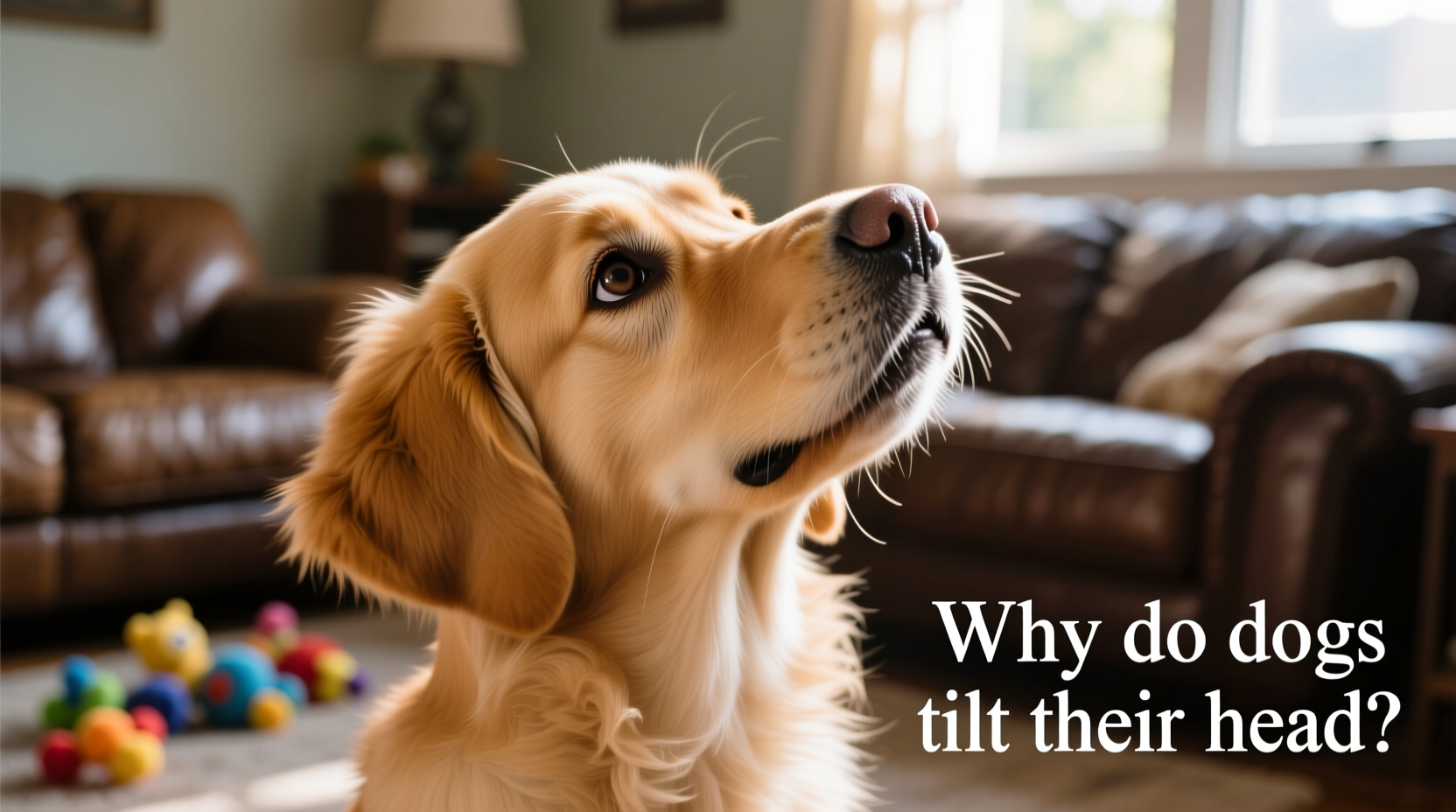
While no single study has definitively explained every instance of head tilting, researchers have identified several plausible explanations rooted in auditory processing, anatomy, and social learning. The head tilt is believed to be a multifaceted response involving both physical and psychological factors.
One primary theory relates to sound localization. Dogs rely heavily on their hearing to interpret their environment. When a word is spoken, especially one with high-frequency sounds or unfamiliar intonation, dogs may tilt their head to adjust the position of their ears and better capture the nuances of the sound. This small adjustment can help them pinpoint the source and meaning of the vocal cue more accurately.
Another anatomical factor involves muzzle obstruction. Breeds with longer snouts, such as Collies or Labradors, may tilt their heads to shift their muzzles out of the way when looking up at human faces. This allows for a clearer view of facial expressions, lip movements, and eye contact—all critical components of human-dog communication. In essence, the tilt improves visual access, helping dogs read our emotional and linguistic cues more effectively.
“Dogs don’t just hear words—they watch us speak. The head tilt is often a sign of active listening, combining auditory focus with visual scanning.” — Dr. Alexandra Horowitz, Canine Cognition Researcher, Barnard College
Cognitive Recognition and Word Association
Dogs are capable of understanding far more than many realize. Studies have shown that some dogs can recognize over 1,000 words, particularly when those words are consistently paired with actions or rewards. When your dog hears a familiar word like “ball” or “dinner,” their brain activates associated memories and expectations. The head tilt may occur during this split-second recognition phase—a physical manifestation of mental processing.
This cognitive engagement is supported by research from Emory University, where functional MRI scans revealed that dogs’ brains respond to familiar words with increased activity in regions analogous to the human language-processing centers. Interestingly, the same study found that tone of voice plays a crucial role: positive intonation combined with known words produces the strongest neural response.
So when you say “park” in an upbeat tone, your dog doesn’t just react to the word—it’s the combination of lexical familiarity and emotional context that triggers both excitement and the characteristic head tilt. It’s a sign that your dog is not only listening but interpreting meaning.
Tip: Use consistent words and tones when training your dog. This strengthens word association and makes responses like the head tilt more predictable and meaningful.Emotional Engagement and Social Bonding
Beyond cognition and anatomy, the head tilt is also a social signal. Dogs are highly attuned to human attention and often use body language to solicit interaction. The head tilt may function as a communicative gesture—one that elicits a positive response from owners, such as laughter, affection, or verbal praise.
Because dogs quickly learn which behaviors get rewarded, the head tilt can become reinforced through positive feedback. If you consistently smile, coo, or pet your dog when they tilt their head, they’re more likely to repeat the behavior, especially in anticipation of something desirable. Over time, this creates a loop: the dog associates certain words with both reward and the rewarding reaction their head tilt provokes.
In this sense, the tilt isn’t just about understanding language—it’s also about connection. It’s a way for dogs to engage emotionally, show attentiveness, and strengthen the bond with their humans. Some experts suggest that dogs who live in highly interactive households exhibit more frequent head tilting, indicating its role in social dynamics.
Real Example: Max the Border Collie
Consider Max, a four-year-old Border Collie living in Colorado. His owner, Sarah, noticed that Max only tilted his head when she said “agility” or “frisbee,” never when she mentioned “bath” or “nail trim.” Curious, she recorded several interactions and observed that the tilt always occurred after a pause—Max would freeze, tilt his head, then sprint to the closet where his gear was stored.
A local animal behaviorist reviewed the footage and concluded that Max wasn’t just reacting to the words themselves, but to the specific pitch and rhythm Sarah used when saying them. Her voice rose slightly on “agility,” signaling excitement. The head tilt served as a moment of confirmation—like double-checking the instruction before acting. In Max’s case, the behavior was both cognitive and anticipatory, shaped by months of consistent training and emotional association.
When the Head Tilt Warrants Attention
While occasional head tilting is normal and healthy, persistent or uncontrolled tilting can indicate underlying medical issues. A constant head tilt—especially if accompanied by loss of balance, circling, nausea, or ear discharge—may be a symptom of vestibular disease, ear infections, or neurological disorders.
Ear infections are a common cause. Built-up wax, bacteria, or foreign objects in the ear canal can disrupt the dog’s equilibrium, leading to a physical inability to hold their head straight. Similarly, older dogs may develop idiopathic vestibular disease, often mistaken for a stroke, which causes sudden dizziness and head imbalance.
If your dog begins tilting their head without the usual triggers—or if the behavior appears involuntary—it’s essential to consult a veterinarian. Early diagnosis can prevent complications and ensure your dog remains comfortable and responsive.
| Situation | Normal Head Tilt? | Action Recommended |
|---|---|---|
| Occasional tilt when hearing \"treat\" or \"go\" | Yes | None—this is typical behavior |
| Tilt followed by tail wagging or action | Yes | Encourage with positive reinforcement |
| Constant tilt, even at rest | No | See a vet promptly |
| Tilting with scratching, odor, or redness in ears | No | Veterinary exam for infection |
| New onset in senior dog with disorientation | Potentially abnormal | Rule out vestibular disease |
How to Encourage (and Understand) the Behavior
Understanding why your dog tilts their head empowers you to communicate more effectively. You can use this knowledge to improve training, deepen your bond, and ensure your dog’s well-being. Below is a step-by-step guide to interpreting and responding to head tilting in a constructive way.
- Observe the trigger words: Keep a mental note of which words consistently prompt a head tilt. These are likely words tied to strong associations—positive or negative.
- Monitor the context: Is the tilt followed by action (e.g., running to the door)? Or does it happen during calm moments with no outcome? Context reveals whether it’s cognitive or social.
- Check for physical discomfort: Gently examine your dog’s ears for redness, odor, or discharge. If in doubt, schedule a vet check.
- Use consistent language: Choose specific words for commands and stick to them. This reinforces clarity and reduces confusion.
- Respond appropriately: Reward attentive behavior with praise, but avoid over-reinforcing the tilt if it becomes excessive or attention-seeking.
Checklist: Healthy Head Tilting vs. Warning Signs
- ✅ Occurs occasionally in response to specific words
- ✅ Paired with alert posture and eye contact
- ✅ Resolves immediately after processing the cue
- ✅ Happens more with high-pitched or emotionally charged speech
- ❌ Persistent tilt lasting hours or days
- ❌ Accompanied by stumbling, vomiting, or eye twitching
- ❌ New behavior in an older dog without clear trigger
- ❌ Head shaking, scratching, or signs of pain
Frequently Asked Questions
Do all dogs tilt their heads, or is it breed-specific?
No, not all dogs tilt their heads equally. While any dog can exhibit the behavior, it’s more commonly observed in intelligent, attentive breeds such as Border Collies, Shetland Sheepdogs, and Poodles. However, individual personality plays a significant role—some dogs are simply more expressive or curious than others.
Can I train my dog to tilt his head on command?
Yes, using positive reinforcement, you can shape the head tilt into a trained behavior. Hold a treat slightly above and to the side of your dog’s head, prompting them to follow it with their eyes. As their head moves sideways, mark the behavior with a click or verbal cue like “tilt,” then reward. With repetition, the dog will associate the word with the action.
Does the head tilt mean my dog understands me?
It’s a strong indicator of engagement, but not proof of full comprehension. Dogs understand tone, frequency, and context better than grammar or syntax. The head tilt suggests they’re processing the input and searching their memory for associated experiences. It’s a sign of attentiveness, not necessarily linguistic mastery.
Conclusion: A Gesture Full of Meaning
The head tilt is far more than a cute quirk—it’s a window into your dog’s mind. Whether driven by auditory focus, visual adjustment, cognitive recognition, or emotional connection, this small gesture speaks volumes about how dogs interpret our world. They listen not just to our words, but to our tone, our expressions, and our intentions. By paying attention to when and why your dog tilts their head, you gain insight into their perception, their needs, and their feelings.
Next time your dog cocks their head at the mention of “car ride” or “squirrel,” take a moment to appreciate the complexity behind that simple motion. It’s a testament to millions of years of domestication, learning, and mutual understanding. Cherish it, respond to it, and continue building a relationship grounded in trust and communication.
💬 Have a story about your dog’s head tilt? Share your experience in the comments—what words trigger it, and what do you think it means to your dog?








