Dog owners around the world know that moment: you say a word—“walk,” “treat,” or even just change your tone—and suddenly, your dog cocks their head to the side. Ears perked, eyes wide, they look as if they’re solving a complex puzzle. It’s one of the most endearing behaviors in the animal kingdom. But beyond its charm, what’s really going on when a dog tilts their head? Is it curiosity? Confusion? A bid for attention? The truth is more nuanced than simple cuteness—it involves anatomy, cognition, and communication.
Understanding why dogs tilt their heads requires peeling back layers of evolutionary biology, sensory processing, and learned behavior. While no single explanation fits every situation, researchers and veterinarians have identified several compelling reasons behind this gesture. More than just an Instagram-worthy pose, head tilting may be a window into how dogs interpret their world—and how deeply attuned they are to human interaction.
The Anatomy Behind the Tilt
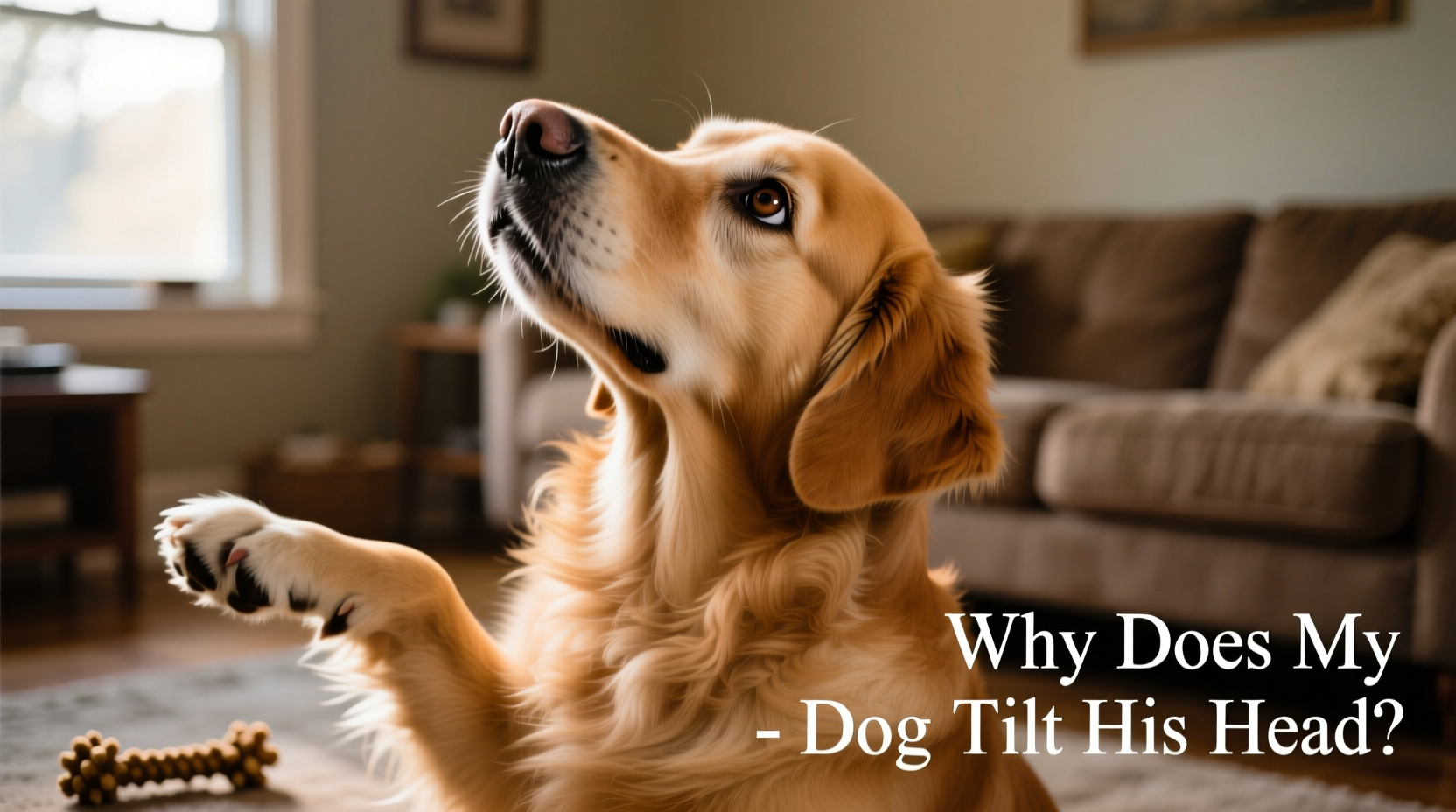
A dog’s physical structure plays a foundational role in head tilting. Unlike humans, dogs rely heavily on both auditory and visual cues to navigate their environment, and their skull shape, ear placement, and muzzle length influence how they process incoming information.
Dogs with longer muzzles—such as Collies, Setters, or Shepherds—often tilt their heads more frequently than breeds with shorter snouts like Pugs or Bulldogs. Why? Because a long muzzle can obstruct their line of sight, especially when looking up at a person’s face. By tilting their head, they shift their muzzle out of the way, allowing them to better see facial expressions, lip movements, and emotional cues.
This small adjustment enhances their ability to read human gestures, which is crucial since dogs have evolved to depend on us for social context. In fact, studies show that dogs are remarkably skilled at interpreting human facial expressions and subtle shifts in tone—skills that likely developed over thousands of years of domestication.
Tip: If your dog has a long muzzle and tilts often during conversation, they’re likely trying to get a clearer view of your face—not just being cute.Hearing and Sound Localization
Another major factor in head tilting is auditory processing. Dogs hear a broader range of frequencies than humans, but pinpointing where a sound comes from isn’t always straightforward. When a dog hears an unfamiliar or high-pitched noise—a squeaky toy, a doorbell chime, or a new word—they may tilt their head to fine-tune their hearing.
The movement adjusts the position of the ears and ear canals, helping the dog determine the direction and distance of the sound. Think of it like adjusting an antenna for better reception. By shifting their head, dogs can compare the slight time delay and volume differences between their two ears, improving their ability to locate the source.
This behavior is especially common in dogs with floppy ears, such as Beagles or Cocker Spaniels, whose ear flaps can partially block sound. Tilting helps open the ear canal and capture more auditory detail. Even dogs with erect ears, like German Shepherds, will tilt when processing novel sounds—suggesting that the behavior serves both anatomical and cognitive functions.
“Head tilting is often a sign of active listening. It shows the dog is concentrating on auditory input and trying to make sense of it.” — Dr. Sarah Carter, Veterinary Behaviorist
Cognitive Engagement and Word Association
Perhaps the most fascinating reason dogs tilt their heads relates to learning and memory. Research from Hungary’s Family Dog Project has shown that some dogs can understand over 200 words—especially those trained in object retrieval tasks. When these dogs hear a familiar command or the name of a toy, they respond differently than when they hear an unknown word.
In these cases, head tilting may signal cognitive effort—an attempt to recall stored information. Just as a person might furrow their brow when trying to remember a name, a dog may tilt their head when processing language. This suggests that the behavior isn’t purely reflexive; it can reflect genuine mental engagement.
Moreover, dogs are highly attuned to human praise and positive reinforcement. If a dog learns that tilting their head results in laughter, treats, or affection, they may begin to repeat the behavior intentionally. Over time, what started as a natural response becomes a learned social cue—one used strategically to elicit a desired reaction from their owner.
| Trigger | Likely Reason for Head Tilt | Common Breeds Observed |
|---|---|---|
| Hearing a high-pitched sound | Sound localization and ear adjustment | Beagle, Cocker Spaniel, Dachshund |
| Being spoken to in a new tone | Processing vocal intonation and emotion | Golden Retriever, Poodle, Border Collie |
| Seeing a person’s face up close | Improving visual field by moving muzzle aside | Greyhound, Shetland Sheepdog, Doberman |
| Hearing a known word (e.g., “ball”) | Cognitive recall and expectation | Border Collie, Papillon, Australian Shepherd |
| Receiving attention after previous tilt | Learned behavior for social reward | All breeds, especially responsive ones |
When Head Tilting Might Signal a Health Issue
While occasional head tilting is normal, frequent or persistent tilting—especially when accompanied by other symptoms—can indicate an underlying medical condition. Owners should be alert to signs that go beyond typical behavior.
One serious concern is vestibular disease, which affects the balance system in the inner ear or brain. Symptoms include constant head tilting, loss of coordination, circling, nausea, and abnormal eye movements. This condition can be caused by ear infections, tumors, inflammation, or idiopathic (unknown) factors, particularly in older dogs.
Ear infections are another common culprit. Bacteria or yeast buildup in the ear canal can cause discomfort and disrupt balance, prompting a dog to hold their head tilted toward the affected side. Other signs include scratching, head shaking, redness, or odor from the ears.
If your dog begins tilting their head without an obvious trigger—or if the tilt becomes chronic—it’s essential to consult a veterinarian. Early diagnosis can prevent complications and improve outcomes significantly.
Tip: Monitor the frequency and context of head tilts. Occasional tilting during conversation is normal; daily or unprovoked tilting warrants a vet visit.Checklist: When to Seek Veterinary Advice
- Head tilt lasts more than a few hours or occurs daily
- Dog shows signs of dizziness or imbalance
- Eyeballs twitch rapidly (nystagmus)
- Loss of appetite or vomiting
- Frequent ear scratching or discharge
- Sudden change in behavior or responsiveness
A Real-Life Example: Max the Border Collie
Consider Max, a six-year-old Border Collie owned by a speech therapist in Colorado. His owner noticed that Max tilted his head not only when she said “treat” or “park,” but also when she practiced articulation exercises at home. Curious, she began tracking the behavior and found that Max tilted more often during high-pitched vowel sounds and when she used exaggerated intonation.
She recorded several sessions and shared them with a canine cognition researcher at her local university. After analysis, the team concluded that Max was responding to pitch variation and rhythm—key components of human speech. His breed’s high trainability and sensitivity to vocal cues made him particularly responsive to prosody, the musicality of language.
In Max’s case, the head tilt wasn’t just about seeing or hearing better—it was part of a deeper pattern of linguistic engagement. He had learned to associate certain tones with positive outcomes and used the tilt both to gather information and to solicit attention. Once his owner started reinforcing calm behavior instead, the frequency decreased slightly, but never disappeared entirely—because, as she put it, “he knows it gets him extra pets.”
How to Respond to Your Dog’s Head Tilt
While it’s tempting to immediately reward every head tilt with praise or treats, doing so consistently may encourage the behavior beyond its natural occurrence. If you’d like to understand or gently shape your dog’s responses, consider the following approach:
- Observe the context: Note when and why the tilt happens. Is it during speech? Sounds? Eye contact?
- Avoid over-reinforcement: Don’t automatically reward each tilt. Instead, acknowledge it occasionally to prevent it from becoming a manipulative habit.
- Encourage alternative focus: Use commands like “sit” or “watch me” to redirect attention when appropriate.
- Support ear health: Clean ears regularly (if recommended for your breed) and check for signs of infection.
- Engage cognitively: Teach new words or tricks to stimulate mental processing—this may reduce random tilting due to confusion.
Frequently Asked Questions
Is head tilting a sign of intelligence?
Not directly, but it can reflect attentiveness and cognitive processing. Dogs that tilt their heads when hearing commands may be actively trying to understand language, which is associated with higher learning capacity. However, all dogs—regardless of smarts—may tilt their heads for anatomical or auditory reasons.
Do puppies tilt their heads too?
Yes, though less frequently than adult dogs. Puppies begin displaying the behavior around 8–12 weeks as their hearing and vision mature. As they learn human cues, the frequency may increase—especially if the behavior is rewarded.
Can I train my dog not to tilt his head?
You can reduce the frequency through selective reinforcement, but you likely won’t eliminate it entirely—and there’s no need to. Unless it’s medically linked, head tilting is harmless and often a sign of engagement. Forcing suppression could interfere with natural communication.
Conclusion: Embracing the Gesture with Insight
The dog’s head tilt is more than a photogenic quirk—it’s a multifaceted behavior rooted in biology, learning, and relationship-building. Whether your dog is adjusting their view, fine-tuning their hearing, or simply asking, “What’s next?” with soulful eyes, the gesture speaks volumes about their connection to you.
By recognizing the reasons behind the tilt, you deepen your understanding of canine perception and strengthen your bond. You also become better equipped to distinguish between normal behavior and potential health concerns. So the next time your dog gives you that sideways glance, smile back—not just because it’s adorable, but because it’s a moment of real communication.
💬 Does your dog tilt their head in unique situations? Share your story in the comments—we’d love to hear what your dog is trying to tell you!








