
Dogs often exhibit behaviors that leave their owners puzzled—tail chasing, barking at nothing, or suddenly fixating on a spot on the ceiling. While some quirks are harmless, persistent or intense staring can signal anything from curiosity to neurological issues. Understanding why your dog stares at the ceiling is essential for distinguishing between normal canine habits and potential health problems. This article explores the most common causes, signs that warrant concern, and steps you can take to ensure your dog’s well-being.
Common Behavioral Reasons for Ceiling Staring
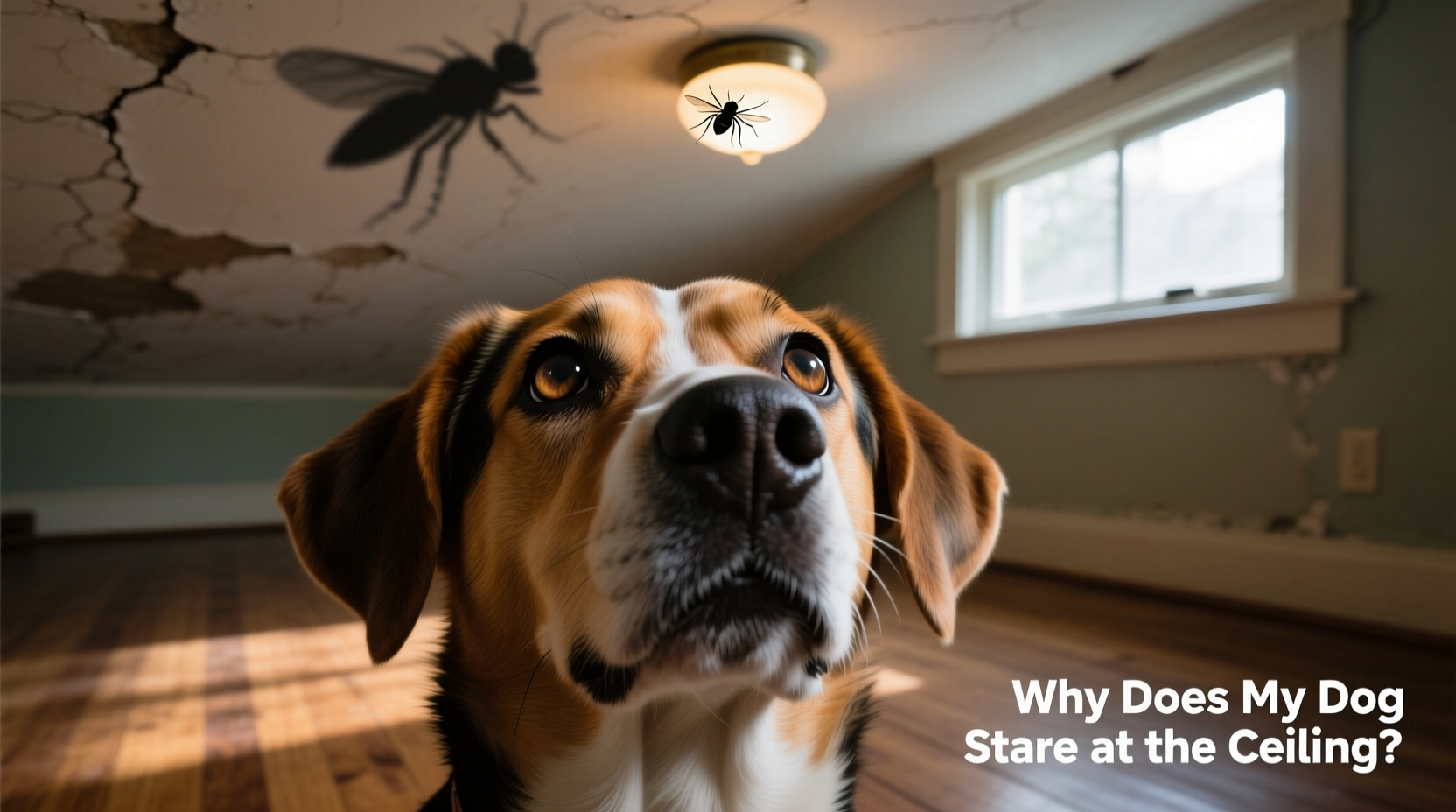
Dogs rely heavily on their senses of sight and hearing, both of which are far more acute than humans’. What seems like an empty ceiling to you might be full of movement, shadows, or sounds imperceptible to human ears. Some behavioral explanations for ceiling fixation include:
- Motion detection: Insects, dust particles, or light reflections moving across the ceiling may catch your dog’s attention. Even a slowly rotating ceiling fan can trigger prolonged observation.
- Auditory stimulation: High-pitched noises such as electrical buzzing, HVAC systems, or rodent activity within walls or ceilings can draw a dog’s focus upward.
- Playful fascination: Puppies and younger dogs are naturally curious. A flickering shadow or dangling cobweb might become an impromptu “toy” in their eyes.
- Learned attention-seeking: If staring leads to interaction—being picked up, spoken to, or given treats—your dog may repeat the behavior to gain attention.
Medical Conditions That May Cause Ceiling Staring
While occasional staring is usually benign, sudden or frequent episodes can indicate underlying health issues. Neurological and sensory disorders are among the most concerning causes.
Epilepsy and Seizure Activity
Focal (partial) seizures affect only a portion of the brain and may not cause full-body convulsions. Instead, they manifest as unusual behaviors such as:
- Fixed gaze toward the ceiling or corner
- Twitching of facial muscles
- Unresponsiveness to voice or touch
- Lip smacking or repetitive chewing motions
These episodes typically last seconds to minutes and may be followed by disorientation. Dogs with epilepsy often experience these behaviors in clusters.
“Focal seizures can be subtle. A dog staring into space or at a wall might actually be having a seizure. Owners should record the episode and consult a veterinarian promptly.” — Dr. Laura Bennett, Veterinary Neurologist
Cognitive Dysfunction Syndrome (CDS)
Similar to dementia in humans, CDS affects older dogs (usually over 9 years). Symptoms include confusion, altered sleep cycles, and odd behaviors like aimless wandering or staring at nothing. Ceiling gazing may occur during periods of spatial disorientation.
Vision or Hearing Changes
Degenerative eye conditions like cataracts or sudden acquired retinal degeneration (SARDS) can alter how dogs perceive light and motion. A dog losing vision may tilt its head upward, appearing to stare at the ceiling while trying to interpret visual stimuli. Similarly, hearing loss may lead to increased visual scanning as compensation.
Pain or Discomfort
In rare cases, neck pain or spinal discomfort can cause a dog to hold its head in an elevated position, creating the illusion of ceiling-staring. Arthritis or intervertebral disc disease (IVDD) are possible culprits, especially in breeds prone to back issues.
When to Be Concerned: Red Flags to Watch For
Not every instance of ceiling gazing requires urgent action. However, certain patterns and accompanying symptoms should prompt a veterinary evaluation.
| Behavior | May Be Normal | Warrants Concern |
|---|---|---|
| Duration | Less than 10 seconds, occasional | Over 30 seconds, repeated multiple times daily |
| Response to Name | Looks away when called | Ignores commands, appears “zoned out” |
| Physical Signs | None | Twitching, drooling, trembling, loss of balance |
| After Episode | Resumes normal activity immediately | Appears confused, tired, or disoriented |
| Frequency | Once in a while | Daily or increasing over time |
Step-by-Step Guide: What to Do When Your Dog Stares at the Ceiling
If you notice your dog repeatedly staring at the ceiling, follow this practical timeline to determine the cause and appropriate response.
- Observe silently: Don’t call or touch your dog. Note duration, body language, and environmental factors (e.g., lights, sounds).
- Record the episode: Use your phone to capture video from multiple angles. Include ambient sound.
- Check the room: Look for insects, drafts causing movement, or electronic devices emitting high-frequency noise.
- Monitor frequency: Keep a log for 3–5 days. Record time, duration, and any triggers.
- Assess other behaviors: Note changes in appetite, sleep, coordination, or house training.
- Schedule a vet visit: If episodes recur or red flags appear, book an appointment with your veterinarian. Mention all observations and provide video.
- Prepare for diagnostics: Blood work, neurological exams, or MRI/CT scans may be recommended depending on suspected cause.
Mini Case Study: Max, the 7-Year-Old Border Collie
Max, a normally energetic Border Collie, began staring at the ceiling for 20–30 seconds several times a day. His owner, Sarah, initially thought he was tracking flies. But when Max started bumping into furniture and seemed dazed after episodes, she recorded a video and visited her vet.
Blood tests were normal, but a neurological exam revealed subtle muscle twitching consistent with focal seizures. An MRI confirmed a small lesion in the temporal lobe. Max was diagnosed with idiopathic epilepsy and started on phenobarbital. Within two weeks, the staring episodes ceased entirely.
This case highlights how seemingly minor behaviors can mask serious conditions—and why early intervention matters.
Prevention and Management Tips
While not all causes of ceiling staring are preventable, proactive care reduces risks and improves outcomes.
- Maintain routine vet checkups: Annual exams help detect early signs of cognitive decline, vision loss, or metabolic issues.
- Reduce environmental stressors: Minimize loud noises, erratic lighting, or clutter that could confuse or overstimulate your dog.
- Support brain health: Diets rich in antioxidants (e.g., vitamin E, omega-3s) and supplements like SAM-e may benefit senior dogs.
- Provide mental enrichment: Puzzle toys and scent games reduce boredom-related fixation behaviors.
Checklist: Actions to Take When Ceiling Staring Occurs
- ✅ Observe without interrupting
- ✅ Record a video of the episode
- ✅ Check for bugs, drafts, or lights
- ✅ Note time, duration, and frequency
- ✅ Watch for additional symptoms (tremors, drooling, confusion)
- ✅ Consult your vet if behavior persists or worsens
- ✅ Follow through with recommended testing
Frequently Asked Questions
Can dogs see things we can’t, like spirits or energy fields?
There is no scientific evidence that dogs perceive supernatural entities. However, their enhanced vision and hearing allow them to detect subtle movements, infrared heat patterns, or ultrasonic sounds invisible or inaudible to humans. What may seem paranormal is usually explainable through biology.
Is ceiling staring always a sign of a seizure?
No. Many dogs stare due to harmless environmental stimuli. However, if the behavior is repetitive, unresponsive, or paired with twitching or disorientation, it could indicate a seizure. Only a veterinarian can make a definitive diagnosis.
My older dog stares at the ceiling and paces at night. Should I be worried?
Yes. These are classic signs of canine cognitive dysfunction syndrome (CDS), especially when occurring together. Nighttime restlessness, confusion, and altered social behavior are common. Early management with medication, diet, and routine adjustments can improve quality of life.
Conclusion: Trust Your Instincts and Act Early
Dog behavior is complex, shaped by instinct, environment, and health. While a brief glance at the ceiling is rarely alarming, sudden, repeated, or intense staring deserves attention. The key is vigilance without panic—observe, document, and consult a professional when in doubt.
Neurological conditions like epilepsy or cognitive decline are manageable when caught early. Even behavioral quirks can be addressed with proper enrichment and training. Your dog depends on you to interpret their actions and advocate for their health.
💬 Has your dog ever stared at the ceiling unexpectedly? Share your experience in the comments—your story might help another pet owner recognize a warning sign sooner.








